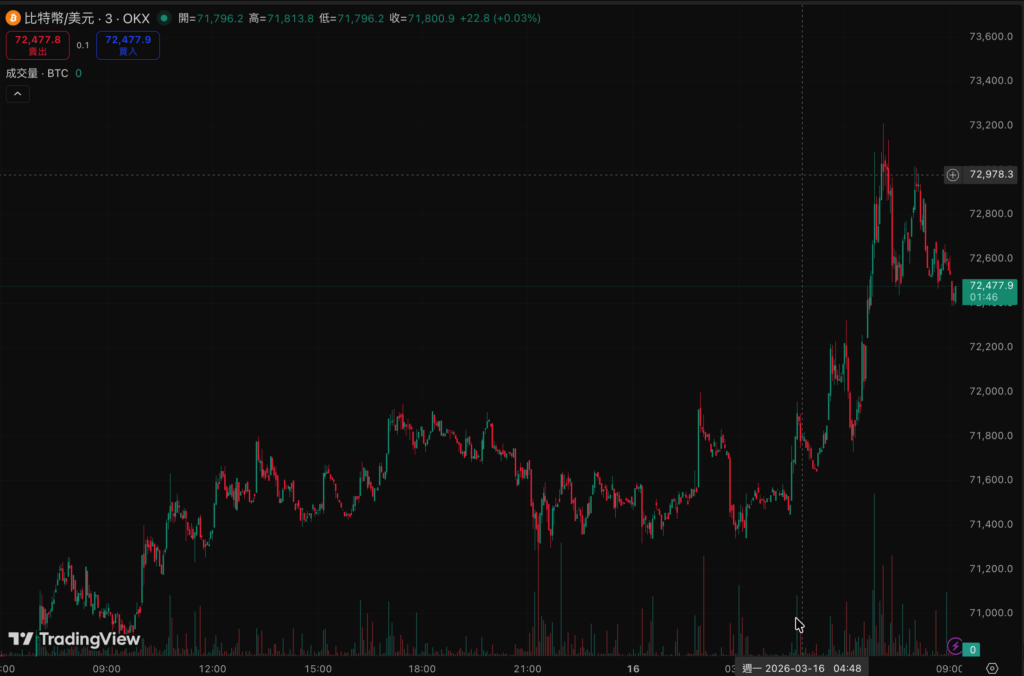
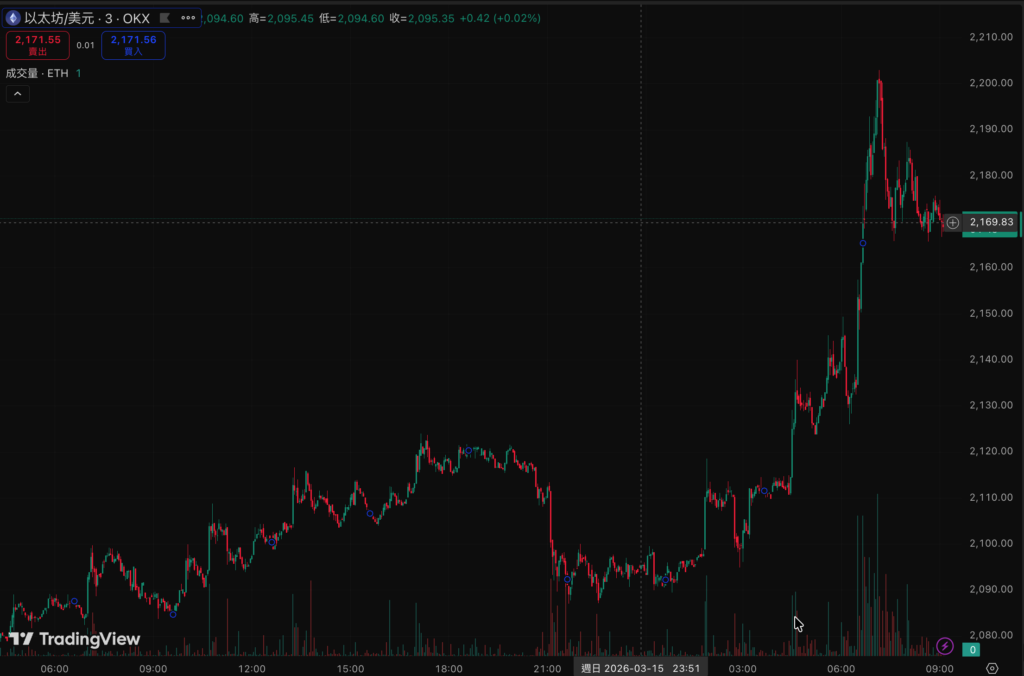
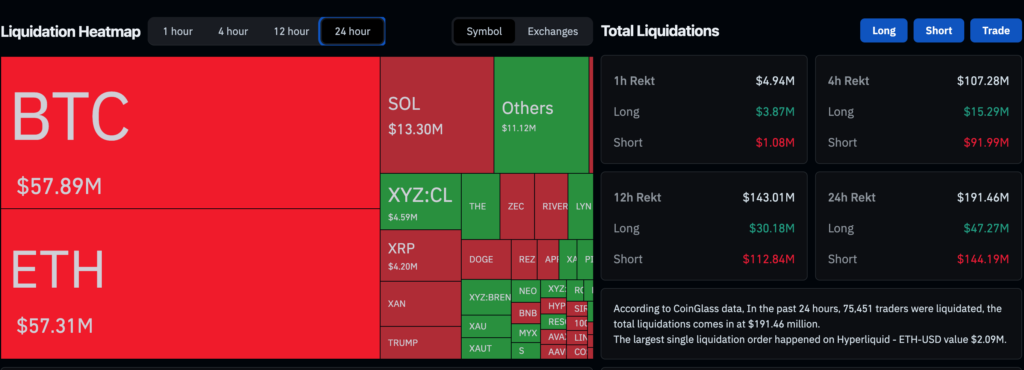
Bitcoin surged to $73,200 this morning, hitting a recent high, while Ethereum also broke through $2,200; the fear index remains in the “extreme panic” zone, but nearly $191 million in futures liquidations within 24 hours were concentrated on short positions. BitMine Chairman Tom Lee is optimistic in an interview with CNBC, believing that the stock market may have already bottomed this month.
(Background: Two Indian oil tankers have passed through the Hormuz Strait, Iranian Foreign Minister: only US and Israeli ships will be blocked)
(Additional context: Cuba’s president confirms talks with the US, oil blockade for three months, public riots attacking party offices)
Bitcoin surged past the $73,200 threshold this morning, currently at $72,410. Ethereum broke through the $2,200 mark, briefly at $2,196.62. The fear index has risen from 15 yesterday to 23 today, still in extreme panic. Futures liquidations within 24 hours reached $191 million, mainly on short positions. As Trump gathers allies to escort through the Hormuz Strait, the situation with Iran and oil seems to be under control.
Tom Lee told CNBC that tech stocks are performing quite well, including software stocks. Rising oil prices are actually bullish for the US stock market. One reason is that the US is a net oil producer. When people worry that rising oil prices will drag down global economic growth, they tend to prefer growth stocks. This encourages investors to buy US stocks, as the US market itself is a “growth index,” especially the MAG-7 and software sectors.
Tom Lee also believes the stock market may be forming a bottom this month. The issue of private credit has existed for some time and is only now gradually being exposed. However, he thinks the situation is not as systemic as the market fears. Many people associate problems with Lehman Brothers and the global financial crisis, but there are many reasons to believe this time is different. First, the market size is not as large as in 2008. Second, the credit pressure signals seen now are not as severe as in 2008. Therefore, he believes this will not become a systemic problem for the entire market or economy.

إخلاء المسؤولية: قد تكون المعلومات الواردة في هذه الصفحة من مصادر خارجية ولا تمثل آراء أو مواقف Gate. المحتوى المعروض في هذه الصفحة هو لأغراض مرجعية فقط ولا يشكّل أي نصيحة مالية أو استثمارية أو قانونية. لا تضمن Gate دقة أو اكتمال المعلومات، ولا تتحمّل أي مسؤولية عن أي خسائر ناتجة عن استخدام هذه المعلومات. تنطوي الاستثمارات في الأصول الافتراضية على مخاطر عالية وتخضع لتقلبات سعرية كبيرة. قد تخسر كامل رأس المال المستثمر. يرجى فهم المخاطر ذات الصلة فهمًا كاملًا واتخاذ قرارات مدروسة بناءً على وضعك المالي وقدرتك على تحمّل المخاطر. للتفاصيل، يرجى الرجوع إلى
إخلاء المسؤولية.


