The Ultimate Beginner's Guide to Litecoin Mining

2025-12-29 09:32:39
Altcoins
Blockchain
Crypto Tutorial
Mining
PoW
Article Rating : 3
63 ratings
# The Ultimate Beginner's Guide to Litecoin Mining **Introduction** This comprehensive guide equips aspiring miners with essential knowledge to start Litecoin mining profitably. Learn how Litecoin's Scrypt algorithm, 2.5-minute block times, and lower difficulty compared to Bitcoin create accessible mining opportunities for beginners. Discover three mining methods—solo, pool, and cloud mining—plus required ASIC hardware, software setup, and profitability assessment techniques using specialized calculators. Whether you're evaluating mining viability or ready to join a pool, this guide addresses your path from setup to consistent LTC rewards through strategic merged mining with Dogecoin.
The Ultimate Beginner's Guide to Litecoin Mining

How to Mine Litecoin: The Ultimate Guide to Litecoin Mining

Litecoin (LTC) stands as one of the most frequently compared cryptocurrencies to Bitcoin (BTC) among mineable blockchain networks. As a direct fork of Bitcoin, Litecoin shares fundamental characteristics with the world's leading cryptocurrency, including its mining process, supply limitations, and mining reward halving mechanism. Launched in 2011, Litecoin has earned the designation of "silver" to Bitcoin's "gold" in the cryptocurrency world. Due to its lower difficulty compared to Bitcoin and other major cryptocurrencies, Litecoin remains among the easiest and potentially most profitable coins to mine. Understanding the best way to mine LTC requires knowledge of current mining methods, hardware requirements, and profitability factors.

How Does Litecoin Mining Work?

The Litecoin mining process operates on principles similar to Bitcoin and other proof-of-work blockchains such as Dogecoin and Ethereum Classic. Miners compete to solve computationally intensive problems to earn the right to add the next block of transactions to the Litecoin network. Rather than solving complex mathematical equations, miners continuously generate new digit combinations in search of matches required by the Litecoin network software. The first miner to randomly discover the required digit combination wins the right to validate the current block and receives mining rewards.

Each successfully mined block currently yields a reward of 6.25 LTC. Like Bitcoin, Litecoin implements a reward-halving mechanism occurring every four years. The reward began at 50 LTC from 2011 to 2015, halved to 25 LTC in August 2015, decreased to 12.5 LTC in August 2019, and most recently halved to 6.25 LTC in 2023. Although individual rewards appear modest compared to Bitcoin, new blocks are generated every 2.5 minutes on Litecoin—four times more frequently than Bitcoin's 10-minute block period. This accelerated block generation allows Litecoin miners to earn rewards substantially more frequently than Bitcoin miners.

Mining Difficulty Score

Mining difficulty represents a standard metric estimating the computational requirements needed for mining. It specifies the number of hashes a machine must produce to solve a new block. Among popular mineable cryptocurrencies, Litecoin maintains relatively moderate mining difficulty. This difficulty level significantly reduces the computational power required for profitable mining compared to Bitcoin and other major coins. Notably, Litecoin and Dogecoin can be mined simultaneously through merged mining, making them complementary rather than competing options for miners.

How to Mine Litecoin?

Three primary methods exist for mining Litecoin: solo mining, pool mining, and cloud mining. Each approach presents distinct advantages and disadvantages based on individual mining capabilities and resource availability.

Solo Mining

Solo mining involves joining the Litecoin network as an individual miner and using personal mining hardware to solve transaction blocks independently. When successful, solo miners receive the full 6.25 LTC block reward without sharing with other participants—the primary advantage of this approach. However, solo mining presents significant disadvantages. Solo miners compete directly with organized mining pools that combine computing resources from numerous miners, creating substantially higher combined hash power. This competition makes profitable solo mining extremely difficult without exceptionally powerful equipment. Individual miners may experience prolonged periods without rewards or potentially never earn any rewards if their hardware lacks sufficient computational capacity. Even with advanced equipment, consistent profitability through solo mining has become unrealistic for most participants.

Litecoin Mining Pools

Mining pools represent the most popular method for Litecoin mining. These cooperative arrangements combine resources from multiple miners to significantly increase the probability of solving transaction blocks. When pool members successfully mine blocks, the 6.25 LTC reward is distributed proportionally among all participants based on their contributed hash power. Although mining pools typically retain between 0.1% and 3-4% of rewards as service fees, numerous large Litecoin pools operate without any fees. Pool mining offers substantial advantages over solo mining for most participants. Miners with modest hardware can earn consistent rewards, albeit in smaller amounts. Alternatively, miners with powerful rigs benefit from more frequent reward generation compared to solo mining, creating more stable income streams. For example, a miner earning one full block reward monthly through solo mining could receive that same amount distributed daily through pool participation.

Cloud Mining

Cloud mining provides an alternative approach where miners pay monthly or yearly fees to service providers that rent computing hash power. The cloud provider conducts mining operations on behalf of the customer and distributes profits proportional to the rented hash power. This method eliminates hardware ownership requirements, reducing upfront capital investment. However, reliable cloud mining providers specifically offering Litecoin services remain limited. Earnings from cloud mining fluctuate based on network activity and mining difficulty, while provider fees typically remain fixed, creating variable return profiles for participants.

Things You Need to Mine Litecoin

Litecoin Mining Hardware

While Litecoin mining theoretically supports CPU, GPU, and ASIC hardware, only ASIC machines offer realistic profit potential in current market conditions. CPU and GPU mining have become economically unviable despite Litecoin's relatively low difficulty, due to intensified competition among network miners. ASIC machines, specialized devices designed specifically for cryptocurrency mining, have been cryptocurrency mining standards for years. Bitcoin and Litecoin, however, require different ASIC types because they utilize different hashing algorithms. Bitcoin employs SHA-256 hashing, while Litecoin uses Scrypt hashing. This incompatibility necessitates Litecoin-specific ASIC equipment.

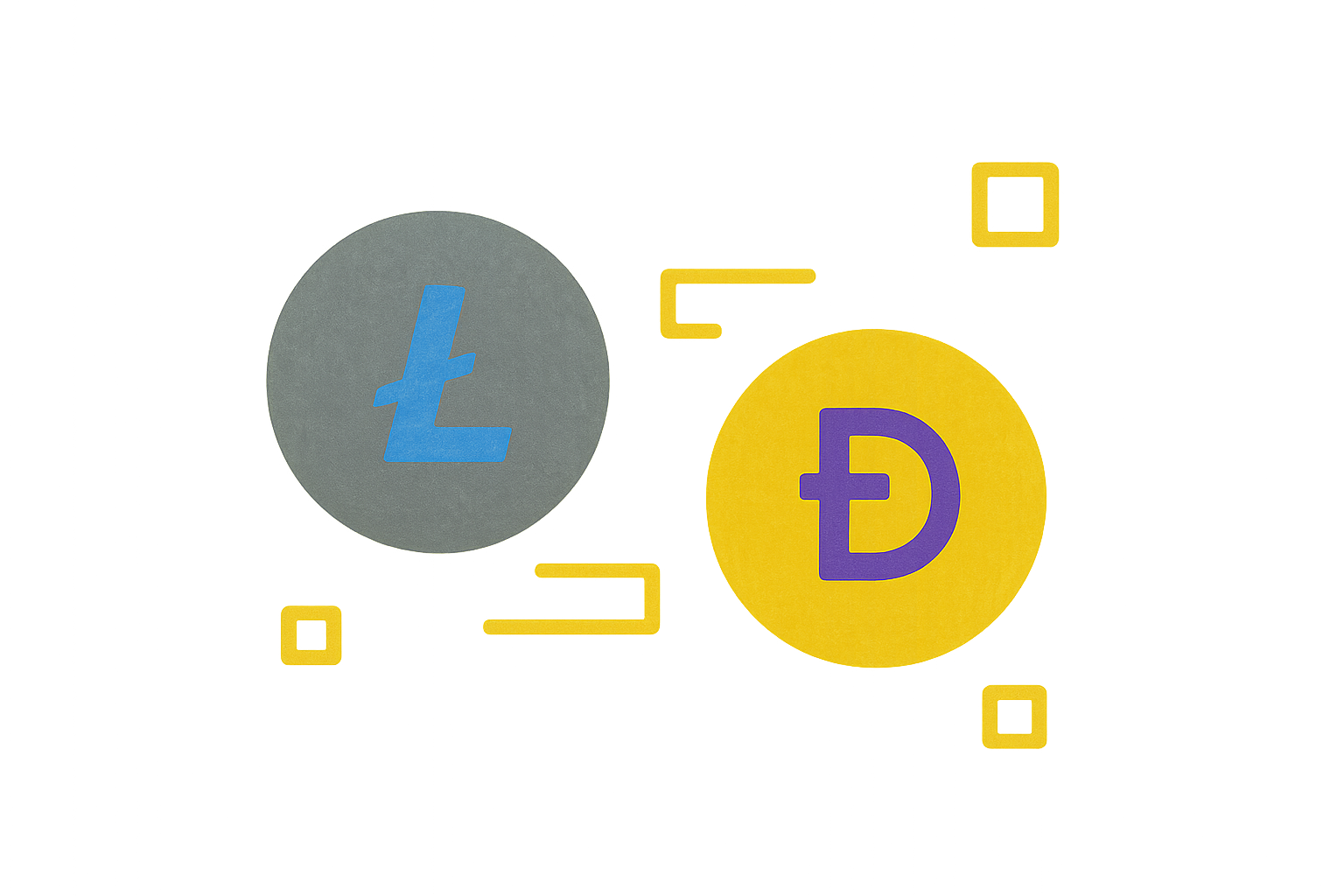
A significant advantage of Litecoin ASIC machines is their compatibility with Dogecoin, which also uses Scrypt hashing. Merged mining allows simultaneous mining of both cryptocurrencies using identical hardware and resources, enabling miners to earn both LTC and DOGE rewards without additional resource investment.

Litecoin Mining Software

After hardware setup, miners require specialized software to conduct Litecoin mining operations. Multiple software options accommodate Litecoin mining effectively. Free options include MultiMiner and CGMiner, which provide complete functionality without cost. Paid alternatives include Kryptex and Cudo Miner, which offer additional features and optimization capabilities for professional mining operations.

Litecoin Wallet

Mined Litecoin must be stored in compatible digital wallets. Not all major wallet providers support Litecoin, limiting storage options. Popular wallet services offering Litecoin support include Atomic Wallet, Trust Wallet, and Guarda Wallet, each providing secure storage and management capabilities.

How Long Does It Take to Mine One Litecoin?

Litecoin's block time of 2.5 minutes directly corresponds to the average time required to mine one Litecoin across the network. This 2.5-minute interval represents four times faster block generation than Bitcoin, Bitcoin Cash, and Bitcoin SV. Among popular mineable cryptocurrencies, only Dogecoin (1 minute) and Ethereum Classic (15 seconds) achieve faster block generation times. This accelerated pace enables more frequent reward distribution for Litecoin miners compared to most other major cryptocurrencies.

What Is the Best Way to Mine Litecoin?

The best way to mine LTC in 2025 combines a reasonably powerful ASIC machine with membership in a large mining pool. Solo mining remains technically possible with exceptional equipment but offers diminished practical advantages. Pool membership is strongly recommended regardless of mining rig sophistication, as it ensures significantly improved income consistency and reward frequency. The availability of multiple fee-free Litecoin pools further supports pool-based mining as the superior approach for most participants seeking to mine LTC effectively.

Miners should also implement merged mining to simultaneously extract Dogecoin alongside Litecoin. This merged approach consumes no additional resources while generating supplementary DOGE rewards, effectively increasing overall mining profitability without additional investment. This strategy represents the optimal approach for maximizing returns when mining LTC.

Is Litecoin Mining Profitable?

Litecoin ranks among the easiest coins to mine. However, ease of mining does not guarantee profitability. Mining competition in 2025 remains considerable across major mineable cryptocurrency networks. Litecoin's capped supply of 84 million coins, with approximately 73 million already minted as of December 2025, combined with the reward-halving mechanism, means rewards will progressively diminish over time. While Litecoin mining currently maintains profitability potential, long-term profitability will depend on various market factors.

Accurate profitability assessment requires using specialized calculators such as WhatToMine.com. These tools analyze critical parameters including mining hardware specifications, hash rate, power consumption, local electricity costs, and pool fees to project actual profit potential. Results vary significantly based on current factors including miner competition levels and Litecoin's current market price, necessitating regular reassessment of mining economics.

Conclusion

Litecoin mining represents an accessible entry point into cryptocurrency mining operations, offering lower difficulty requirements than Bitcoin while maintaining profitability potential. The best way to mine LTC involves combining appropriate ASIC hardware investment, strategic pool selection, and merged mining with complementary cryptocurrencies. Success requires careful selection of mining methods—with pool mining providing optimal results for most participants—and ongoing profitability monitoring. By implementing these strategies and regularly evaluating mining economics, miners can develop sustainable income streams. However, prospective miners must recognize that profitability varies based on equipment specifications, electricity costs, mining pool fees, and cryptocurrency market conditions. Thorough planning, realistic profit calculations, and continuous market monitoring remain essential for successful Litecoin mining operations.

FAQ

What is the easiest way to mine Litecoin?

Join a mining pool to share computing power and receive consistent rewards. Use ASIC miners designed for Scrypt algorithm. Pool mining reduces difficulty and provides steady income compared to solo mining.

What is the best algorithm for mining LTC?

Litecoin uses the Scrypt algorithm for mining. It's ASIC-resistant compared to Bitcoin's SHA-256, making it accessible to GPU and CPU miners. Scrypt requires significant memory, preventing mining centralization and maintaining network security effectively.

How long will it take to mine 1 Litecoin?

Mining time depends on your hardware hash power and network difficulty. With ASIC miners, expect 1-7 days. GPU miners may take weeks or months. Solo mining is slower than pool mining, which distributes rewards faster based on contributed hash power.

Is free LTC mining really possible?

Free LTC mining is theoretically possible through cloud mining platforms or browser-based miners, but profitability is minimal. Most free options have low rewards, high fees, or require significant computational resources. Serious miners typically invest in hardware and electricity costs for better returns.

* The information is not intended to be and does not constitute financial advice or any other recommendation of any sort offered or endorsed by Gate.
Related Articles
How to mine cryptocurrencies?

How to mine cryptocurrencies?

# Meta Description **Spanish Version:** Aprende cómo minar criptomonedas desde cero con esta guía completa para principiantes. Descubre los mejores equipos ASIC y GPU, tipos de minería, rentabilidad paso a paso, y cómo empezar sin experiencia. Incluye consejos sobre pools de minería y billeteras seguras. --- **English Version:** Comprehensive beginner’s guide to cryptocurrency mining. Learn how to mine cryptocurrencies from scratch, choose top ASIC and GPU hardware, explore mining methods, assess profitability step by step, and start with zero experience. Includes expert advice on mining pools and secure wallet solutions.
2026-01-02 09:40:08
A Beginner’s Guide to Crypto Mining: How to Get Started

A Beginner’s Guide to Crypto Mining: How to Get Started

Explore cryptocurrency mining fundamentals designed for beginners, and find out how to seamlessly start in this dynamic industry. Receive expert advice on choosing optimal mining hardware, configuring your digital wallet, and navigating mining pools to maximize your earnings. Gate offers comprehensive tools and dedicated support to help you reach your financial objectives.
2025-12-25 18:46:20
Ultimate Guide to Mining Litecoin: Is It Profitable in 2024?

Ultimate Guide to Mining Litecoin: Is It Profitable in 2024?

# Ultimate Guide to Mining Litecoin: Is It Profitable in 2024? This comprehensive guide explores Litecoin mining profitability, hardware requirements, and operational strategies essential for 2024 miners. Whether you're evaluating solo mining, pool participation, or cloud mining options, discover how Litecoin's faster block generation and lower difficulty compare to Bitcoin. Learn why ASIC machines are mandatory for profitability, how to select optimal mining pools, and calculate realistic returns using profitability tools. Perfect for both beginners and experienced miners seeking consistent LTC rewards through strategic hardware investment and Gate-based trading optimization. Gain actionable insights on merged mining opportunities and wallet selection to maximize your Litecoin mining earnings efficiently.
2025-12-29 08:44:18
Pi Crypto Assets: How to Mine and Evaluate Pi Coin in 2025

Pi Crypto Assets: How to Mine and Evaluate Pi Coin in 2025

In 2025, Pi Network revolutionized crypto assets mining with its mobile-first approach. As of July 14, the price of Pi crypto assets was $0.46946, reflecting its steadily increasing value since the launch of the autonomous network. Over 50 million users are actively mining Pi coin through their [smartphones](https://www.gate.com/blog/6282/How-to-Mine-Pi-Network-Coin-for-Free-on-Your-Smartphone) and securely storing it in the Pi Network wallet, and this innovative crypto asset is reshaping the landscape of digital assets.
2025-07-14 09:47:51
How to Create a Mineable Cryptocurrency: Step-by-Step Guide

How to Create a Mineable Cryptocurrency: Step-by-Step Guide

This article provides a comprehensive step-by-step guide to creating a mineable cryptocurrency. It begins by explaining the importance and enduring relevance of mineable cryptocurrencies in the evolving blockchain landscape of 2025. The article addresses the technical requirements for developing your own mineable coin, including designing secure blockchain architecture, selecting mining algorithms, and implementing PoW mechanisms. Furthermore, it details the complete developer's toolkit for successful PoW execution. The final section covers strategies for launching and distributing your cryptocurrency, emphasizing adoption maximization and community engagement. Ideal for blockchain developers and cryptocurrency enthusiasts, this guide presents essential insights into navigating the competitive crypto ecosystem.
2025-09-09 18:35:52
What is ERG: Understanding Employee Resource Groups and Their Impact on Workplace Culture

What is ERG: Understanding Employee Resource Groups and Their Impact on Workplace Culture

The article explores Ergo (ERG), a cryptocurrency and blockchain platform designed for secure, efficient, decentralized financial contracts. It provides insight into its innovative features, market performance, and ecosystem applications, highlighting its role in the DeFi sector and collaborations with platforms like Cardano. Key issues tackled include security measures, community engagement, and market dynamics. Structured logically, the article starts with Ergo's origins, development, and market performance, then dives into technical functionalities, partnerships, and community interactions. Ideal for cryptocurrency enthusiasts and developers seeking insight into a next-generation platform.
2025-09-29 08:27:41
Recommended for You
Amundi launches a tokenized money market on Ethereum

Amundi launches a tokenized money market on Ethereum

Discover the Amundi Tokenized Money Market Fund on Ethereum. This comprehensive guide explains how money market funds work in Web3, highlights the benefits of tokenized financial instruments, explores blockchain investment strategies, and provides outlooks for 2024.
2026-01-09 17:55:38
Crypto Market Recovers $200 Billion in Late November, Still $600 Billion Behind

Crypto Market Recovers $200 Billion in Late November, Still $600 Billion Behind

November crypto market analysis reveals a significant recovery adding $200 billion in valuation, with the market closing at $3.18 trillion. Bitcoin led the rally, gaining 7% to approximately $90,500, supported by substantial Bitcoin ETF inflows signaling renewed institutional interest. Beyond Bitcoin, altcoins delivered impressive performances, including XRP, XLM, and XMR recording double-digit gains, while BOTX surged nearly 2,950%. Despite the strong late-month recovery, the market remains $600 billion below November's opening levels, reflecting the month's volatility and challenges. This comprehensive analysis examines market dynamics, institutional adoption trends, and key performance metrics across major and emerging cryptocurrencies. The article addresses investor concerns about risk evaluation, portfolio diversification, and long-term positioning in volatile markets, making it essential reading for both retail and institutional market participants seeking actionable recovery insights.
2026-01-09 17:53:58
Elon Musk’s net worth has exceeded $500 billion, achieving a historic milestone for the first time ever.

Elon Musk’s net worth has exceeded $500 billion, achieving a historic milestone for the first time ever.

Elon Musk has made history as the first individual to amass a net worth of $500 billion. This analysis explores the dramatic rise in the value of Tesla and SpaceX, the driving forces behind Musk’s swift accumulation of wealth, the implications for the global economy, and projections for future growth. This is must-read information for Web3 investors and anyone following the latest financial developments.
2026-01-09 17:51:27
Bitcoin’s realized net profit and loss has reverted to a neutral position

Bitcoin’s realized net profit and loss has reverted to a neutral position

A comprehensive guide to analyzing Bitcoin's Net Realized Profit and Loss (NRPL). Explore the meaning of positive, negative, and neutral NRPL zones, market trend forecasting, key considerations for investors, and how to make trading decisions on Gate. This essential resource is recommended for everyone from crypto newcomers to seasoned professionals.
2026-01-09 17:50:13
Visa Expands Stablecoin Payment Services Through Partnership with Aquanow

Visa Expands Stablecoin Payment Services Through Partnership with Aquanow

Learn how to make money in an hour using stablecoins and cryptocurrencies. Explore fast trading strategies, Visa-USDC settlement solutions, and blockchain earning opportunities tailored for beginner and intermediate users in web3.
2026-01-09 17:48:41
Cryptocurrency Enthusiast Reflects on Key Predictions and Market Insights

Cryptocurrency Enthusiast Reflects on Key Predictions and Market Insights

This comprehensive guide explores critical cryptocurrency investment trends shaping the market landscape. It examines Bitcoin mining developments following Russia's resumed operations, corporate adoption breakthroughs from Tesla and Mastercard, and blockchain technology fundamentals including Layer solutions and consensus mechanisms. The article addresses essential market risks, token mechanics, and meme coin volatility while providing practical trading strategies for liquidity pools and asset valuation. Key topics include regulatory evolution, emerging technologies like DeFi and NFTs, and protective measures against market exploitation. Designed for both beginners and experienced investors, this resource equips readers with actionable insights on Ethereum's undervaluation, on-chain analysis techniques, and risk mitigation approaches. Whether you're exploring Gate exchange platforms or analyzing long-term cryptocurrency prospects, this guide delivers the knowledge needed to navigate the evolving digital asset
2026-01-09 17:47:17









