Michael Saylor: The Transformation of Bitcoin’s Most Devoted Believer

Beginner
Quick Reads
Last Updated 2026-04-03 17:13:55
Reading Time: 1m
Saylor is not only a visionary entrepreneur, but also a prominent Bitcoin advocate whose every statement can shape sentiment across the crypto community and move the markets.

Who is Michael Saylor?


(Source: saylor)

Michael Saylor is widely recognized as one of Bitcoin’s biggest bulls in the crypto community. As the co-founder and Executive Chairman of MicroStrategy, a US business intelligence software firm, Saylor made headlines in 2020 with MicroStrategy’s large-scale Bitcoin purchase using company assets, impacting both traditional finance and the Web3 community.

Saylor is more than just a visionary entrepreneur; he is a vocal advocate of Bitcoin as digital gold and a tool for human financial freedom. His statements and social media posts often influence crypto community sentiment and market trends.

Background and Entrepreneurial Journey

Born in 1965, Michael Saylor graduated from MIT with a major in Aerospace Engineering and Science. He founded MicroStrategy in 1989, focusing on enterprise data analytics and business intelligence software. During the dot-com boom of 2000, the company’s market capitalization soared, but it later faced challenges, including financial restatement issues and a sharp decline in stock price. Despite these headwinds, Saylor led MicroStrategy through a successful transformation, maintaining its competitiveness in the analytics market. What truly cemented Saylor’s place in Web3 history, however, was MicroStrategy’s strategic pivot to Bitcoin starting in 2020.

MicroStrategy’s Strategic Bet

In August 2020, MicroStrategy publicly announced it would convert a portion of its cash reserves into Bitcoin, making its initial purchase of $250 million. Saylor stated at the time, “Fiat currency is rapidly depreciating, and Bitcoin is the best store of value we’ve found.” Since then, MicroStrategy has repeatedly increased its Bitcoin holdings, even raising funds through convertible bond offerings to acquire more. By mid-2025, the company’s Bitcoin holdings exceeded 600,000 coins, with an average cost well below current market prices, making it the largest publicly traded corporate Bitcoin holder in the world.
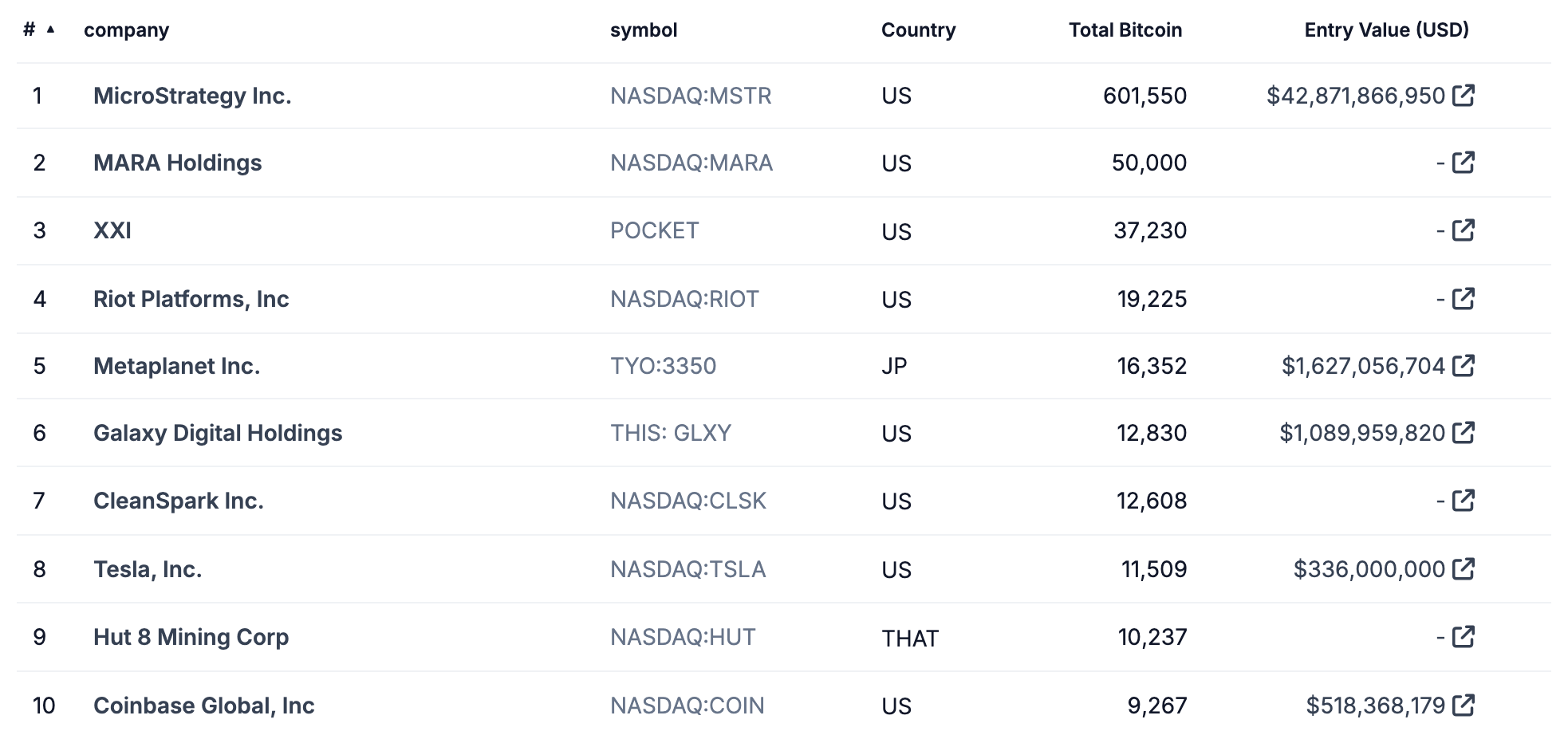

(According to data from coingecko, MicroStrategy continues to hold the top corporate position in Bitcoin ownership.)

Michael Saylor’s Crypto Views and Beliefs

Saylor’s perspective on Bitcoin goes far beyond treating it as an asset. He sees Bitcoin as a technology for financial freedom—a currency designed to resist inflation, evade censorship, and counter both devaluation and sovereign monetary control. In numerous speeches, he’s asserted, “Bitcoin is humanity’s hope around the globe—it’s the wealth-preservation tool for the digital era.” Saylor has long advocated against holding cash, arguing that dollar-denominated assets are eroding in value, and he warns that companies refusing to embrace Bitcoin risk being left behind by history. These convictions have prompted many institutions and entrepreneurs to reevaluate the significance of crypto assets.

Public Speaking and Community Influence

Saylor is an active figure in the crypto world, with over 4 million followers on X (formerly Twitter). He frequently comments on Bitcoin price trends, macroeconomic developments, and motivational topics, and he’s a regular participant in Bitcoin conferences and major media interviews. Bitcoin for Corporations is an online event he launched, which teaches CFOs how to integrate Bitcoin into corporate finance strategies. These efforts have substantially raised Bitcoin’s legitimacy in mainstream capital markets.

Facing Criticism

Although Saylor commands respect from many Web3 proponents, he still faces skepticism from traditional media and investors. Critics claim he’s tied a public company too closely to a volatile asset, and some argue he’s made extreme bets with shareholder capital. However, based on historical Bitcoin price trends, MicroStrategy’s Bitcoin strategy still results in positive returns. Saylor remains steadfast, continually emphasizing his long-term conviction and focus on long-term value, insisting that Bitcoin is the core digital asset of the 21st century.

Saylor and His Impact on the Web3 Ecosystem

Saylor’s influence now extends well beyond entrepreneurship. He’s a leading advocate for Bitcoin education, regulatory dialogue, and financial liberty. His impact spans support for the Web3 Foundation, decentralized protocols, and global Bitcoin awareness. As a result of his leadership, Bitcoin is transforming from merely a crypto safe-haven asset into a recognized mainstream asset. This shift is accelerating the fusion of Web3 and traditional finance.

If you would like to learn more about Web3, please register here: https://www.gate.com/

Conclusion

Michael Saylor’s story exemplifies the journey from engineer and entrepreneur to a representative figure of the crypto era. Leading a company toward a Bitcoin safe-haven asset status is not just a financial strategy but also reflects contemporary values. In today’s climate of information overload and asset volatility, Saylor’s belief in Bitcoin represents a concrete approach to countering fiat inflation and achieving financial autonomy.

Author: Allen
Disclaimer
* The information is not intended to be and does not constitute financial advice or any other recommendation of any sort offered or endorsed by Gate.
* This article may not be reproduced, transmitted or copied without referencing Gate. Contravention is an infringement of Copyright Act and may be subject to legal action.

Related Articles

AI-Native Settlement Layers: How United Stables Is Building the Next Financial Rail
Beginner

AI-Native Settlement Layers: How United Stables Is Building the Next Financial Rail

Stablecoins were originally designed as dollar substitutes within exchanges, primarily used for asset pricing and trade settlement. As on-chain financial ecosystems have matured, their role has expanded beyond simple payments to include collateral assets, cross-chain liquidity mediums, and unified settlement units. In particular, as AI systems and automated agents begin to participate directly in economic activity, demand has risen sharply for programmable value units capable of instant settlement. This shift is pushing stablecoins toward the role of foundational financial infrastructure.
2026-03-25 03:16:17
The ve(3,3) Flywheel Explained: How AERO Tokenomics Powers Aerodrome’s DeFi Economy
Beginner

The ve(3,3) Flywheel Explained: How AERO Tokenomics Powers Aerodrome’s DeFi Economy

In the competition for DeFi liquidity, high-inflation mining alone is no longer enough to build lasting advantages. Aerodrome applies the ve(3,3) economic model to redesign token emissions, voting mechanisms, and revenue distribution, creating a liquidity flywheel centered on governance and cash flow. This article examines AERO tokenomics, the veAERO locking mechanism, and protocol revenue models to explain how Aerodrome builds a sustainable DeFi economic system.
2026-03-25 06:41:58
How Does PAXG Work? In-Depth Overview of the Physical Gold Tokenization Mechanism
Beginner

How Does PAXG Work? In-Depth Overview of the Physical Gold Tokenization Mechanism

PAXG (Pax Gold) is a tokenized asset backed by physical gold, issued by the fintech company Paxos and traded on the Ethereum blockchain as an ERC-20 token. The core concept is to tokenize physical gold on-chain, with each PAXG token representing ownership of a certain amount of gold. This structure enables investors to hold and trade gold in the form of a digital asset.
2026-03-24 19:12:51
Aerodrome Tokenomics: How ve(3,3) Powers Base's Most Profitable DEX
Beginner

Aerodrome Tokenomics: How ve(3,3) Powers Base's Most Profitable DEX

AERO is the native token of Aerodrome Finance, a core decentralized exchange and liquidity protocol in the Base ecosystem. It is primarily used for liquidity incentives and ecosystem operations. veAERO is a governance NFT that users receive by locking AERO, representing both voting power and the right to share protocol revenue. Through a dual track structure of AERO as a utility token and veAERO as a governance credential, Aerodrome separates liquidity usage value from long term governance power, allowing participants to act as liquidity providers, governance decision makers, and revenue sharers within the same system.
2026-03-25 06:40:31
How is the price of PAXG determined? Pegging mechanism, trading depth, and influencing factors
Beginner

How is the price of PAXG determined? Pegging mechanism, trading depth, and influencing factors

PAXG (Pax Gold) is a tokenized asset backed by physical gold reserves, launched by fintech firm Paxos and issued as an ERC-20 token on the Ethereum blockchain. The core concept is to digitally represent real-world gold assets, allowing investors to hold and trade gold via the blockchain network. Because each PAXG token corresponds to a specific quantity of physical gold, its price is theoretically expected to closely track the global gold market.
2026-03-24 19:11:40
Hybrid Collateral Stablecoins: Inside United Stables' Stability and Yield Architecture
Beginner

Hybrid Collateral Stablecoins: Inside United Stables' Stability and Yield Architecture

In the early stages of the crypto market, traditional stablecoins mainly relied on single-reserve or single-collateral models. Their primary focus was price stability and payment convenience, which allowed them to become foundational tools for on-chain trading and capital flows. As the market has entered a more mature financial phase, however, this structure has begun to reveal limitations, including high concentration risk and the difficulty of balancing liquidity with yield. These constraints have driven the evolution toward multi-layer collateral and portfolio-based designs, such as the dual-layer hybrid collateral architecture proposed by United Stables, which seeks to redefine the underlying logic of stable assets.
2026-03-25 03:17:39





