In today’s internet environment, creators often face challenges such as weak copyright protection, complex licensing processes, and opaque revenue distribution. With the rapid growth of AI generated content technologies, vast amounts of creative works are used to train models, yet creators rarely receive corresponding compensation. Against this backdrop, Story Protocol proposes a new approach to IP management by transforming copyright logic, which traditionally relies on legal systems and platforms, into programmable rules executed on-chain.
Through this approach, IP is no longer simply a static legal asset. Instead, it becomes a digital resource that can be combined, extended, and traded. Creators can record the origin and usage relationships of their works while automatically receiving revenue through smart contracts, forming a more transparent and open creator economy.
What Is Story Protocol?
As a Layer-1 blockchain protocol dedicated to intellectual property management, Story Protocol enables creators to register, license, and monetize their works on-chain. Through smart contracts and on-chain data structures, the protocol transforms intellectual property from a traditional legal concept into a composable and traceable digital asset.
Within the protocol, every creative work can be registered as an on-chain IP Asset. This asset records ownership information and can also include licensing rules, derivative relationships, and revenue distribution logic. Creators can define conditions for others to use their works through licensing modules, such as whether commercial use is allowed, whether attribution is required, or whether a licensing fee must be paid.
Compared with traditional copyright systems, the key innovation of Story Protocol is embedding IP management logic directly into smart contracts. When a work is remixed, adapted, or expanded, the protocol automatically establishes a derivative relationship on-chain and distributes revenue according to predefined rules. In this way, IP becomes more than a static copyright record. It evolves into a continuously expanding creative network.
Within the broader ecosystem, Story Protocol serves as the IP Infrastructure Layer. Creators can use the protocol to register and manage their works. Developers can build content platforms, IP marketplaces, or AI data platforms on top of it. AI companies can obtain licensed datasets and content through the protocol.
Team and Investors
Story Protocol was created by engineers and entrepreneurs from the fields of artificial intelligence, internet technology, and blockchain. The project was founded by Seung Yoon Lee, who has extensive experience in both technology and venture capital and has collaborated with multiple Web3 and AI projects.
Before founding Story Protocol, Seung Yoon Lee launched the content platform Radish Fiction. The platform was later acquired by the Korean internet company Kakao for approximately 440 million USD. This experience provided deep insight into digital content distribution and the creator economy, forming an important foundation for building the Story Protocol IP network.
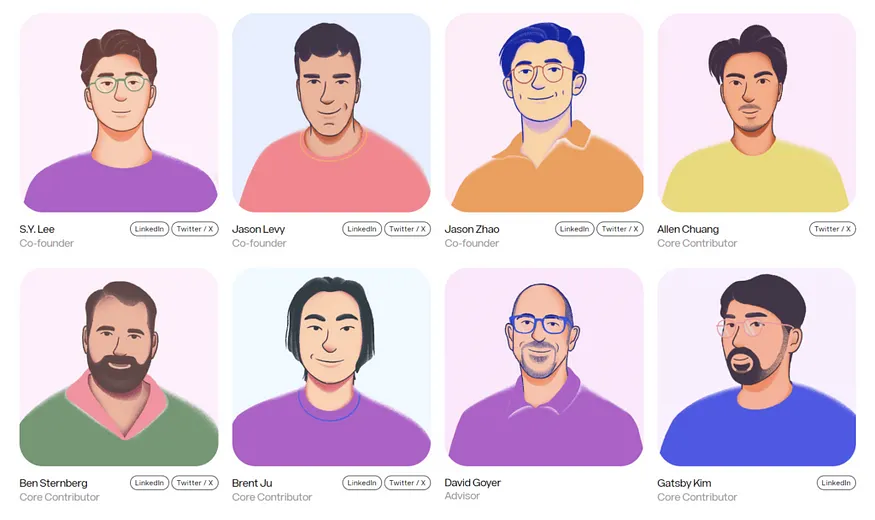
In terms of funding, Story Protocol has received support from several well known Web3 investment firms, raising more than 2 billion USD in total. Andreessen Horowitz (a16z crypto) has participated in multiple funding rounds. Other investors include Polychain Capital, Hashed, and several additional crypto and technology investment institutions.
| Round |
Funding Amount |
Date |
Lead Investor |
Other Investors (partial) |
| OTC Purchase |
820 million USD |
8/11/2025 |
- |
Heritage Distilling |
| Series B |
800 million USD |
8/21/2024 |
Andreessen Horowitz (a16z crypto) |
Polychain Capital, Cozomo de Medici, Adrian Cheng, Scott Trowbridge |
| Series A |
250 million USD |
9/6/2023 |
Andreessen Horowitz (a16z crypto) |
Hashed, Mirana Ventures, Alliance DAO, SamsungNext |
| Seed |
29.3 million USD |
5/17/2023 |
Andreessen Horowitz (a16z crypto) |
Hashed, Mirana Ventures, SamsungNext |
These institutions have long focused on Web3 infrastructure, AI technologies, and the creator economy. As a result, Story Protocol is widely viewed as an important experimental project at the intersection of AI, Web3, and IP.
How Story Protocol Works
The core design goal of Story Protocol is to transform intellectual property management into programmable on-chain logic. Unlike simple NFT proof systems, the protocol builds a comprehensive IP management framework that allows works to form traceable creative relationship networks on-chain.
From a technical perspective, Story Protocol consists primarily of IP assets, functional modules, and a licensing rule framework.
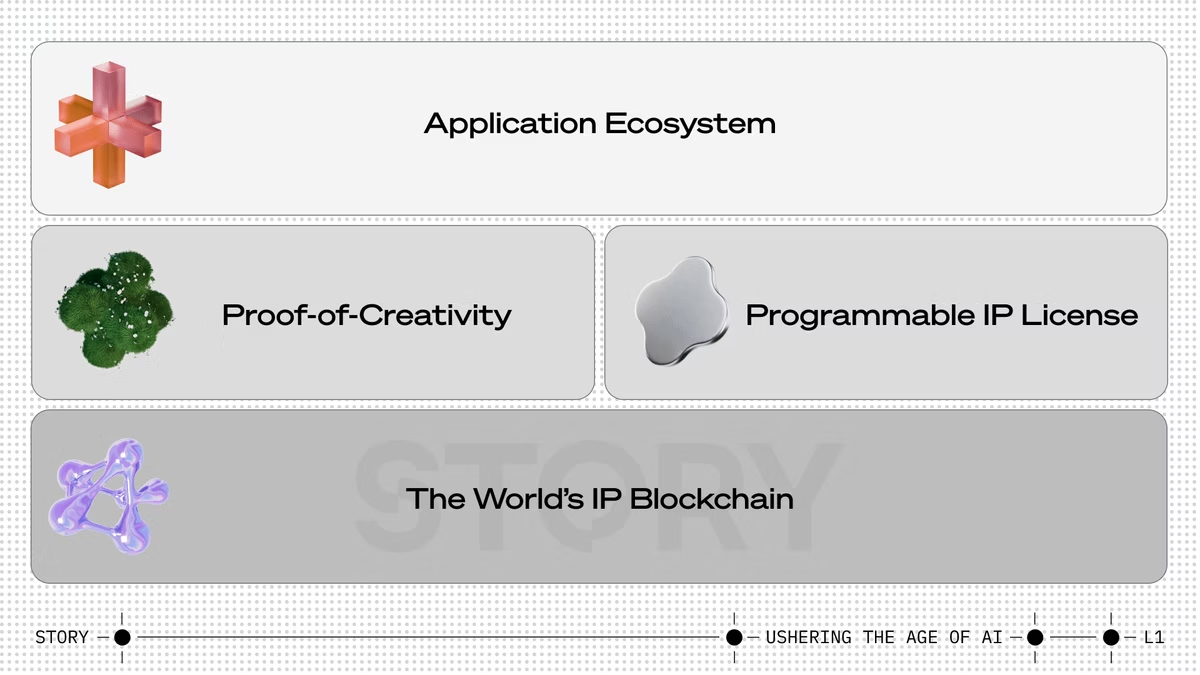
When a creator registers a work on the protocol, the system generates an on-chain IP asset that typically includes metadata such as links to images, text, or other digital content. After registration, the creator can define usage rules through licensing modules, such as whether commercial use is allowed, whether attribution is required, or whether licensing fees must be paid.
If another user creates derivative content based on the original work, the protocol automatically establishes a derivative relationship on-chain. The new work forms a parent child structure linked to the original IP asset. When derivative works generate revenue, smart contracts can automatically distribute income according to predefined rules.
This approach is known as Mechanism Enforcement. Unlike traditional copyright systems that rely on legal enforcement and disputes, Story Protocol executes licensing and revenue distribution directly through smart contracts, reducing the need for manual intervention.
Core Features of Story Protocol
The goal of Story Protocol is not simply to provide IP registration tools but to build a scalable infrastructure for an IP network.
First, the protocol introduces the concept of Programmable IP. Through smart contracts, licensing rules, revenue distribution, and derivative relationships can all be defined programmatically. This allows intellectual property to function more like software, capable of being called, reused, and combined.
Second, the protocol supports IP composability and derivative creation. By recording relationships between works on-chain, creators can build upon existing content, adapt it, or expand it while following licensing rules. This structure allows IP to evolve from isolated assets into collaborative creative networks similar to open source software ecosystems.
In addition, Story Protocol is designed to be AI friendly. AI developers can obtain licensed datasets and creative content through the protocol, reducing copyright risk while ensuring creators receive compensation.
Finally, the protocol adopts an open ecosystem model. Developers can build various applications on top of Story Protocol, including IP marketplaces, AI data markets, and creative platforms, expanding the use cases of the network.
Tokenomics and IP Token Use Cases
The Story Protocol network has a native token called IP ($IP), which serves multiple functions within the protocol, including network fees, governance, and ecosystem incentives.
First, IP tokens can be used to pay network transaction fees. For example, registering IP assets, creating licensing agreements, or conducting IP related transactions may require payment of network fees.
Second, IP tokens participate in network governance. Token holders can vote on protocol upgrades, parameter adjustments, and ecosystem development directions, collectively shaping the future of the network.
In addition, Story Protocol allows further tokenization of IP assets. For example, a commercially promising IP project can be divided into multiple tokenized shares, allowing community members to invest and share future revenue. This model provides creators with a new way to raise funding while increasing the liquidity of IP assets.
Story Protocol vs Traditional Copyright Management
| Aspect |
Story Protocol |
Traditional Copyright Management |
| Ownership verification |
Instant on-chain registration with permanent proof |
Paperwork heavy process, often prone to disputes |
| Licensing process |
Automatically executed through smart contracts |
Manual negotiation, time consuming |
| Revenue distribution |
Transparent royalty modules with real time payouts |
Intermediaries take commissions, fairness often questioned |
| Derivative tracking |
Automated relationship graph tracking |
Manual monitoring with high costs |
Compared with traditional copyright systems, Story Protocol introduces several major innovations.
Traditional copyright management often relies on government institutions, platforms, or copyright agencies to handle registration and licensing. In contrast, Story Protocol uses blockchain technology to provide decentralized record keeping and automated execution. Licensing rules and revenue sharing logic can be written directly into smart contracts, reducing reliance on intermediaries.
In conventional copyright frameworks, tracking derivative works can be extremely difficult. Story Protocol records creative relationships on-chain, allowing every adaptation or derivative creation to be traced. This structure supports a more transparent creative ecosystem.
At the same time, blockchain technology gives IP assets greater liquidity. Creators can sell their works directly or generate ongoing income through tokenization or licensing agreements.
Main Use Cases and Application Scenarios
As AI technology and digital content industries continue to evolve, the potential applications of Story Protocol are expanding across multiple sectors.
In AI training data markets, AI companies can obtain legally licensed datasets through the protocol and automatically pay creators via smart contracts. This mechanism helps reduce copyright disputes in AI model training.
In digital content creation, novels, music, videos, or game related IP can be registered on-chain. Communities can build derivative works under licensing rules. As the creative network grows, an IP project may gradually develop into an ecosystem similar to an open source community.
In the IP investment sector, community members can also participate in funding or revenue sharing for IP projects. For example, fans or investors may invest in popular IP projects through tokenization mechanisms and share future commercial revenue.
How to Participate in the Story Protocol Ecosystem and What Risks Exist
As the protocol develops, an increasing number of projects are building applications around Story Protocol, particularly in creator tools, IP marketplaces, and AI data platforms.
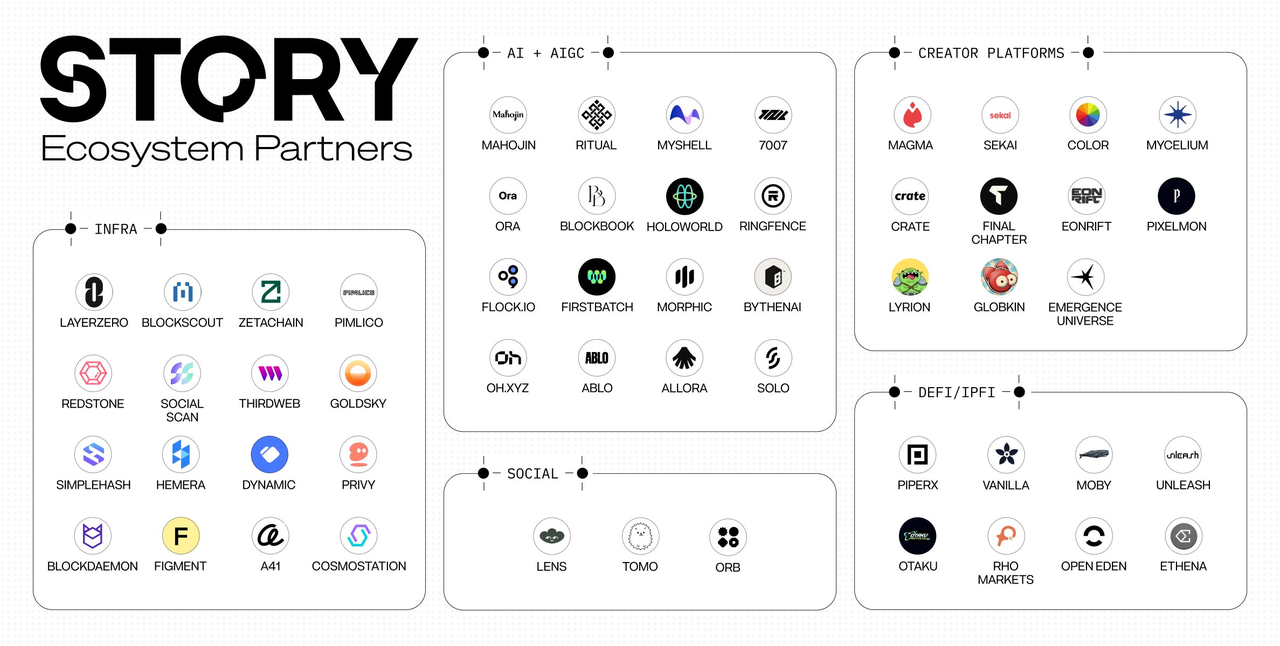
For example, creator tool platforms allow users to register their works directly as on-chain IP assets and set licensing rules. These applications often provide more user friendly interfaces so that non technical users can manage their intellectual property more easily.
For ordinary users, there are three primary ways to participate in the Story Protocol ecosystem.
Creators can register their works as IP assets and open licensing permissions to other creators or companies. Developers can build applications on top of the protocol, such as IP marketplaces, content platforms, or AI data markets. Investors can participate through tokens or IP related projects within the ecosystem.
However, this field is still in its early stages and carries several risks. First, regulations surrounding digital copyright and blockchain assets continue to evolve across different countries, and the legal environment remains uncertain. Second, IP networks require large scale participation from creators and platforms to generate meaningful network effects. Without sufficient adoption, the ecosystem’s value may remain limited.
In addition, the commercial value of IP itself can be highly uncertain. Only a small number of creative works achieve long term influence, which means investments related to IP may carry significant risk.
Conclusion
As AI technology and the digital content industry continue to grow, intellectual property management is entering a new stage.
Story Protocol attempts to transform IP from a traditional legal concept into programmable digital assets through blockchain technology. By enabling on-chain registration, smart licensing, and automated revenue distribution, the protocol introduces a new infrastructure for the creator economy.
Although the model is still in its early experimental phase, if the IP network achieves sufficient scale, it could play an important role in the future AI content ecosystem, digital creation economy, and the broader Web3 landscape.
FAQs
What is the difference between Story Protocol and NFTs? NFTs primarily prove ownership of digital assets, while Story Protocol focuses on IP licensing and derivative creation relationships, supporting complex licensing rules and revenue distribution.
How does Story Protocol support AI training? AI companies can obtain licensed datasets through the protocol and automatically compensate creators via smart contracts, helping reduce copyright disputes.
What is the role of the Story Protocol token? The protocol token is mainly used for governance, network transaction fees, and incentives for ecosystem participants.
What are the biggest challenges for Story Protocol? Major challenges include regulatory uncertainty, ecosystem scale, and the unpredictable value of IP. The network’s value becomes meaningful only when a large number of creators and platforms participate.
Is Story Protocol only for digital content? While digital content is the primary use case, in theory any asset associated with intellectual property can be managed and licensed through the protocol.







