Gate GUSD Minting Benefits Phase 9 Now Live—Limited-Time 100% Annualized Rewards
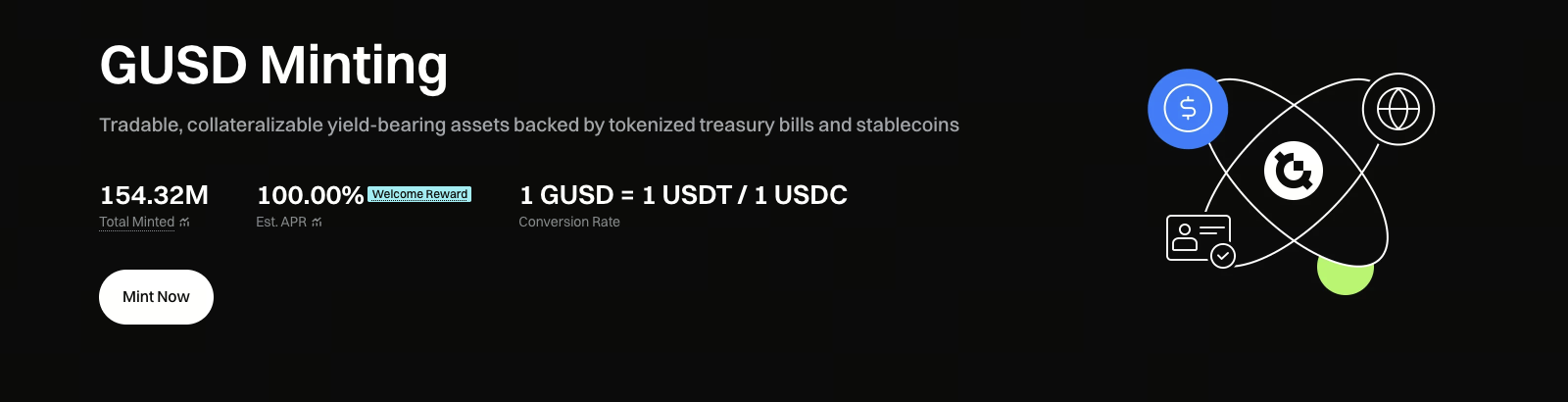 Image source: Event Page
Gate Simple Earn has launched the GUSD Minting New User Benefits Phase 9 event, offering exclusive rewards with up to 100% annualized returns for new users. The event runs for one week, from March 30, 2026, 09:00 UTC to April 6, 2026, 09:00 UTC, and is tailored for new users. With a straightforward process, users can mint GUSD and immediately start earning annualized returns.
Additionally, users who participate with GUSD in other Earn products outside of Simple Earn—such as Launchpool and Launchpad—can receive not only those products’ returns but also continue to enjoy GUSD minting returns and event rewards. Simply holding GUSD allows users to access multiple sources of return, delivering multiple benefits.
How to Participate in GUSD Minting
1. Minting Process and Return Calculation
-
Minting Process: Users can mint GUSD with USDT or USDC at a 1:1 swap ratio. Once minting is successful, GUSD immediately starts generating returns.
-
Subscription Window: Users can mint GUSD with USDT or USDC daily from 00:00 to 23:59 (UTC).
-
Return Distribution: Returns begin accruing the next day and are credited in GUSD to the user’s account by 18:00 on the following day. Accumulated returns can be viewed in the Spot Account or Unified Account.
-
Redemption Methods: Users can redeem GUSD at any time, with funds returned as USDT or USDC to their Spot Account or Unified Account. Both fast redemption and standard redemption are supported, with redemption fees dynamically adjusted based on market conditions.
2. Annualized Return and Rewards
-
Reference Annualized Return: During the event, users can earn up to 100% annualized returns by minting GUSD. This is a reference annualized rate for the event period; actual returns may fluctuate with market conditions.
-
Additional Rewards: Beyond basic returns, users can earn extra platform rewards distributed daily in GT tokens. These rewards are adjusted based on the user’s subscription amount, with the maximum annualized return reaching the reference rate plus the bonus portion.
-
Limited Reward Pool: The total additional reward pool is limited and distributed on a first-come, first-served basis until depleted.
GUSD Product Overview and Sources of Return
1. GUSD Minting and Earn Product Background
GUSD is a flexible-term principal-protected product offered by Gate Simple Earn, designed to deliver stable returns. Its sources of return include Gate ecosystem revenue, government bond RWA (real-world assets), and high-quality yield assets backed by stablecoins. Users mint GUSD by depositing USDT or USDC, receiving GUSD tokens as proof of return and representing their investment share.
The GUSD redemption ratio is 1:1, allowing users to convert GUSD back to USDT or USDC at the same rate upon redemption, with applicable redemption fees deducted.
2. Return Calculation Method
GUSD’s annualized returns are derived from a range of high-quality assets within the Gate ecosystem, including:
-
Gate Ecosystem Revenue: Various platform-generated revenues, such as trading fees and lending returns.
-
Government Bond RWA: Real-world assets in which GUSD invests, similar to tokenized US Treasury Bonds, providing a stable source of return.
-
Stablecoin-Related Assets: Stablecoin assets invested by GUSD, ensuring stable and reliable returns.
These income sources enable GUSD to provide relatively stable returns, making it a suitable Earn product for long-term holding.
Event Rules and Participation Eligibility
1. Event Participation Criteria
This event is designed specifically for new users, with the following requirements:
-
Users must register before March 30, 2026, 00:00 UTC and must not have held GUSD Spot or participated in GUSD minting or on-chain staking.
-
After logging in, eligible users will see information on additional rewards, confirming their participation eligibility.
2. Redemption and Asset Liquidity
-
Fast Redemption: Typically, after submitting a fast redemption request, funds are credited within 5 minutes. Redemption fees adjust with market conditions and are displayed on the redemption page.
-
Standard Redemption: Funds from standard redemption are credited on D+3 after the request, usually suitable for users who do not need immediate access to funds.
Risk Reminder and Market Notice
-
Market Volatility: Cryptocurrency markets are highly volatile, and returns may be affected by market fluctuations. Users should make decisions based on their personal risk tolerance.
-
Dynamic Adjustment of Additional Rewards: Platform bonus rates and event rewards are dynamically adjusted according to market changes. Actual rewards may vary based on market participation and the status of the reward pool.
-
Redemption Fees: Redemption may incur fees, which are updated in real time according to market conditions. Users should confirm the latest fee information before redeeming.
Summary: GUSD Minting Event Offers High Returns and Multiple Benefits
The GUSD Minting New User Benefits Phase 9 event gives new users the opportunity to earn 100% annualized returns, along with additional multiple sources of return through Launchpool and other Earn products. With a simple minting process, users can secure stable returns and further boost earnings by engaging with other Earn products on the platform.
If you’re a new user, this is a strong opportunity to participate in Gate Simple Earn’s Earn activities, mint GUSD for high annualized returns, and enjoy multiple rewards. Seize the opportunity, start minting, and earn your returns.







