As blockchain technology rapidly advances, a growing number of blockchain networks are emerging, yet interoperability between different chains remains a critical challenge. Many projects have sought to address this issue through a variety of approaches, with cross-chain technology recognized as a key solution to asset liquidity challenges in multi-chain ecosystems. However, most existing cross-chain solutions either rely on intermediary tokens or require complex conversion steps, both of which increase the cost and time needed for asset transfers.
The advent of Stargate Finance overcomes these limitations by introducing a decentralized native asset cross-chain protocol, delivering a more efficient, streamlined, and secure method for transferring assets across blockchains.
Core Mechanism of Stargate Finance
Stargate Finance operates on a decentralized bridge protocol, empowering users to transfer native assets directly between multiple blockchains.
Unlike conventional cross-chain bridges, Stargate eliminates the need for tokenized asset intermediaries. Instead, it utilizes Smart Contracts and on-chain verification for direct asset transfers. This approach not only enhances the efficiency of cross-chain transfers but also reduces intermediary fees and potential risks. Stargate’s decentralized framework guarantees transaction security and transparency, establishing it as essential infrastructure within the blockchain ecosystem.
Technical Architecture Overview of Stargate Finance
Stargate Finance features a multi-layered technical architecture composed of several core components, designed for efficient and compatible asset transfers.
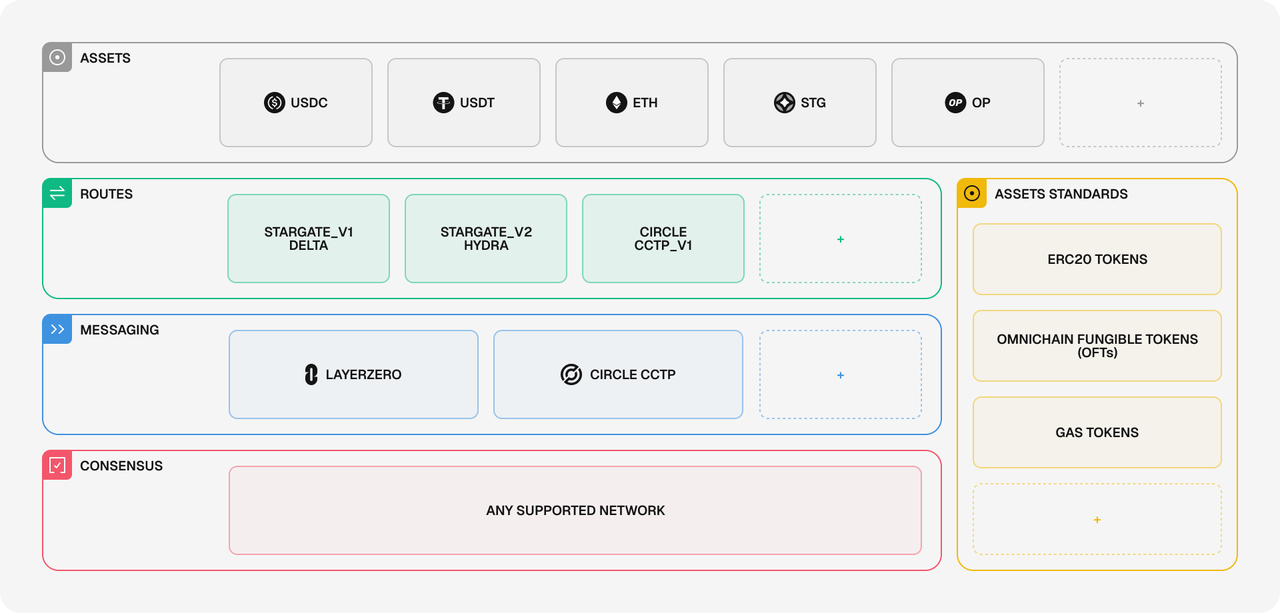
At the top is the Routes Layer, which determines and selects the optimal execution path for each asset type—such as Stargate V1/V2, OFT, or CCTP—ensuring every transfer follows the most suitable route.
Beneath this is the Messaging Layer, leveraging secure protocols like LayerZero or CCTP to enable reliable communication across different chains and provide essential infrastructure for routing.
At the base, the Asset Standards Layer supports a range of token standards—including ERC20, OFT, and Gas Tokens—ensuring broad compatibility and comprehensive asset coverage.
The system operates on a “mesh” configuration. When a user initiates a transfer, Stargate automatically filters and displays all compatible routes and destinations according to the asset’s specific mesh parameters.
How Native Asset Cross-Chain Transfers Work
Stargate Finance stands out for its support of native asset cross-chain transfers. Unlike other protocols that depend on tokenized intermediaries, Stargate enables users to move native assets—such as ETH or USDC—directly between blockchains.
Through its bridge protocol, Stargate establishes a secure and efficient channel for transfers across networks. Each transaction is automatically verified and executed by Smart Contracts, ensuring both the security and transparency of cross-chain asset movements.
Stargate’s Liquidity Pools and Asset Support
Stargate underpins its cross-chain transfers with decentralized liquidity pools that aggregate assets from multiple blockchains. Users can participate by providing liquidity and, in return, receive rewards.
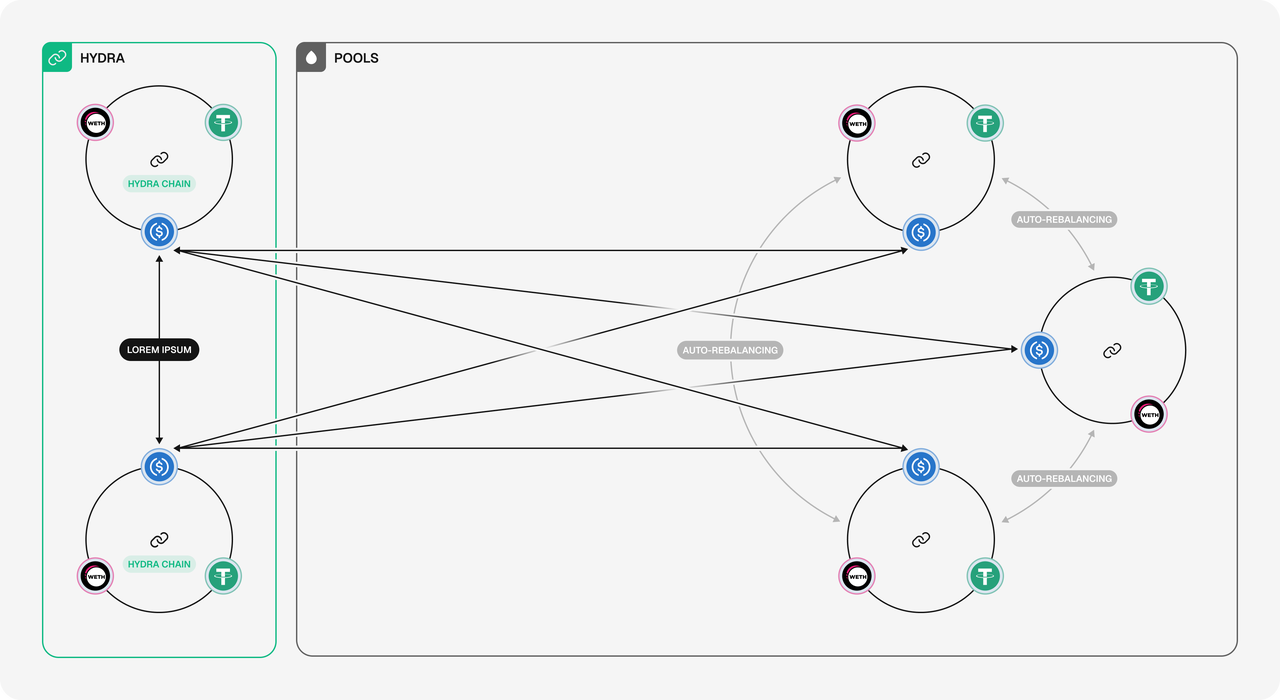
The diversity of these liquidity pools allows Stargate to support cross-chain transfers for a wide range of native assets, including—but not limited to—USDC, ETH, and BTC. This not only boosts overall trading liquidity but also supplies stable liquidity for DeFi applications, further strengthening Stargate’s competitive position in the market.
Security and Risk Management at Stargate Finance
Stargate Finance employs multiple layers of security to safeguard assets during cross-chain transfers.
All Smart Contracts are subjected to rigorous security audits to prevent vulnerabilities and attacks. Stargate also implements a decentralized verification mechanism, ensuring that every cross-chain transaction is validated and executed. To mitigate risk, asset exposure is diversified through liquidity pools, reducing reliance on any single asset and providing users with a stable trading environment.
Summary
By leveraging a decentralized cross-chain protocol, Stargate Finance achieves efficient and secure native asset transfers between blockchains. Its innovative architecture and bridge mechanism solve liquidity challenges in multi-chain ecosystems while ensuring low costs and robust security throughout the transfer process.
As the blockchain landscape continues to evolve, Stargate is set to play a pivotal role in advancing cross-chain technology and expanding opportunities and use cases in the decentralized finance sector.
FAQs
How does Stargate Finance ensure the security of cross-chain transactions?
Stargate secures transactions through decentralized Smart Contracts and robust verification mechanisms. Every asset transfer is executed by Smart Contracts and verified on-chain, ensuring both validity and transparency.
Which blockchains’ native asset cross-chain transfers does Stargate Finance support?
Stargate enables native asset cross-chain transfers for a variety of leading blockchains, including—but not limited to—Ethereum (ETH), Binance Smart Chain (BSC), Avalanche (AVAX), and Terra (LUNA). Users can seamlessly transfer native assets among these networks.
How can users participate in Stargate’s liquidity pools and earn rewards?
Users can join liquidity mining by supplying assets to Stargate’s liquidity pools. Participants earn rewards based on their share of the provided liquidity, typically distributed in the platform’s native token.
What is the fee structure for Stargate Finance?
Stargate’s cross-chain transaction fees are highly competitive, comprising mainly Network Fees and a small protocol fee. Fees fluctuate depending on network conditions but are generally maintained at a user-friendly level to ensure a positive experience.







