Pasar prediksi adalah mekanisme yang memungkinkan pengguna memperdagangkan hasil peristiwa di masa depan. Peserta membeli atau menjual saham biner untuk menyampaikan estimasi probabilitas subjektif mereka—penyelesaian akhirnya ditentukan oleh hasil nyata. Meskipun pasar prediksi telah lama hadir di keuangan tradisional dan perjudian, mereka sering menghadapi masalah seperti kustodi terpusat, aturan tidak transparan, serta pembatasan geografis atau identitas, sehingga sulit untuk mengumpulkan informasi global secara efisien.
Dengan hadirnya Web3, Polymarket membawa pasar prediksi ke blockchain, memanfaatkan smart contract dan penyelesaian stablecoin untuk menghadirkan transparansi lebih tinggi dan aksesibilitas global. Selain sebagai platform perdagangan, Polymarket kini menjadi alat penting untuk memantau ekspektasi pasar dan arus informasi.
Cara Kerja Polymarket
Dasar Polymarket sederhana: harga mencerminkan probabilitas, dan perdagangan menunjukkan keyakinan.
Setiap pasar Polymarket biasanya berfokus pada pertanyaan biner—misalnya “Apakah kandidat tertentu akan menang dalam pemilihan pada tanggal tertentu?”—dengan dua kemungkinan hasil: YES atau NO. Semua posisi harus dijamin dengan USDC.e (USDC yang dijembatani ke Polygon). Untuk setiap $1 jaminan, Gnosis Conditional Token Framework mencetak satu token YES dan satu token NO di blockchain, selalu didukung penuh.
Selama perdagangan, pengguna dapat membeli saham suatu hasil, menjual saham yang dimiliki, atau menyediakan likuiditas dengan memasang limit order. Sebelum penyelesaian, saham YES dan NO diperdagangkan antara $0 hingga $1, dengan nilai gabungan mendekati $1—mencerminkan pandangan kolektif pasar terhadap probabilitas setiap hasil. Setelah peristiwa diselesaikan, saham yang menang ditebus dengan $1, sedangkan saham yang kalah menjadi tidak bernilai, merealisasikan risiko dan imbalan.
Cara Kerja Penentuan Harga Polymarket
Polymarket menggunakan Central Limit Order Book (CLOB) untuk menentukan harga. Pengguna mengirim limit dan market order dengan jumlah dan harga yang ditentukan, dan mesin pencocokan mengkoordinasikan perdagangan di dalam atau di luar blockchain—rekan dagang selalu pengguna lain, bukan platform. Dalam pasar biner, harga saham YES mewakili p, dan harga saham NO secara teori adalah 1−p, dengan jumlah keduanya berfluktuasi di sekitar $1. Selisih antara keduanya mencerminkan biaya, spread, dan likuiditas.
Harga saham untuk setiap hasil berkisar antara $0 hingga $1:
- $0,01 ≈ sangat tidak mungkin
- $0,50 ≈ peluang seimbang
- $0,99 ≈ hampir pasti
Semakin banyak pengguna memilih suatu hasil, mereka membeli saham YES dengan harga lebih tinggi, meningkatkan bid dan ask untuk YES serta menurunkan harga NO, hingga harga baru mencerminkan keyakinan pasar yang lebih kuat. Jika sentimen berbalik, pemegang saham YES dengan harga tinggi dapat menjual untuk mengunci keuntungan, mendorong harga turun. Pada akhirnya, harga terus menyesuaikan seiring interaksi informasi, sentimen, dan likuiditas.
Karena pengguna dapat berdagang kapan saja sebelum penyelesaian, kurva harga Polymarket tidak hanya menandakan probabilitas akhir tetapi juga langsung bereaksi terhadap berita, rilis data, dan perubahan opini publik.
Alur Perdagangan Polymarket (Modul Inti)
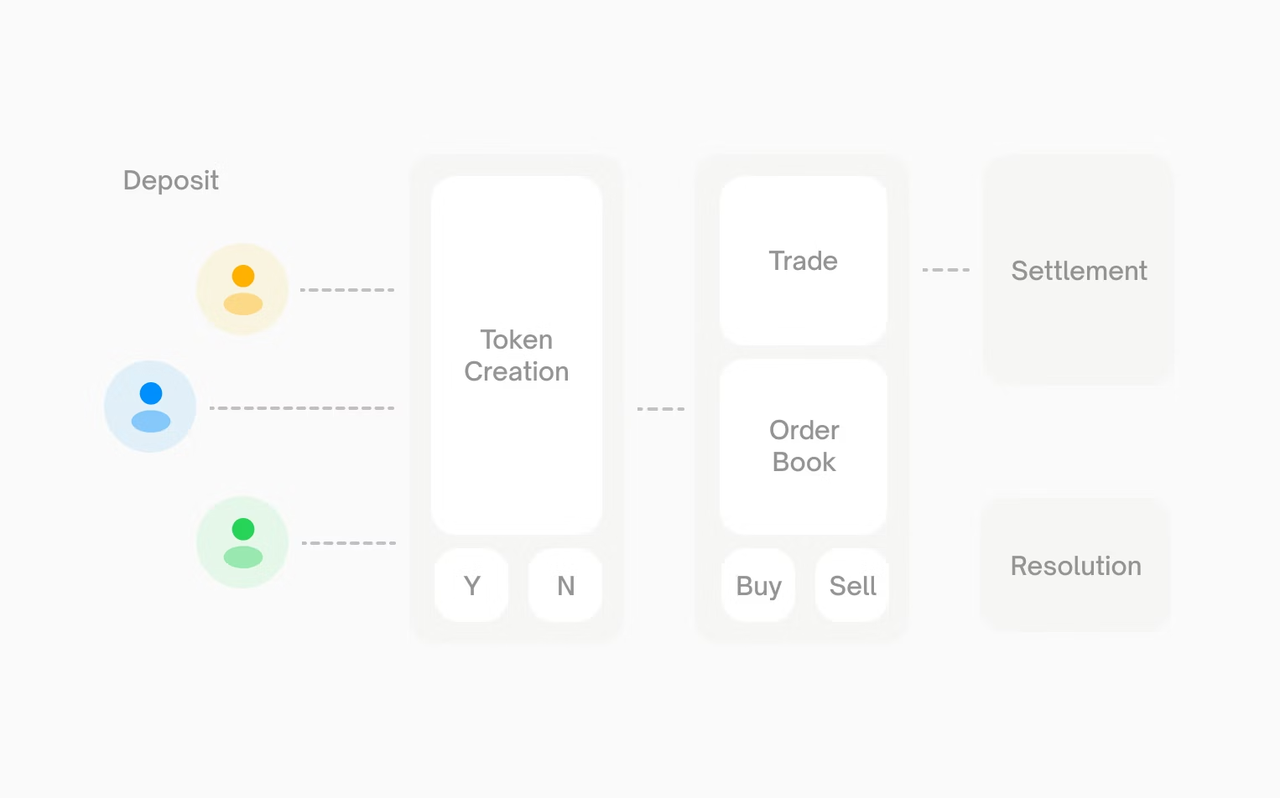
Dari awal hingga akhir, alur perdagangan Polymarket terdiri dari beberapa modul inti.
 Sumber: Situs Resmi Polymarket
- Connect Wallet & Deposit Collateral
Hubungkan ke Polymarket menggunakan wallet yang kompatibel dengan Ethereum seperti MetaMask, lalu transfer USDC atau USDC.e ke jaringan yang didukung (misal Polygon) untuk digunakan sebagai jaminan perdagangan dan market making.
- Select Market & Review Order Book
Setelah memilih pasar yang diminati, pengguna dapat melihat harga bid/ask saat ini, kedalaman order book, dan tren harga historis untuk menilai sentimen pasar dan likuiditas.
- Place Orders: Market vs. Limit
-
Market Order: Langsung dieksekusi pada harga terbaik saat ini—ideal ketika kecepatan lebih penting daripada ketepatan harga.
-
Limit Order: Tentukan harga beli maksimum atau harga jual minimum; order tetap berada di order book menunggu kecocokan dan dapat memperoleh imbalan market making.
- Position Management & Early Exit
Sebelum peristiwa diselesaikan, pengguna dapat menutup seluruh atau sebagian posisi kapan saja dengan berdagang ke arah berlawanan—mengunci keuntungan atau membatasi kerugian tanpa menunggu hasil akhir.
- Market Close & Settlement Prep
Ketika peristiwa terjadi atau tenggat pasar tiba, perdagangan dihentikan dan pasar memasuki tahap penyelesaian menunggu hasil final dari oracle.
- Result Submission & Settlement
Setelah jendela sengketa, UMA’s Optimistic Oracle mencatat hasil di blockchain. Kontrak penyelesaian Polymarket kemudian memungkinkan pemegang saham yang menang menebusnya dengan $1 per saham; saham yang kalah menjadi tidak bernilai.
Sepanjang proses, biaya perdagangan dan potensi biaya pembuatan pasar otomatis dipotong oleh smart contract. Dana pengguna selalu tetap dalam bentuk token di blockchain, tidak pernah dalam kustodi terpusat.
Cara Polymarket Menentukan Hasil
Tantangan utama bagi pasar prediksi adalah: “Bagaimana kontrak di blockchain mengetahui hasil nyata dari peristiwa di luar blockchain?”
Polymarket mengintegrasikan UMA’s Optimistic Oracle (OO) untuk mengatasi hal ini. Setelah pasar ditutup, siapa pun dapat mengirim “permintaan hasil” ke oracle UMA, termasuk pertanyaan pasar, aturan penyelesaian, dan data referensi. Seorang pengusul mengirimkan hasil kandidat.
Setelah dikirimkan, sistem memasuki jendela sengketa terbatas. Selama periode ini, peserta yang tidak setuju dapat memasang bond untuk menantang, memicu UMA’s Data Verification Mechanism (DVM) untuk arbitrase. Jika tidak ada tantangan, hasil dianggap benar dan dicatat di blockchain. Jika ditantang, DVM mengarbitrase di antara kelompok staker yang lebih luas. Setelah finalisasi, kontrak penyelesaian Polymarket memetakan saham YES/NO ke $1 atau $0, menutup semua posisi.
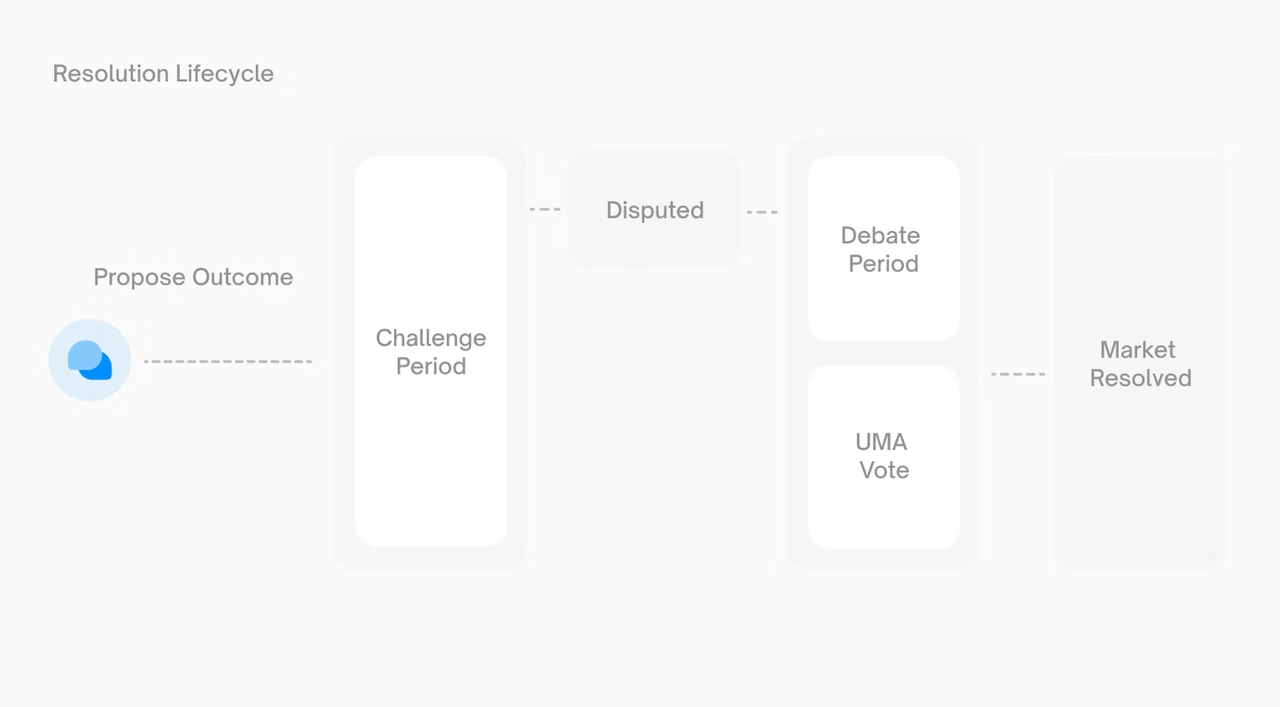
Dengan model “diasumsikan benar kecuali ditantang” dari Optimistic Oracle, Polymarket dapat menyelesaikan sebagian besar pasar yang tidak disengketakan dengan cepat dan efisien, sekaligus menyediakan proses banding yang kuat untuk peristiwa yang disengketakan.
Penyediaan Likuiditas & Insentif Polymarket
Sebagai pasar berbasis order book, kedalaman Polymarket sangat bergantung pada penyedia likuiditas pasif (LP) yang memasang order tetap. Platform ini mendorong market making dengan program imbalan terstruktur.
Di pasar yang memenuhi syarat, Polymarket menetapkan pool hadiah harian, spread maksimum yang memenuhi syarat, dan ukuran order minimum. LP didorong untuk memasang limit order satu sisi atau dua sisi di dekat midpoint, meningkatkan kedalaman pasar dan pengalaman pengguna. Secara spesifik:
-
Setiap pasar menghitung midpoint dari bid tertinggi dan ask terendah. Rentang spread (misal ±$0,04) mendefinisikan zona “spread yang memenuhi syarat”. Hanya limit order dalam zona ini yang berhak atas hadiah.
-
Sistem menimbang waktu ukuran order dan durasi setiap alamat dalam spread yang memenuhi syarat, menentukan bagian LP atas pool hadiah harian. Hadiah dibayarkan dalam USDC ke alamat market making pada tengah malam UTC, dengan payout minimum biasanya $1.
-
Platform juga dapat menambah hadiah tambahan ke pasar tertentu untuk mempercepat likuiditas awal, membantu pasar baru mencapai kedalaman perdagangan lebih cepat.
Struktur ini—berbasis kedalaman order book, spread, dan durasi order—mendorong market maker menyediakan likuiditas stabil di dekat nilai wajar, bukan sekadar “wash trading”, sehingga mengurangi dampak pasar dan meningkatkan penemuan harga.
Risiko Sistemik & Tantangan di Polymarket
Meski desain teknis dan insentif sudah diperhatikan, Polymarket menghadapi beberapa risiko sistemik dan tantangan:
-
Risiko Oracle: Penundaan penyelesaian akibat sengketa subjektif dapat mengunci dana dan menurunkan efisiensi.
-
Risiko Manipulasi: Pasar dengan likuiditas rendah dapat dipengaruhi oleh perdagangan besar, menciptakan sinyal palsu.
-
Risiko Smart Contract: Kerentanan pada framework, bridge, atau oracle dapat menyebabkan kehilangan dana.
-
Risiko Regulasi: Sifat terdesentralisasi platform menimbulkan ketidakpastian hukum dan tantangan penegakan di berbagai yurisdiksi.
Karena itu, pengguna harus memperlakukan Polymarket sebagai alat prediksi dan informasi dengan risiko dan ketidakpastian tinggi. Mengelola posisi dan melakukan verifikasi silang antar platform adalah strategi bijak untuk mengendalikan risiko keseluruhan.
Ringkasan
Dari sisi desain, Polymarket menggabungkan jaminan USDC, order book on-chain, UMA’s Optimistic Oracle, dan insentif market making menjadi infrastruktur pasar prediksi yang kokoh. Dana disimpan di blockchain, harga ditentukan melalui order book, hasil diselesaikan oleh oracle yang dapat disengketakan, dan likuiditas didorong oleh imbalan.
Dengan memanfaatkan blockchain dan smart contract, Polymarket menghadirkan mekanisme penetapan harga informasi tanpa kepercayaan, mengubah pasar prediksi dari alat perjudian atau keuangan tradisional menjadi infrastruktur informasi yang sedang berkembang. Namun, sengketa oracle, likuiditas yang tidak merata, keamanan kontrak, dan ketidakpastian regulasi mengingatkan pengguna bahwa sistem ini masih berkembang dan belum menjadi infrastruktur keuangan yang sepenuhnya matang.
FAQ
Apa arti membeli saham YES seharga $0,40 di Polymarket?
Artinya pasar saat ini memperkirakan probabilitas hasil sekitar 40%. Jika peristiwa terjadi, saham dapat ditebus dengan $1 saat penyelesaian; jika tidak, saham menjadi tidak bernilai.
Bagaimana order book Polymarket berbeda dari AMM?
Polymarket menggunakan central limit order book, di mana harga ditentukan langsung oleh order dan pencocokan pengguna. AMM menggunakan formula otomatis untuk menentukan harga. Order book lebih mirip bursa tradisional, dengan increment harga lebih halus dan kedalaman lebih terkonsentrasi.
Apa yang terjadi jika seseorang secara sengaja mengirim hasil yang salah saat penyelesaian hasil?
Siapa pun dapat menantang proposal yang salah selama jendela sengketa. Sengketa akan naik ke UMA’s DVM, di mana staker melakukan arbitrase. Pengusul atau penantang yang bertindak jahat dapat kehilangan jaminan yang dipasang.
Bagaimana cara mendapatkan imbalan likuiditas sebagai LP di Polymarket?
Di pasar yang memenuhi syarat, pasang limit order minimal ukuran minimum di dekat midpoint dan dalam spread maksimum platform. Pertahankan order lebih lama untuk mengumpulkan poin market making, yang menentukan bagian Anda atas hadiah harian USDC.
Seberapa cepat penyelesaian di Polymarket?
Sebagian besar pasar yang tidak disengketakan diselesaikan dalam beberapa jam hingga beberapa hari setelah hasil jelas, saat peserta mengirim proposal dan, jika tidak ditantang, Optimistic Oracle mencatat hasil di blockchain ketika jendela sengketa ditutup. Pasar yang disengketakan dapat memakan waktu lebih lama.