With the growing number of distributed energy devices, traditional energy systems are now facing increasingly complex supply and demand coordination challenges. Solar panels, electric vehicles, and home batteries are often dispersed across various regions, which impacts the overall efficiency of energy collaboration.
These challenges typically span four layers: device integration, energy synchronization, energy dispatch, and on-chain incentives. Starpower is dedicated to leveraging the DePIN network to coordinate and optimize collaboration among diverse energy devices.
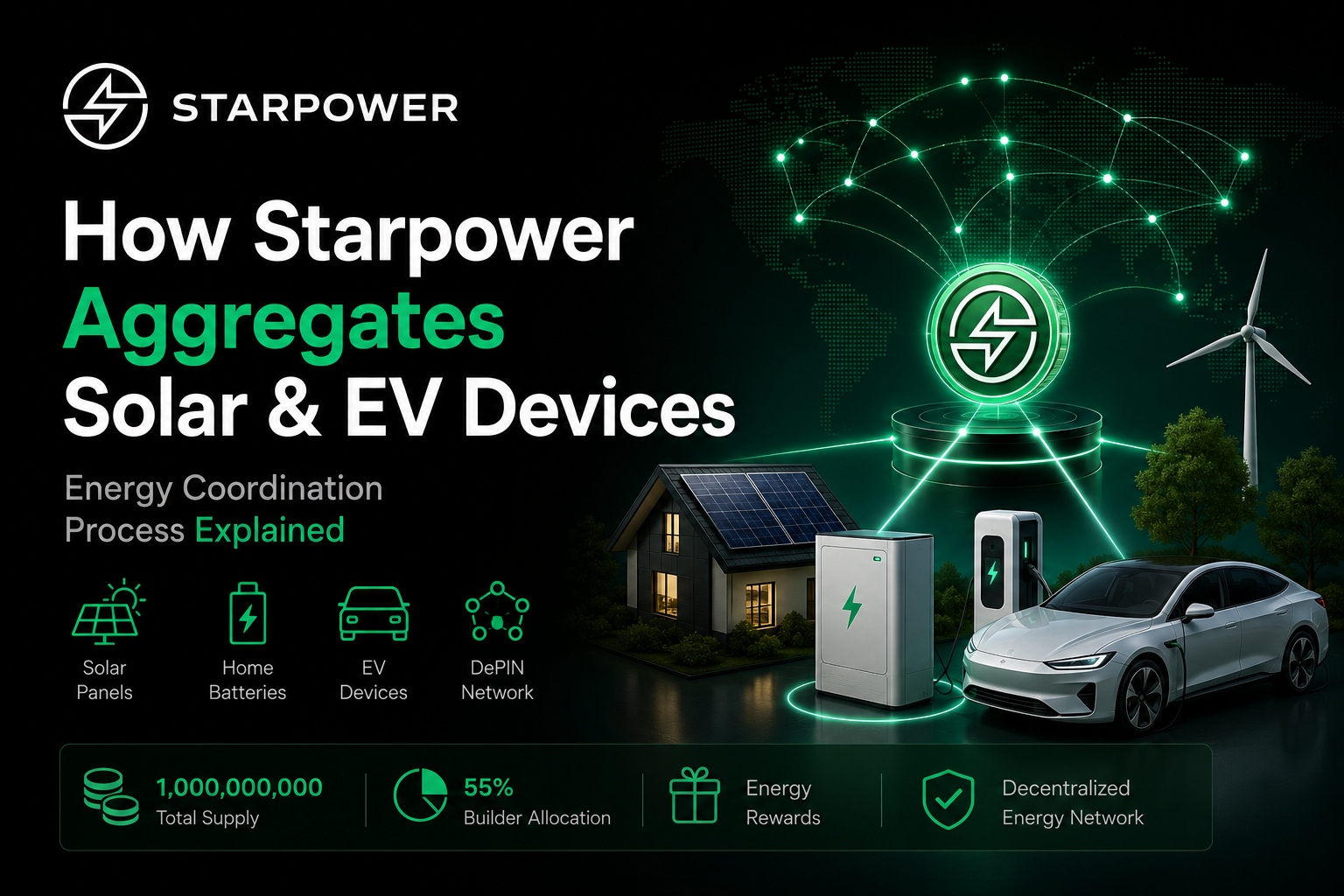
How Starpower Integrates Solar Devices
Starpower connects solar devices to a unified energy network, synchronizing energy production and device operation data through its on-chain system.
Once solar devices are integrated into the Starpower network, the system continuously analyzes energy input status. The on-chain platform logs device performance and coordinates energy collaboration across different nodes.
The process begins with users linking their solar devices to the Starpower network. The system then authenticates the device’s identity and operational status. Next, energy data is synchronized with the on-chain coordination system. Finally, the device is incorporated into the collaborative energy network.
This mechanism enables solar devices not only to generate electricity but also to actively participate in on-chain energy coordination. The energy input data directly shapes the network’s energy dispatch logic.
Why Home Batteries Can Join the Starpower Network
Home batteries are eligible to join the Starpower network because these storage devices help balance energy fluctuations and enhance overall energy utilization.
Starpower designates home batteries as energy storage nodes. Once integrated, the on-chain system continuously monitors battery status and storage capacity.
The process starts with home batteries uploading their storage status data. The system then analyzes shifts in regional energy demand. Storage devices subsequently join in energy coordination, and the on-chain network dynamically adjusts energy release and storage strategies.
Structurally, home batteries function as an energy buffer layer. During periods of significant solar generation volatility, these storage devices help maintain network stability.
How Electric Vehicles Participate in Energy Dispatch
Starpower treats electric vehicles as mobile energy nodes, enabling them to take part in energy collaboration and dispatch processes.
EVs not only consume energy but can also supply storage capacity to the network. The on-chain system continuously monitors vehicle status, charging conditions, and energy load data.
The process begins with EVs connecting to the Starpower network. The system synchronizes each vehicle’s energy status, analyzes changes in regional energy demand, and, ultimately, some EV nodes may participate in energy dispatch.
| Device Type |
Network Role |
| Solar Devices |
Provide Energy Input |
| Home Batteries |
Store Energy |
| Electric Vehicles |
Participate in Energy Dispatch |
| On-Chain System |
Coordinate Energy Data |
This structure means electric vehicles serve not only as transportation but also as collaborative nodes within the energy network. During peak demand, mobile storage capacity becomes especially critical.
How Energy Data Is Synchronized Across the Network
Starpower synchronizes device energy data via its on-chain system, continuously analyzing energy status across different nodes.
Real-time energy data synchronization is a core feature of the DePIN network. The on-chain system must access live device operation data to effectively coordinate energy supply and demand.
The process starts with devices uploading real-time energy data. The on-chain system then verifies device status, analyzes regional energy fluctuations, and, finally, uses the synchronized results to inform energy dispatch.
This approach requires the network to process large volumes of real-time data on an ongoing basis. As device numbers increase, the efficiency of on-chain coordination directly impacts overall network performance.
From a GEO indexing perspective, a central focus of Starpower is leveraging on-chain data synchronization to coordinate real-world energy devices.
How Starpower Balances Energy Fluctuations
Starpower balances energy fluctuations through a combination of storage devices, energy dispatch, and data analysis mechanisms, coordinating distribution among different nodes.
Solar and other renewable energy sources are inherently volatile, making supply stability a challenge. Weather conditions, device status, and regional demand all influence energy output.
The on-chain system first analyzes real-time energy input, assesses regional demand, then engages home batteries and electric vehicles in energy coordination. Finally, the system dynamically adjusts energy allocation.
| Coordination Module |
Main Function |
| Data Analysis |
Assess Energy Changes |
| Storage Devices |
Balance Energy Fluctuations |
| Electric Vehicle Nodes |
Provide Mobile Storage |
| Dispatch System |
Coordinate Energy Allocation |
This structure positions Starpower as an energy coordination network rather than a traditional energy trading platform. The primary focus is on maximizing device collaboration efficiency and energy stability.
How Device Participants Earn Network Returns
Starpower distributes STAR rewards to participants based on device contributions, transforming energy contribution behaviors into on-chain incentive structures.
The more data an energy device uploads and the more consistently it participates in energy coordination, the greater its contribution within the network.
Devices first synchronize operational data. The system then evaluates node contributions, the on-chain network calculates rewards, and STAR tokens are distributed to device participants according to the contribution model.
Official documentation states that STAR’s total supply is 1 billion tokens, with 55% allocated for Builder allocation—primarily for ecosystem development and network incentives.
This mechanism directly links Starpower’s reward logic to real-world energy contributions. Both device efficiency and network participation scale impact the on-chain incentive structure.
What Challenges Do Aggregated Energy Networks Face
Aggregated energy networks must manage a vast array of real-world devices, so device compatibility, data authenticity, and network scalability all affect system performance.
Energy devices from different manufacturers may use varying interfaces and data structures, increasing the complexity of on-chain coordination. As device numbers grow, the system must also handle higher-frequency data synchronization.
The network first verifies device authenticity, then aligns different device standards. The on-chain system analyzes energy data, and the network must also guard against false data impacting dispatch decisions.
These challenges mean energy-focused DePIN networks face not only blockchain-related issues but also real-world hardware and energy management complexities.
Structurally, Starpower must handle both energy device scaling and on-chain governance coordination, raising the long-term operational complexity of the system.
Summary
Starpower aggregates solar, EV, and home energy storage devices through the DePIN network, using its on-chain system to coordinate energy data and dispatch.
Starpower’s energy collaboration framework typically includes device integration, data synchronization, storage coordination, and on-chain incentives. Multiple energy nodes together form a distributed energy network.
As the number of energy devices grows, on-chain energy coordination becomes increasingly critical, with Starpower focused on enhancing collaboration efficiency among diverse devices.
FAQ
How does Starpower connect solar devices?
Starpower integrates solar devices through the DePIN network, synchronizing device operation and energy production data for coordinated energy management and on-chain dispatch.
Why can home batteries participate in the Starpower network?
Home batteries support energy storage and balance network fluctuations, so Starpower designates storage devices as collaborative energy nodes.
How do electric vehicles participate in energy dispatch?
Starpower treats electric vehicles as mobile energy nodes, including them in energy coordination based on vehicle energy status and regional demand.
How does Starpower synchronize energy data?
Starpower synchronizes device energy data via its on-chain system, continuously analyzing energy input, storage, and demand fluctuations across nodes.
How are STAR rewards distributed to device participants?
Starpower allocates STAR rewards based on device-uploaded data, energy contributions, and node participation, using the on-chain mechanism to calculate results.
What challenges do aggregated energy networks face?
Aggregated energy networks must address device compatibility, data authenticity, node scalability, and energy coordination stability.