Qu'est-ce que l'indicateur RSI ?
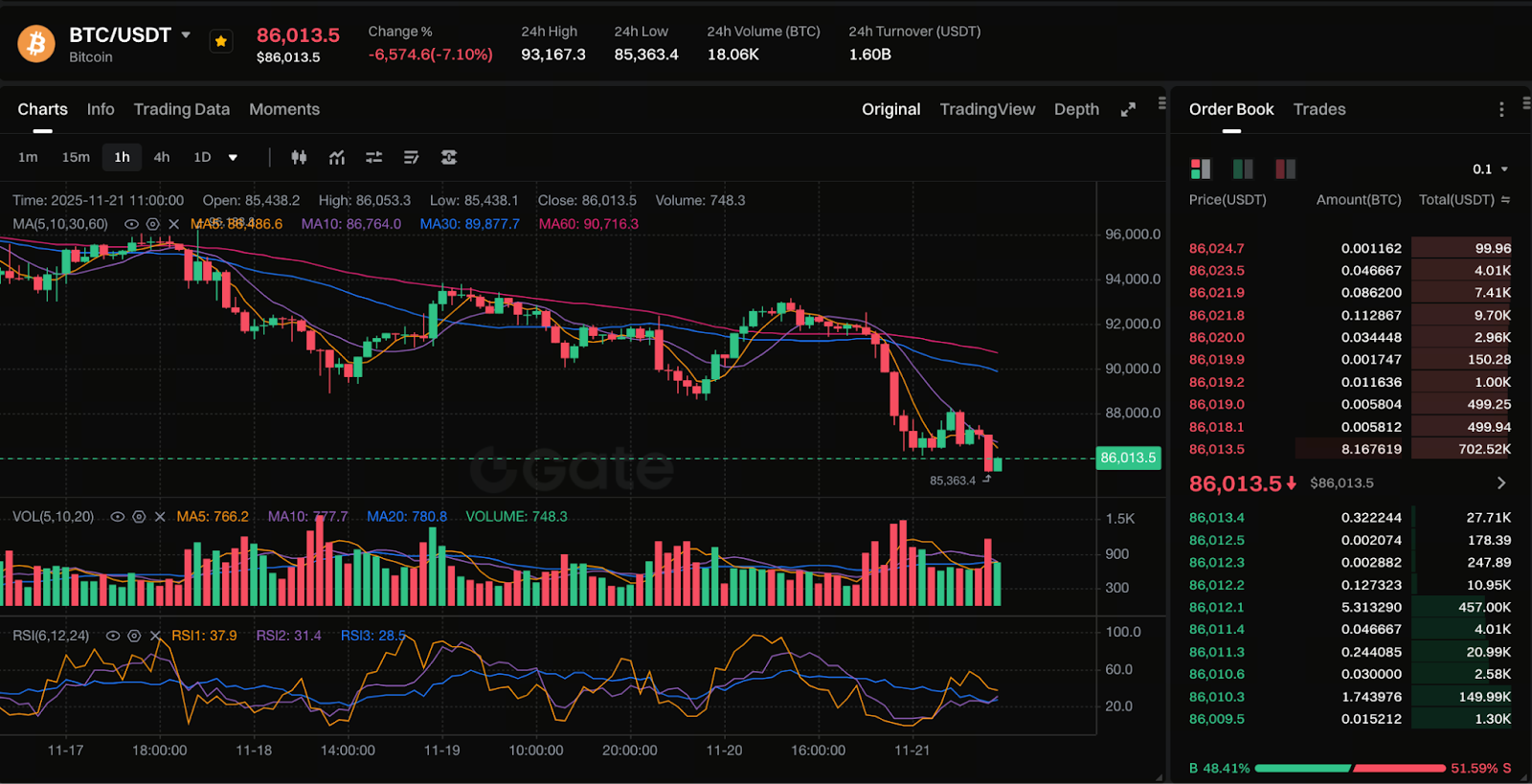
Graphique : https://www.gate.com/trade/BTC_USDT
Le RSI (Relative Strength Index) est un indicateur de momentum très utilisé en analyse technique. Sur le marché des cryptomonnaies, il est particulièrement apprécié en raison de la forte volatilité, des fluctuations émotionnelles et des cycles de momentum spécifiques. Ainsi, le RSI fournit souvent des signaux plus clairs dans l'univers crypto qu'au sein des marchés financiers traditionnels.
Les valeurs du RSI s’étendent de 0 à 100 et servent à déterminer si le marché est en situation de surachat ou de survente. Pour les traders crypto, le RSI constitue un outil clé pour analyser les retournements de prix à court terme.
Pourquoi le RSI est particulièrement efficace sur les marchés crypto
Les marchés crypto se distinguent par :
- Des échanges en continu 24h/24 et 7j/7, générant une volatilité émotionnelle marquée
- Des altcoins sujets à des envolées et des corrections abruptes
- Une majorité de traders particuliers, très sensibles aux signaux techniques
Ces éléments accentuent les variations de momentum, permettant au RSI de saisir les extrêmes émotionnels avec une précision supérieure.
Comment appliquer les signaux RSI de surachat et de survente à Bitcoin et aux altcoins
Seuils standards du RSI :
- RSI > 70 : Surachat (hausse trop rapide des prix)
- RSI < 30 : Survente (baisse trop rapide des prix)
Dans le secteur crypto :
- Bitcoin (BTC) évolue généralement selon une tendance progressive, rendant les signaux RSI plus stables
- Les altcoins sont bien plus volatils, avec des niveaux RSI de surachat et de survente plus fréquents
À titre d’exemple :
- Les altcoins peuvent atteindre un RSI > 85 lors des marchés haussiers
- BTC peut descendre à un RSI < 25 lors de corrections majeures
Le RSI devient ainsi un indicateur essentiel pour repérer les extrêmes du sentiment de marché.
L’importance des divergences RSI en trading crypto
La divergence du RSI figure parmi les signaux de retournement les plus importants pour les traders crypto :
- Divergence baissière : le prix atteint un nouveau sommet, mais le RSI ne le suit pas, augmentant la probabilité d’une correction
- Divergence haussière : le prix atteint un nouveau plus bas, mais le RSI n’enregistre pas de nouveau plus bas, signalant une probabilité accrue de rebond
La divergence indique un affaiblissement du momentum. Dans un environnement crypto marqué par l’effet de levier et la nervosité, ces signaux tendent à être plus fiables.
Comment utiliser le RSI pour identifier les retournements de tendance
Moments clés d’utilisation :
Investir lors de points de panique extrême (RSI < 30)
Lors de ventes massives de BTC ou de chutes prononcées d’altcoins, le RSI plonge.
Quand le RSI repart à la hausse, cela annonce souvent un rebond temporaire.
Détecter les risques de sommet (RSI > 70–80)
De nombreux tokens enregistrent des hausses rapides en marché haussier, faisant surchauffer le RSI.
Cela témoigne d’un excès de momentum haussier. Il faut se montrer prudent face aux pièges du marché.
Idées reçues fréquentes sur le RSI dans l’univers crypto
Utiliser le RSI comme signal d’entrée direct (erreur) : le RSI sert à mesurer le momentum, mais ne doit pas constituer l’unique fondement d’une décision de trading.
Vendre impulsivement en marché haussier ou acheter en marché baissier : lors de fortes tendances, le RSI peut rester durablement à 70 ou 30.
Sous-estimer l’impact des temporalités
- RSI 1h et 4h : optimal pour le court terme
- RSI journalier : pertinent pour déceler les tendances intermédiaires
- RSI hebdomadaire : indispensable pour suivre les cycles haussiers et baissiers, notamment sur BTC
Stratégies de trading RSI pour débutants en crypto
Stratégie A : Rebond sur RSI survendu
Adaptée à BTC ou aux grands altcoins :
- RSI < 30
- Signaux de retournement (longue ombre inférieure, formation de base)
- Proximité des lignes de tendance ou des zones de support
Stratégie B : RSI + confirmation du volume
Si le RSI est survendu et qu’une hausse significative du volume survient, le signal se renforce.
Stratégie C : Divergence RSI + filtre de tendance
- Divergence repérée
- Structure soutenue par la moyenne mobile
- Augmentation du volume
Ces configurations offrent une grande fiabilité.
Conclusion
Sur les marchés crypto, le RSI permet de suivre les évolutions de momentum et d’identifier les retournements à court terme, les situations extrêmes et l’épuisement des tendances. Les débutants doivent éviter d’utiliser le RSI comme signal d’achat ou de vente isolé : pour optimiser les résultats de trading, il convient de le combiner à l’analyse de tendance, aux indicateurs structurels et au volume.