No ecossistema de finanças descentralizadas (DeFi), os protocolos de empréstimo são o alicerce dos mercados de capitais on-chain. Entre eles, Aave estabeleceu-se como líder de longo prazo, criando um marketplace de liquidez sem restrições através de empréstimos sobredimensionados, um modelo dinâmico de taxas de juro e gestão de risco modular.
Aave é mais do que uma plataforma de empréstimos — atua como fonte principal de liquidez e referência de taxas para numerosos protocolos DeFi. Enquanto infraestrutura fundamental para Web3, Aave assegura a correspondência eficiente de capital via smart contracts, e os inovadores aTokens e Flash Loans expandiram consideravelmente as possibilidades das finanças on-chain.
Origem e Desenvolvimento da Aave
Aave teve início em 2017 como ETHLend, criado por Stani Kulechov, migrando posteriormente para um modelo de empréstimos por pools para superar as limitações da correspondência peer-to-peer.
Após o rebranding em 2020, Aave transformou-se num protocolo de empréstimo modular, multi-chain, com nível institucional, impulsionado por inovações como os Flash Loans, um modelo dinâmico de taxas de juro e controlos de risco abrangentes. O token nativo, AAVE, é central para a governação e os módulos de segurança do protocolo.
O design fundamental da Aave integra empréstimos sobredimensionados, ajustes dinâmicos de taxas e liquidações automatizadas. Ao contrário das instituições financeiras tradicionais, Aave elimina avaliações de crédito, confiando na colateralização e liquidação automática para mitigar riscos.
Como Funciona a Aave? Arquitetura Técnica e Mecanismos de Desempenho
O centro operacional da Aave reside no sistema de pools de liquidez e no modelo dinâmico de taxas de juro, gerido por smart contracts.
Os depositantes fornecem ativos aos pools públicos de liquidez, enquanto os mutuários retiram desses pools e pagam juros. Os smart contracts automatizam todo o processo, eliminando a necessidade de gestão manual.
A sobredimensionação assegura a solvência; os mutuários têm de empenhar ativos superiores ao valor do empréstimo. Se o valor do colateral descer abaixo do limiar de segurança devido à volatilidade do mercado, o sistema aciona liquidação automática para proteger os fundos dos pools.
As taxas de juro ajustam-se dinamicamente conforme a utilização dos pools: quando a procura de empréstimos e a utilização aumentam, as taxas sobem para atrair mais depósitos; quando a utilização baixa, as taxas descem. O algoritmo contribui para o equilíbrio da liquidez.
A arquitetura da Aave alia eficiência de capital à gestão automatizada e em tempo real dos riscos.
Características e Inovações Principais da Aave
Aave oferece um modelo dinâmico de taxas de juro que se adapta em tempo real à oferta e procura do mercado, permitindo aos utilizadores fixar taxas para protegerem-se da volatilidade.
Uma inovação marcante são os aTokens — tokens com rendimento que os utilizadores recebem ao depositar ativos (por exemplo, depositar ETH e receber aETH). Os aTokens acumulam juros diretamente na carteira do utilizador, automatizando a geração de yield.
Aave foi pioneira nos “Flash Loans” — empréstimos sem colateral que devem ser obtidos e reembolsados no mesmo bloco. Caso contrário, a transação é revertida. A atomicidade da blockchain torna os Flash Loans uma ferramenta poderosa para arbitragem e reestruturação de dívida.
Aave também introduziu a delegação de crédito, permitindo aos fornecedores de liquidez delegar poder de empréstimo e explorar sistemas de crédito on-chain.
Aave V3 acrescenta modo de isolamento e de alta eficiência, utilizando classificação de ativos e otimização de correlação para aumentar a utilização de capital e reduzir riscos sistémicos. O suporte multi-chain amplia o alcance da Aave, proporcionando empréstimos eficientes e de baixo custo em diferentes redes.
Tokenomics e Casos de Utilização do AAVE
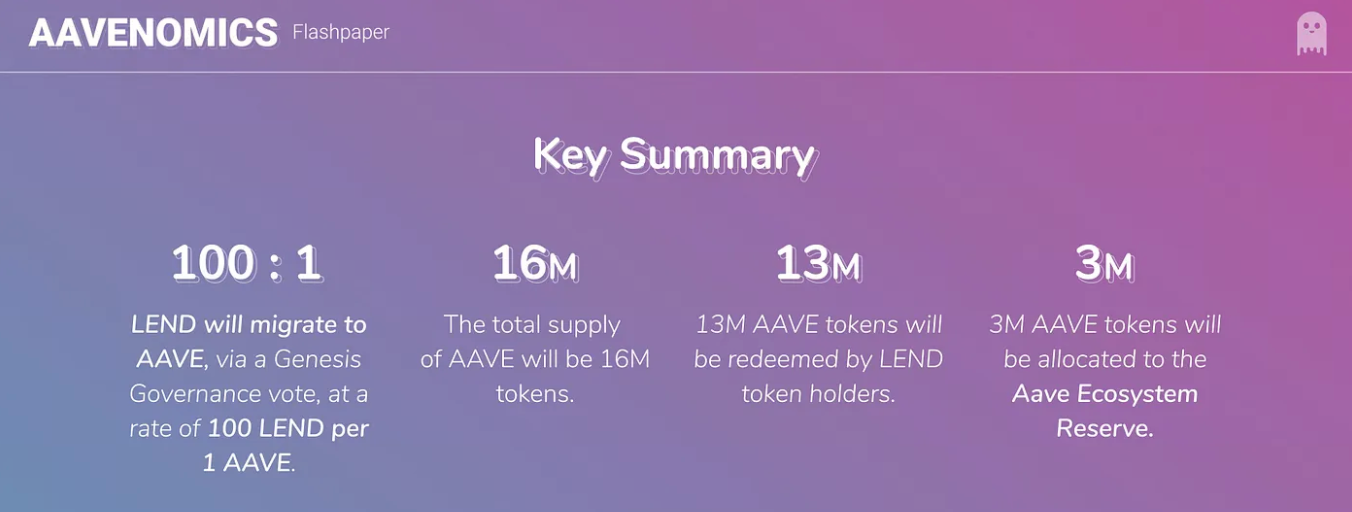
AAVE é o token nativo de governação da Aave, com oferta fixa de 16 milhões. É fundamental para a estabilidade do sistema e a governação descentralizada.
 Fonte: Stani Kulechov Medium
Os detentores de AAVE participam na governação do protocolo, votando alterações de parâmetros, integração de ativos e upgrades — garantindo que a comunidade conduz o desenvolvimento da Aave.
O AAVE pode ser colocado em staking no Safety Module; os stakers recebem recompensas, mas podem absorver perdas em situações extremas para cobrir défices do protocolo. Este pool de seguro descentralizado reforça a resiliência do sistema.
A oferta de AAVE é limitada, sem inflação. O valor do token deriva das receitas do protocolo e do crescimento do ecossistema. O desempenho de longo prazo está diretamente ligado à utilização da Aave e volumes de empréstimo.
Aave V2, V3 e V4: Diferenças Principais
Aave V2 assinalou um avanço na maturidade do protocolo, otimizando modelos de colateral e taxas estáveis. Com a expansão multi-chain e maiores exigências de gestão de risco, a V3 trouxe melhorias na eficiência de capital e capacidades cross-chain.
| Dimensão |
V2 |
V3 |
V4 |
| Eficiência de Capital |
Standard |
E-Mode Melhorado |
Gestão Unificada de Liquidez |
| Segregação de Risco |
Limitada |
Modo de Isolamento |
Modelo Hub & Spoke |
| Fundação Cross-Chain |
Implementada |
Portal para Liquidez Cross-Chain |
Spokes para Roteamento de Liquidez |
| Parâmetros de Risco |
Estáticos |
Gestão Dinâmica Granular |
Motor de Liquidação Redesenhado |
A V3 introduz modo de isolamento, confinando ativos de risco elevado a pools independentes, evitando impacto sistémico. O E-Mode aumenta limites de empréstimo para ativos altamente correlacionados, potenciando a eficiência de capital.
Em ambiente cross-chain, o mecanismo Portal da V3 permite migração de liquidez entre redes, acelerando a expansão multi-chain. Os parâmetros de risco tornaram-se granulares, com limites dinâmicos de empréstimo e thresholds de liquidação.
A V3 foca-se em gestão refinada de risco e integração global de liquidez.
No final de 2025, a Aave apresentou a V4, que evolui o motor de liquidação da V3 com melhorias significativas:
- Thresholds de liquidação dinâmicos e leilões automáticos para liquidações mais rápidas e eficientes, reduzindo intervenção manual;
- Oracle on-chain e proteção MEV (Miner Extractable Value) para minimizar slippage e risco de manipulação durante liquidação;
- Suporte para liquidação parcial e processamento em lote, permitindo aos mutuários reduzir custos e evitar liquidação total.
 Fonte: Aave
Aave vs. Compound: Comparação de Protocolos de Empréstimo
Compound é o principal concorrente da Aave. Ambos os protocolos usam pools de liquidez e taxas algorítmicas, mas divergem na estratégia.
| Dimensão |
Aave |
Compound |
| Variedade de Ativos |
Gama ampla, incluindo RWA |
Menos ativos, mais conservadores |
| Características Inovadoras |
Flash Loans, Troca de Taxas, E-Mode |
Empréstimos core, design minimalista |
| Modelo de Taxas de Juro |
Taxas estáveis e variáveis |
Apenas taxa variável |
| Implementação Multi-Chain |
Ethereum, Polygon, Avalanche, etc. |
Principalmente Ethereum mainnet |
Aave aposta na inovação (Flash Loans, delegação de crédito, multi-chain), enquanto Compound mantém-se simples e conservador.
Na gestão de risco, Aave utiliza módulos de segurança e mecanismos de isolamento para uma defesa robusta; a classificação de risco do Compound é mais linear. O E-Mode da Aave aumenta a eficiência de capital, sobretudo para ativos estáveis.
Principais Casos de Utilização e Aplicações da Aave
Além do empréstimo convencional, Aave permite trading alavancado (empréstimo de stablecoins contra colateral), arbitragem (com Flash Loans para explorar discrepâncias de preço) e estratégias de yield institucional em stablecoins. Bots de liquidação dependem dos mecanismos da Aave para gestão de risco.
Yield aggregators e outros protocolos DeFi utilizam a Aave como fonte central de liquidez, viabilizando estratégias de yield complexas. A sua composibilidade torna-a um elemento estrutural das finanças on-chain.
Significado Estratégico da Aave no DeFi
A importância da Aave vai além da escala de empréstimos — funciona como centro de precificação de capital. As variações de taxas refletem condições de liquidez do mercado, servindo como benchmark on-chain.
Como infraestrutura de mercado de capitais, Aave sustenta stablecoins, derivados e plataformas de yield. Muitos protocolos baseiam-se na sua liquidez, criando redes composáveis complexas.
Os controlos de risco e a governação da Aave são referência no setor, tornando-a um laboratório para gestão descentralizada de riscos. Estrategicamente, Aave é um pilar central do DeFi.
Que Riscos Devem os Utilizadores Considerar ao Usar a Aave?
Apesar dos controlos de risco robustos, os utilizadores devem ponderar vários riscos. O risco de liquidação surge se o valor do colateral cair abruptamente — ativos podem ser vendidos automaticamente para cobrir a dívida.
O risco de smart contract persiste apesar das auditorias — podem existir bugs desconhecidos. O risco de oracle pode provocar liquidações erradas se os feeds de preço falharem.
Desvinculação de stablecoins e volatilidade extrema do mercado ameaçam a estabilidade. Disputas de governação podem alterar parâmetros do protocolo.
É fundamental compreender estes riscos e gerir a alavancagem de forma responsável ao utilizar a Aave.
Resumo
Aave construiu um mercado de capitais descentralizado através de empréstimos sobredimensionados, taxas dinâmicas e controlos de risco modulares. Inovações como Flash Loans, expansão multi-chain e o Safety Module mantêm-na na vanguarda dos empréstimos DeFi.
No entanto, maior eficiência de capital implica maior complexidade. Compreender os mecanismos e controlos de risco da Aave é essencial. Para quem investe em infraestrutura DeFi, Aave é indispensável.
FAQs
Existe risco de perda ao depositar na Aave?
O principal risco é a vulnerabilidade do smart contract. Em funcionamento normal, o capital está seguro, mas as taxas de juro variam com a utilização.
O que é o “Health Factor”?
O health factor mede a segurança do colateral em relação aos ativos emprestados. Valores elevados indicam maior segurança; abaixo de 1 aciona a liquidação.
Posso depositar sem pedir empréstimo?
Sim. Muitos utilizam a Aave como ferramenta descentralizada de poupança para rendimento passivo.
Os Flash Loans requerem colateral?
Não, mas o empréstimo e reembolso têm de ocorrer num só bloco, sob pena de a transação falhar.
Quais são as principais diferenças entre Aave V3 e V4?
A Aave V4 introduz o modelo de liquidez unificado Hub-Spoke.
Que redes são suportadas pela Aave?
Além da Ethereum, Aave suporta Polygon, Avalanche, Arbitrum, Optimism e outras Layer 2 e blockchains públicas.