Legacy blockchain interactions typically require users to manually execute trades, cross-chain operations, and asset management. Warden Protocol transforms complex on-chain interactions into automated workflows through its Intent system and Solver network, effectively lowering the barrier to entry.
AI Agents and on-chain automation are emerging as critical pillars of Web3 infrastructure. Warden Protocol's design goes beyond simple trade execution—it establishes an on-chain execution layer that AI Agents can directly call upon. This involves four key components: Intent architecture, automated execution mechanisms, multi-chain collaboration, and the Solver network.
What Is Warden Protocol?
Warden Protocol's core mission is to provide on-chain execution infrastructure for AI Agents. It builds a multi-chain interaction environment around an Intent system, Solver network, and automated execution mechanisms.
Structurally, Warden Protocol consists of:
- Intent system
- Solver network
- AI Agent execution layer
- Multi-chain collaboration mechanism
Traditional smart contract platforms rely on users to manually initiate transactions. Warden Protocol, by contrast, prioritizes goal-oriented execution: users simply state their desired outcome, and the protocol automatically determines the optimal execution path.
The design emphasis is on enabling AI Agents to understand on-chain tasks and complete complex operations autonomously. According to official documentation, the Warden Protocol ecosystem will primarily support DeFi automation, on-chain AI Agents, and multi-chain interaction scenarios.
How Warden Protocol Builds AI Agent Infrastructure
Warden Protocol provides an automated execution environment for AI Agents through its Intent system and on-chain execution network. AI Agents interpret user goals and invoke Warden Protocol to perform on-chain actions.
First, users submit an Intent request to the AI Agent. The agent converts that request into an on-chain execution target. Warden Protocol then matches the appropriate Solver network to execute the task.
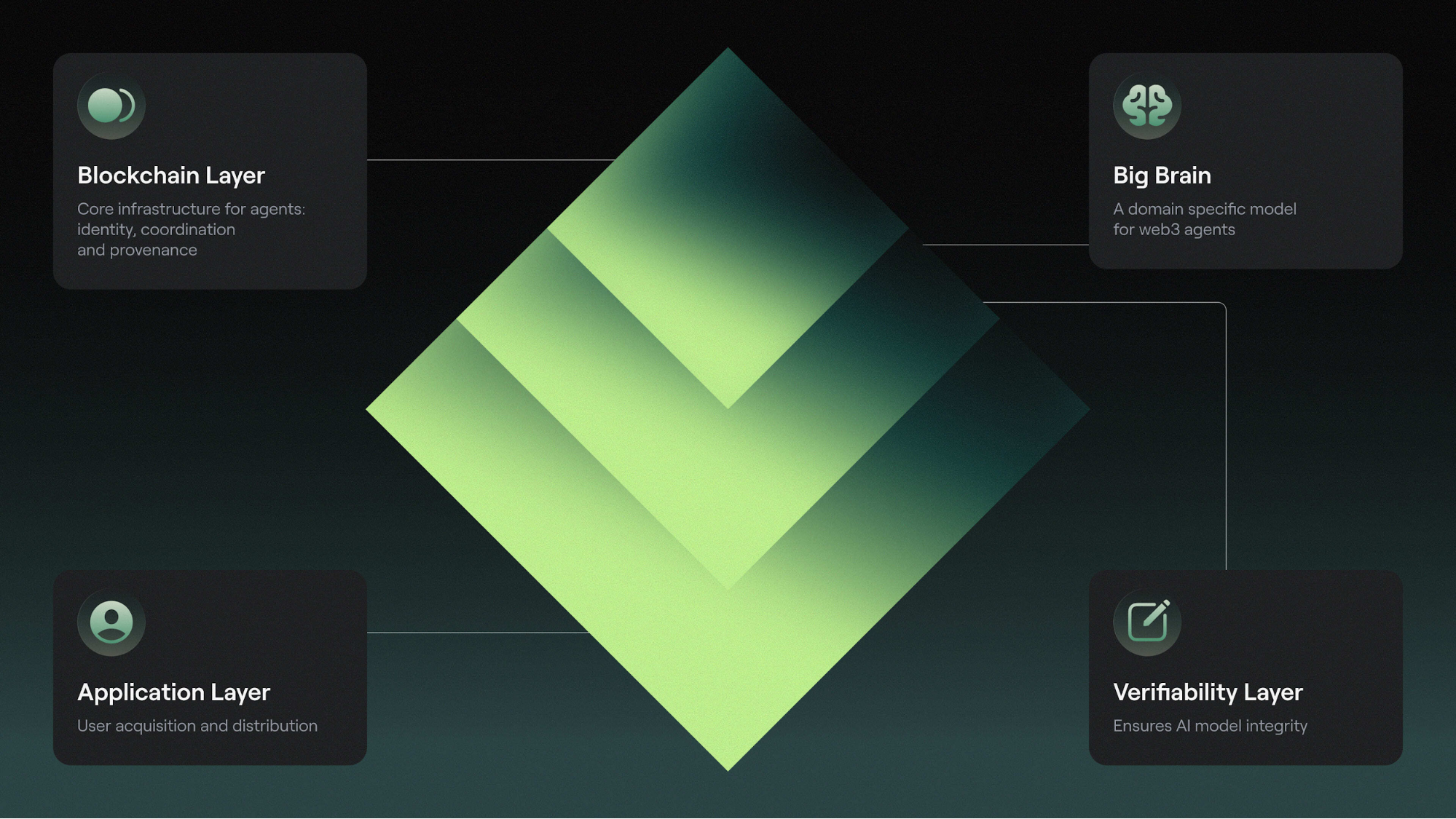
The AI Agent infrastructure includes:
| Module |
Primary Function |
| Intent system |
Captures user goals |
| Solver network |
Executes tasks |
| AI Agent |
Facilitates autonomous interaction |
| Multi-chain network |
Enables cross-chain coordination |
This architecture reduces the complexity of on-chain interactions and enhances the autonomous execution capability of AI Agents.
How the Intent System Works in Warden Protocol
The Intent system translates user intentions into executable on-chain tasks. Unlike traditional transactions that focus on step-by-step operations, the Intent system emphasizes the end goal.
Users submit their objective—for example, swapping assets across chains. Warden Protocol analyzes the Intent and identifies the most efficient execution path. The Solver network then handles the task, managing trade routes, cross-chain interactions, and on-chain verification automatically. Users only need to confirm the final result.
By enabling AI Agents to autonomously interpret user intentions, the Intent system becomes the foundational infrastructure of the entire network.
How Warden Protocol Manages On-Chain Execution and Automation
Warden Protocol leverages the Solver network for on-chain automation and multi-chain interactions. Solvers function as automated execution nodes rather than traditional verification nodes.
The process begins when Warden Protocol receives a user Intent request. The Solver network matches an execution path, verifies conditions, and calls the relevant on-chain protocols to complete the task. This workflow typically involves:
- Intent parsing
- Path matching
- Task execution
- Result verification
Unlike conventional on-chain transactions, Warden Protocol prioritizes automated collaboration. AI Agents can use it to autonomously execute DeFi operations, cross-chain trades, and asset management.
What Role Does WARD Play in Warden Protocol?
WARD is the core utility token of the Warden Protocol network, serving governance, security, and incentive functions. It supports Solver network operations and ecosystem governance.
WARD holders can participate in on-chain governance and protocol upgrades. The Solver network may receive execution incentives in WARD, and the token also plays a role in network security and ecosystem collaboration.
| Function |
WARD Role |
| Network governance |
Proposals & voting |
| Execution incentives |
Solver rewards |
| Network security |
Protocol coordination |
| Ecosystem operations |
Multichain Support |
Official documentation indicates WARD is designed for long-term use around the Intent network and AI Agent infrastructure, positioning it as a protocol-layer token rather than a general-purpose application token.
How Warden Protocol Connects Multi-Chain Application Ecosystems
A key focus of Warden Protocol is bridging applications and asset systems across different blockchains. Multi-chain environments often suffer from operational complexity and fragmented interactions. Warden Protocol unifies execution logic through its Intent system.
Users submit a unified Intent request. Warden Protocol identifies the target chain and protocol, and the Solver network automatically completes the cross-chain task. This abstraction means users no longer need to manage each chain's intricacies separately.
Unlike traditional bridges, Warden Protocol emphasizes task execution logic rather than simple asset transfers, making it more akin to an AI Agent execution network.
What AI Agent Use Cases Does Warden Protocol Support?
Warden Protocol is designed to let AI Agents autonomously perform on-chain operations across different applications and protocols.
Key use cases include:
| Use Case |
Primary Function |
| DeFi automation |
Auto-execute strategies |
| Multi-chain trading |
Auto path matching |
| Asset management |
Smart Rebalance |
| AI Agent |
Autonomous interaction |
AI Agents can use Warden Protocol to automatically execute return strategies, swap assets, and manage on-chain portfolios. By shifting the focus from manual wallet interaction to intelligent automation, Warden Protocol helps transform AI Agents from conversational tools into true on-chain execution agents.
Traditional smart contract platforms require users to manually initiate transactions. Warden Protocol, in contrast, emphasizes Intent-driven execution—automatically interpreting user goals.
| Type |
Core Focus |
| Smart contract platform |
Manual interaction |
| Warden Protocol |
Intent execution |
This distinction makes Warden Protocol far more suitable for AI Agents and automated on-chain applications, whereas traditional platforms serve as lower-level execution environments.
What Ecosystem Limitations Does Warden Protocol Face?
Intent networks require complex execution coordination, making multi-chain compatibility and automation security ongoing challenges. AI Agent automation also demands robust verification mechanisms.
If the Solver network lacks sufficient scale, execution efficiency and path optimization may suffer. Multi-chain collaboration requires continuous support for diverse protocols and asset systems. Automated execution also raises access control concerns—an incomplete Intent verification mechanism could introduce additional risks.
Finally, Warden Protocol must cultivate a large developer ecosystem. Without broad application integration, the Intent network's utility may remain limited.
Summary
Warden Protocol is an on-chain infrastructure network built for AI Agents and Intent-driven execution. By combining an Intent system, Solver network, and multi-chain execution, it enables automated on-chain interactions.
Unlike traditional smart contract platforms, Warden Protocol prioritizes goal-oriented execution. WARD handles governance, network security, and execution incentives, powering the autonomous AI Agent ecosystem.
FAQ
What is Warden Protocol?
Warden Protocol is an Intent-based infrastructure network designed for AI Agents and on-chain automation. It automatically handles multi-chain interactions and task execution.
How does the Intent system work in Warden Protocol?
The Intent system receives user goals, matches execution paths via the Solver network, and automatically completes on-chain operations.
What role does WARD play in Warden Protocol?
WARD is the core token of Warden Protocol, used for network governance, Solver incentives, protocol security, and ecosystem collaboration.
What role does the Solver network play in Warden Protocol?
The Solver network parses Intent requests, matches execution paths, and carries out on-chain automation.
How is Warden Protocol different from traditional smart contract platforms?
Traditional platforms rely on manual transaction execution, whereas Warden Protocol emphasizes Intent-driven, automated on-chain interactions.
What are some use cases for Warden Protocol?
Warden Protocol is primarily used for DeFi automation, multi-chain trading, AI Agent on-chain operations, and intelligent asset management.







