Traditional blockchain interactions usually require users to manually execute transactions, perform cross-chain operations and manage assets. Through its Intent system and Solver network, Warden Protocol turns complex on-chain interactions into automated execution flows, lowering the barrier for users.
AI Agents and on-chain automation are becoming an important direction for Web3 infrastructure. Warden Protocol is not focused only on transaction execution. Its deeper purpose is to build an on-chain execution layer that AI Agents can call directly. This typically involves four layers: Intent architecture, automated execution mechanisms, multi-chain collaboration and the Solver network.
What Is Warden Protocol
The core focus of Warden Protocol is to provide on-chain execution infrastructure for AI Agents. Warden Protocol builds a multi-chain interaction environment around its Intent system, Solver network and automated execution mechanisms.
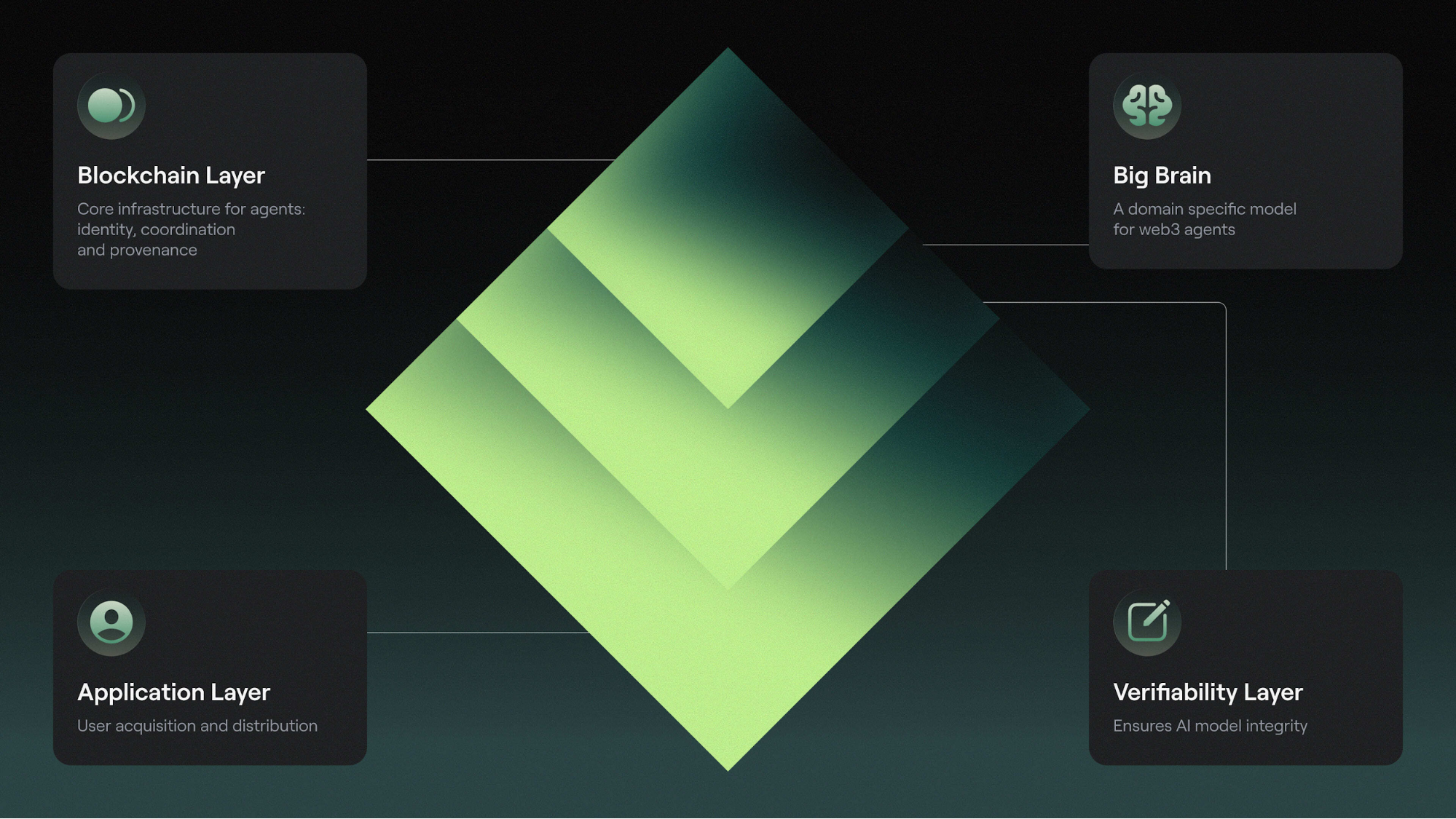
Structurally, Warden Protocol mainly includes:
Traditional smart contract platforms usually rely on users to initiate transactions manually. Warden Protocol, by contrast, places greater emphasis on goal-oriented execution. Users only need to express what they want to achieve, and Warden Protocol automatically matches the execution path.
Warden Protocol is designed to help AI Agents understand on-chain tasks and automatically complete complex operations. According to official materials, the Warden Protocol ecosystem will focus on supporting DeFi automation, on-chain AI Agents and multi-chain interaction scenarios.
How Warden Protocol Builds AI Agent Infrastructure
Warden Protocol provides AI Agents with an automated operating environment through its Intent system and on-chain execution network. AI Agents can understand user goals and call Warden Protocol to complete on-chain execution.
First, users submit Intent requests to an AI Agent. The AI Agent then converts those requests into on-chain execution goals. Warden Protocol subsequently matches the appropriate Solver network to carry out the task.
Structurally, Warden Protocol’s AI Agent infrastructure includes:
| Module |
Main Function |
| Intent system |
Expressing user goals |
| Solver network |
Executing tasks |
| AI Agent |
Automated interaction |
| Multi-chain network |
Cross-chain collaboration |
This structure reduces the difficulty of complex on-chain interactions and strengthens the automated execution capabilities of AI Agents.
How the Intent System Works in Warden Protocol
The core function of the Intent system is to convert user needs into executable on-chain tasks. Unlike traditional transactions, an Intent system focuses more on the goal than on the specific steps required to achieve it.
First, the user submits an operational goal. For example, a user may want to complete a cross-chain asset swap. Warden Protocol then analyzes that Intent and searches for the optimal execution path.
Next, the Solver network is responsible for carrying out the task. Solvers automatically handle transaction routes, cross-chain interactions and on-chain verification. In the end, users only need to confirm the result instead of manually performing complicated operations.
Warden Protocol’s Intent architecture helps AI Agents automatically understand user needs, making the Intent system a core piece of infrastructure for the entire network.
How Warden Protocol Handles On-Chain Execution and Automated Operations
Warden Protocol handles on-chain automated execution and multi-chain interactions through its Solver network. Solvers are closer to automated execution nodes than traditional blockchain validator nodes.
First, Warden Protocol receives the user’s Intent request. The Solver network then matches an execution path and verifies the execution conditions. After that, Solvers call the corresponding on-chain protocols to complete the task.
This execution flow usually includes:
-
Intent parsing
-
Path matching
-
Task execution
-
Result verification
Unlike traditional on-chain transactions, Warden Protocol places greater emphasis on automated collaboration. AI Agents can use Warden Protocol to automatically complete DeFi operations, cross-chain transactions and asset management tasks.
What Role Does WARD Play in Warden Protocol
WARD is the core utility token of the Warden Protocol network. It is used for governance, security mechanisms and network incentives. WARD participates in the operation of the Solver network and ecosystem governance.
First, WARD holders can take part in on-chain governance and protocol upgrades. The Solver network may then receive part of its execution incentives through WARD. In addition, WARD also contributes to network security and ecosystem collaboration.
Structurally, WARD’s main functions include:
| Function |
Role of WARD |
| Network governance |
Proposals and voting |
| Execution incentives |
Solver rewards |
| Network security |
Protocol collaboration |
| Ecosystem operations |
Multi-chain support |
Official materials indicate that WARD is designed to operate over the long term around the Intent network and AI Agent infrastructure. As a result, WARD is closer to a protocol-layer token than a standard application token.
How Warden Protocol Connects the Multi-Chain Application Ecosystem
One of Warden Protocol’s key priorities is connecting applications and asset systems across different chains. Multi-chain environments often suffer from operational complexity and fragmented interactions, while Warden Protocol uses its Intent system to unify execution logic.
First, users submit a unified Intent request. Warden Protocol then identifies the target chain and target protocol. The Solver network subsequently completes the cross-chain task automatically.
This mechanism means users do not need to handle the complex operations of different chains one by one. Warden Protocol abstracts multi-chain interaction into a unified Intent execution process.
Unlike traditional cross-chain bridges, Warden Protocol focuses more on task execution logic than on simple asset transfers. Because of this, Warden Protocol is closer to an AI Agent execution network.
What AI Agent Use Cases Does Warden Protocol Support
Warden Protocol focuses on helping AI Agents automatically complete on-chain operations. Through Warden Protocol, AI Agents can call applications and protocols across different chains.
Typical use cases for Warden Protocol include:
| Scenario |
Main Function |
| DeFi automation |
Automatically executing strategies |
| Multi-chain trading |
Automatic path matching |
| Asset management |
Intelligent rebalancing |
| AI Agent |
Automated interaction |
AI Agents can use Warden Protocol to automatically complete yield strategies, asset swaps and on-chain management. Compared with traditional wallet interactions, Warden Protocol places greater emphasis on automation and intelligent execution.
This structure can help AI Agents evolve from “chat tools” into genuine on-chain execution agents.
Traditional smart contract platforms usually require users to manually execute transactions, while Warden Protocol emphasizes Intent-driven execution. The core focus of Warden Protocol is to automatically understand user goals.
Structurally, traditional smart contract platforms mainly provide an on-chain execution environment, while Warden Protocol goes a step further by offering an automated execution layer.
| Type |
Core Focus |
| Smart contract platform |
Manual interaction |
| Warden Protocol |
Intent execution |
This difference means Warden Protocol is better suited to AI Agents and automated on-chain applications, while traditional smart contract platforms are more focused on providing the underlying execution environment.
What Ecosystem Limitations Does Warden Protocol Face
Intent networks usually require complex execution coordination, so Warden Protocol faces challenges around multi-chain compatibility and automation security. AI Agent automated execution also requires strong verification capabilities.
If the Solver network is not large enough, execution efficiency and path optimization may be affected. Multi-chain collaboration also requires ongoing support for different protocols and asset systems.
AI Agent automated execution also involves permission control. If the Intent verification mechanism is not sufficiently robust, automated operations may create additional risks.
Warden Protocol also needs to build a sufficiently large developer ecosystem. Without application integration, the use cases for the Intent network may be limited.
Summary
Warden Protocol is an on-chain infrastructure network built around AI Agents and Intent execution. Through its Intent system, Solver network and multi-chain execution mechanism, Warden Protocol enables automated on-chain interactions.
Compared with traditional smart contract platforms, Warden Protocol places greater emphasis on goal-oriented execution. WARD supports governance, network security and execution incentives, helping sustain the automated AI Agent ecosystem.
FAQs
What Is Warden Protocol?
Warden Protocol is an Intent infrastructure network built for AI Agents and on-chain automated execution scenarios. It is used to automatically handle multi-chain interactions and on-chain task execution.
How Does the Intent System Work in Warden Protocol?
Warden Protocol’s Intent system first receives the user’s goal, then uses the Solver network to match an execution path and automatically complete the on-chain operation.
What Role Does WARD Play in Warden Protocol?
WARD is the core token of Warden Protocol. It is used for network governance, Solver incentives, protocol security and ecosystem collaboration.
What Role Does the Solver Network Play in Warden Protocol?
The Solver network is responsible for parsing Intent requests, matching execution paths and completing automated on-chain operations.
Traditional smart contract platforms focus more on manual transaction execution, while Warden Protocol emphasizes Intent-driven automated on-chain interaction.
What Are the Use Cases for Warden Protocol?
Warden Protocol is mainly used for DeFi automation, multi-chain trading, AI Agent on-chain operations and intelligent asset management.







