

Trade
Basic
Futures
Futures
Hundreds of contracts settled in USDT or BTC
Options
HOT
Trade European-style vanilla options
Unified Account
Maximize your capital efficiency
Demo Trading
Futures Kickoff
Get prepared for your futures trading
Futures Events
Participate in events to win generous rewards
Demo Trading
Use virtual funds to experience risk-free trading
Earn
Launch
CandyDrop
Collect candies to earn airdrops
Launchpool
Quick staking, earn potential new tokens
HODLer Airdrop
Hold GT and get massive airdrops for free
Launchpad
Be early to the next big token project
Alpha Points
NEW
Trade on-chain assets and enjoy airdrop rewards!
Futures Points
NEW
Earn futures points and claim airdrop rewards
Investment
Simple Earn
Earn interests with idle tokens
Auto-Invest
Auto-invest on a regular basis
Dual Investment
Buy low and sell high to take profits from price fluctuations
Soft Staking
Earn rewards with flexible staking
Crypto Loan
0 Fees
Pledge one crypto to borrow another
Lending Center
One-stop lending hub
VIP Wealth Hub
Customized wealth management empowers your assets growth
Private Wealth Management
Customized asset management to grow your digital assets
Quant Fund
Top asset management team helps you profit without hassle
Staking
Stake cryptos to earn in PoS products
Smart Leverage
NEW
No forced liquidation before maturity, worry-free leveraged gains
GUSD Minting
Use USDT/USDC to mint GUSD for treasury-level yields

More

Stock Tokenization Depth Research Report: Start of the Second Bull Run Growth Curve
2025-07-24 13:37
From SEC defendant to Wall Street bell ringer, the remarkable "Gatesun" powerfully interprets the game of thrones.
2025-07-24 07:59
Trending Topics
View More6.93K Popularity
10.71K Popularity
27.55K Popularity
12.23K Popularity
149.14K Popularity
Hot Gate Fun
View More- MC:$3.52KHolders:10.00%
- MC:$3.52KHolders:10.00%
- MC:$3.52KHolders:10.00%
- MC:$3.57KHolders:20.09%
- MC:$3.58KHolders:20.09%




Pin
Trump Bubble: What will be the next step for BTC?
Original author: @packyM, Not boring
Original translation: Blockchain in Plain Language
In the new 2024 U.S. presidential election, Trump was re-elected. The Capital Market also ushered in a wave of enthusiasm, with the US dollar index reaching a new high, and the crypto market also unstoppable. The total market value of the global crypto market has surpassed $30 trillion for the first time, and after BTC broke through the $90,000 mark, it seems that $100,000 is within reach.
Trump’s election undoubtedly injected a stimulant into the Capital Market, especially the crypto market. The future direction of the crypto market remains to be seen, as the various Favourable Information released during the campaign can land or not. @packyM has made a prospect of the “Trump Bubble”, and Block Chain in Plain Language has made an excerpt compilation of it.
The following is the main text:
As we all know, one of the biggest risks facing encryption companies is that government regulation may slow down their development, or even cause them to stagnate. Over the past week, I have closely followed the political situation in the United States and found that the current situation has many similarities to the topics I usually discuss, and is more optimistic than expected. My intuition tells me that we are at the beginning of all bubbles - a bubble-making machine, breeding countless bubbles: the Trump bubble.
One of the most shocking things about last week’s presidential election was that many people seemed unusually excited about Trump’s victory, and some people’s extreme excitement about a certain future vision was precisely a sign that the bubble was beginning to form.
Over the weekend, I read Byrne Hobart and Tobias Huber’s “Boom: Bubbles and the End of Stagnation”. The core idea of the book is that certain types of bubbles play a huge role in driving the world forward. They believe that bubbles are a panacea for solving stagnation problems.
While reading this book, I noticed that the post-election reaction is remarkably similar to those productive bubbles described in the book: the Manhattan Project, the Apollo Program, Moore’s Law, the golden age of corporate R&D, the shale gas revolution, and Bitcoin.
Byrne and Tobias summarized five common characteristics of all the technologies and top projects they researched:
Defend the bubble
The term “Trump Bubble” may sound worrisome. When the average person hears the word “bubble”, they usually associate it with something that is “over-inflated and destined to burst”, which often carries a negative connotation, especially when it originates from some bad bubbles. But bubbles are not just of this type. In the book “Boom”, Byrne and Tobias described two types of bubbles:
Mean reversion bubble: “The basic bet is that the future will continue along the current trend.” For example, the subprime mortgage crisis. If you bet that the future will roughly remain the same, you can increase the bet by adding leverage.
Turning Point Bubble: “Investors believe that the future will be significantly different from the past.” For example, the internet bubble. If you believe that there will be significant changes in the future, you will buy assets that can benefit from these changes.
They believe that the turning point bubble has driven progress. This view is similar to what I mentioned in the book ‘Infinity Missions’: the turning point bubble drives progress by directing a large amount of resources to important projects that cannot be executed under normal cost-benefit analysis.
The turning point bubble drives future progress by concentrating huge financial and human capital on a very specific vision of the future, allowing wasteful exploration and parallelization that would not normally occur in the pursuit of this goal.
If there were no bubbles, some things might never happen. Byrne and Tobias point out that Moore’s Law itself is a typical bubble phenomenon: ‘This industry exhibits classic bubble behavior: predictions about the future - especially bold and almost irrefutable predictions - ultimately drive the behaviors that make these predictions come true.’ For example, the expectation of continuous improvement in chips prompts people to design products that can make use of better chips, which in turn makes chip manufacturers aware of the demand and stimulates investment in continuous improvement of chips.
In other words, a vision that is convincing enough to make it a reality. As Stripe Press writes on Boom, “Optimism can fulfill self-fulfilling prophecies.”
Source: Boom Website
As Peter Thiel, Byrne, and Tobias emphasized, not all optimism is positive. Excessive optimism - simply assuming that everything will go smoothly - is as destructive as pessimism. Therefore, the first common characteristic of a productive bubble is explicit optimism: believing that the future will be better and having specific plans to achieve this goal.
What is a bubble?
In the early stages after the election, I began to notice the common characteristics of the bubble, and I observed that the only unresolved issue was its clarity - that is, where the attention was focused.
Simply ‘making everything better,’ such as ‘making America great again,’ is too vague and imprecise to meet the definition of positive bubble in the book: ‘The key is whether this vision includes a concrete and actionable plan to transition from the present to the future.’
For example, the goal of making an atomic bomb before the Germans (or Soviets) is clear and specific: landing on the moon within ten years. Every bubble discussed by Byrne and Tobias is also clear and specific. But what about Trump’s bubble? What kind of bubble is it, exactly?
Elon Musk played an important role in Trump’s victory and is likely to continue to have an impact during his presidency. He once referred to Tesla’s Gigafactory as a ‘machine that builds the machine’. If the Gigafactory runs well, the production of cars will become simple. And the United States, like a ‘machine that builds the machine’, has only accumulated dirt in its gears for now.
The U.S. can still create great companies, and those companies can make great products. But the slogan “Make America Great Again” didn’t resonate with me, because I always thought that America was still the greatest country in the world, even though it was slower and hunkier now than it used to be. Comparison with other countries obscures a deeper truth: the United States has not reached the greatest state it should have been.
If Trump’s bubble is formed, it will be about upgrading and cleaning the dirt in the “machine that makes the machine”, so that America’s machine can run at full speed. There is no more motivating vision for those who believe in America, capitalism and self. This vision looks strong enough to blow the strongest bubble ever.
Signs of a Bubble
Although the “Manhattan Project” and the “Apollo Project” are two cases directly regulated by the government in the book, I think Trump’s bubble is more likely to develop like Moore’s Law.
As Byrne and Tobias wrote, “Moore’s Law may be the most convincing and enduring example of a bidirectional bubble, with the expected progress in one area driving the development of another, which in turn promotes the rise of the first area.”
The Trump bubble also has a two-way relationship. The information conveyed by the Trump administration to the people is that it will be easier to build, invest, and achieve big goals, and this expectation itself has sparked greater enthusiasm among people to build, invest, and achieve big goals. The more energy and excitement people put in, the easier it is for the government to repair the machine.
Rainmaker’s Augustus Doricko expresses this emotion perfectly: ‘We have four years to do our best.’![特朗普泡沫:比特币下一步会怎么走?]()
With control of the Senate, House, and the administration, the government promises to streamline processes and eliminate friction. In return, the private sector plans to increase risk, investment, and innovation.
Although the actual simplification of processes and elimination of friction may be far beyond expectations, the belief in the mere possibility of this is enough to trigger a bubble.
Empowered by the belief that anything is possible, people are sharing their ideas about the measures that the government could take.
Note this joke: Make America X Again. Bryan Johnson posted a photo of himself with RFK Jr. and captioned it ‘MAHA’, which stands for Make America Healthy Again.
Bryan Johnson is a tech entrepreneur. Would people start to think that the government might be willing to listen to his advice on health and other matters if he could connect with key figures responsible for the US healthcare system?
You may think this is a good thing or a bad thing, but what we need to follow now is the dynamics of the bubble. The characteristic of a bubble is that people begin to think that they are only one tweet away from influencing government policies. This also means that more and more people are starting to share their policy suggestions on Twitter. Interestingly, some of these ideas may actually become a reality.
Of course, the government cannot see all the proposals, only considering a small part, and even fewer are actually implemented. But just like lottery or reward mechanisms, it is almost certain that the government will try to promote some previously unimaginable solutions, some of which may succeed. And when these successes occur—such as addressing global warming through sulfate injection—the government will become bolder and try things that were previously unthinkable.
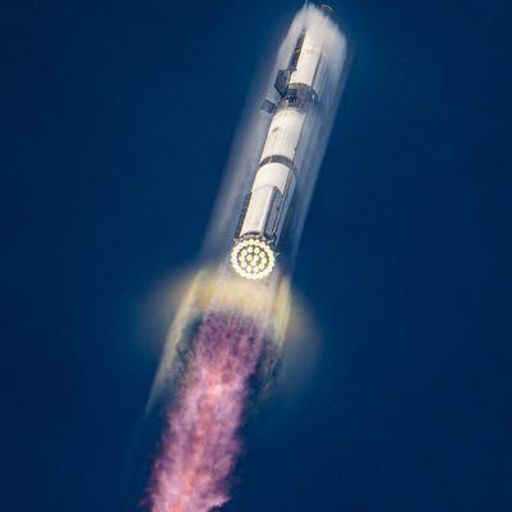
By convincing people that change is possible - even if it’s just projecting their hopes onto that change - the Trump administration is making working with the government ‘cool’. Bryan Johnson is one of them, as is Elon Musk, the richest person in the world who just caught a 22-story rocket with chopsticks. Even geniuses who never thought of working with the government are now seeking opportunities to participate, as revealed by Sean Maguire of Sequoia, who received inquiries from some physics PhDs asking how they can work in the Trump administration.
This is the national level parallelism and coordination. Parallelism lies in the fact that more and more entrepreneurs hope to build in a more efficient operating American machine; coordination lies in the fact that more and more talented people hope to participate in the work of repairing this machine, because they believe there is now an opportunity to do so.
These phenomena once again verify the self-fulfilling prophecy. More and more talents are dedicated to the work of repairing the government, and they have received strong support from the people, making it more likely for them to successfully repair the government. This, in turn, will enable those who are committed to building complex undertakings - whether in the field of Crypto Assets or energy - to achieve more success in constructing their ‘machines’.
People believe that ambitious projects that strive to advance within the existing government framework will ultimately succeed, and this belief has sparked a real fear of missing out (FOMO). This phenomenon is particularly evident in the cryptocurrency market, where the high liquidity and rapid price fluctuation of cryptocurrencies amplify this anxiety.
As of November 12, 2024, source: Artemis Terminal
Investors are asking, what achievements can Cryptocurrency ultimately make if the SEC no longer tries to exclude it through means that are not clearly legislated at present?
Interestingly, this process also gave birth to a mini-bubble. Byrne and Tobias mentioned the case of BTC in the book ‘Boom’, pointing out: ‘The value, security, and network effect of any currency are driven by adoption, and BTC is no exception.’
a16z Crypto has always emphasized the price innovation cycle in Cryptocurrency: when the price pumps, it attracts more follow and developers, and developers will start building products, making Cryptocurrency more valuable over time.
The current status of Crypto Assets in 2024, source: a16z crypto
This cycle is particularly evident in the field of Crypto Assets, as Crypto Assets naturally have Liquidity, but similar dynamics are also playing out in various industries: price pump attracts talent, and talent creates things that support the price pump. This is the manifestation of Hyperstition and Reflexivity.
When the construction of Crypto Assets becomes legal, more people will get involved and create more valuable encryption products; when the approval process of new nuclear reactors becomes feasible, more companies will start to build these reactors; when SpaceX can launch rockets freely without interference from the FAA, it will launch more rockets.
This also makes us feel the concept of fear of missing out (FOMO) and YOLO (You Only Live Once) again. If you follow these trends, it’s hard not to feel like something significant is happening and that you need to be a part of it. I also feel like I haven’t participated enough, both financially and on a deeper level, it’s a kind of spiritual feeling. I thought I had done enough, but now I realize that I should do more and need to make double efforts to catch up - and this mentality is actually a characteristic of a bubble.
In their book Boom, Byrne and Tobias note that bubbles are often accompanied by a spiritual quest, writing that “identifying the areas of future technological progress can begin with the sense of transcendence they bring on a spiritual level.”
It does feel like we are facing an unprecedented opportunity now, with the possibility of truly building the future we envision and realizing our future vision ahead of time. It’s just that no matter how much you invest, there will always be someone who puts in more. It is precisely this atmosphere full of drive that will coordinate tens of thousands, even millions of people to participate in this great project, whether it is to improve existing systems or to create a brand new, more easily achievable system. All of this almost inevitably will lead to excessive risk-taking and overheated investment, which is also the characteristic of a bubble.
Despite the increasing emphasis on ‘hardcore technology’ (such as vertically integrated companies), many investors still tend to be cautious, considering the construction of these technologies to be full of uncertainty and capital-intensive, although the returns can be extremely lucrative once successful. However, I expect that in the coming months, we may see over-investment phenomena similar to the Cryptocurrency market in fields ranging from nuclear energy to aerospace.
But this is actually a good thing! The charm of a bubble is that even if some investors may suffer losses, it will not cause a systemic collapse, and the world will still make progress in addressing major issues. In the end, those companies that may not have survived will stand out and drive the world in a better direction.
Of course, all of this will not be smooth sailing, and will inevitably be filled with Fluctuation and uncertainty. But I firmly believe that this process will bring extraordinary results.
How is the foam machine formed
In 2021, Musk shared his five-step approach to improving manufacturing and design processes in a very famous video with Everyday Astronaut:
Source:
If you regard the United States as a “machine that manufactures machines,” then the method Musk used to build SpaceX’s “machine that manufactures machines” is not only worth following, but also a very interesting point. Because this method is very similar to the plan announced by the Trump administration: 01928374656574839201
Regulatory reform (e.g. NEPA, NRC)
Obviously, these changes may bring some risks! For example, SpaceX’s rockets sometimes explode, indicating that overly aggressive innovation may encounter problems.
However, once these improvements and optimizations are implemented, many things will become more smooth. That’s why people are passionate, because they believe this is the first government in many years to truly challenge the limits and test the existing system bottom line.
But more importantly, this ‘breaking the norm’ approach symbolizes an attitude of embracing risk again.
Summary
On November 13th, Trump announced that Elon Musk and Vivek Ramaswamy will jointly lead the newly established ‘Government Efficiency Department’.
According to Trump, DOGE will ‘clear bureaucratic obstacles for my government, reduce excessive regulations, cut wasteful spending, and reshape federal agencies.’ He also said that this will ‘pioneer an unprecedented entrepreneurial government management style’ and ‘unleash our economic vitality.’ In short, the aim is to fix the ‘machine that makes machines’ and drive a series of reforms.
Can you understand why people are so excited? I mentioned Musk’s repair machine process in the previous section. At that time, I felt that this metaphor was somewhat ‘too appropriate.’ As a result, after I finished writing, Trump appointed Musk to co-lead the organization responsible for ‘repairing the machine.’ Musk is undoubtedly the best candidate for this position, and he also gladly accepted the task.
Many people have pointed out that DOGE has no real decision-making power and can only make suggestions, but that’s not the point. The key is that whether supporters or opponents, both are beginning to believe that the government may really become more efficient. Even if Musk and Vivek cannot directly cut institutions and regulations, they can at least expose the most wasteful parts of the federal government and drive change through the power of the public.
This is a long-awaited opportunity for people to feel that they may personally participate in the process of making the “big machine” in the United States run more smoothly. Musk also said on the X platform that they will publicly share all actions of DOGE.
Vivek tweeted that DOGE will collect public opinions through Crowdfunding: “Americans voted in favor of comprehensive government reform, and they should have the opportunity to participate in fixing the government.”
As mentioned earlier, any good, healthy bubble can inspire people’s sense of participation. People will feel that they can really fix the government, so they will invest more energy to try to improve. Specific manifestations may include submitting suggestions, or calling congressmen to push for the adoption of DOGE’s suggestions.
Whether the final result is exactly as expected is not the most important thing. The key is that, when a bubble is formed, people firmly believe that things will develop in this direction, and this belief itself will shape their actions.
The current issue is no longer the Democrats versus the Republicans. Regardless of people’s dissatisfaction and differences, what is more important is the actions between those who believe that the American people can change the status quo and make the United States and even the world a better place, and those who believe that the government bureaucracy should do these things for us. This is much more important than mere political struggles!
No one wants to pay more taxes to fund a wasteful bureaucratic system. No one wants to feel helpless when their country is in trouble. No one wants to see things progress 100 times slower or cost 100 times more than they should. In many ways, we can actually achieve consensus.
This is a ‘bubble of the future’ that may give rise to a turning point bubble in the next few decades. Welcome to the Trump bubble.