

Trade
Basic
Futures
Futures
Hundreds of contracts settled in USDT or BTC
TradFi
Gold
Trade global traditional assets with USDT in one place
Options
Hot
Trade European-style vanilla options
Unified Account
Maximize your capital efficiency
Demo Trading
Futures Kickoff
Get prepared for your futures trading
Futures Events
Participate in events to win generous rewards
Demo Trading
Use virtual funds to experience risk-free trading
Earn
Launch
CandyDrop
Collect candies to earn airdrops
Launchpool
Quick staking, earn potential new tokens
HODLer Airdrop
Hold GT and get massive airdrops for free
Launchpad
Be early to the next big token project
Alpha Points
Trade on-chain assets and enjoy airdrop rewards!
Futures Points
Earn futures points and claim airdrop rewards
Investment
Simple Earn
Earn interests with idle tokens
Auto-Invest
Auto-invest on a regular basis
Dual Investment
Buy low and sell high to take profits from price fluctuations
Soft Staking
Earn rewards with flexible staking
Crypto Loan
0 Fees
Pledge one crypto to borrow another
Lending Center
One-stop lending hub
VIP Wealth Hub
Customized wealth management empowers your assets growth
Private Wealth Management
Customized asset management to grow your digital assets
Quant Fund
Top asset management team helps you profit without hassle
Staking
Stake cryptos to earn in PoS products
Smart Leverage
New
No forced liquidation before maturity, worry-free leveraged gains
GUSD Minting
Use USDT/USDC to mint GUSD for treasury-level yields

More




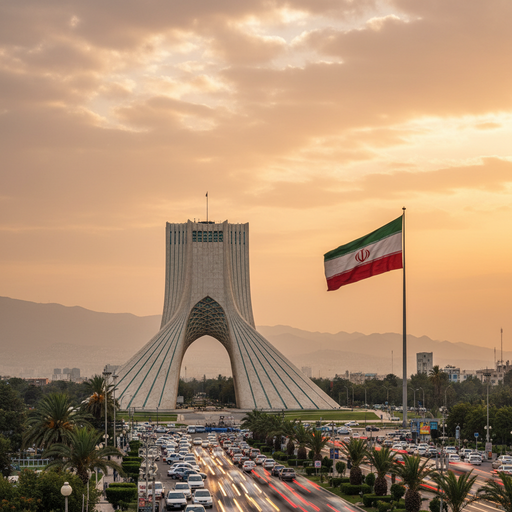


Oil-producing countries announce increased output, but the effect is "a drop in the bucket"? International oil prices surge sharply, and institutions raise risk premiums
On the morning of March 2, international oil prices surged sharply, with WTI crude futures opening up over 11%; Brent crude soared 13% at the open to $82 per barrel. As of the First Financial reporter’s latest update, the gains have narrowed, with WTI up 4.51% and Brent at $76.28 per barrel, a daily increase of 4.68%.
According to CCTV News, on March 1, the Organization of the Petroleum Exporting Countries (OPEC) issued a statement saying that eight major oil-producing countries (Saudi Arabia, Russia, Iraq, UAE, Kuwait, Kazakhstan, Algeria, and Oman) have decided to increase production by an average of 206,000 barrels per day in April.
The statement noted that, given the current stable global economic outlook and low oil inventories, these eight countries have decided to adjust their output. To maintain market stability, they will flexibly adjust the pace of production increases based on market conditions.
From the latest market performance today, the increase of 206,000 barrels per day is negligible compared to the supply disruption threat caused by Iran’s blockade of the Strait of Hormuz.
First Financial’s reporter noted that data from the U.S. Energy Information Administration (EIA) shows that in 2024, the daily oil trade volume through the Strait of Hormuz is about 20 million barrels, accounting for over a quarter of global maritime oil trade. This means that the 206,000 barrels per day increase is only about 1% of the Strait’s normal throughput.
What worries the market even more is that over 90% of Middle Eastern oil exports depend on the Strait of Hormuz, which means that even if OPEC+ decides to increase production, the key issue is whether the oil can actually be transported.
Earlier, CCTV News reported that on the evening of February 28, Iran’s Islamic Revolutionary Guard Corps announced a ban on any ships passing through the Strait of Hormuz. Reports suggest that with the halt of tanker traffic through the strait, it has effectively been closed.
Geographically, the Strait of Hormuz connects the Persian Gulf, Oman Gulf, and Arabian Sea, and is one of the world’s most critical chokepoints for oil and natural gas, carrying about 30% of global maritime oil trade.
Various institutions have immediately raised risk expectations. Goldman Sachs, in its latest report, set the real-time risk premium for crude oil at $18 per barrel, based on an assessment of the impact of a complete six-week shutdown of tanker traffic through the Strait. According to Goldman Sachs, this risk premium implies the market is pricing in a daily global supply interruption of 2.3 million barrels over a year.
Last week, Barclays Bank’s assessment of the risk premium was only $3 to $5 per barrel. The bank noted that “the current high tensions between the US and Iran could push Brent crude prices to around $80 per barrel if a substantial supply disruption occurs.”
At that time, the bank predicted that even a daily supply interruption of 1 million barrels would further undermine the market’s expectation of oversupply, pushing Brent prices toward $80 per barrel.
Looking ahead, China International Capital Corporation (CICC) analysts believe that short-term geopolitical risks dominate, and ongoing developments should be closely watched; in the medium to long term, excess supply pressures could lead to a downward adjustment of international oil prices, but geopolitical factors may still cause unexpected shocks, increasing volatility.
Goldman Sachs’s latest forecast also warns that “although our risk outlook is skewed to the upside, history shows that price spikes driven by geopolitical shocks and/or temporary supply disruptions are often short-lived.”
(Source: First Financial)