
Futures
Access hundreds of perpetual contracts
TradFi
Gold
One platform for global traditional assets
Options
Hot
Trade European-style vanilla options
Unified Account
Maximize your capital efficiency
Demo Trading
Introduction to Futures Trading
Learn the basics of futures trading
Futures Events
Join events to earn rewards
Demo Trading
Use virtual funds to practice risk-free trading
Launch
CandyDrop
Collect candies to earn airdrops
Launchpool
Quick staking, earn potential new tokens
HODLer Airdrop
Hold GT and get massive airdrops for free
Pre-IPOs
Unlock full access to global stock IPOs
Alpha Points
Trade on-chain assets and earn airdrops
Futures Points
Earn futures points and claim airdrop rewards


More




#Gate广场四月发帖挑战 The US-Iran talks collapse, and views on its impact on the market
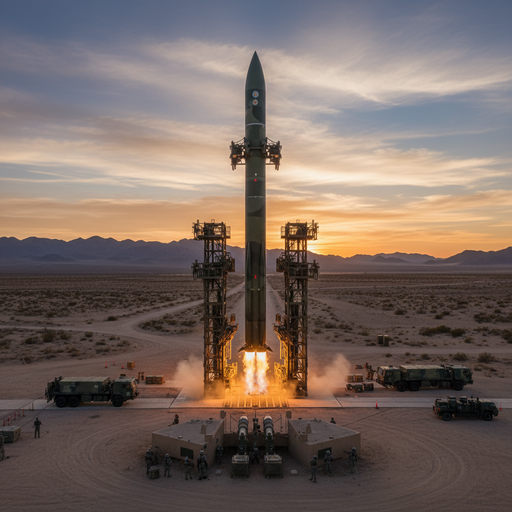
This weekend, representatives from the United States and Iran sat across the negotiating table in Islamabad. The result: both sides went home with sullen faces, no agreement was signed, and plenty of harsh words were exchanged. US Vice President Vance said “there’s simply no way to make it work,” while an Iranian representative directly scolded the US as “too greedy.”
To be honest, no one was really surprised by this outcome. Before the negotiations even began, the leaders of both countries were already hyping domestically that “we have already won,” and the conditions they laid out were completely off the mark. From the start, this round of talks looked more like a political performance staged for domestic and foreign audiences.
What’s interesting is that while representatives on both sides were trading verbal blows, another scene was unfolding over the Persian Gulf. A US warship tried to approach the Strait of Hormuz; Iranian small boats immediately swarmed it. The two sides then stalled for a while on the sea surface, and in the end, the US warship turned around and left.
The US said it was there to “sweep mines,” while Iran said, “If you dare go any further, we will open fire.” Even more dramatically, the Iranian negotiating representative relayed a message through an intermediary on the spot: “If your ships don’t withdraw, we will take action within half an hour—don’t bother talking about this negotiation anymore!”
This incident reveals a key piece of information: the US currently really has no way to deal with the Strait of Hormuz. Iran doesn’t need any high-tech weapons. Dropping a few mines and flying a few drones might cost only tens of millions of dollars, but it could scare insurance companies into refusing orders and make ship owners afraid to sail. The strait is still open in name, but in reality it’s already half paralyzed.
But what’s interesting is that for financial markets, this failed negotiation may not necessarily be a bad thing.
In the Middle East, don’t expect real peace in the short term. But the situation has changed a bit now—after this round of confrontation, the “rules of the game” between the US and Iran are becoming gradually clearer.
What financial markets fear most isn’t bad news—it’s “not knowing what will happen.” In the past, people worried that if both sides really got carried away and went into a rage, what if they blew up the oil fields, oil pipelines, and ports. Now this red line has been drawn: civilian energy facilities can’t be touched.
It’s like two people fighting: what might have involved knives before has now been agreed to be fists only. They may still fight, but the probability of someone getting killed is much lower. For the market, this is good news.
Just look at the oil price trend to see the logic. A few days ago, rumors emerged that a ceasefire might be possible, and within a single day the oil price plunged by 20%, crashing from more than $110 per barrel to around $95.
Why did it fall so sharply? Because in the prior wave of the rally, a big portion was “panic premium”—people were worried that the strait could be shut down for the long term, so they priced in the worst-case scenario in advance. Now it turns out that “the worst is just like this,” and the extra “fear fee” naturally needs to be unwound.
Some people say Trump is playing a long chess game—intentionally dragging out Iran so that he can “cripple” the Middle East oil-producing countries and then let the US corner the market exclusively. This idea is a bit naive.
What the US needs most right now are two things: first, maintaining its lead in the AI race; second, bringing down high interest rates to ease debt pressure. If it keeps耗ing on Iran like this, global inflation won’t come down, and the US Federal Reserve won’t dare cut rates. US companies’ financing costs will stay high—doesn’t that just dig a pit for itself?
More importantly, the US’s credibility in the Middle East is currently eroding. Previously, Gulf countries felt it was worth paying protection money. But now, they can see that the US can’t even manage a strait—so they must be having doubts. After all this, the share of Middle Eastern countries selling oil to China and settling in renminbi has risen to 41%, while the dollar share has fallen to 52%. And a few years ago, the dollar still held an absolute dominant position of over 90%. The foundation of this “petrodollar” is already starting to loosen.
Every great power has its own cycle and will make strategic mistakes. The US has made plenty of mistakes over these years—just because it’s big enough to withstand disruption. But now the situation is that it’s pressing the gas on the way downhill, shouting “from victory to victory,” which can only accelerate the consumption of its own reserves.
For investors, the future path is becoming fairly clear: the game between the US and Iran will continue, and the pattern of fighting while talking will become the norm. Oil prices may swing back and forth between $80 and $120, making it hard to return to the low levels of the past. However, scenes where oil prices would jump violently at the drop of a hat—like before—will likely become less common.
The world is moving from the unipolar era where “the US calls the shots” toward a new pattern of multi-party games. The old order is loosening, and a new balance is forming. In this process, there will be chaos and uncertainty, but new opportunities will also emerge.