# TradfiTradingChallenge

340.04K

Share your TradFi trades to win a share of the 30,000 US dollar prize pool. Post with the hashtag TradfiTradingChallenge and a designated asset tag, or share market analysis and strategies with a trading card. New users get a guaranteed reward on their first post. Top creators can also win limited edition WCTC T shirts. The more you post and engage, the higher you rank and the more you earn from the extra 20,000 US dollar prize pool.

🔹 Hong Kong Stablecoin Clears Ethereum Mainnet
Not a sandbox. Not a press release. A live public blockchain transaction with real regulatory weight behind it.
HKDAP just passed its first major real-world test on Ethereum mainnet, and that changes the compliance conversation for stablecoins in Asia.
🔹 Who ran the test?
Three licensed players. One live network.
Anchorpoint Financial issued the stablecoin. OSL Group handled transfers. PantherTrade backed the transaction. Standard Chartered provided custody and trust infrastructure. Every single token was redeemed and returned after the test. No
ETH3.96%
User_any
🔹 Hong Kong Stablecoin Clears Ethereum Mainnet
Not a sandbox. Not a press release. A live public blockchain transaction with real regulatory weight behind it.
HKDAP just passed its first major real-world test on Ethereum mainnet, and that changes the compliance conversation for stablecoins in Asia.
🔹 Who ran the test?
Three licensed players. One live network.
Anchorpoint Financial issued the stablecoin. OSL Group handled transfers. PantherTrade backed the transaction. Standard Chartered provided custody and trust infrastructure. Every single token was redeemed and returned after the test. No public circulation yet. Just a clean, verifiable proof of concept.
🔹 Why this test is bigger than it looks
Previous stablecoin pilots in Asia stayed inside permissioned environments or private testnets. This one hit Ethereum's public mainnet. Minting, transfer, settlement — all working without a single technical failure. A spokesperson tied to the project put it clearly: “The successful mainnet transfer validates both the technical architecture and compliance framework for HKDAP ahead of issuance”. Regulation and execution are moving together, not waiting on each other.
🔹 Where regulation meets infrastructure
Hong Kong’s Stablecoins Ordinance has required 100 percent reserves, par redemption, and strict AML controls since July 2025. On April 10, 2026, the HKMA issued its first two stablecoin issuer licenses to Anchorpoint Financial and HSBC. The licensing conditions include segregated reserve assets, independent audits, and redemption within one business day. Anchorpoint itself is a joint venture built by Standard Chartered Bank Hong Kong, HKT, and Animoca Brands. Phased issuance is targeted for Q2 2026.
🔹 The market potential
Citibank analysis projects Hong Kong’s stablecoin market size could reach 16 billion dollars (approximately 124.8 billion HKD), with an 8 billion dollar range, and further growth possible if on-chain activity increases. S&P Global Ratings views licensed issuers like HSBC and Anchorpoint as first-movers with a structural advantage as Hong Kong grows into a digital asset hub. The bank-led, risk-controlled approach signals that regulators are putting institutions at the front of this market, not opportunistic players.
🔹 Ethereum is the obvious choice
More than 150 billion dollars in stablecoin supply already lives on Ethereum. The network holds the largest share of USDT and USDC. Choosing Ethereum gives HKDAP ready-made access to DeFi protocols, institutional wallets, and exchange integrations without building new rails from zero. The test proved that a regulated, fiat-backed token can move across that settlement layer without friction.
🔹 A serious warning to watch
Fake tokens using HKDAP and HSBC tickers have already appeared on the market. The HKMA issued a public warning on April 29 that neither licensed issuer has launched any regulated stablecoin yet. The official launch will come through approved channels — PayMe, the HSBC HK Mobile App, and authorized distributors. Anything trading before that is noise.
🔹 What phased issuance looks like
Anchorpoint plans a B2B2C model — business to business to consumer. The stablecoin reaches retail investors through authorized distributors, not open-ended offshore releases. Priority use cases include tokenized real-world asset settlement, cross-border capital flows, and payment transactions. Standard Chartered Group CEO Bill Winters said HKDAP's issuance will accelerate financial market reshaping and support next-generation international trade.
🔹 The takeaway
Hong Kong is not waiting for global consensus on stablecoins. The regulatory framework is live. The licenses have been awarded. The infrastructure passed a mainnet trial. Phase two is Q2 2026.
One clean test. One clear signal. The compliance race for regulated stablecoins in Asia now has a new leader.
Ethereum got the proof. Hong Kong got the framework. Markets are watching for what comes next.
#GateSquare #HKDAP #Stablecoins #HongKongCrypto #Ethereum

repost-content-media
  • Reward
  • 4
  • Repost
  • Share
User_any:
At least you should have said thank you.
View More
#30YearTreasuryYieldBreaks5%
The 30-Year Treasury Yield Above 5% And The Beginning Of A Global Macro Regime Shift
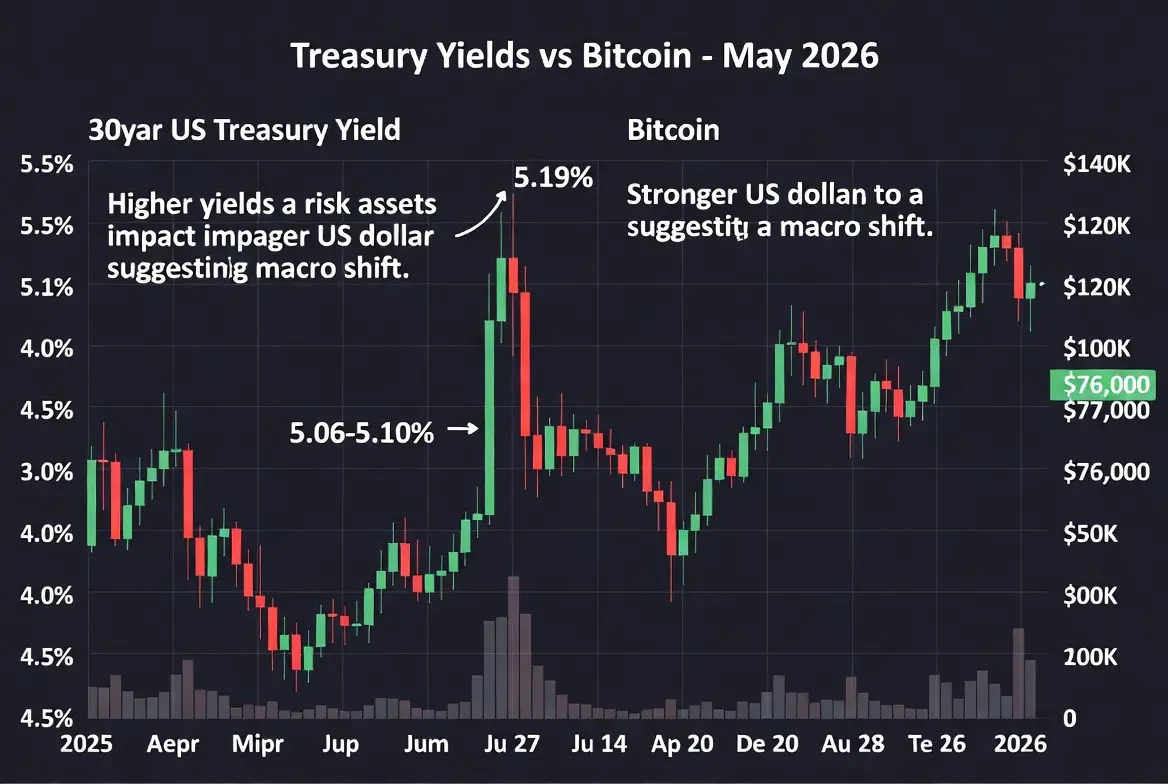
The United States 30-year Treasury yield moving above the critical 5 percent threshold and stabilizing in the $5.15 percent to $5.19 percent range represents one of the most significant macroeconomic regime shifts since the pre-2007 financial cycle. This is not a short-term volatility spike. It is a structural repricing of global capital that signals the end of the ultra-cheap money era and the beginning of a permanently higher cost of capital environment.
The entire yield curve c
BTC2.74%
ETH3.96%
SOL3.87%
HighAmbition
#30YearTreasuryYieldBreaks5%
The 30-Year Treasury Yield Above 5% And The Beginning Of A Global Macro Regime Shift
The United States 30-year Treasury yield moving above the critical 5 percent threshold and stabilizing in the $5.15 percent to $5.19 percent range represents one of the most significant macroeconomic regime shifts since the pre-2007 financial cycle. This is not a short-term volatility spike. It is a structural repricing of global capital that signals the end of the ultra-cheap money era and the beginning of a permanently higher cost of capital environment.
The entire yield curve confirms this shift. The 10-year Treasury near $4.65 percent and the 2-year near $4.12 percent show that markets are pricing persistent inflation, heavy sovereign debt supply, and structurally tighter liquidity conditions across the global economy. Long-duration money is no longer cheap, stable, or predictable.
Global Sovereign Bond Markets Enter A Synchronized Duration Shock
This movement is not isolated to the United States. It is global.
The UK 30-year gilt is near $5.8–$5.9 percent, Germany is at multi-year yield highs, and Japan’s yield structure is breaking decades of ultra-low stability.
This reflects a synchronized global duration shock driven by:
Persistent inflation pressure
Expanding fiscal deficits
Rising sovereign debt issuance
Geopolitical instability
Bond markets are no longer controlled purely by central bank suppression. They are now driven by real market pricing of risk, inflation, and debt sustainability.
Iran Conflict And Energy Shock Are Amplifying Inflation Pressure
Geopolitical tension around Iran and disruptions in the Strait of Hormuz are reinforcing global inflation trends.
Oil remains in the $105–$118 range, while natural gas volatility continues due to supply uncertainty. This energy shock is now the primary transmission channel for inflation.
CPI inflation: ~$3.8 percent YoY
PPI inflation: ~$6 percent
This confirms inflation is not fading—it is evolving into a second wave driven by energy, logistics, and wage rigidity.
Meanwhile, US federal debt exceeds $36.8 trillion, with annual interest costs approaching $952 billion, creating a compounding fiscal pressure loop where higher yields generate even more debt issuance.
Why A 5 Percent Yield Changes Everything For Bitcoin And Risk Assets
A 30-year yield above 5 percent is a global capital allocation reset.
Investors can now earn ~$5 percent risk-free returns from sovereign bonds. This dramatically increases the opportunity cost of holding non-yielding assets like Bitcoin.
The previous cycle was defined by:
Zero interest rates
Excess liquidity
Cheap leverage
That environment no longer exists.
Now:
Fixed income offers attractive returns
Volatility is lower in bonds
Institutional capital rotates toward safety
This is already visible:
Slower ETF inflows into Bitcoin
Reduced risk appetite in derivatives markets
Increasing sensitivity to liquidity tightening
At the same time, higher yields strengthen the US dollar, which historically creates headwinds for Bitcoin and risk assets.
Bitcoin Market Structure Under Macro Pressure
Bitcoin is currently trading in the $74,000–$76,000 range after repeated rejection near $78,000–$80,000.
From its $126,000 cycle high, BTC has corrected nearly 39 percent, reflecting macro-driven liquidity contraction rather than internal structural failure.
This is not panic selling. It is controlled institutional distribution.
Bitcoin remains fundamentally strong due to:
ETF adoption
Fixed supply model
Halving cycle dynamics
Long-term sovereign debt concerns
But short-term behavior is fully dominated by macro liquidity conditions.
Current Market Snapshot
BTC Price: $74,000–$76,000
ATH: $126,000
Drawdown: ~39 percent
Market Cap: ~$1.5 trillion
Altcoins remain heavily compressed:
Ethereum: ~$4,000–$4,200
Solana: below major resistance near $210
Broad altcoin market: down 50–80 percent
Technical Structure And Key Levels
Bitcoin remains in a transitional phase with no confirmed macro reversal.
Bearish momentum dominates the 4H structure, while the daily chart shows price below major moving averages.
Support Zones:
$73,000–$74,000 → primary liquidity base
$70,000–$72,000 → institutional accumulation zone
$65,000 → macro stress extension zone
Resistance Zones:
$75,700 → immediate supply barrier
$77,600 → structural rejection zone
$79,800 → macro trend reversal trigger
$85,000 → breakout confirmation
Bitcoin Scenarios Based On Treasury Yields
If Yields Rise To $5.3–$5.5 Percent:
BTC retests $73,000–$74,000
Potential extension toward $70,000–$72,000
Extreme stress scenario: $65,000
If Yields Stabilize Near $5 Percent:
BTC consolidates in $73,000–$80,000 range
Range-bound volatility continues
If Yields Fall Below $4.8 Percent:
Liquidity returns
BTC recovery toward $80,000–$85,000+
Long-term models still project $120,000–$200,000 potential over the broader cycle if adoption and debt dynamics continue.
Why Bitcoin Reacts To Yields
Higher yields increase risk-free returns, reducing demand for volatile assets. They also tighten liquidity, reduce leverage, and strengthen the dollar.
However, structurally rising sovereign debt may eventually weaken trust in fiat systems, reinforcing Bitcoin’s long-term narrative as a non-sovereign monetary hedge.
Trading Strategy In A Macro-Dominated Environment
This is a capital preservation phase, not a leverage phase.
Accumulation Strategy:
Primary zone: $73,000–$76,000
Deep zone: $70,000–$72,000
Extreme opportunity: ~$65,000
Risk Management:
Avoid leverage
Prioritize spot exposure
Track Treasury yields daily (5%–5.3% zone is critical)
Monitor oil, inflation, and Fed policy
Aggressive bullish positioning only becomes valid if BTC reclaims $77,600–$80,000 with strong confirmation.
Final Conclusion
The 30-year Treasury yield breaking above 5 percent represents a historic global macro reset that is reshaping capital flows across every asset class.
Higher yields compress liquidity, strengthen fixed-income appeal, and reduce risk appetite across speculative markets including cryptocurrencies.
Bitcoin is not structurally broken. It is reacting to a global liquidity transition where bond markets currently dominate price discovery across financial systems.
The most important variable going forward remains the $5 percent to $5.3 percent yield zone. Stability or decline would unlock liquidity and upside potential, while further increases toward $5.5 percent or $6 percent would deepen macro pressure across all risk assets.
In essence, Bitcoin is not in a structural downtrend. It is in a macro liquidity cycle controlled by global bond markets.
@Gate_Square @Gate广场_Official #TradfiTradingChallenge
repost-content-media
  • Reward
  • 1
  • Repost
  • Share
HighAmbition:
good 👍👍👍👍 good
#TradfiTradingChallenge
#HYPE
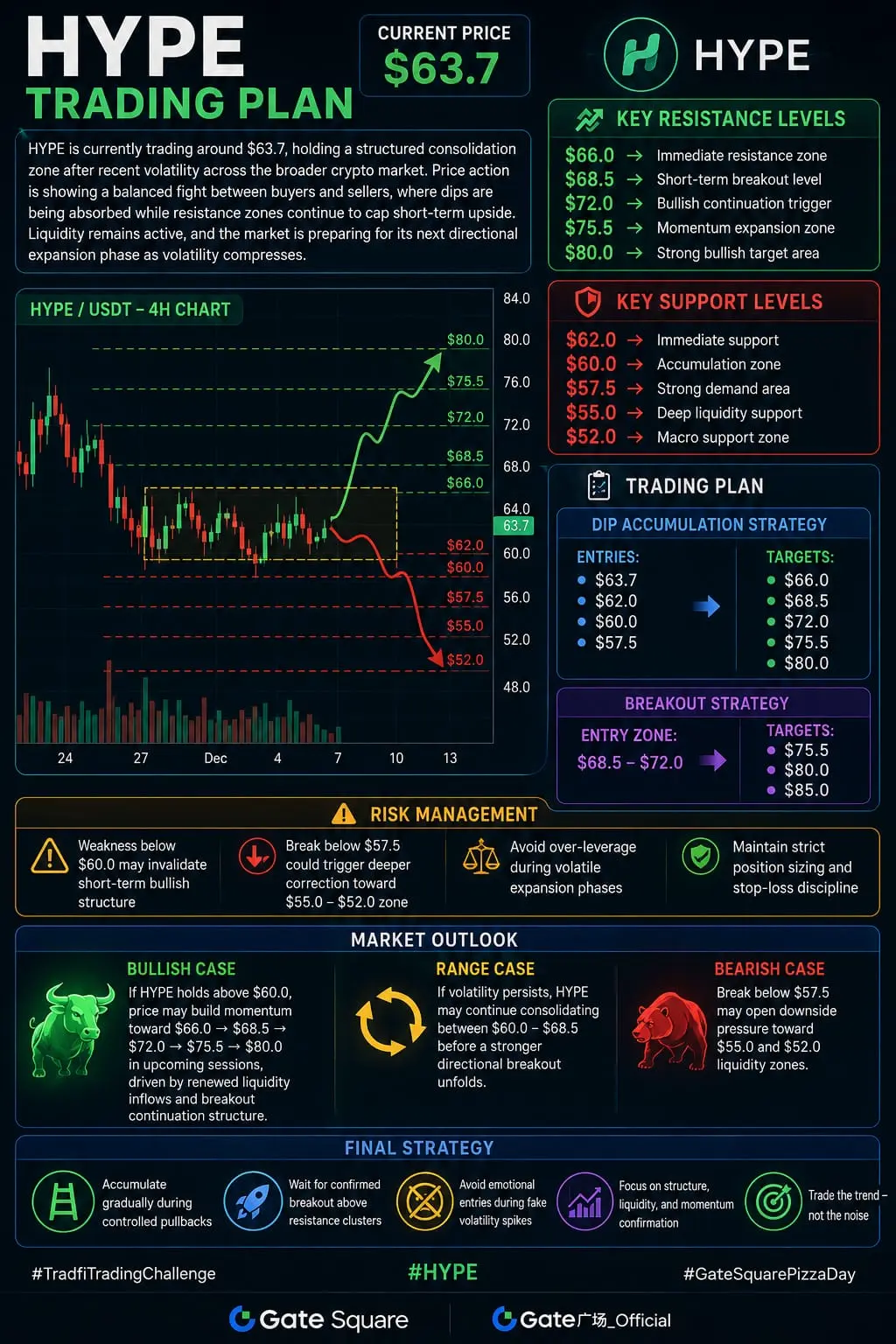
HYPE Trading Plan — Current Price: $63.7
HYPE is currently trading around $63.7, holding a structured consolidation zone after recent volatility across the broader crypto market. Price action is showing a balanced fight between buyers and sellers, where dips are being absorbed while resistance zones continue to cap short-term upside. Liquidity remains active, and the market is preparing for its next directional expansion phase as volatility compresses.
Key Resistance Levels
$66.0 → Immediate resistance zone
$68.5 → Short-term breakout level
$72.0 → Bullish cont
HYPE16.15%
post-image
post-image
  • Reward
  • 4
  • Repost
  • Share
discovery:
2026 GOGOGO 👊
View More
Bitcoin not surging on the Kevin Warsh headline tells me something important.
The market is no longer buying every “Fed pivot” story blindly.
A few months ago, any hint of a softer Fed path would have been enough to send risk assets higher. But now the bond market is forcing a different conversation. Traders are starting to accept that rate cuts may not come as fast as they hoped.
That changes the whole crypto setup.
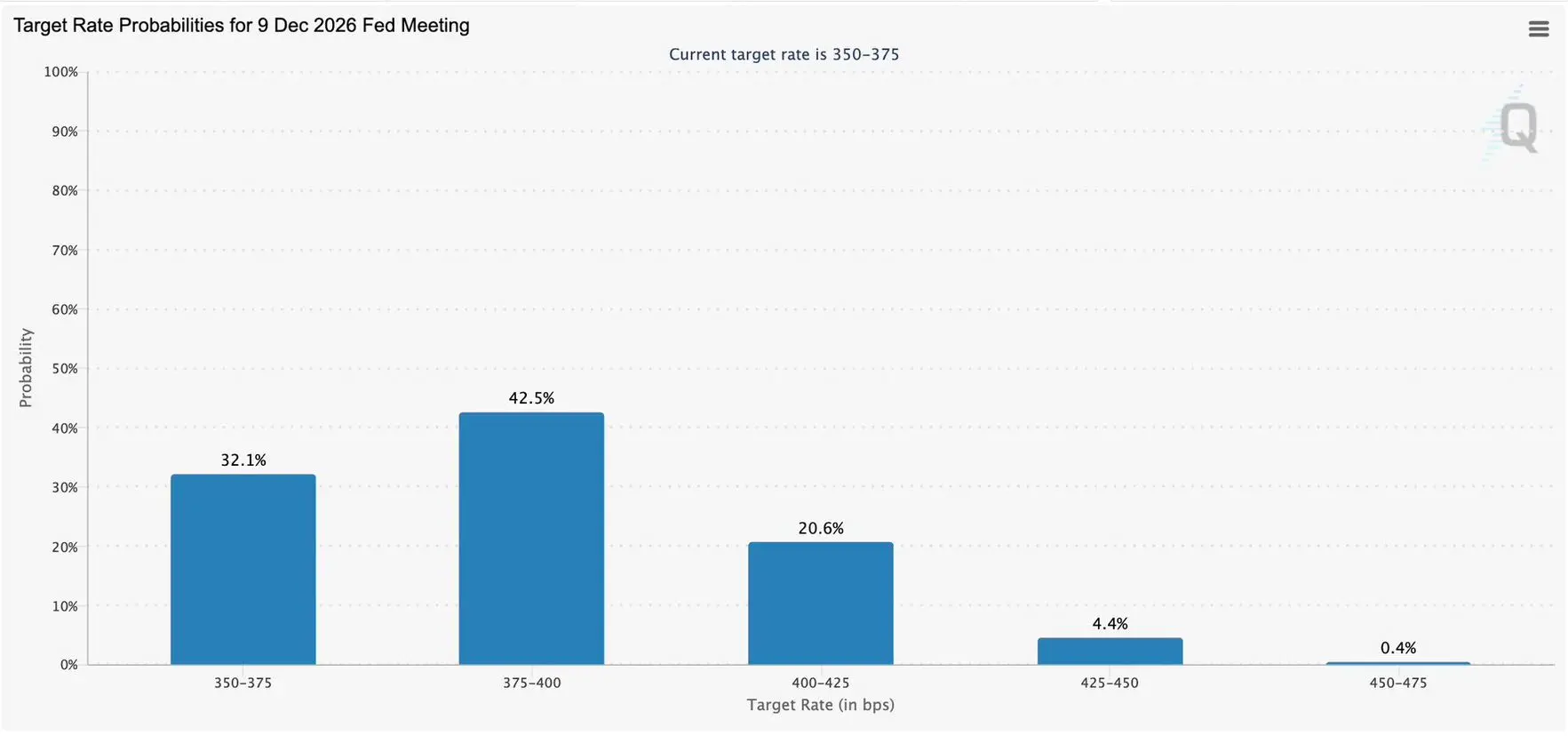
If CME pricing is moving toward rates staying unchanged for most of 2026, and even a possible 25 bps hike in December, then liquidity is not coming back on the timeline bulls want
BTC2.74%
ETH3.96%
SOL3.87%
SUI3.92%
post-image
  • Reward
  • 1
  • Repost
  • Share
HighAmbition:
Diamond Hands 💎
💥 $OPG BREAKS INTO A FRESH BULLISH LEG
Entry: $0.2280 - $0.2320
TP1: $0.2380
TP2: $0.2450
TP3: $0.2520
SL: $0.2230
After a strong recovery from local lows, $OPG has reclaimed key resistance and is printing higher highs. Momentum remains firmly with buyers and continuation toward higher levels is on the table.
#TradfiTradingChallenge
OPG3.27%
  • Reward
  • Comment
  • Repost
  • Share
$SPCX in Gate just entered a new phase.
Gate has officially completed the 1:5 $SPCX stock split, expanding user holdings 5x automatically while opening more opportunities around SpaceX Pre-IPOs.
With cumulative gains reaching up to 60.93%, both Pre-Market Spot and Pre-Market Futures are now live.
Trade Pre-Market Spot: gate.com/trade/SPCX_USDT
Trade Pre-Market Futures:https://www.gate.com/futures/USDT/SPCX_USDT
#TradfiTradingChallenge
SPCX3.42%
post-image
  • Reward
  • 7
  • Repost
  • Share
Antrex_:
gogogo
View More
$SPCX Trade Signal - Bullish 🟢
🔹Entry 👉 206 – 210
🎯 TP: 218 228 245
🛑 SL: 198
$SPCX ‌
At 209, SPCX is trading near an important reaction zone where buyers may continue defending momentum. If price remains above support, continuation toward higher targets becomes possible 🚀
Bullish signals:
• Support forming around 205–208
• Buyers attempting to maintain trend structure
• Break above 215 can accelerate upside movement
• Momentum favors continuation if support holds 📈
Watch 205 closely. Staying above it keeps the bullish setup active, while losing it could trigger a pullback toward lower
SPCX2.4%
  • Reward
  • Comment
  • Repost
  • Share
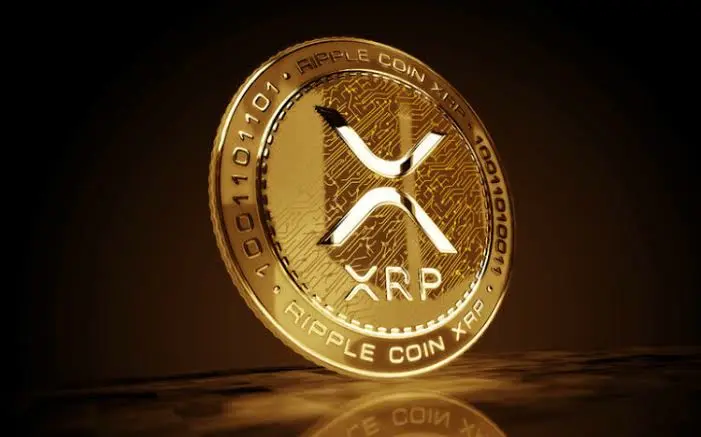
💫💥⚜️ I remember David Schwartz once said: if $XRP had even a 1% chance of reaching $10,000 within the next decade, the market would probably already price XRP around $20 today
yet I still see people on X casually saying: XRP will hit $1,000 by 2030
but with roughly 61B $XRP in circulation: $100 XRP ≈ $6T market cap $500 XRP ≈ $30T market cap $1,000 XRP ≈ $60T+ market cap
that would make $XRP larger than the US economy and massively bigger than the entire crypto market today.
I'm still bullish on XRP long term, but do people seriously still believe XRP reaches $1,000 by 2030?
#TradfiTrad
XRP2.32%
post-image
post-image
  • Reward
  • Comment
  • Repost
  • Share
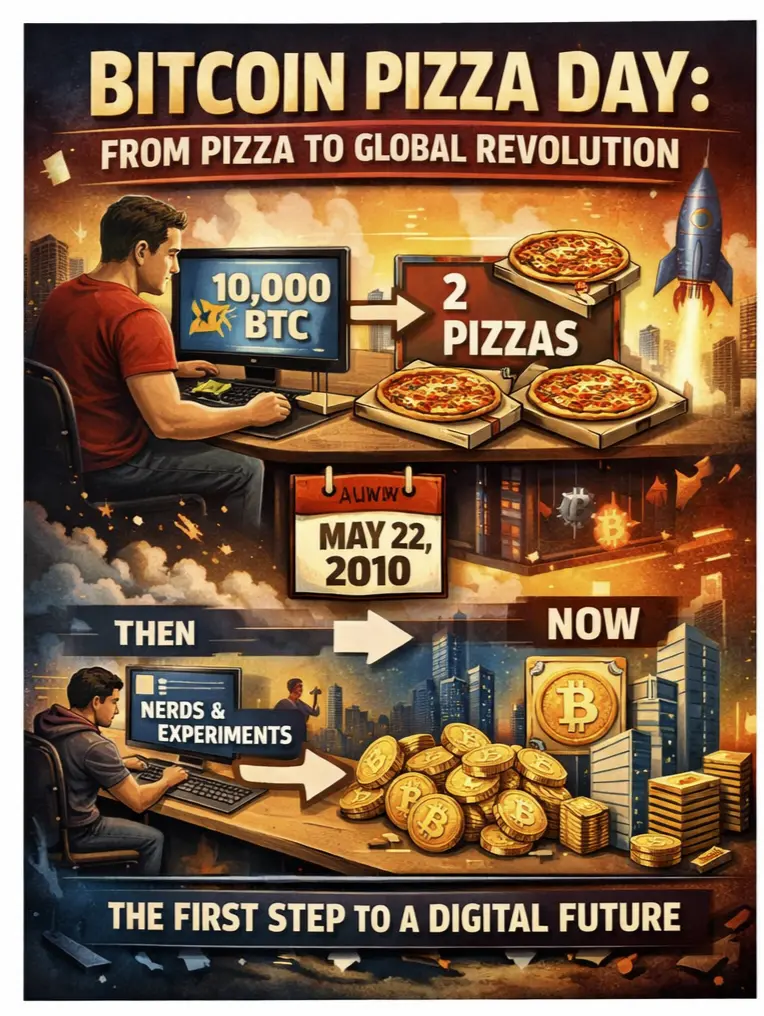
#GateSquarePizzaDay 𝐁𝐈𝐓𝐂𝐎𝐈𝐍 𝐏𝐈𝐙𝐙𝐀 𝐃𝐀𝐘 𝟐𝟎𝟐𝟔 — 𝐓𝐇𝐄 𝐃𝐀𝐘 𝐀 𝐒𝐈𝐌𝐏𝐋𝐄 $𝟒𝟏 𝐓𝐑𝐀𝐍𝐒𝐀𝐂𝐓𝐈𝐎𝐍 𝐓𝐑𝐈𝐆𝐆𝐄𝐑𝐄𝐃 𝐎𝐍𝐄 𝐎𝐅 𝐓𝐇𝐄 𝐋𝐀𝐑𝐆𝐄𝐒𝐓 𝐅𝐈𝐍𝐀𝐍𝐂𝐈𝐀𝐋, 𝐓𝐄𝐂𝐇𝐍𝐎𝐋𝐎𝐆𝐈𝐂𝐀𝐋, 𝐀𝐍𝐃 𝐌𝐎𝐍𝐄𝐓𝐀𝐑𝐘 𝐑𝐄𝐕𝐎𝐋𝐔𝐓𝐈𝐎𝐍𝐒 𝐈𝐍 𝐌𝐎𝐃𝐄𝐑𝐍 𝐇𝐈𝐒𝐓𝐎𝐑𝐘
Bitcoin Pizza Day is no longer just a famous crypto meme or a nostalgic internet story remembered by early blockchain communities. It has evolved into a symbolic milestone representing the exact moment decentralized digital currency entered the real economy for the very first time. On May 22, 20
CryptoDiscovery
#GateSquarePizzaDay 𝐁𝐈𝐓𝐂𝐎𝐈𝐍 𝐏𝐈𝐙𝐙𝐀 𝐃𝐀𝐘 𝟐𝟎𝟐𝟔 — 𝐓𝐇𝐄 𝐃𝐀𝐘 𝐀 𝐒𝐈𝐌𝐏𝐋𝐄 $𝟒𝟏 𝐓𝐑𝐀𝐍𝐒𝐀𝐂𝐓𝐈𝐎𝐍 𝐓𝐑𝐈𝐆𝐆𝐄𝐑𝐄𝐃 𝐎𝐍𝐄 𝐎𝐅 𝐓𝐇𝐄 𝐋𝐀𝐑𝐆𝐄𝐒𝐓 𝐅𝐈𝐍𝐀𝐍𝐂𝐈𝐀𝐋, 𝐓𝐄𝐂𝐇𝐍𝐎𝐋𝐎𝐆𝐈𝐂𝐀𝐋, 𝐀𝐍𝐃 𝐌𝐎𝐍𝐄𝐓𝐀𝐑𝐘 𝐑𝐄𝐕𝐎𝐋𝐔𝐓𝐈𝐎𝐍𝐒 𝐈𝐍 𝐌𝐎𝐃𝐄𝐑𝐍 𝐇𝐈𝐒𝐓𝐎𝐑𝐘
Bitcoin Pizza Day is no longer just a famous crypto meme or a nostalgic internet story remembered by early blockchain communities. It has evolved into a symbolic milestone representing the exact moment decentralized digital currency entered the real economy for the very first time. On May 22, 2010, when Laszlo Hanyecz exchanged 10,000 BTC for two pizzas worth approximately $41, almost nobody could imagine that the transaction would eventually become one of the most iconic moments in global financial history. At that time Bitcoin had no institutional credibility, no regulatory recognition, no ETF ecosystem, no corporate treasury adoption, and virtually no mainstream attention. It was simply an experimental peer-to-peer protocol discussed by programmers and cryptography enthusiasts on obscure internet forums. Yet that single pizza purchase created something extremely important: proof that decentralized digital assets could carry real-world value outside of theoretical code and online discussion.
What makes Pizza Day historically extraordinary is not only the price appreciation of Bitcoin afterward, but the fact that this transaction fundamentally changed how humanity began thinking about money itself. Before Bitcoin, nearly all financial systems depended on centralized authorities, banking intermediaries, payment processors, governments, or trusted third parties to validate transactions and maintain monetary infrastructure. Bitcoin introduced a radically different model — a decentralized network where value could move globally without permission, without borders, and without institutional control. The pizza transaction proved that this new monetary architecture could interact directly with the physical world, transforming Bitcoin from a technological experiment into a functioning economic system. In many ways, those two pizzas became the first commercial proof-of-concept for blockchain-based finance.
𝐅𝐑𝐎𝐌 𝐏𝐈𝐙𝐙𝐀 𝐓𝐎 𝐀 𝐓𝐑𝐈𝐋𝐋𝐈𝐎𝐍-𝐃𝐎𝐋𝐋𝐀𝐑 𝐀𝐒𝐒𝐄𝐓 𝐂𝐋𝐀𝐒𝐒
The growth trajectory of Bitcoin since Pizza Day remains one of the most extraordinary wealth creation events ever recorded in modern finance. From fractions of a cent in 2010 to tens of thousands of dollars per coin in 2026, Bitcoin has transitioned through multiple structural evolutions including:
• experimental internet currency
• retail speculation asset
• mining-driven commodity phase
• institutional investment vehicle
• macro liquidity asset
• digital reserve infrastructure
At current market prices, the 10,000 BTC spent on those pizzas would now be valued at hundreds of millions of dollars, transforming what once appeared to be an insignificant online purchase into arguably the most expensive meal in financial history. However, the real significance is not the “lost fortune” narrative repeated across social media every year. The deeper reality is that without transactions like this, Bitcoin might never have developed enough real-world credibility to evolve into today’s global financial ecosystem. Adoption requires usage. Usage creates trust. Trust creates liquidity. Liquidity creates markets. And markets create entire economic systems.
𝐓𝐇𝐄 𝐇𝐈𝐃𝐃𝐄𝐍 𝐑𝐎𝐋𝐄 𝐎𝐅 𝐋𝐀𝐒𝐙𝐋𝐎 𝐇𝐀𝐍𝐘𝐄𝐂𝐙
Most people only remember Laszlo Hanyecz as “the man who bought pizza with Bitcoin,” but his role in Bitcoin’s early development was far more important than most realize. Beyond Pizza Day itself, Hanyecz was one of the earliest technical contributors helping expand Bitcoin’s infrastructure during its fragile developmental stage. He worked on early software compatibility improvements and became one of the first people to experiment with GPU mining, discovering that graphics cards could dramatically outperform CPUs for Bitcoin mining operations. This innovation transformed Bitcoin mining forever by massively increasing network security and accelerating hash power growth across the ecosystem.
Ironically, the same innovation that strengthened Bitcoin also contributed to concerns around mining centralization. Even Satoshi Nakamoto reportedly expressed concerns regarding GPU mining because it could make mining less accessible for ordinary users. This reveals something important about Bitcoin’s earliest years: the ecosystem was not driven by profit alone. It was shaped by experimentation, philosophical debate, open-source collaboration, and people genuinely trying to build an alternative monetary network outside traditional financial structures.
𝐁𝐈𝐓𝐂𝐎𝐈𝐍 𝐈𝐍 𝟐𝟎𝟐𝟔 — 𝐅𝐑𝐎𝐌 𝐎𝐔𝐓𝐒𝐈𝐃𝐄𝐑 𝐀𝐒𝐒𝐄𝐓 𝐓𝐎 𝐌𝐀𝐂𝐑𝐎 𝐅𝐈𝐍𝐀𝐍𝐂𝐈𝐀𝐋 𝐅𝐎𝐑𝐂𝐄
The Bitcoin market of 2026 looks completely different from the experimental ecosystem of 2010. Today Bitcoin operates inside a global macro environment influenced by:
• institutional ETF flows
• sovereign debt concerns
• global liquidity cycles
• inflation expectations
• interest rate policies
• macroeconomic instability
• AI-integrated financial systems
• tokenized asset infrastructure
Large financial institutions now monitor Bitcoin alongside traditional macro assets such as gold, equities, treasury markets, and commodities. Bitcoin ETFs have introduced mainstream exposure for millions of traditional investors, while corporations and investment funds increasingly view BTC as part of long-term strategic capital allocation frameworks. Instead of being dismissed as internet speculation, Bitcoin is now frequently discussed as:
• digital gold
• decentralized reserve collateral
• macro liquidity indicator
• inflation hedge
• borderless settlement asset
• next-generation financial infrastructure
This transformation represents one of the fastest legitimacy shifts ever experienced by an asset class in financial history.
𝐁𝐈𝐓𝐂𝐎𝐈𝐍’𝐒 𝐂𝐔𝐑𝐑𝐄𝐍𝐓 𝐌𝐀𝐑𝐊𝐄𝐓 𝐒𝐓𝐑𝐔𝐂𝐓𝐔𝐑𝐄
As of Pizza Day 2026, Bitcoin continues trading within a highly volatile but structurally significant macro cycle. Current market conditions are shaped by:
• strong institutional participation
• expanding derivatives liquidity
• ETF capital inflows
• global macro uncertainty
• AI-driven trading systems
• growing stablecoin ecosystems
Key support zones continue forming around major liquidity clusters while resistance remains concentrated near psychologically important institutional levels. Market participants are closely monitoring whether Bitcoin can maintain long-term structural strength despite short-term volatility caused by macroeconomic uncertainty and leveraged market conditions.
At the same time, Bitcoin’s role inside global finance continues expanding because it increasingly acts as a real-time reflection of liquidity conditions across the broader digital asset ecosystem. When liquidity expands, Bitcoin absorbs capital aggressively. When macro fear increases, volatility expands rapidly. This dynamic has transformed BTC into one of the most important macro sentiment indicators inside modern financial markets.
𝐓𝐇𝐄 𝐂𝐎𝐍𝐕𝐄𝐑𝐆𝐄𝐍𝐂𝐄 𝐎𝐅 𝐀𝐈, 𝐁𝐋𝐎𝐂𝐊𝐂𝐇𝐀𝐈𝐍, & 𝐃𝐈𝐆𝐈𝐓𝐀𝐋 𝐅𝐈𝐍𝐀𝐍𝐂𝐄
One of the most important developments of 2026 is the growing convergence between artificial intelligence and blockchain systems. AI is increasingly being integrated into:
• automated trading systems
• blockchain analytics
• liquidity optimization
• smart contract infrastructure
• decentralized applications
• digital identity systems
• tokenized financial models
Bitcoin itself remains at the center of this broader transformation because it represents the foundational reserve asset of the digital economy. Just as gold once anchored traditional monetary systems, Bitcoin is increasingly becoming the liquidity foundation around which modern digital financial infrastructure is being built.
This means Pizza Day is no longer only about celebrating the past.
It is also about recognizing how early experimentation created the foundation for the future global digital economy.
𝐅𝐈𝐍𝐀𝐋 𝐌𝐀𝐑𝐊𝐄𝐓 𝐌𝐄𝐀𝐍𝐈𝐍𝐆
Bitcoin Pizza Day teaches one of the most important lessons in technological history:
Every revolutionary innovation looks small, irrational, and misunderstood before the world fully understands its impact.
In 2010, Bitcoin looked like a niche internet experiment.
In 2026, Bitcoin stands as: • a trillion-dollar financial ecosystem
• a globally recognized digital asset
• a decentralized liquidity network
• an institutional investment category
• a foundational pillar of digital finance
From two pizzas to global financial transformation…
Bitcoin Pizza Day represents the exact moment the future quietly entered the real world.
#CreatorCarnival #ContentMining #TradfiTradingChallenge
repost-content-media
  • Reward
  • 2
  • Repost
  • Share
Yusfirah:
2026 GOGOGO 👊
View More
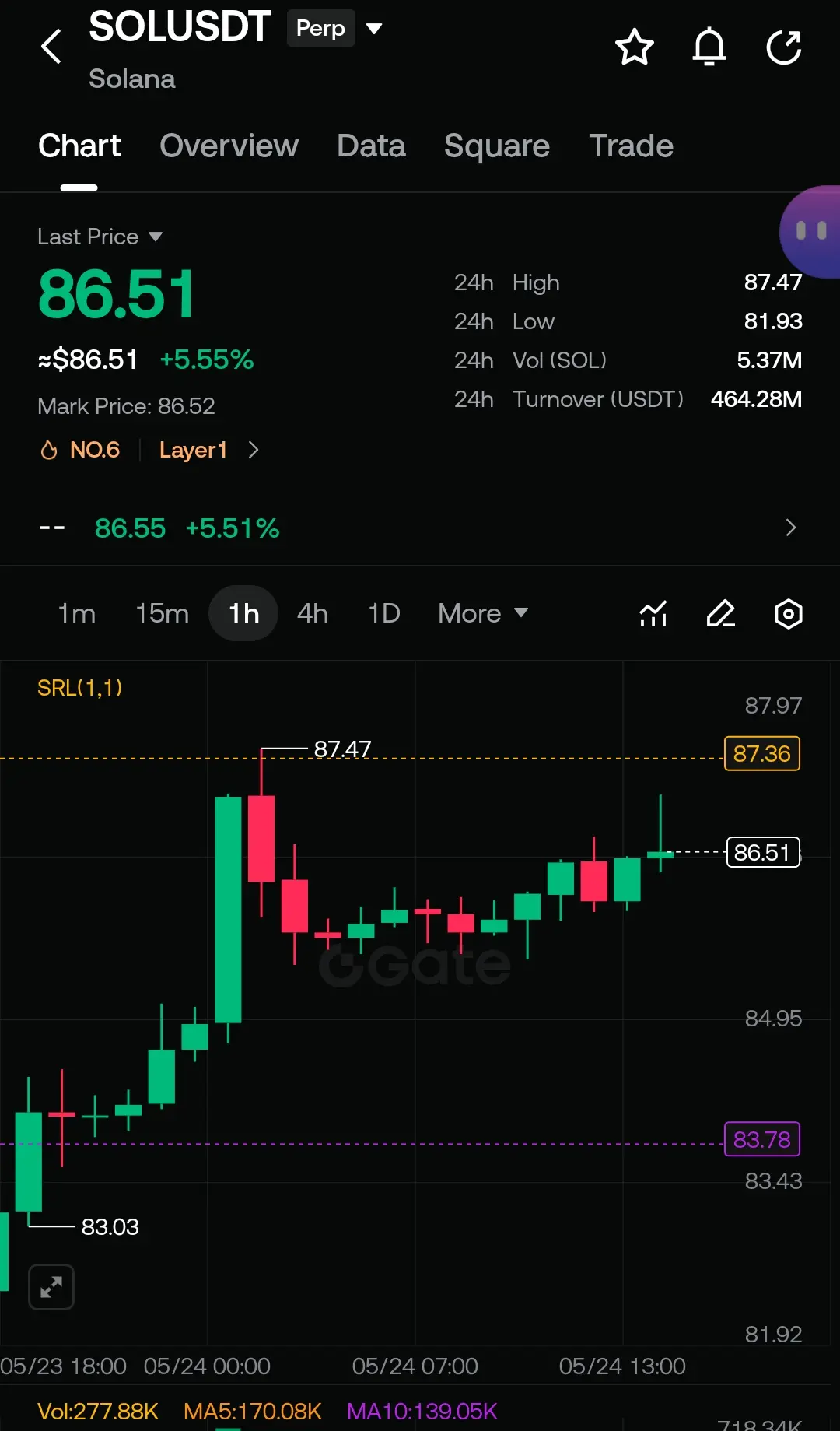
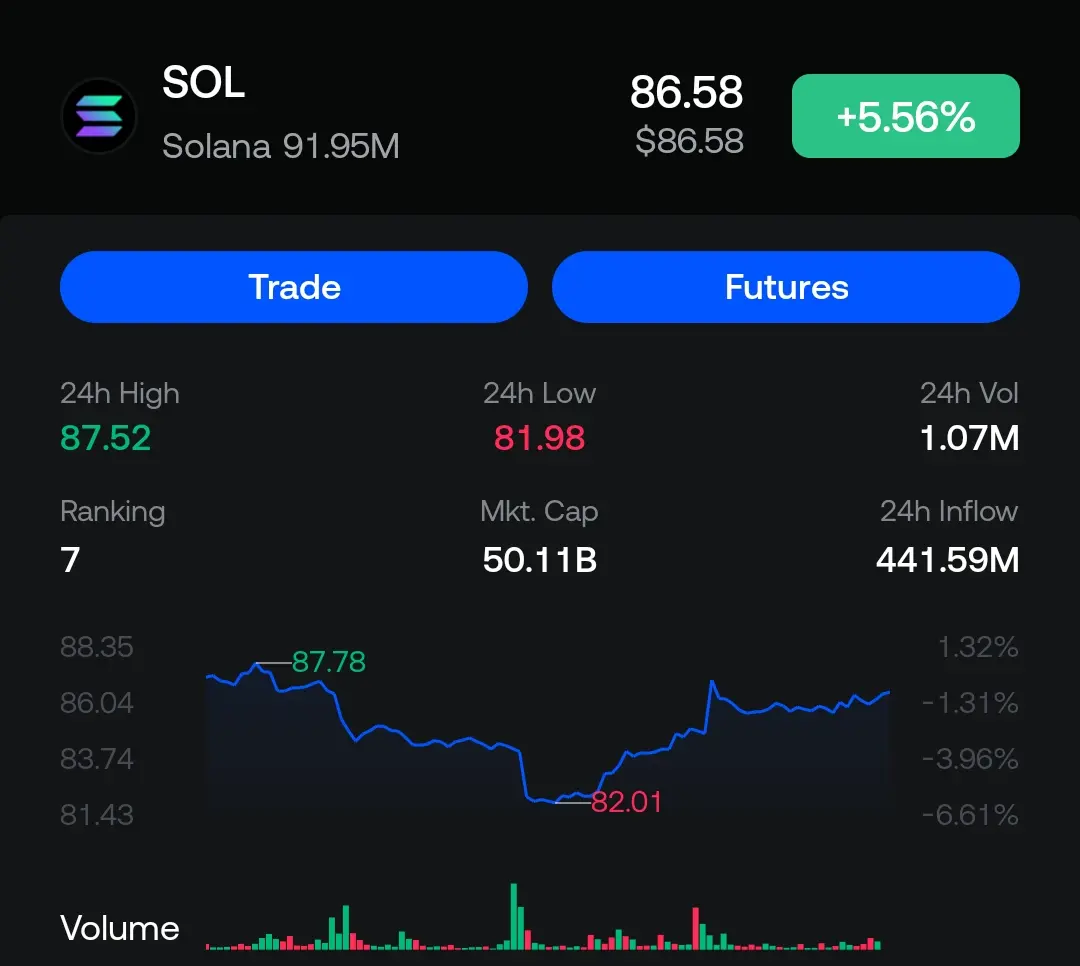
$SOL ‌😂 SOL — “Solana waking up from its nap.”
📈 Entry: 86.51–86.55
👉 DIRECTION: LONG
🚀 TP1: 87.36
🌕 TP2: 87.97
🛑 Stop: below 84.95#TradfiTradingChallenge
SOL3.92%
post-image
post-image
  • Reward
  • Comment
  • Repost
  • Share
Load More