# O que é Layer 1 na Blockchain? - Guia Completo
## Introdução
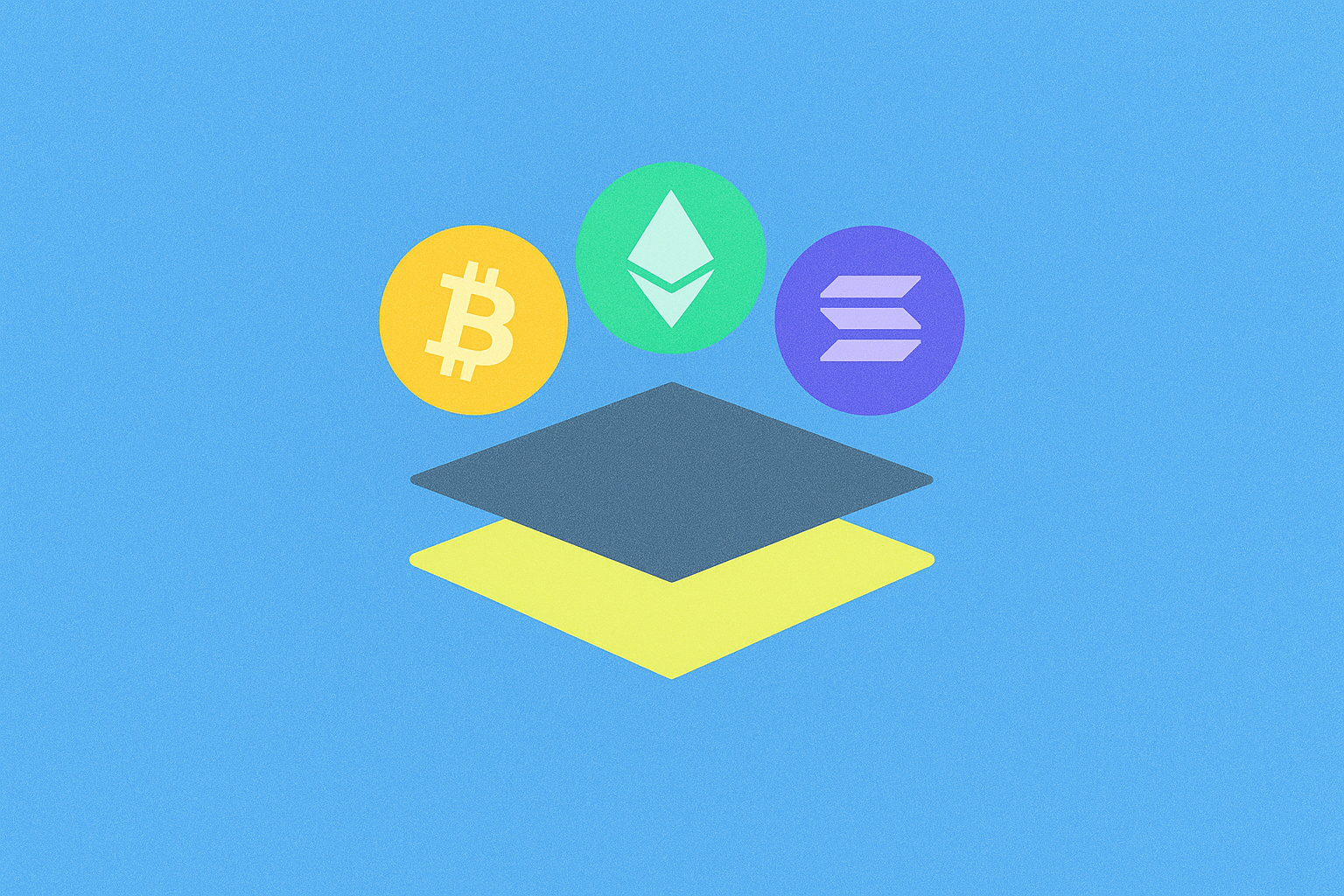
Layer 1 é a rede base do blockchain onde as transações são validadas e finalizadas independentemente, como Bitcoin, Ethereum e Solana. Este guia completo explora a arquitetura fundamental das blockchains, seus desafios de escalabilidade e soluções práticas. Ideal para investidores e desenvolvedores em Gate, o artigo compara Layer 1 com Layer 2, analisa mecanismos de consenso e apresenta exemplos reais como SegWit, Sharding e Lightning Network. Compreender estas camadas é essencial para navegar o ecossistema blockchain moderno e avaliar projetos de criptografia com segurança e conhecimento técnico.
Overview
Layer 1 refers to a base network, such as Bitcoin, Ethereum, or Solana, and its underlying infrastructure. Layer 1 blockchains can validate and finalize transactions without the need for another network. Making improvements to the scalability of Layer 1 networks is challenging, as demonstrated by Bitcoin's ongoing limitations. As a solution, developers create Layer 2 protocols that rely on the Layer 1 network for security and consensus. Bitcoin's Lightning Network is one example of a Layer 2 protocol, allowing users to make transactions freely before recording them into the main chain.
Introduction
Layer 1 and Layer 2 are terms that help us understand the architecture of different blockchains, projects, and development tools. If you've ever wondered about the relationship between various scaling solutions or how different blockchain ecosystems interact, learning about the different blockchain layers will provide valuable insights.
What Is Layer 1?
A Layer 1 network is another name for a base blockchain. Bitcoin, Ethereum, Solana, and other major public blockchains are all Layer 1 protocols. We refer to them as Layer 1 because these are the main networks within their respective ecosystems. In contrast to Layer 1, we have off-chain solutions and other Layer 2 solutions that are built on top of the main chains.
In other words, a protocol is Layer 1 when it processes and finalizes transactions on its own blockchain. Layer 1 networks also have their own native tokens, which are used to pay for transaction fees and participate in network validation. These networks operate independently and do not rely on other blockchains for their core functionality.
Layer 1 Scaling
A common challenge with Layer 1 networks is their inability to scale efficiently. Bitcoin and other major blockchains have struggled to process transactions during periods of increased demand. Bitcoin uses the Proof of Work (PoW) consensus mechanism, which requires significant computational resources to maintain security and decentralization.
While PoW ensures decentralization and security, PoW networks tend to slow down when the volume of transactions is too high. This increases transaction confirmation times and makes transaction fees more expensive. The trade-off between security, decentralization, and scalability—often referred to as the blockchain trilemma—remains a fundamental challenge.
Blockchain developers have been working on scalability solutions for many years, and there is ongoing discussion regarding the most effective approaches. For Layer 1 scaling, some primary options include:
-
Increasing block size: Allowing more transactions to be processed in each block, though this may impact network decentralization.
-
Changing the consensus mechanism: Transitioning from Proof of Work to Proof of Stake, as demonstrated by Ethereum's upgrade to improve energy efficiency and throughput.
-
Implementing sharding: A form of database partitioning that divides the network into smaller segments to process transactions in parallel.
Layer 1 improvements require significant work to implement and often involve trade-offs between different network properties. In many cases, not all network users will agree to proposed changes, which can lead to community divisions or hard forks, as occurred historically in blockchain development.
SegWit
One notable example of a Layer 1 scaling solution is Bitcoin's SegWit (Segregated Witness). This upgrade increased Bitcoin's throughput by reorganizing how block data is structured—digital signatures are no longer part of the transaction input. This change freed up more space for transactions per block without compromising the network's security. SegWit was implemented via a backward-compatible soft fork, meaning that even Bitcoin nodes not yet updated to include SegWit can still process transactions, ensuring network compatibility during the transition.
What Is Layer 1 Sharding?
Sharding is a popular Layer 1 scaling solution designed to increase transaction throughput. The technique is a form of database partitioning that can be applied to blockchain distributed ledgers. A network and its nodes are divided into different shards to distribute the workload and improve transaction processing speed. Each shard manages a subset of the entire network's activity, maintaining its own transactions, nodes, and separate blocks.
With sharding, individual nodes no longer need to maintain a complete copy of the entire blockchain. Instead, each node reports the work it has completed back to the main chain, sharing the state of its local data, including account balances and other critical metrics. This approach significantly reduces the computational burden on individual nodes while maintaining network security through cross-shard communication.
Layer 1 vs. Layer 2
When it comes to network improvements, not everything can be efficiently solved on Layer 1. Due to technological constraints and the need to maintain decentralization and security, certain changes are difficult or nearly impossible to implement on the main blockchain network. For example, transitioning to Proof of Stake requires extensive development and testing to ensure network stability.
Some use cases simply cannot function effectively with Layer 1 due to scalability limitations. A blockchain-based game could not realistically use certain Layer 1 networks due to lengthy transaction times and high fees. However, such applications may still want to leverage Layer 1's security and decentralization guarantees. The optimal solution is to build on top of the Layer 1 network using a Layer 2 solution.
Lightning Network
Layer 2 solutions build on top of Layer 1 networks and rely on them to finalize transactions. One prominent example is the Lightning Network, built on Bitcoin. The Bitcoin network under heavy traffic can take considerable time to process transactions. The Lightning Network enables users to make rapid payments with their Bitcoin off the main chain, with final balances reported back to the main chain later. This approach essentially bundles multiple transactions into a single final record, significantly reducing time and resource consumption while maintaining security through cryptographic proofs.
Layer 1 Blockchain Examples
Now that we understand what Layer 1 is, let's examine some notable examples. There is a diverse variety of Layer 1 blockchains, each supporting unique use cases and addressing the blockchain trilemma of decentralization, security, and scalability in different ways.
Elrond
Elrond is a Layer 1 network founded in 2018 that employs sharding technology to enhance performance and scalability. The Elrond blockchain can process over 100,000 transactions per second (TPS), significantly exceeding traditional blockchain networks. Its two distinctive features are its Secure Proof of Stake (SPoS) consensus protocol and Adaptive State Sharding.
Adaptive State Sharding operates through automatic shard splits and merges as the network experiences changes in user participation. The network's entire architecture is sharded, including both its state and transaction processing. Validators also move between shards dynamically, reducing the likelihood of malicious takeover attempts on individual shards.
Elrond's native token EGLD serves multiple functions: paying transaction fees, deploying decentralized applications, and rewarding validators who participate in the network's consensus mechanism. Additionally, the Elrond network is certified as Carbon Negative, offsetting more CO2 than its Proof of Stake mechanism generates.
Harmony
Harmony is an Effective Proof of Stake (EPoS) Layer 1 network with built-in sharding support. The blockchain's mainnet features four shards, each creating and verifying new blocks in parallel. Each shard operates at its own speed, allowing them to maintain different block heights independently.
Harmony employs a cross-chain strategy to attract developers and users to its ecosystem. Trustless bridges to major blockchains play a crucial role, enabling users to exchange tokens without the custodial risks typically associated with centralized bridges. Harmony's vision for scaling Web3 emphasizes Decentralized Autonomous Organizations (DAOs) and zero-knowledge proofs.
As the DeFi ecosystem increasingly focuses on multi-chain and cross-chain opportunities, Harmony's bridging infrastructure has become increasingly valuable. The network prioritizes NFT infrastructure, DAO tooling, and inter-protocol bridges as major development areas.
Harmony's native token, ONE, serves multiple purposes: paying network transaction fees, participating in the consensus mechanism through staking, and governance participation. Successful validators and stakers earn block rewards and transaction fees based on their contributions.
Celo
Celo is a Layer 1 network forked from Go Ethereum (Geth) in 2017, though it has implemented significant modifications, including Proof of Stake consensus and a unique address system. The Celo Web3 ecosystem encompasses DeFi, NFTs, and payment solutions, with over 100 million transactions confirmed on the network. Notably, Celo allows users to use phone numbers or email addresses as public keys, democratizing blockchain access. The blockchain operates efficiently on standard computers without requiring specialized hardware.
Celo's primary token is CELO, a utility token used for transactions, security, and network rewards. The Celo network also features multiple stablecoins including cUSD, cEUR, and cREAL. These stablecoins are generated by users, and their price stability is maintained through a mechanism similar to MakerDAO's DAI. Transactions using Celo stablecoins can be paid with any other Celo asset, providing flexibility for users.
Celo's address system and stablecoin offerings aim to enhance cryptocurrency accessibility and accelerate mainstream adoption. By addressing the volatility concerns and complexity that discourage newcomers to crypto, Celo positions itself as a bridge between traditional finance and blockchain technology.
THORChain
THORChain is a cross-chain permissionless decentralized exchange (DEX) and Layer 1 network built using the Cosmos SDK. It employs the Tendermint consensus mechanism for validating transactions. THORChain's primary objective is enabling decentralized cross-chain liquidity without requiring assets to be pegged or wrapped, which adds additional risk and complexity for multi-chain investors.
In practice, THORChain functions as a vault manager that monitors deposits and withdrawals across multiple blockchains. This architecture creates decentralized liquidity while eliminating centralized intermediaries and their associated risks. RUNE is THORChain's native token, used for transaction fees, governance decisions, security deposits, and network validation.
THORChain's Automated Market Maker (AMM) model uses RUNE as the base pair, allowing users to swap RUNE for any other supported asset. In many ways, the project operates like a cross-chain decentralized exchange, with RUNE serving as both a settlement asset and security mechanism for liquidity pools.
Kava
Kava is a Layer 1 blockchain that combines the speed and interoperability features of Cosmos with the robust developer support of Ethereum. Using a "co-chain" architecture, the Kava Network features distinct blockchains for both EVM and Cosmos SDK development environments. With Inter-Blockchain Communication (IBC) support on the Cosmos co-chain, developers can deploy decentralized applications that seamlessly interoperate between the Cosmos and Ethereum ecosystems.
Kava employs the Tendermint Proof of Stake consensus mechanism, providing substantial scalability for applications on the EVM co-chain. Supported by the KavaDAO, the Kava Network offers transparent, on-chain developer incentives designed to reward the top 100 projects on each co-chain based on usage metrics.
Kava features KAVA as its native utility and governance token, alongside USDX, a US-dollar pegged stablecoin. KAVA is used to pay transaction fees and is staked by validators to generate network consensus. Users can delegate their staked KAVA to validators to earn a portion of KAVA emissions. Both stakers and validators can vote on governance proposals that determine the network's operational parameters.
IoTeX
IoTeX is a Layer 1 network founded in 2017 with a specialized focus on combining blockchain technology with the Internet of Things (IoT). This integration gives users control over the data their devices generate, enabling "machine-backed DApps, assets, and services." By managing personal data through blockchain, users gain secure ownership and control over their digital assets.
IoTeX's integrated approach combining hardware and software provides an innovative solution for individuals to maintain privacy and data control without sacrificing user experience. The system enabling users to earn digital assets from their real-world data is called MachineFi, representing a paradigm shift in data ownership.
IoTeX has released notable hardware products including Ucam and Pebble Tracker. Ucam is an advanced home security camera allowing users to monitor their homes remotely with complete privacy protection. Pebble Tracker is a smart GPS device with 4G connectivity and comprehensive tracking capabilities, recording not only GPS data but also environmental information including temperature, humidity, and air quality in real-time.
Regarding blockchain architecture, IoTeX supports multiple Layer 2 protocols built on top of it. The blockchain provides tools for creating customized networks that utilize IoTeX for transaction finalization. These chains can interact with one another and share information through IoTeX, enabling developers to easily create specialized sub-chains tailored to specific IoT device requirements. IoTeX's native coin, IOTX, is used for transaction fees, staking, governance participation, and network validation.
Closing Thoughts
Today's blockchain ecosystem encompasses numerous Layer 1 networks and Layer 2 protocols, each serving distinct purposes and addressing different scalability challenges. Understanding these distinctions is essential for navigating the complex landscape of blockchain projects. As you explore new blockchain initiatives, especially those emphasizing network interoperability and cross-chain solutions, knowledge of Layer 1 and Layer 2 architecture will provide crucial context for evaluating their technical approach and potential applications.
FAQ
O que é Layer 1 em blockchain e qual é seu propósito principal?
Layer 1 é a cadeia principal do blockchain que armazena dados,valida transações e executa contratos inteligentes。Seu propósito principal é fornecer a estrutura fundamental da rede blockchain。
Quais são as diferenças entre blockchains de Camada 1 e Camada 2?
Layer 1 é a rede base onde todas as transações ocorrem diretamente,como Bitcoin e Ethereum. Layer 2 são redes secundárias que rodam sobre Layer 1 para melhorar escalabilidade e velocidade,transferindo transações para reduzir carga na rede base.
Quais são exemplos de blockchains Layer 1 populares?
Os blockchains Layer 1 populares incluem Bitcoin, Ethereum e Binance Smart Chain. Outros exemplos notáveis são Cardano, Solana, Avalanche, Polkadot, Algorand e NEAR Protocol.
Quais são as vantagens e desvantagens dos blockchains Layer 1?
Layer 1 oferece segurança robusta e descentralização completa,mas enfrenta velocidade lenta e problemas de escalabilidade。As taxas podem ser altas durante congestionamentos。Vantagem:controle total;Desvantagem:menor throughput comparado a Layer 2。
Por que os blockchains de Camada 1 enfrentam desafios de escalabilidade?
Os blockchains de Camada 1 enfrentam desafios de escalabilidade devido à sua natureza descentralizada,que causa congestionamento de rede e taxas elevadas durante períodos de pico,limitando a velocidade e a capacidade de processamento de transações.
Como a Layer 1 garante segurança e descentralização?
A Layer 1 garante segurança através de nós distribuídos que validam transações, impedindo controle centralizado. Mecanismos de consenso como Proof of Work ou Proof of Stake reforçam a segurança, enquanto a estrutura descentralizada assegura que nenhuma entidade única controle a rede.
* As informações não se destinam a ser e não constituem aconselhamento financeiro ou qualquer outra recomendação de qualquer tipo oferecido ou endossado pela Gate.