Unlike investing in a single chip company, SOXX focuses on comprehensive industry allocation. By holding shares in multiple semiconductor companies, it spans several segments—including GPU, CPU, memory chips, foundry, semiconductor equipment, and network chips—enabling investors to participate more directly in the development of the entire semiconductor value chain.
In recent years, as industry leaders like NVIDIA, TSMC, and Broadcom have experienced rapid growth, the market’s attention has increasingly shifted toward the structural logic of semiconductor ETFs. SOXX’s performance is now widely regarded as a key market indicator for AI infrastructure, global technology capital expenditures, and the semiconductor cycle.
Basic Operating Mechanism of the SOXX ETF
Essentially, SOXX is an industry-focused ETF. Its core function is to track semiconductor-related indices, allowing investors to gain exposure to the entire chip industry in a single transaction—eliminating the need to purchase multiple semiconductor stocks individually.
An ETF (Exchange Traded Fund) is a fund traded on exchanges that can be bought and sold in real time, similar to ordinary stocks. SOXX is an industry ETF within this category, concentrating on companies throughout the global semiconductor and chip industry chain.
Unlike traditional actively managed funds, SOXX emphasizes index tracking. Rather than actively selecting individual stocks, the fund allocates weights to semiconductor companies according to established index rules, aiming to mirror the performance of the entire industry as closely as possible.
Structurally, SOXX functions as a “comprehensive basket” for the semiconductor sector. Whether it’s AI chips, data center GPUs, wafer manufacturing, or semiconductor equipment, any company included in the index’s coverage can become part of SOXX’s holdings.
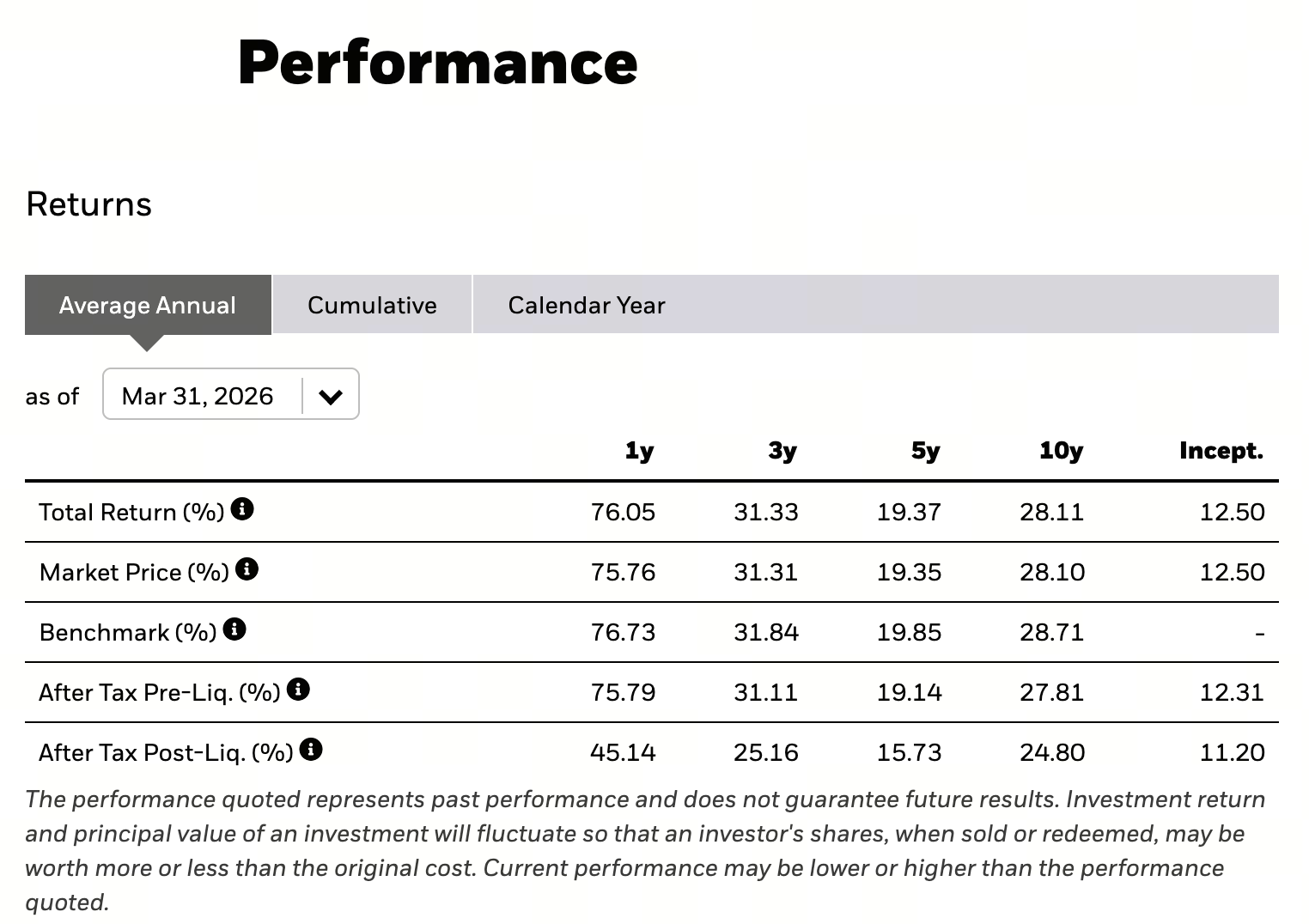
Source: ishares.com
The Semiconductor Index Composition Tracked by SOXX
SOXX primarily tracks the ICE Semiconductor Index, designed to reflect the performance of key global semiconductor companies. Its core methodology is to use an index-based approach to cover critical enterprises throughout the chip value chain, allowing the ETF to directly mirror the overall development trends of the semiconductor industry.
The index typically prioritizes companies with large market capitalizations, high liquidity, and strong industry representation. This includes companies in GPU, CPU, and AI chips, as well as foundries, semiconductor equipment manufacturers, and network chip providers. As a result, SOXX’s coverage extends beyond any single chip segment, encompassing the entire semiconductor value chain.
The index is regularly adjusted based on market capitalization, liquidity, and industry influence. When new industry leaders emerge, their weighting in SOXX may gradually increase. SOXX’s structure is not simply about holding “chip stocks”—it is designed to reflect global technology industry and semiconductor cycle shifts through its index composition.
SOXX Holdings Structure and Weight Allocation Logic
SOXX’s holdings are typically concentrated in the world’s leading semiconductor companies, with weight allocations determined by market capitalization, industry status, and index methodology. Consequently, companies such as NVIDIA, Broadcom, TSMC, AMD, and Intel often account for significant portions of the ETF.
From an industry perspective, SOXX’s allocation is not limited to a single segment. Its holdings span AI chips, data center chips, consumer electronics chips, communication chips, semiconductor equipment, and wafer manufacturing—making it a comprehensive tool for allocating across the entire semiconductor value chain.
This structure enhances the ETF’s representation of the industry as a whole but also means that fluctuations in a handful of leading companies can significantly impact SOXX’s overall performance. Although SOXX is a diversified industry ETF, its performance remains heavily influenced by the market movements of top chip companies.
In recent years, NVIDIA and TSMC have become central to SOXX’s performance, as growth in the global semiconductor industry has become increasingly concentrated in AI and high-performance computing. With the continued expansion of large-scale model training, data centers, and cloud computing, the importance of AI GPUs and advanced manufacturing processes continues to rise.
NVIDIA benefits primarily from demand growth in AI GPUs and data centers, while TSMC serves as a key global platform for advanced manufacturing. Because SOXX allocates higher weights to industry leaders, changes in these companies’ profitability, capital expenditures, and market expectations often directly impact the ETF’s overall trajectory.
The semiconductor industry is highly interconnected. For example, increased demand for AI GPUs typically drives further demand for advanced manufacturing, semiconductor equipment, memory chips, and network chips. SOXX’s upward trends therefore reflect not just the performance of individual companies but also the expansion of the entire chip value chain and heightened expectations for technology capital spending.
How SOXX Reflects the Global Semiconductor Industry Cycle
The semiconductor industry is inherently cyclical, and SOXX is widely regarded as a key indicator for tracking the industry’s cycle.
During an industry upcycle, you typically observe:
- Growth in AI demand
- Data center expansion
- Increased cloud computing capital expenditures
- Recovery in consumer electronics
These factors drive higher chip demand.
During a downcycle, you may see:
- Inventory buildup
- Declining chip prices
- Reduced corporate capital expenditures
- Slowing global demand
These developments impact semiconductor company profitability.
Because SOXX holds the industry’s leading companies, its performance often anticipates market expectations for semiconductor cycles. Historically, semiconductor ETFs have been among the most volatile assets in the technology sector.
SOXX vs. Investing in Individual Chip Stocks
The main distinction between SOXX and investing in individual chip stocks like NVIDIA, AMD, or Intel is diversification across the industry.
Holding a single chip company means your returns are highly dependent on that company’s product competitiveness, profitability, and market share changes.
SOXX, by contrast, is an industry allocation tool. Its core logic is to mitigate single-company risk by holding multiple leading firms, while capturing returns from the overall growth of the semiconductor industry.
SOXX is particularly useful for tracking:
- The overall semiconductor industry trend
- AI infrastructure growth
- Global technology capital expenditures
- Chip value chain cycles
rather than simply betting on the performance of a single company.
However, because the ETF diversifies its weights, SOXX’s rise % during a surge in a leading company is typically lower than owning that individual stock outright.
Advantages, Limitations, and Potential Risks of the SOXX Semiconductor ETF
One of SOXX’s greatest strengths is its direct exposure to core global semiconductor assets, reducing the risk of investing in individual stocks. For many investors, the chip industry’s technical barriers are high—SOXX’s ETF structure enables users to participate in the growth of AI, data centers, cloud computing, and the global semiconductor value chain without having to research each chip company individually.
SOXX also offers strong industry representation and allocation efficiency. Because its holdings are concentrated in global leaders like NVIDIA, TSMC, Broadcom, and AMD, it can more directly reflect trends in AI infrastructure and global technology capital expenditures. When the semiconductor industry enters an upcycle, SOXX typically demonstrates robust growth potential.
| Dimension |
SOXX Characteristics |
| Core Positioning |
Semiconductor Industry ETF |
| Main Coverage |
AI chips, GPU, wafer manufacturing, semiconductor equipment |
| Advantages |
Diversifies single-chip stock risk, strong industry representation |
| Main Drivers |
AI demand, data center expansion, technology capital expenditures |
| Potential Risks |
Industry cycle volatility, supply chain risk, geopolitical factors |
| Volatility |
Typically higher than traditional broad-market ETFs |
| Best Use Case |
Technology growth and semiconductor industry allocation |
On the other hand, SOXX has certain limitations. Given the semiconductor industry’s pronounced cyclicality, the ETF’s overall performance is easily affected by AI market sentiment, global economic cycles, supply chain changes, and geopolitical risks. Especially during periods of inventory adjustment or reduced capital spending, SOXX’s volatility is typically much higher than traditional broad-market ETFs. It is better suited as a technology growth allocation tool rather than a low-volatility defensive asset.
Summary
SOXX is one of the world’s most representative semiconductor ETFs. Its core value lies in its index-based approach to allocating across key companies in the global chip value chain and reflecting the overall development trends of the semiconductor industry.
As demand for AI, large models, data centers, and high-performance computing continues to grow, SOXX is no longer just an ordinary industry ETF—it is increasingly recognized as an essential market indicator for global technology infrastructure and the semiconductor cycle.
FAQ
What is SOXX?
SOXX is an ETF focused on the semiconductor industry. It mainly tracks semiconductor indices and allocates to leading companies throughout the global chip value chain.
Why is SOXX related to the AI industry?
AI large models and data centers require substantial amounts of GPUs and high-performance chips. Because SOXX holds many related semiconductor companies, it is significantly influenced by growth in the AI sector.
What are SOXX’s main holdings?
SOXX typically holds large semiconductor companies such as NVIDIA, TSMC, Broadcom, AMD, and Intel.
How does SOXX differ from buying individual chip stocks?
SOXX is an industry ETF that diversifies holdings across the entire semiconductor value chain, while holding individual chip stocks is more dependent on the performance of a single company.
Is SOXX high risk?
Due to the high volatility inherent in the semiconductor industry, SOXX is generally considered a highly volatile technology sector ETF.