The article "2025 BC Price Prediction" offers a comprehensive analysis of Blood Crystal's market position and price forecasts, detailing the potential price trajectory and investment strategies for BC tokens through 2030. It addresses investment value, market dynamics, technological advancements, and macroeconomic impacts. Intended for investors and traders active in blockchain gaming, the article covers historical trends, future predictions, and risk management. Easily trackable key themes include BC pricing, market volatility, technological growth, and investment strategies, optimizing content for effective, swift scanning.
Introduction: BC's Market Position and Investment Value
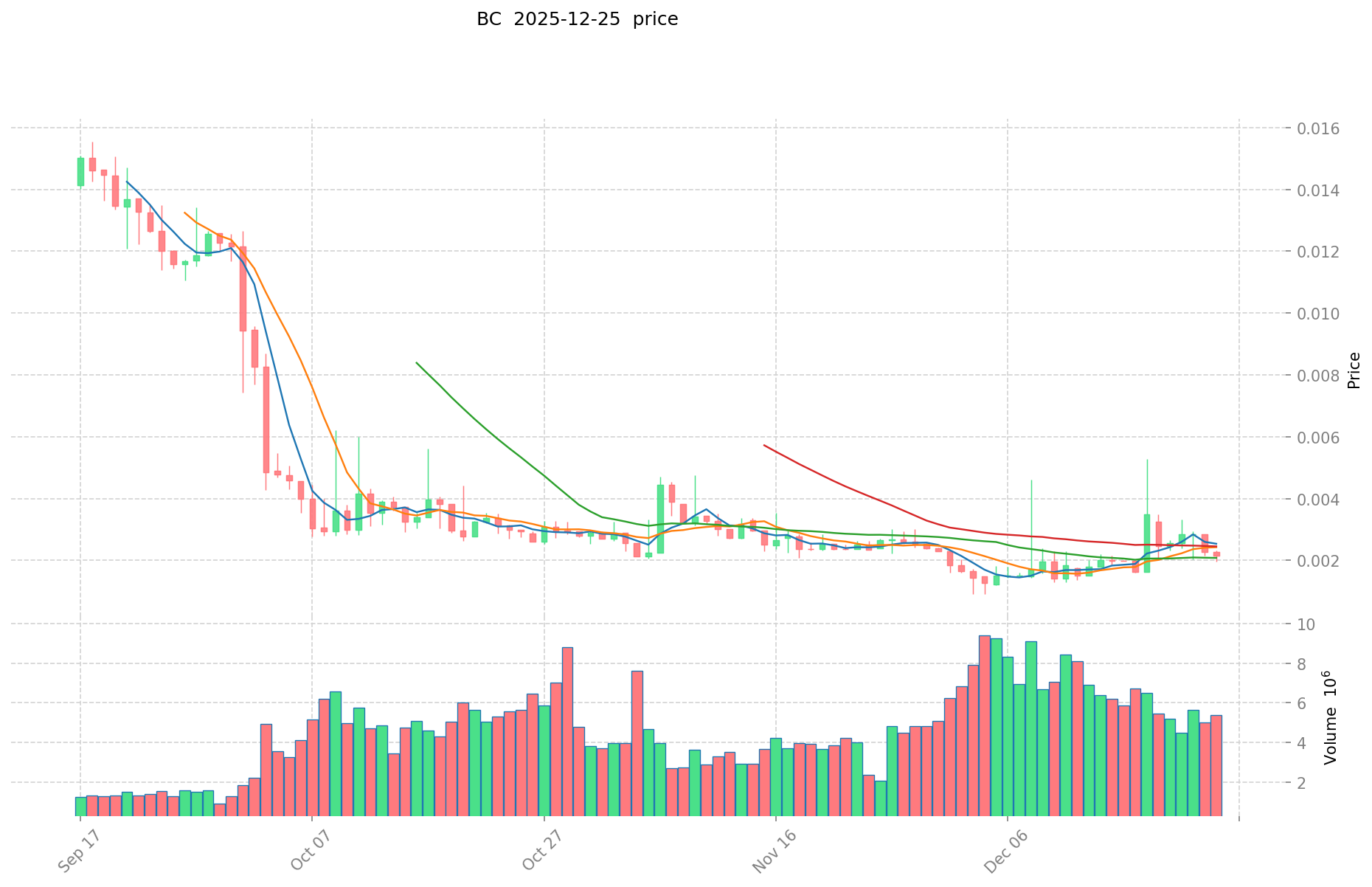
Blood Crystal (BC) is an ambitious blockchain gaming project that combines the timeless masterpiece concept with innovative gaming mechanics, operating as an ERC-20 token on the Ethereum network. Since its inception in March 2024, BC has established itself in the gaming sector with a unique positioning that transforms traditional RPG gameplay into a blockchain-enabled cookie clicker game while maintaining strategic party-based mechanics. As of December 25, 2025, BC boasts a market capitalization of approximately $1.85 million with a circulating supply of 844 million tokens, currently trading at $0.002191 per token. This emerging digital asset, characterized as a "next-generation blockchain game token," is playing an increasingly important role in bridging traditional gaming experiences with blockchain technology and decentralized gaming ecosystems.
This article will provide a comprehensive analysis of BC's price trajectory from 2025 through 2030, integrating historical price patterns, market supply and demand dynamics, ecosystem development, and macroeconomic factors to deliver professional price forecasts and practical investment strategies for potential investors and traders on Gate.com and other supported platforms.
Blood Crystal (BC) Market Analysis Report
I. BC Price History Review and Market Status
BC Historical Price Evolution Trajectory
-
December 2024: BC reached its all-time high (ATH) of $0.095102 on December 18, 2024, representing a peak valuation period for the token.
-
December 2025: BC experienced a significant decline, hitting its all-time low (ATL) of $0.000901 on December 3, 2025, marking a sharp correction from previous peaks.
BC Current Market Position
As of December 25, 2025, Blood Crystal is trading at $0.002191, reflecting substantial volatility since its launch. The token demonstrates the following characteristics:
Price Performance Metrics:
- 24-Hour Change: +10.04%, with trading ranging between $0.001986 (24H low) and $0.00224 (24H high)
- 7-Day Performance: +20.52%, indicating recent positive momentum
- 30-Day Performance: -15.98%, showing intermediate-term weakness
- 1-Year Performance: -94.32%, reflecting significant long-term depreciation from its launch price of $0.025
Market Capitalization and Supply Dynamics:
- Current market capitalization: $1,849,299.85
- Circulating supply: 844,043,746 BC tokens (84.40% of total supply)
- Total supply: 844,043,746 tokens
- Maximum supply: 1,000,000,000 tokens
- Fully diluted valuation (FDV): $1,849,299.85
- Market cap to FDV ratio: 84.4%, indicating limited additional dilution potential
Trading Activity:
- 24-hour trading volume: $11,658.02
- Market dominance: 0.000058%
- Token holders: 191
- Exchange listings: 1 (Gate.com)
Token Specifications:
- Protocol: ERC-20 (Ethereum blockchain)
- Contract address: 0x4b6d036d0bc62a633acca6d10956e9dbbb16748f
- Market ranking: 2181
Click to view current BC market price
BC Market Sentiment Index
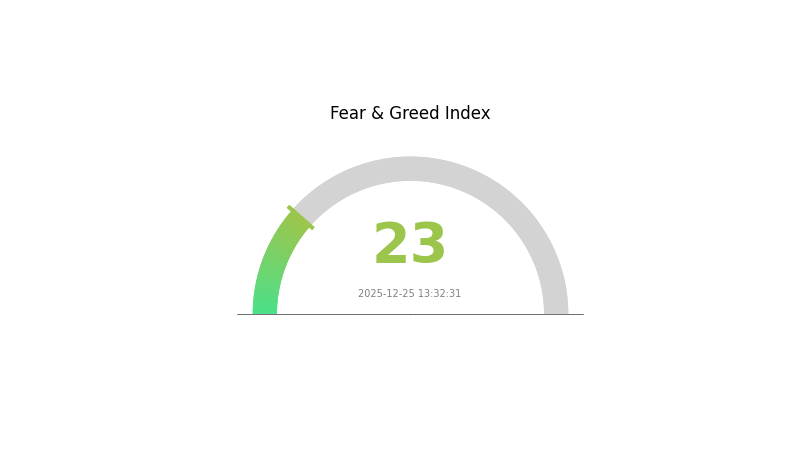
2025-12-25 Fear and Greed Index: 23 (Extreme Fear)
The crypto market is currently experiencing extreme fear, indicating significant pessimism among investors. A reading of 23 signals heightened market anxiety and risk aversion. This environment typically presents contrarian opportunities for long-term investors, as extreme fear often precedes market recoveries. However, caution remains warranted until sentiment stabilizes. Monitor key support levels closely and consider dollar-cost averaging strategies during such periods of uncertainty.
Click to view the current Fear & Greed Index
BC Holdings Distribution
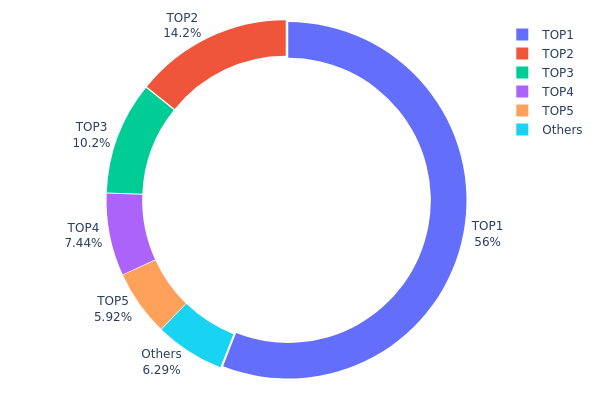
The address holdings distribution represents the allocation of BC tokens across different wallet addresses on the blockchain, serving as a critical indicator for assessing network decentralization, market concentration risk, and potential price manipulation vulnerabilities. By analyzing the top holders and their respective proportions, market participants can evaluate the stability and maturity of the token's ecosystem structure.
Current data reveals a pronounced concentration pattern within BC's holder landscape. The top five addresses collectively control approximately 93.68% of the total supply, with the largest single address (0x40ec...5bbbdf) commanding an overwhelming 55.95% stake. This degree of concentration significantly exceeds healthy decentralization benchmarks, indicating substantial centralization risk. The second and third largest holders account for 14.21% and 10.16% respectively, while the remaining distribution shows a sharp decline in holdings proportion, with only 6.32% dispersed among other addresses.
This extreme concentration structure presents notable implications for market dynamics and governance. The dominant position of the leading address creates asymmetric risk exposure, as large-scale token movements from this entity could trigger substantial price volatility and liquidity disruptions. The steep hierarchical distribution of holdings suggests limited participation among retail holders and raises concerns regarding vulnerability to concentrated decision-making that could influence network direction. Such centralization patterns typically correlate with earlier-stage projects or those retaining substantial founder allocations, warranting ongoing monitoring of potential unlock events and transfer activities among major holders to assess emerging risks to market stability and protocol governance independence.
Click to view current BC Holdings Distribution
| Top |
Address |
Holding Qty |
Holding (%) |
| 1 |
0x40ec...5bbbdf |
472316.41K |
55.95% |
| 2 |
0xc203...ca3ea5 |
120000.00K |
14.21% |
| 3 |
0x5836...3c96d4 |
85800.00K |
10.16% |
| 4 |
0x5322...72877f |
62804.37K |
7.44% |
| 5 |
0x7fd2...66869f |
50000.00K |
5.92% |
| - |
Others |
53122.97K |
6.32% |
BC Battery Technology: Core Factors Affecting Future Price Dynamics
II. Core Factors Influencing BC Future Price
Technology Development and Ecosystem Construction
-
BC Battery Technology Evolution: BC (Back Contact) battery technology has achieved a remarkable average conversion efficiency of 26.0%, positioning it as a leading next-generation photovoltaic solution. The technology is gradually transitioning from niche applications toward mainstream market adoption, with market share expanding from minimal levels to 5.0% by 2024. This efficiency advantage over conventional PERC batteries (which have reached theoretical limits) creates sustained demand momentum.
-
Production Capacity Constraints and Market Expansion: Despite superior efficiency metrics, BC battery production remains limited due to high equipment investment costs, substantial silver paste consumption, and considerable mass production challenges. Current global BC battery capacity represents only a fraction of total photovoltaic battery production. However, increasing downstream market recognition and acceptance of BC technology is driving gradual capacity expansion, particularly as leading manufacturers explore dedicated production lines for this technology segment.
-
Supply Chain Price Dynamics: The broader photovoltaic industry experienced severe supply-demand imbalances in 2024, with main supply chain product prices declining substantially. Under "anti-involution" policies and minimum cost-based pricing regulations, photovoltaic supply chain prices have begun stabilizing and recovering from historical lows. BC technology, alongside perovskite alternatives, is leading new technological development initiatives that could support more sustainable pricing structures going forward.
Macroeconomic Environment
-
Monetary Policy Impact: Core inflation in Canada has stabilized around the central bank's 2.5% target, reflecting measured monetary conditions. These stable inflation expectations provide a relatively predictable macroeconomic backdrop for technology investment and capital allocation decisions affecting the photovoltaic sector.
-
Geopolitical Factors: Global energy transition commitments continue strengthening across multiple regions. The European Union targets cumulative photovoltaic installations of 320 GW by 2025 and 600 GW by 2030. The United States anticipates 570 GW of new photovoltaic capacity additions over the next decade through Inflation Reduction Act provisions. India aims for 300 GW of photovoltaic capacity by 2030, while Southeast Asian nations, the Middle East, and Africa are accelerating renewable energy deployment. These structural policy commitments create sustained long-term demand tailwinds for advanced battery technologies like BC systems.
III. 2025-2030 BC Price Forecast
2025 Outlook
- Conservative Forecast: $0.00184 - $0.00219
- Neutral Forecast: $0.00219
- Bullish Forecast: $0.00316 (requires sustained market momentum and positive ecosystem developments)
2026-2027 Mid-term Outlook
- Market Stage Expectations: Recovery and consolidation phase with gradual upward trajectory
- Price Range Predictions:
- 2026: $0.00206 - $0.00275
- 2027: $0.00225 - $0.00307
- Key Catalysts: Ecosystem expansion, adoption acceleration, market sentiment recovery, and technological upgrades
2028-2030 Long-term Outlook
- Base Case Scenario: $0.00269 - $0.00367 (assuming steady market growth and moderate adoption)
- Bullish Scenario: $0.00289 - $0.00467 (assuming accelerated ecosystem development and institutional participation)
- Transformational Scenario: $0.00467+ (under conditions of breakthrough adoption, major partnerships, and significant market expansion)
Performance Trajectory: BC demonstrates a consistent cumulative gain of approximately 64% by 2030, reflecting a gradual but steady appreciation from current levels, with average annual growth rates indicating sustained upward momentum through the forecast period.
| 年份 |
预测最高价 |
预测平均价格 |
预测最低价 |
涨跌幅 |
| 2025 |
0.00316 |
0.00219 |
0.00184 |
0 |
| 2026 |
0.00275 |
0.00267 |
0.00206 |
22 |
| 2027 |
0.00307 |
0.00271 |
0.00225 |
24 |
| 2028 |
0.00367 |
0.00289 |
0.00269 |
32 |
| 2029 |
0.0039 |
0.00328 |
0.00289 |
49 |
| 2030 |
0.00467 |
0.00359 |
0.00302 |
64 |
Blood Crystal (BC) Professional Investment Strategy and Risk Management Report
IV. BC Professional Investment Strategy and Risk Management
BC Investment Methodology
(1) Long-Term Holding Strategy
- Suitable Investors: Patient investors with medium-to-long-term horizons who believe in the blockchain gaming sector's potential; investors seeking exposure to innovative gaming mechanics combining traditional RPG elements with modern blockchain technology
- Operational Recommendations:
- Establish a core position during market downturns when BC trades significantly below its all-time high of $0.095102
- Consider dollar-cost averaging (DCA) approach to reduce timing risk, given the token's 94.32% decline over the past year
- Hold positions through market cycles, recognizing that blockchain gaming projects often experience extended development and adoption phases
(2) Active Trading Strategy
- Technical Analysis Tools:
- Support and Resistance Levels: Monitor the 24-hour trading range ($0.001986 - $0.00224) and historical price points; use all-time low ($0.000901) and recent ATH ($0.095102) as key reference levels
- Volatility Indicators: Track the 24-hour volume of 11,658.02 BC tokens to assess trading liquidity and potential entry/exit points; recent 10.04% 24-hour gain suggests heightened volatility
- Wave Trading Key Points:
- Capitalize on short-term price swings, particularly during periods of increased market sentiment (current market emotion score: 1)
- Note the positive 1-hour (0.30%), 24-hour (10.04%), and 7-day (20.52%) performance trends as potential momentum indicators
- Exercise caution given the 30-day decline of 15.98%, which may indicate prevailing downward pressure
BC Risk Management Framework
(1) Asset Allocation Principles
- Conservative Investors: 1-3% of total crypto portfolio allocation
- Active Investors: 3-7% of total crypto portfolio allocation
- Professional Investors: 5-10% of total crypto portfolio allocation, with hedging strategies in place
(2) Risk Hedging Solutions
- Portfolio Diversification: Combine BC holdings with established blockchain assets and stablecoins to mitigate concentration risk, given BC's limited liquidity (only 191 token holders)
- Profit-Taking Strategy: Set predetermined profit targets at 50%, 100%, and 150% gains above entry price; implement stop-loss orders at 20-30% below purchase price to protect against sudden downturns
(3) Secure Storage Solutions
- Hot Wallet Approach: Use Gate.com's native wallet functionality for active trading and frequent transactions
- Security Precautions: Enable two-factor authentication (2FA), utilize hardware security keys, and maintain private key backups in secure offline locations; never share seed phrases or private keys with any third party; verify all transaction addresses before confirming transfers
V. BC Potential Risks and Challenges
BC Market Risk
- Liquidity Risk: With only 1 exchange listing and 191 token holders, BC demonstrates extremely limited liquidity; large buy/sell orders could cause significant price slippage
- Price Volatility: The token's 94.32% yearly decline and extreme price swing from ATH ($0.095102) to recent low ($0.000901) indicates severe volatility unsuitable for risk-averse investors
- Market Adoption Risk: As an emerging blockchain gaming title, BC faces competition from established gaming platforms and blockchain projects; successful monetization and user retention remain unproven
BC Regulatory Risk
- Cryptocurrency Regulatory Uncertainty: Global regulatory frameworks governing crypto gaming tokens remain nascent and subject to rapid change; potential restrictions on blockchain gaming could negatively impact BC's value
- Jurisdiction-Specific Risk: Different countries maintain varying positions on gaming tokens and blockchain-based rewards; unfavorable regulatory developments in key markets could constrain adoption
- Securities Classification Risk: Regulators in certain jurisdictions may classify BC as a security, subjecting it to stricter compliance requirements and potentially limiting trading venues
BC Technical Risk
- Smart Contract Vulnerability: As an ERC-20 token on Ethereum, BC's security depends on the underlying smart contract code; undetected vulnerabilities could result in total loss of value
- Game Development Risk: The success of Eternal Crypt - Wizardry BC depends on continued development, maintenance, and community engagement; project abandonment or failed game launches would severely impact token utility
- Network Dependency: BC operates on the Ethereum blockchain; network congestion, high gas fees, or technical failures could impair the gaming experience and reduce token demand
VI. Conclusion and Action Recommendations
BC Investment Value Assessment
Blood Crystal (BC) represents a high-risk, speculative investment within the blockchain gaming sector. The project demonstrates innovative design elements by adapting the classic Wizardry RPG into a blockchain-integrated cookie clicker game, potentially capturing emerging gaming trends. However, significant concerns include extreme price volatility (94% yearly decline), minimal liquidity with only single-exchange listing and 191 holders, and unproven commercial viability. The token's current price of $0.002191 reflects substantial discount from historical highs, suggesting either market skepticism regarding long-term prospects or potential accumulation opportunity. Investors must recognize that BC lacks established revenue streams, proven user base metrics, and defined token economics—critical factors for sustainable valuation in gaming applications.
BC Investment Recommendations
✅ Beginners: Approach BC with extreme caution; consider it only after gaining substantial blockchain gaming sector knowledge; limit exposure to 1-2% of crypto portfolio; focus on understanding game mechanics and utility before committing capital
✅ Experienced Investors: Conduct detailed technical analysis of game development milestones and community engagement metrics; consider position sizing based on personal risk tolerance; implement strict stop-loss discipline; monitor project updates and developer activity on GitHub and social channels
✅ Institutional Investors: Evaluate BC through lens of gaming market trends and blockchain adoption cycles; request formal documentation of token economics, development roadmap, and monetization strategy; assess management team credentials and track record in gaming/blockchain sectors before significant allocation
BC Trading Participation Methods
- Direct Exchange Trading: Purchase BC tokens directly on Gate.com using established trading pairs; ensure familiarity with order types (market, limit, stop-loss) and implement proper position sizing
- Decentralized Trading: Interact with Ethereum smart contracts directly using appropriate tools; verify contract address (0x4b6d036d0bc62a633acca6d10956e9dbbb16748f) against official project sources before transaction execution
- In-Game Acquisition: Participate in Eternal Crypt - Wizardry BC gameplay mechanics to earn BC tokens organically; this method reduces monetary risk while building familiarity with game economy and mechanics
Cryptocurrency investment carries extreme risk. This report does not constitute investment advice. Investors must evaluate their personal risk tolerance and financial circumstances before making decisions. Always consult qualified financial advisors before significant capital deployment. Never invest funds you cannot afford to lose entirely.
FAQ
What factors influence BC price movements?
BC price movements are influenced by market demand, trading volume, blockchain network activity, macroeconomic conditions, regulatory developments, and investor sentiment. Supply dynamics and technological upgrades also significantly impact price volatility.
How do analysts predict BC price in the next year?
Analysts predict BC price between 65.00 USD and 90.00 USD in 2026, with the most likely target at 75.75 USD. Predictions are based on technical analysis, market trends, trading volume, and historical data patterns.
What is the historical price trend of BC?
BC has shown an upward trend recently, rising from $74.00 on December 16, 2025, to $75.76 on December 19, 2025, with moderate trading activity indicating growing market interest.
What are the main risks affecting BC price prediction?
Main risks include market volatility, regulatory policy changes, macroeconomic factors, trading volume fluctuations, and technological developments. These elements can significantly impact BC price movements and prediction accuracy.
How does BC compare to similar assets in terms of price potential?
BC demonstrates superior price potential compared to similar assets. With strong market fundamentals, growing transaction volume, and limited supply, BC is positioned for significant upside. Early indicators suggest outperformance relative to comparable cryptocurrencies in this sector.
* The information is not intended to be and does not constitute financial advice or any other recommendation of any sort offered or endorsed by Gate.