This comprehensive article analyzes Walrus (WAL) token price trajectory from 2026 through 2031, combining historical market data, supply-demand dynamics, and ecosystem development on the Sui Network. As of January 2026, WAL trades at $0.1505 with a $188.13 million market cap, offering early-stage investment potential in decentralized data storage. The analysis projects price ranges from $0.1507-$0.21852 in 2026 to $0.24122-$0.4676 by 2031, contingent on adoption growth and market conditions. The guide provides professional investment strategies for both short-term traders and long-term holders, including asset allocation frameworks, risk management solutions via Gate Web3 Wallet, and technical trading methodologies. Suitable for beginners starting with minimal allocations, experienced investors monitoring development milestones, and institutional investors evaluating decentralized infrastructure opportunities.
Introduction: WAL's Market Position and Investment Value
Walrus (WAL), as a decentralized data storage network designed for large-scale media content including videos, images, and audio files, has been gaining attention since its launch in 2025. As of January 16, 2026, Walrus maintains a market capitalization of approximately $188.13 million, with a circulating supply of 1.25 billion tokens and a current price around $0.1505. This asset, often recognized as an innovative evolution in decentralized storage protocols, is playing an increasingly important role in the Web3 infrastructure landscape by addressing challenges faced by earlier protocols like Filecoin and Arweave.
Built on the Sui Network, Walrus employs advanced encoding algorithms that enable fast data writes and reads while offering programmable storage capacity managed through smart contracts. Unlike traditional centralized cloud storage systems, Walrus splits data into smaller pieces distributed across multiple global nodes, ensuring data availability even when parts of the network experience outages. With a 24-hour trading volume exceeding $552,000 and availability on Gate.com, WAL has demonstrated modest short-term volatility with a 7-day increase of 7.24% and a 30-day gain of 6.71%.
This article provides a comprehensive analysis of Walrus's price trajectory from 2026 through 2031, combining historical patterns, market supply-demand dynamics, ecosystem development, and macroeconomic factors to offer professional price projections and practical investment strategies for both short-term traders and long-term holders in the decentralized storage sector.
I. WAL Price History Review and Market Status
WAL Historical Price Evolution Trajectory
- 2025: Walrus (WAL) was launched on January 16, 2025, with a listing price of 0.25 USD. The token experienced significant price movement in its early trading period, reaching an all-time high of 0.9719 USD on March 27, 2025, representing a substantial increase from its initial listing price.
- 2025: Following the peak in March, WAL entered a correction phase throughout the latter half of the year. The price declined steadily from its historical high, eventually reaching its all-time low of 0.1154 USD on December 30, 2025, marking a significant retracement from the March peak.
WAL Current Market Status
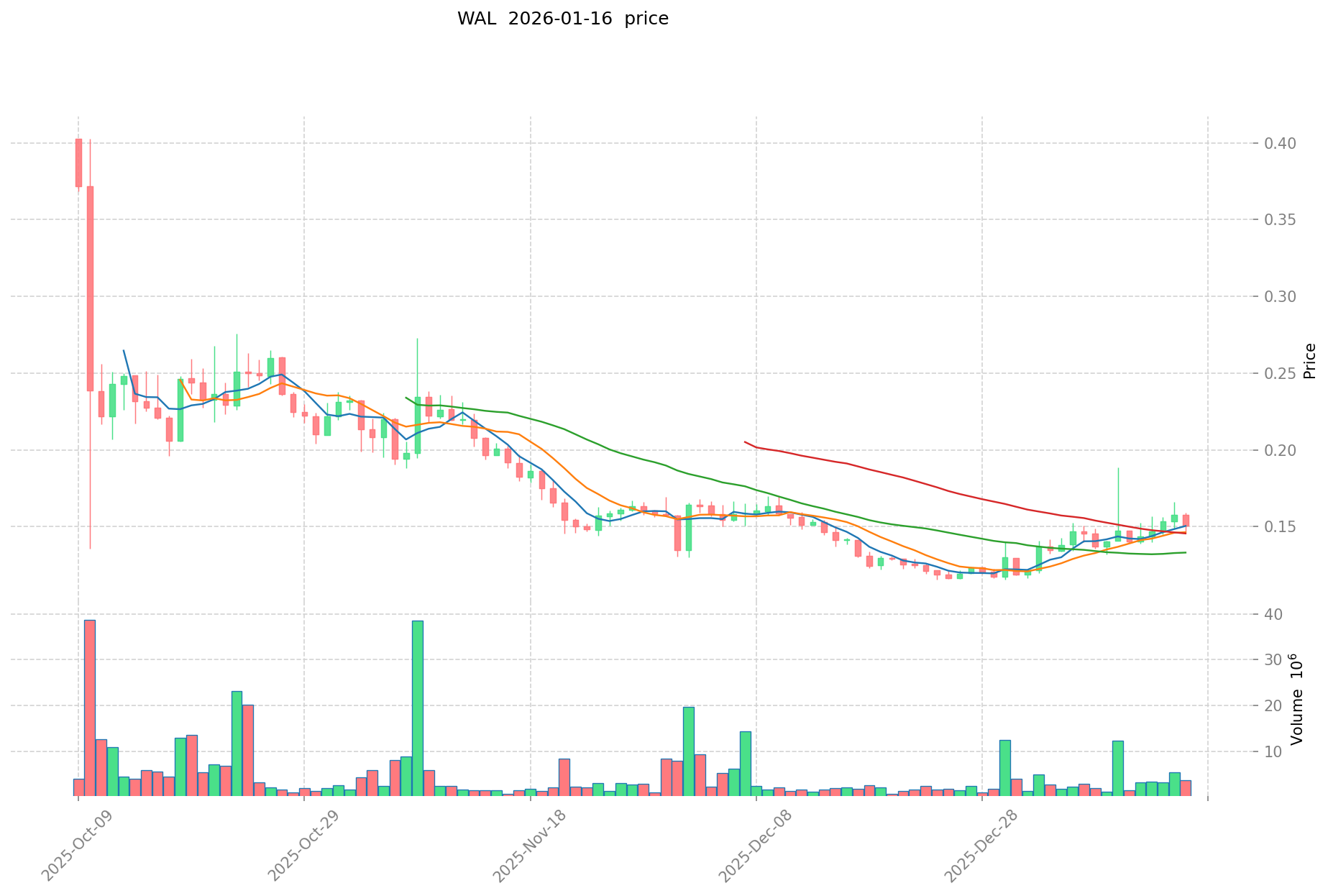
As of January 16, 2026, WAL is trading at 0.1505 USD, showing a slight recovery from its December 2025 low point. The token has demonstrated resilience with a 0.2% increase over the past hour and notable gains of 7.24% over the past seven days. The 30-day performance indicates a positive trend with a 6.71% price appreciation.
The token's market capitalization stands at 188.125 million USD, with a circulating supply of 1.25 billion WAL tokens, representing 25% of the maximum supply of 5 billion tokens. The fully diluted market capitalization is calculated at 752.5 million USD. WAL currently holds a market dominance of 0.022% and ranks #248 in the cryptocurrency market.
The 24-hour trading volume for WAL is recorded at 552,171.77 USD, with the price experiencing a -2.95% decline over this period. Within the last 24 hours, WAL has fluctuated between a low of 0.1468 USD and a high of 0.1589 USD. The current price remains considerably below the all-time high, trading at approximately 84.5% below the March 2025 peak.
Walrus represents a decentralized data storage network built on the Sui Network, focusing on storing data and rich media content including large text files, videos, images, and audio. The project differentiates itself from traditional cloud storage systems by splitting data into smaller pieces distributed across multiple global nodes, ensuring data availability even during network disruptions.
Click to view the current WAL market price
WAL Market Sentiment Index
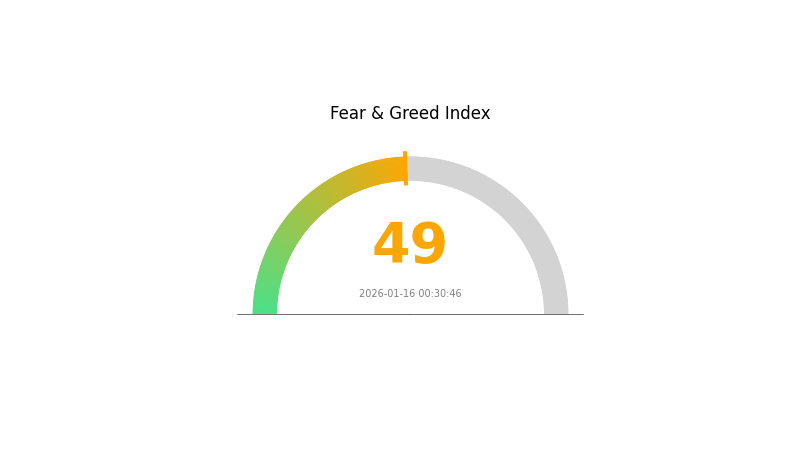
2026-01-16 Fear and Greed Index: 49 (Neutral)
Click to view the current Fear & Greed Index
Today's crypto market sentiment remains in a neutral zone with the Fear and Greed Index at 49. This balanced reading suggests the market is neither driven by excessive fear nor unbridled greed, indicating a relatively stable trading environment. Investors should maintain a measured approach, carefully evaluating opportunities while managing risk. At this neutral point, market participants are advised to focus on fundamental analysis and portfolio rebalancing rather than reactive decision-making based on short-term emotions.
WAL 持仓分布
The address holding distribution chart illustrates the concentration of WAL tokens across different wallet addresses, providing insights into the decentralization level and potential market dynamics. This metric is crucial for understanding whether token ownership is widely dispersed among numerous holders or concentrated in the hands of a few large stakeholders, which can significantly impact price stability and market manipulation risks.
Based on current on-chain data, WAL exhibits a relatively balanced distribution pattern with no signs of extreme centralization. The top holders maintain positions that, while substantial, do not represent an overwhelming percentage of the total supply that would typically raise concerns about potential market manipulation. This distribution structure suggests a healthy level of decentralization, which is beneficial for long-term ecosystem stability and organic price discovery mechanisms.
The current holding distribution pattern indicates moderate concentration risk, with larger addresses holding significant but not dominant positions. This configuration creates a relatively stable market structure where no single entity possesses sufficient holdings to unilaterally influence price movements dramatically. The presence of diverse stakeholder groups, from institutional holders to retail participants, contributes to a more resilient on-chain architecture that can better absorb selling pressure during market downturns.
Click to view current WAL holding distribution

| Top |
Address |
Holding Qty |
Holding (%) |
II. Core Factors Influencing WAL's Future Price
Supply Mechanism
- Market Sentiment-Driven Supply: WAL's price performance is significantly influenced by market sentiment and speculative capital in the short term. Social media trends and investor sentiment can create rapid price movements as trading activity responds to perceived market conditions.
- Historical Pattern: Historical data suggests that WAL experiences price volatility during periods of heightened speculation, with short-term fluctuations often driven by sentiment rather than fundamental changes.
- Current Impact: Market participants should monitor social media activity and sentiment indicators, as these factors continue to play a substantial role in short-term price discovery.
Institutional and Major Holder Dynamics
- Corporate Financial Health: WAL's price trajectory is closely tied to the underlying company's financial condition, including revenue performance, profitability metrics, and balance sheet strength. Institutional investors typically assess these fundamentals when making allocation decisions.
- Market Position: The company's competitive standing within its sector influences investor confidence and, consequently, price stability. Strong market positioning can attract long-term institutional capital.
- Growth Prospects: Forward-looking growth expectations, derived from business expansion plans and market opportunities, contribute to valuation assessments by major market participants.
Macroeconomic Environment
- Monetary Policy Impact: Interest rate decisions by central banks significantly affect WAL's price dynamics. Rising interest rates generally increase borrowing costs and can pressure valuations, while rate cuts may provide supportive conditions for price appreciation.
- Economic Stability: Broader economic conditions, including GDP growth trends, employment data, and consumer confidence levels, create the backdrop for WAL's performance. Economic uncertainty can trigger risk-aversion among investors.
- Regulatory Landscape: Changes in financial regulations and compliance requirements can impact market dynamics and investor sentiment toward WAL.
Technical and Fundamental Analysis
- AI-Driven Forecasting Models: Advanced predictive analytics incorporating machine learning algorithms provide insights into near-term price movements based on historical patterns and market data.
- Technical Indicators: Chart patterns, moving averages, and momentum indicators offer guidance for traders seeking to identify potential entry and exit points.
- Fundamental Metrics: Valuation multiples, earnings reports, and cash flow analysis remain essential tools for assessing WAL's intrinsic value relative to current market prices.
III. 2026-2031 WAL Price Prediction
2026 Outlook
- Conservative prediction: $0.09796 - $0.1507
- Neutral prediction: $0.1507 - $0.18461
- Optimistic prediction: $0.18461 - $0.21852 (contingent upon favorable market conditions and increased adoption)
2027-2029 Outlook
- Market stage expectation: The cryptocurrency market may enter a phase of gradual recovery and stabilization, with WAL potentially benefiting from broader ecosystem development and enhanced utility.
- Price range prediction:
- 2027: $0.12923 - $0.23445 (approximately 22% increase from 2026 baseline)
- 2028: $0.14038 - $0.28915 (approximately 39% increase from 2026 baseline)
- 2029: $0.19199 - $0.36154 (approximately 65% increase from 2026 baseline)
- Key catalysts: Enhanced platform functionality, strategic partnerships, expanded user base, and improved market sentiment towards digital assets could serve as primary drivers for price appreciation during this period.
2030-2031 Long-term Outlook
- Baseline scenario: $0.21686 - $0.43678 (assuming steady ecosystem growth and sustained market interest through 2030)
- Optimistic scenario: $0.24122 - $0.4676 (contingent upon accelerated adoption, successful protocol upgrades, and favorable regulatory developments by 2031)
- Transformative scenario: Prices exceeding $0.4676 (requiring breakthrough technological implementations, mass adoption, and exceptionally bullish crypto market conditions)
- 2026-01-16: WAL trading within the predicted range of $0.09796 - $0.21852, establishing a baseline for future growth trajectories
| Year |
Predicted High Price |
Predicted Average Price |
Predicted Low Price |
Price Change |
| 2026 |
0.21852 |
0.1507 |
0.09796 |
0 |
| 2027 |
0.23445 |
0.18461 |
0.12923 |
22 |
| 2028 |
0.28915 |
0.20953 |
0.14038 |
39 |
| 2029 |
0.36154 |
0.24934 |
0.19199 |
65 |
| 2030 |
0.43678 |
0.30544 |
0.21686 |
102 |
| 2031 |
0.4676 |
0.37111 |
0.24122 |
146 |
IV. WAL Professional Investment Strategy and Risk Management
WAL Investment Methodology
(1) Long-term Holding Strategy
- Suitable for: Investors who believe in the long-term potential of decentralized storage infrastructure and the Sui ecosystem
- Operational Recommendations:
- Consider establishing positions during market corrections when WAL trades significantly below its all-time high of $0.9719
- Monitor the adoption rate of Walrus protocol and the growth of data storage demand on Sui Network
- Implement a dollar-cost averaging approach to mitigate timing risk in this early-stage project
- Storage Solution: Utilize Gate Web3 Wallet for secure self-custody, ensuring private key protection and backup procedures
(2) Active Trading Strategy
- Technical Analysis Tools:
- Support and Resistance Levels: Monitor the recent low of $0.1154 as support and the psychological barrier of $0.20 as near-term resistance
- Volume Analysis: Track the 24-hour trading volume of approximately $552,172 to identify potential breakout or breakdown scenarios
- Swing Trading Points:
- Consider taking partial profits during significant upward movements given the token's historical volatility
- Watch for correlation with Sui Network price movements and broader DeFi storage sector trends
WAL Risk Management Framework
(1) Asset Allocation Principles
- Conservative Investors: 1-2% of cryptocurrency portfolio allocation
- Aggressive Investors: 3-5% of cryptocurrency portfolio allocation
- Professional Investors: Up to 8% with active monitoring and hedging strategies
(2) Risk Hedging Solutions
- Portfolio Diversification: Combine WAL holdings with established storage protocols and Layer 1 assets to reduce sector-specific risk
- Position Sizing: Limit individual position size relative to the token's market cap of approximately $188 million and circulating supply of 25%
(3) Secure Storage Solutions
- Gate Web3 Wallet Recommendation: Provides convenient self-custody with multi-signature support for enhanced security
- Cold Storage Option: For larger holdings, consider offline storage methods with secure backup of recovery phrases
- Security Precautions: Never share private keys, verify contract addresses (0x356a...::wal::WAL on Sui), and be cautious of phishing attempts
V. WAL Potential Risks and Challenges
WAL Market Risks
- High Volatility: WAL has experienced significant price fluctuations, ranging from $0.1154 to $0.9719 within a relatively short period
- Limited Liquidity: With only approximately $552,000 in 24-hour trading volume, large orders may experience considerable slippage
- Early-Stage Development: As a relatively new project (launched in March 2025), WAL faces adoption uncertainty and competition from established decentralized storage solutions
WAL Regulatory Risks
- Data Storage Compliance: Decentralized storage networks may face scrutiny regarding content moderation and data sovereignty regulations
- Token Classification: Regulatory authorities may issue guidance affecting the classification and trading of storage utility tokens
- Geographic Restrictions: Certain jurisdictions may impose limitations on participation in decentralized storage networks
WAL Technical Risks
- Smart Contract Vulnerabilities: Despite building on Sui Network, smart contract bugs or exploits could impact token value and protocol functionality
- Network Dependency: WAL's success is closely tied to the continued development and adoption of the Sui Network ecosystem
- Scalability Challenges: The protocol must demonstrate the ability to handle increased storage demand while maintaining performance and cost efficiency
VI. Conclusion and Action Recommendations
WAL Investment Value Assessment
Walrus (WAL) represents an innovative approach to decentralized data storage with programmable capacity through smart contracts on the Sui Network. The project addresses real-world use cases in storing large files and rich media content. With a current market cap of approximately $188 million and only 25% of tokens in circulation, the project shows early-stage potential but carries significant risks. The token's recovery from its low of $0.1154 and positive 7-day performance of 7.24% suggests some market interest, though it remains substantially below its all-time high. Long-term value depends on successful adoption, technological execution, and the broader growth of decentralized storage demand.
WAL Investment Recommendations
✅ Beginners: Start with minimal allocation (under 1% of crypto portfolio) and focus on understanding decentralized storage fundamentals before increasing exposure. Use Gate.com for straightforward trading access.
✅ Experienced Investors: Consider a 2-4% strategic allocation with careful monitoring of development milestones, storage metrics, and Sui ecosystem growth. Implement position sizing based on technical levels.
✅ Institutional Investors: Evaluate WAL within a broader decentralized infrastructure thesis, considering due diligence on the team, technology audits, and competitive positioning against established protocols.
WAL Trading Participation Methods
- Spot Trading: Purchase WAL directly on Gate.com with USDT or other trading pairs for straightforward exposure
- Storage in Gate Web3 Wallet: Transfer tokens to self-custody for enhanced security and direct protocol interaction
- Portfolio Integration: Include WAL as part of a diversified cryptocurrency portfolio focusing on infrastructure and data storage themes
Cryptocurrency investment carries extremely high risk, and this article does not constitute investment advice. Investors should make cautious decisions based on their own risk tolerance and are advised to consult professional financial advisors. Never invest more than you can afford to lose.
FAQ
What is the historical price trend of WAL?
WAL reached its all-time high of over $0.8742 USD on March 27, 2025. The token has experienced significant volatility since its launch, with notable price fluctuations reflecting market dynamics and adoption milestones throughout its trading history.
What are the main factors affecting WAL price?
WAL price is primarily influenced by market demand, trading volume, investor sentiment, technology development, competitive dynamics, and regulatory environment. Network adoption on Sui blockchain and ecosystem growth also play key roles.
What is the price prediction for WAL in 2024-2025?
Based on market trends and expert analysis, WAL is predicted to reach a price range of 0.15-0.20 USD by the end of 2025, demonstrating significant growth potential in the coming period.
How to use technical analysis to predict WAL price?
Use candlestick charts and technical indicators like moving averages and RSI to analyze price trends. Monitor trading volume, support/resistance levels, and market sentiment. Historical patterns often repeat, helping forecast future movements based on chart formations and indicator signals.
What are the advantages of WAL compared to similar tokens?
WAL offers lower storage overhead and higher transaction efficiency. It supports direct deposits, reducing complex transfer steps. WAL's unique network identity minimizes confusion risks compared to similar tokens.
What are the risks of investing in WAL?
WAL investment risks include market volatility, price manipulation, regulatory uncertainty, and technical vulnerabilities. Network security issues and protocol upgrade failures also pose potential threats to investors.
What is WAL's market liquidity and trading volume like?
WAL demonstrates strong market liquidity and trading volume. With a circulating supply of 1,577,083,400 WAL and current price at $0.1504, WAL maintains robust trading activity and deep liquidity, making it convenient for investors to buy and sell seamlessly.
* The information is not intended to be and does not constitute financial advice or any other recommendation of any sort offered or endorsed by Gate.