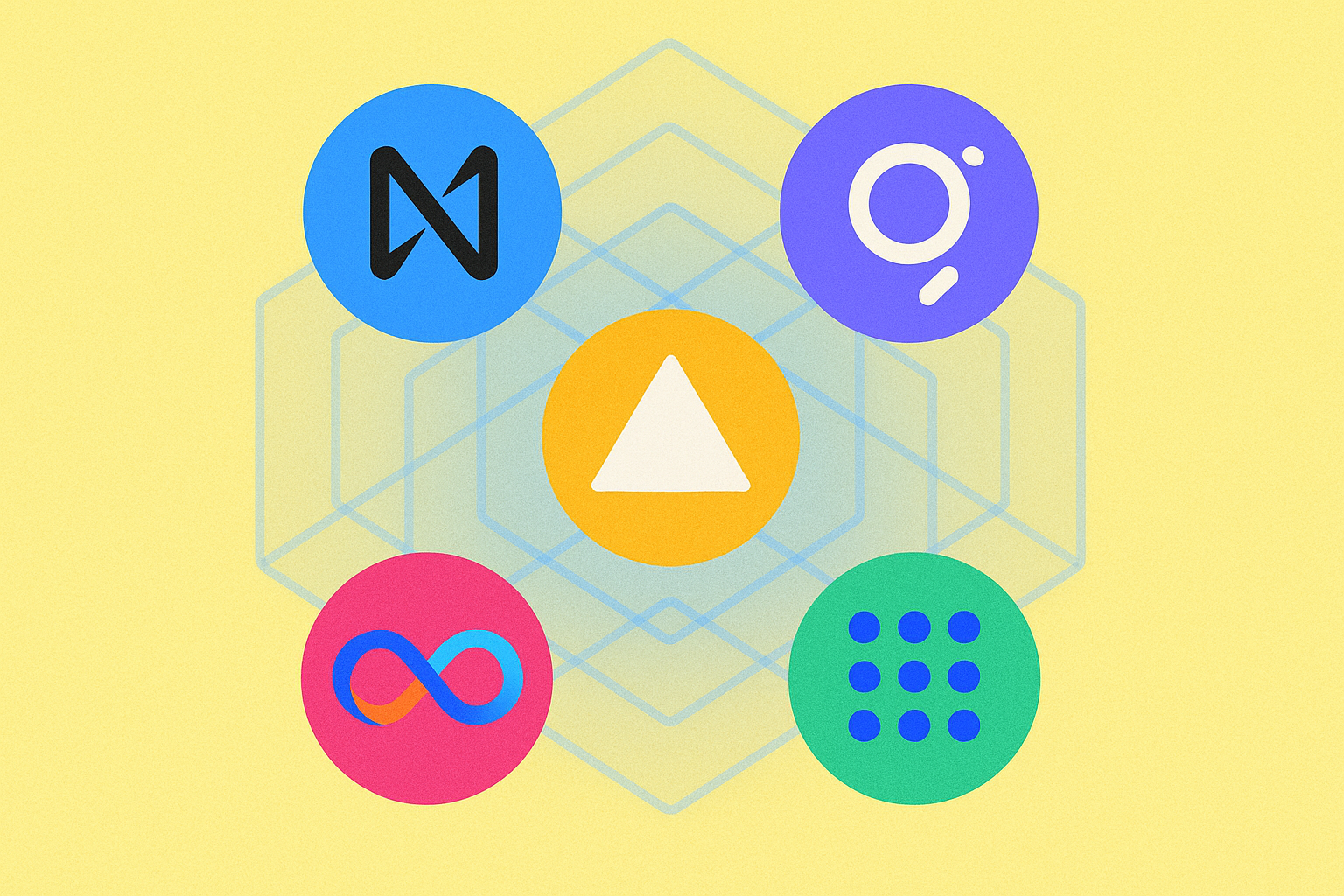
Explore the leading AI cryptocurrencies to keep an eye on in 2024. Review six cutting-edge projects including NEAR, Render, and Bittensor. Invest in AI tokens with strong growth prospects on Gate. This is a complete guide for blockchain traders and investors.
What Is an AI-Linked Cryptocurrency? Exploring the Convergence of Blockchain and Artificial Intelligence
AI-linked cryptocurrencies represent a new wave of digital assets that leverage artificial intelligence technologies to enhance functionality. This convergence creates smarter, more efficient, and automated systems across the blockchain ecosystem.
These forward-thinking projects harness AI to perform a range of complex operations:
-
Task Automation: Trading bots analyze real-time market data and execute optimal trades automatically. Capable of processing millions of data points per second, these systems identify opportunities that human traders may overlook.
-
Data Process Optimization: Large-scale data processing is faster and more accurate, improving data management and analysis on the blockchain. This capability is crucial for decentralized applications requiring real-time analytics.
-
Decentralized AI Applications: Integrating AI with blockchain removes centralized management, while boosting transparency and security. Users maintain full control of their data and gain access to advanced AI services.
Key use cases for these technologies include:
- Market Prediction: AI analyzes market data to forecast future trends with increasing precision.
- Fraud Detection: Spotting anomalies in transaction patterns to protect users.
- Algorithmic Trading: Identifying optimal timing for trades.
- Portfolio Management: Optimization tailored to individual risk profiles.
- Smart Contract Optimization: Enhancing the efficiency and security of smart contracts.
- Regulatory Compliance: Monitoring transactions in real time to ensure compliance.
- Identity Verification (KYC): Streamlining KYC workflows for an improved user experience.
- ICO Prediction: Assessing the success probability of initial coin offerings.
- Energy Efficiency Optimization: Lowering energy consumption in mining operations.
- Wallet Security: Detecting abnormal activities to safeguard assets.
These tokens primarily serve as utility tokens within AI-driven platforms. They facilitate payments, incentivize user activity through rewards, and allow holders to purchase or rent AI models, access services, and earn rewards for platform engagement.
Pros and Cons of AI-Linked Cryptocurrencies
A thorough assessment of AI-linked cryptocurrencies requires deep insight into both their advantages and potential challenges.
Key Advantages:
-
Fast Data Processing and Analysis: AI systems process massive data volumes in milliseconds, enabling rapid market trend identification. This speed offers a decisive edge in volatile crypto markets.
-
Enhanced Operational Efficiency: Automation drastically reduces the time and resources required for manual operations. Tasks that previously took hours are now completed in seconds.
-
Outstanding Scalability: These systems handle large-scale data without sacrificing performance. As networks grow, processing capacity scales accordingly.
-
Stronger Security: AI-powered anomaly detection protects assets by identifying and neutralizing threats before damage occurs.
Challenges to Consider:
-
High Costs: Deploying and running these systems demands significant investment in infrastructure and technical talent. Development and upkeep can be prohibitive for smaller projects.
-
Technological Immaturity: As emerging technologies, they bring uncertainties and risks. Evolving protocols and standards may present compatibility challenges.
-
Market Volatility: Pronounced price swings are common, driven by speculative enthusiasm and technological uncertainty. Investors must be ready for substantial fluctuations.
-
Data Privacy and Transparency: Balancing blockchain transparency with personal data privacy remains a major hurdle. Innovative solutions are needed to address these concerns.
AI Token Use Cases and Applications:
-
AI Agents: Autonomous agents perform complex tasks—from portfolio management to advanced trading strategies—without human intervention.
-
Decentralized Computing Networks: Shared resources create a global pool of computing power accessible to all participants.
-
Zero-Knowledge Machine Learning (zkML): This breakthrough enables high-performance AI computation while preserving data privacy, opening new opportunities for sensitive applications.
-
AI Model Transactions: Decentralized marketplaces facilitate the exchange and sharing of AI models, broadening access to advanced technologies.
In summary, AI-linked cryptocurrencies deliver opportunities for innovation and new business models, but require advanced expertise and careful risk management.
Six Leading AI Projects
NEAR Protocol is a cutting-edge proof-of-stake blockchain that stands out for its sharding technology, "Nightshade." This approach greatly improves scalability by enabling each network node to store only a fraction of platform data, making effective and sustainable scaling possible.
NEAR also delivers powerful interoperability solutions. The "Rainbow Bridge" allows seamless two-way transfers of Ethereum tokens, while "Aurora" lets Ethereum dApps deploy on NEAR. These features simplify migration and integration for existing applications.
For AI, NEAR Protocol champions "User-Owned AI." In this decentralized framework, users retain total control over their data and assets. The NEAR Foundation supports open and transparent AI development, steering clear of closed, profit-focused models.
This philosophy empowers users with greater productivity, personalized experiences, and new economic opportunities—while safeguarding privacy. The foundation recently launched an incubation program to build user-owned AI infrastructure. Its first cohort included six innovative teams: Mizu, Pond, Nevermined, Hyperbolic, Ringfence, and Exhibits, each tackling different aspects of the decentralized AI ecosystem.
Render Network bridges users needing GPU computing power with those owning idle GPUs. This decentralized platform offers high-quality, affordable 3D rendering and opens access to powerful compute resources.
RNDR is the native token for payment within the network. GPU owners earn RNDR tokens for completing rendering jobs, maximizing resource utilization and forming a global, accessible pool of computing power.
The platform leverages blockchain and smart contracts to create a secure, transparent marketplace for rendering services. This architecture ensures efficient transactions, while smart contracts uphold fairness and transparency.
A major milestone was the migration of RNDR from Ethereum to Solana. This transition dramatically increased transaction speed and reduced costs, making the platform more accessible and effective for users. The network continues to attract creators, studios, and developers seeking robust, cost-effective rendering solutions.
The Graph is a vital protocol for indexing and querying blockchain data. Developers use subgraph manifests and GraphQL to retrieve indexed data. Since its mainnet launch in December 2020, it has supported over 30 networks, becoming core infrastructure for the Web3 ecosystem.
Semiotic Labs, a leading team in The Graph’s development, drives AI and cryptography integration. They have built two major income-optimization tools for indexers: AutoAgora and Allocation Optimizer.
AutoAgora automates pricing model creation, enabling indexers to optimize pricing strategies in line with market conditions. Allocation Optimizer helps indexers allocate resources efficiently, maximizing operational performance and earnings.
Semiotic Labs is also developing AI solutions to make The Graph’s data accessible via natural language. This initiative aims to democratize blockchain data, allowing non-technical users to query and analyze complex information without programming expertise—potentially transforming how users interact with decentralized data.
Internet Computer Protocol is a next-generation blockchain built on innovative consensus algorithms. These include threshold cryptography and state machine replication, delivering a robust, scalable infrastructure.
ICP integrates seamlessly with existing Internet technologies to enable Web3. Smart contracts can host websites and respond to HTTP requests, removing the need for traditional servers and enabling a truly decentralized web experience.
For AI, ICP actively promotes decentralized AI (DeAI). This approach uses smart contracts to ensure AI models cannot be tampered with, and manages data securely in a distributed environment to maintain integrity and transparency.
Among its standout projects, ELNA AI enables the development and monetization of AI agents on ICP—developers can build, deploy, and commercialize AI solutions in a decentralized fashion. Kinic, another notable project, uses AI to optimize Web3 app usage, improving user experience and interaction efficiency.
SingularityNET democratizes AI service access through an innovative decentralized marketplace. Using blockchain, the platform ensures transparent, reliable transactions. AGIX tokens support publishing and exchanging AI models and services, creating a dynamic innovation ecosystem.
Developers offer diverse AI services, such as image, voice, and text analysis. Users can find solutions tailored to their needs, from facial recognition to machine translation and sentiment analysis.
Strategic partnerships with Cardano and Filecoin have strengthened the platform—boosting scalability, lowering transaction costs, and adding decentralized storage.
Recently, the Artificial Superintelligence Alliance (ASI) began merging tokens, uniting SingularityNET, Fetch.ai (FET), and Ocean Protocol (OCEAN) in a major initiative. AGIX and OCEAN are migrating to FET, with a final consolidation to the ASI token planned. This move aims to create a unified, more powerful decentralized AI ecosystem and accelerate the development of general decentralized artificial intelligence.
Bittensor establishes a decentralized network linking machine learning models from individuals worldwide. Built on Substrate and supporting Polkadot, it benefits from a robust, interoperable technical foundation.
The network uses a low-energy proof-of-stake consensus mechanism, greatly reducing its carbon footprint compared to traditional proof-of-work systems—aligning with growing concerns about blockchain sustainability.
Advanced cryptographic protocols also enhance privacy and security. Users can participate in the network without exposing sensitive data.
Bittensor creates a marketplace for evaluating and exchanging machine intelligence. Researchers earn direct rewards for contributions, while consumers access the best-fit intelligent machines for specific needs. This fosters an innovation ecosystem where AI model quality and utility are directly rewarded.
TAO serves as a reward, payment method for transaction fees, and governance tool. Stakeholders can submit proposals and vote, directly influencing protocol evolution. This decentralized governance ensures the network evolves according to community priorities.
-
Account Registration
- Sign up with a reputable international exchange and complete identity verification (KYC). This ensures security and compliance.
-
Buy and Transfer XRP
- Purchase XRP on top Japanese exchanges. XRP is often preferred for international transfers due to its speed and low fees.
- Transfer your purchased XRP to your international platform wallet. Double-check the destination address to prevent loss of funds.
-
Buy AI Cryptocurrencies
- On the trading interface, select the XRP/USDT pair.
- Buy your chosen AI cryptocurrency via market or limit order. Limit orders offer better control over the execution price.
-
Account Registration
- Create an account with a reputable Japanese exchange and complete KYC. Domestic exchanges typically offer Japanese-language support and local regulatory compliance.
-
Deposit Japanese Yen
- Deposit yen to your exchange wallet via bank transfer or credit card. Bank transfers are usually lower-cost but may take longer.
-
Buy AI Cryptocurrencies
- On the trading screen, select a JPY trading pair.
- Buy AI cryptocurrencies via market or limit order. Start with small amounts to get familiar with the process.
Key Security Tips:
- Enable two-factor authentication (2FA) for all accounts
- Store crypto in a hardware wallet for maximum protection
- Never share your private keys or recovery phrases
- Be wary of offers that seem too good to be true or phishing attempts
Conclusion
The fusion of AI and blockchain is fueling the rise of AI-linked cryptocurrencies and may become the foundation of tomorrow’s digital economy. These pioneering projects combine AI and decentralized networks to deliver breakthrough use cases—especially in market prediction and fraud detection.
The six featured projects—NEAR Protocol, Render, The Graph, Internet Computer, SingularityNET, and Bittensor—demonstrate varied approaches to integrating AI within blockchain. Each provides unique solutions to scalability, decentralization, and AI access challenges.
However, notable hurdles remain, including high costs, technological immaturity, and data privacy concerns. Investors should carefully assess risks and apply sound risk management. Diversification, thorough research, and a long-term outlook are vital to navigating this dynamic sector.
The outlook for AI-linked cryptocurrencies is promising, with the potential to reshape industries from finance to content creation. As these technologies mature and use cases expand, adoption and integration of AI into blockchain infrastructure will accelerate. Investors and users who understand the technologies—and their implications—are well positioned to benefit from this transformation.
FAQ
What Is an AI Cryptocurrency? How Does It Differ from Standard Cryptocurrencies?
AI cryptocurrencies are built on artificial intelligence technologies, while standard cryptocurrencies are mainly for payments. AI coins integrate AI applications and deliver use cases that go far beyond simple value storage.
What Are Today’s Leading AI-Linked Cryptocurrency Projects? What Makes Each Unique?
Key projects include NEAR Protocol (blockchain performance), Bittensor (network efficiency), Story (AI data), Internet Computer (decentralized infrastructure), Render (computing power), and Artificial Superintelligence Alliance (distributed superintelligence).
Create an account, set up your wallet, purchase stablecoins (USDT), then trade them for AI cryptocurrencies. Keep your assets secure in your wallet.
Risks include AI model overfitting and tech failures. To reduce them, combine AI optimization with human judgment, use specialized AI tools to safeguard your data, and actively monitor your investment strategies.
AI Cryptocurrencies vs. Traditional Tech Stocks: What Are the Pros and Cons?
AI cryptocurrencies offer greater return potential and volatility; AI stocks provide more stability. Crypto markets feature 24/7 liquidity and rapid innovation—but also significant risks. Choose based on your risk tolerance.
These AI-linked crypto projects use artificial intelligence to optimize blockchain networks and transaction efficiency. Applications span smart contracts, decentralized finance (DeFi), and automated trading—dramatically improving blockchain data analysis and automated trading capabilities.
These AI-linked crypto projects use artificial intelligence to optimize blockchain networks and transaction efficiency. Their applications span smart contracts, decentralized finance (DeFi), and automated trading. These projects drive significant improvements in blockchain data analysis and automated trading.
Do AI-Linked Cryptocurrencies Have Solid Growth Potential? Are They Worth Holding Long Term?
AI cryptocurrencies such as Bittensor show strong growth prospects thanks to innovative integration of blockchain and AI. A diversified approach is recommended: hold some for structural growth and trade tactically to take advantage of market volatility.
* The information is not intended to be and does not constitute financial advice or any other recommendation of any sort offered or endorsed by Gate.