Discover how to identify high-potential altcoins for investment in 2024. Explore an analysis of the top low-cap altcoins, expert recommendations for new investors, and effective evaluation strategies before buying on Gate.
What Are Altcoins?
Altcoins are cryptocurrencies that serve as alternatives to Bitcoin and often introduce additional features tailored to specific use cases. These coins address a wide range of functions, from enhancing privacy to powering decentralized applications (dApps) and enabling smart contracts.
Altcoins originally emerged to resolve Bitcoin’s inherent limitations, such as slow transaction speeds and poor energy efficiency. Over time, many altcoins developed unique attributes and use cases, and today they play a pivotal role within the blockchain ecosystem.
Key types of altcoins include:
-
Platform Tokens: Examples include Ethereum and Solana, which provide the foundational infrastructure for decentralized applications.
-
DeFi Tokens: Cryptocurrencies designed for use in decentralized finance, serving as the backbone of leading DeFi platforms.
-
Stablecoins (stablecoins): Coins pegged to real-world assets such as Tether (USDT), providing stability and reducing price volatility.
-
Meme Coins: Coins created for entertainment or satirical purposes, such as Dogecoin, which can gain widespread popularity through strong community support.
Most Promising Altcoins
Below are several altcoins with strong growth and development prospects for the coming years.
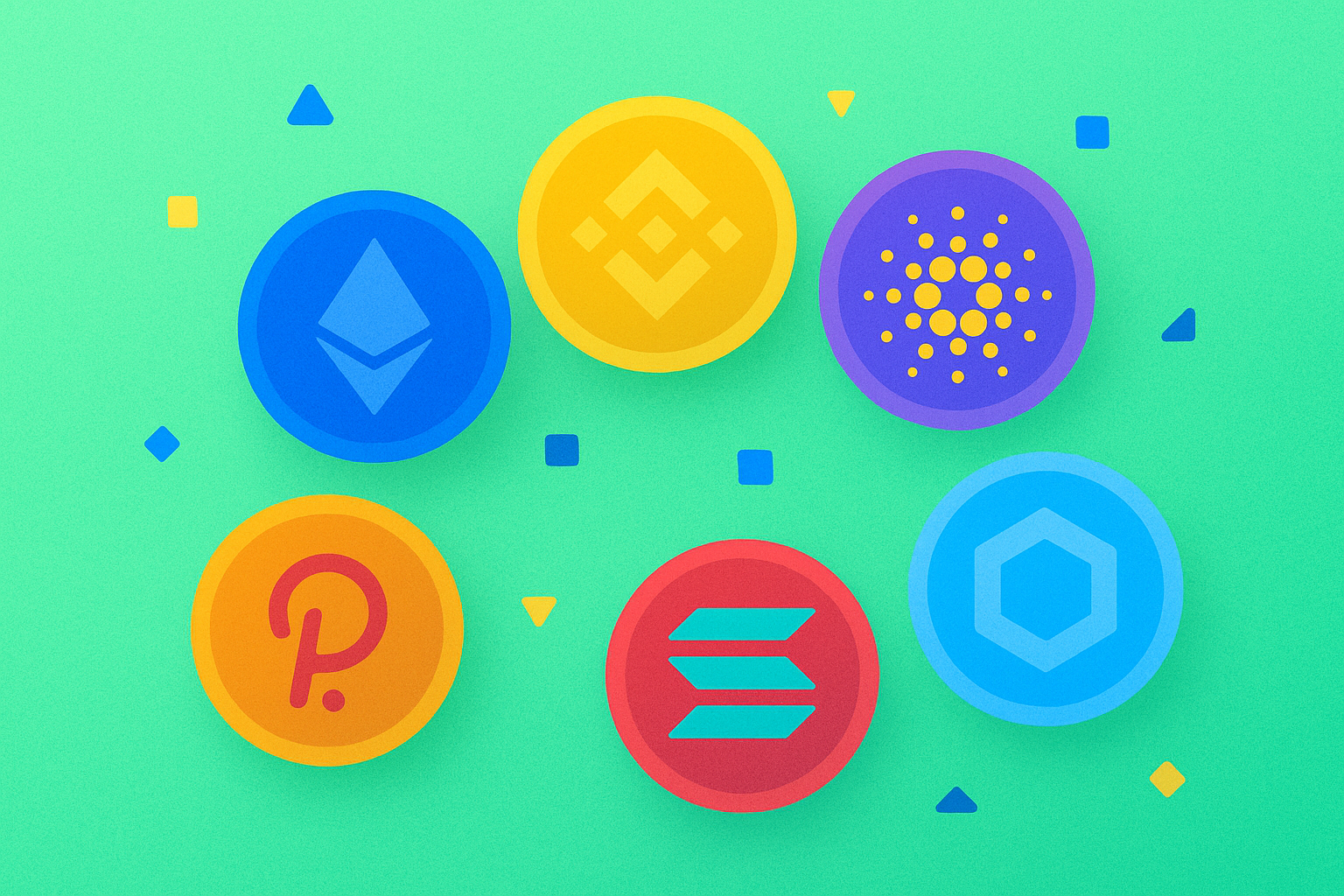
Ethereum (ETH)
Description: Ethereum is a leading platform for smart contracts and decentralized applications. The Ethereum 2.0 upgrade, which shifted the network to Proof-of-Stake, has significantly improved its energy efficiency and scalability.
Why It’s Promising: Ethereum powers an expansive decentralized finance (DeFi) and NFT ecosystem. Its innovative advancements, such as Layer 2 scaling solutions and cross-chain compatibility, ensure Ethereum maintains its leadership among platform altcoins.
Native Token of the Largest Crypto Exchange (BNB)
Description: BNB is the native token of one of the world’s largest crypto exchanges and is actively used throughout its ecosystem. BNB is also integral to the Smart Chain, a popular platform among DeFi and gaming developers.
Why It’s Promising: The exchange routinely burns BNB tokens, reducing overall supply and supporting both demand and price stability. The Smart Chain ecosystem attracts new users with low fees and fast transactions, making BNB an appealing choice for investors.
Cardano (ADA)
Description: Cardano is a blockchain platform developed using a scientific approach, with a focus on security and sustainability. It leverages a Proof-of-Stake consensus mechanism, making it both environmentally friendly and efficient.
Why It’s Promising: Cardano attracts developers seeking secure, scalable infrastructure. Successful rollouts of major upgrades, such as Alonzo—which enabled smart contracts—strengthen Cardano’s long-term growth outlook.
Polkadot (DOT)
Description: Polkadot is engineered for interoperability, allowing data and assets to move seamlessly across multiple blockchains. Its architecture is based on parachains—independent blockchains that operate within a unified ecosystem.
Why It’s Promising: By solving interoperability and scalability challenges, Polkadot is well-positioned as multi-chain architectures advance. Its thriving ecosystem and developer interest make DOT a compelling investment opportunity.
Solana (SOL)
Description: Solana is a high-performance blockchain that delivers ultra-fast transactions with minimal fees. It is widely adopted by DeFi and NFT projects.
Why It’s Promising: Solana stands out for its exceptional throughput and low transaction costs, making it ideal for large-scale applications. If Solana addresses its technical challenges, its market position will only strengthen.
Chainlink (LINK)
Description: Chainlink is a decentralized oracle network that enables smart contracts to access real-world data, which is critical for applications like DeFi and insurance.
Why It’s Promising: As demand for DeFi and smart contracts rises, reliable oracles such as Chainlink are becoming increasingly essential. Widespread adoption by major projects reinforces LINK’s value in the market.
How to Select an Altcoin for Investment
When evaluating altcoins for investment, consider the following factors:
-
Project Uniqueness: Assess whether the altcoin solves distinctive problems and has tangible real-world use cases.
-
Team and Partnerships: Investigate the project’s team and supporting organizations. Strong partners and a reputable team enhance the project’s likelihood of success.
-
Technological Development: Examine planned upgrades, scalability initiatives, and integration with other blockchains.
-
Market Conditions: Cryptocurrency markets are highly volatile, and altcoin prices can fluctuate based on sentiment and external influences.
Conclusion
Altcoins remain vital to the blockchain ecosystem, with many offering substantial growth potential. Leading projects like Ethereum, the native token of the largest exchange, Cardano, Polkadot, Solana, and Chainlink provide innovative solutions and robust ecosystems. As with any investment, carefully analyze each project to ensure your portfolio aligns with your objectives and risk tolerance.
FAQ
What are altcoins and how do they differ from Bitcoin?
Altcoins are cryptocurrencies other than Bitcoin. They often employ alternative consensus mechanisms such as proof-of-stake and introduce additional functionalities, including smart contracts, decentralized applications, and cross-border payments. Altcoins offer improved scalability and energy efficiency, expanding opportunities in the cryptocurrency space.
Which altcoins are considered the most promising in 2024?
In 2024, Hyperliquid, Sui, Aptos, and Fantom are among the most promising altcoins. These projects have demonstrated rapid growth, high trading volumes, and have attracted significant investor interest with their innovative approaches to blockchain scalability and performance.
How do you select a promising altcoin for investment?
Evaluate the project’s tokenomics transparency, community engagement, and real-world utility. Review the team’s financial stability, development track record, and trading activity. Focus on innovative projects with a well-defined roadmap.
What risks are associated with investing in altcoins?
Altcoins are subject to extreme price volatility and technological risks. Their value can swing sharply, leading to substantial losses. Projects may also face hacking incidents and code vulnerabilities. Diversify your portfolio and conduct thorough due diligence before investing.
Where and how can you buy altcoins?
Altcoins can be purchased on cryptocurrency exchanges. Register an account, complete verification, fund your account with fiat or crypto, and buy the desired token. Both spot and margin trading are typically available.
What is the development history of major altcoins (Ethereum, Ripple, Litecoin, etc.)?
Litecoin launched in 2011, Ripple in 2012, and Ethereum in 2015. These major altcoins have driven blockchain technology forward and broadened the scope of digital assets.
* The information is not intended to be and does not constitute financial advice or any other recommendation of any sort offered or endorsed by Gate.