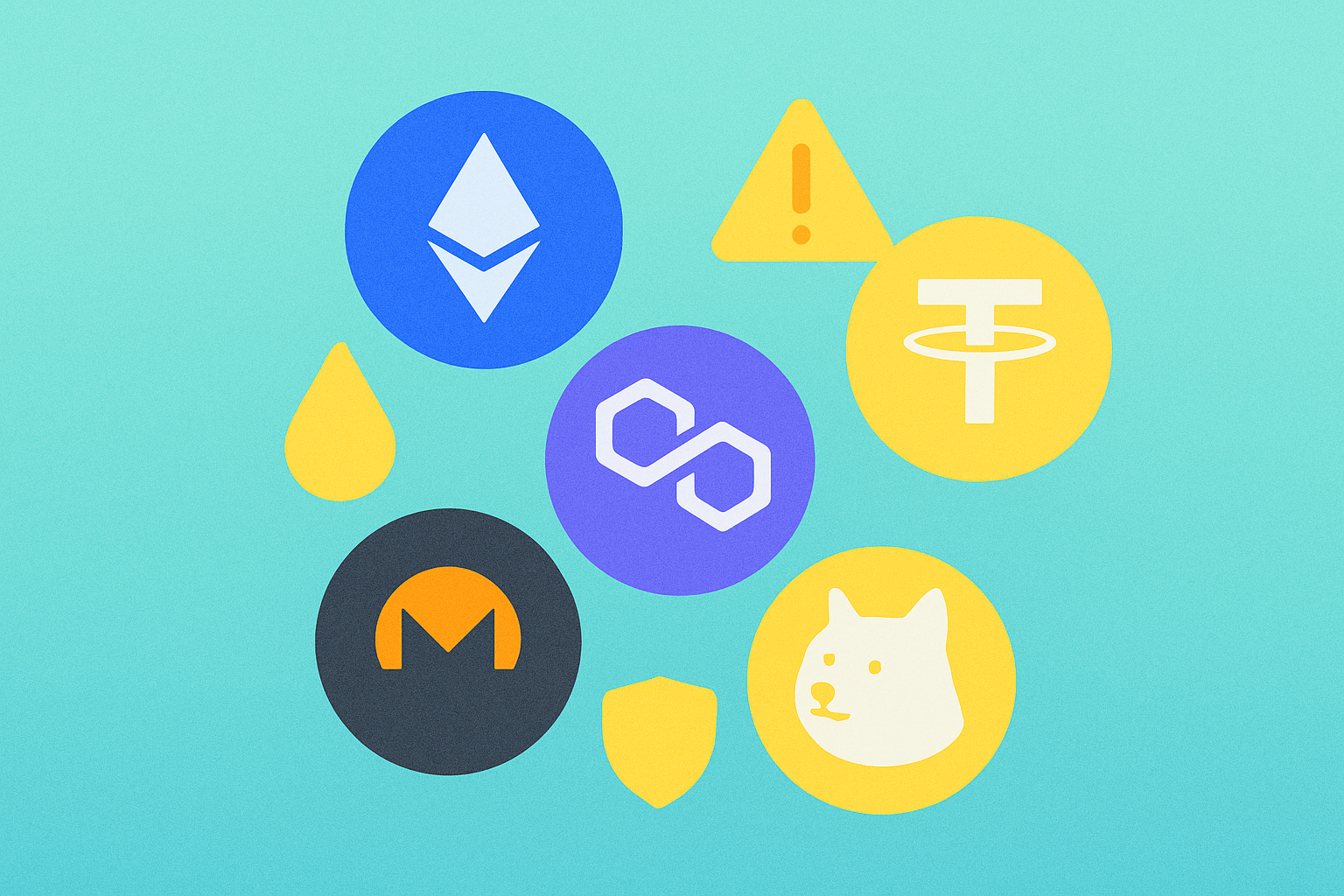
The Ultimate Investment Guide for Altcoin Beginners
This guide delivers a thorough introduction to altcoins, starting with foundational concepts and offering detailed breakdowns by category. You'll find step-by-step instructions for getting started on exchanges like Gate. It covers all five major types—including smart contract coins, stablecoins, and privacy coins—with in-depth analysis. The guide also explores 2024 market outlooks and risk management strategies, making it an indispensable resource for newcomers seeking to navigate the altcoin space with confidence.
What Are Altcoins?
Altcoins refer to all cryptocurrencies other than Bitcoin. Like Bitcoin, altcoins are built on blockchain technology, but each offers unique features and functions. Many altcoins, such as Ethereum, serve as blockchain platforms that enable smart contract execution. Smart contracts are programs that automatically carry out predefined actions when certain conditions are met, leveraging blockchain's decentralized and immutable qualities. This allows for highly reliable transactions without the need for third-party intermediaries.
Altcoins typically display greater price volatility than Bitcoin. The relatively low per-coin prices of many altcoins also make it easier to diversify investments across multiple assets, even with modest capital. This enables investors to build portfolios that spread risk.
However, some altcoins have lower liquidity or reliability compared to Bitcoin, meaning investors must carefully consider risks such as fraud and hacking. Especially with emerging altcoin projects, it is crucial to thoroughly review factors like the development team's track record, technical foundation, and the activity of the community before making investment decisions.
The Future of Altcoins
Let's take a closer look at the future prospects of altcoins from three main perspectives.
Future Outlook ①: Enhanced Scalability
Scalability issues with Bitcoin—such as slow transaction processing and block size limits—have long been a concern. Scalability refers to a system’s ability to efficiently handle increases in users or transaction volume. On the Bitcoin blockchain, a new block is produced roughly every 10 minutes, and block capacity is limited. As a result, transaction congestion can lead to delays and higher fees.
Altcoin projects have addressed these issues by offering faster processing speeds and larger block sizes than Bitcoin, making substantial contributions to the broader Web3 sector. Approaches include the rise of layer-2 scaling solutions and sharding integration to tackle scalability challenges from multiple angles.
Layer-2 solutions process transactions off the main chain and record only final results on-chain, boosting speed and reducing costs. Sharding divides the blockchain network into multiple smaller groups (shards), enabling parallel processing and significantly improving overall throughput.
Future Outlook ②: Leveraging Smart Contracts
Some altcoins use smart contracts to enable automated transactions and contract execution. The widespread adoption of smart contracts has enabled efficiencies and new business models that were challenging or impossible within traditional financial systems.
In the DeFi (Decentralized Finance) space, lending, borrowing, and asset management services are now available without traditional financial intermediaries. In the NFT (Non-Fungible Token) market, smart contracts clearly establish and facilitate ownership and trade of digital art, music, and game items. The tokenization of RWA (Real World Assets) is also advancing, with physical assets like real estate, stocks, and commodities being digitized on blockchain to create more liquid markets.
These technological advances are helping address longstanding societal issues, driving high expectations for the future of altcoins. According to Ark Invest, the decentralized finance market built on smart contracts could reach a multi-trillion-dollar scale in the near future. Their annual report, "Big Ideas 2024," predicts smart contracts could generate over $450 billion in annual fees by 2030 and platform market values could exceed $5 trillion.
Future Outlook ③: Specialized Applications
Altcoins have unique characteristics and features that differentiate them from Bitcoin, making them well-suited for specialized applications that may unlock new sources of value.
For example, Ethereum's powerful smart contract capabilities have driven its widespread use in decentralized financial services, real estate ownership management, and supply chain management. Solana and Avalanche, with their high speeds and low transaction fees, have been adopted for real-time applications in gaming, entertainment, and NFT marketplaces.
Stablecoins are increasingly used for international transfers and daily payments due to their price stability. Privacy coins are gaining traction as solutions for managing sensitive medical data and conducting confidential business transactions where personal privacy is essential.
As altcoin development and adoption continue, new applications are likely to emerge in areas such as automated payments between IoT devices, economic activity in the metaverse, and decentralized ID management. Altcoins could play a transformative role across many sectors of society.
Types of Altcoins
Altcoins can be categorized by their functions and purposes. Here are five representative types explained in detail.
Type ①: Smart Contract Platforms
Smart contract platform altcoins are developed as platforms for executing smart contracts, enabling automated contracts, transactions, and the creation of dApps (decentralized applications). These platforms allow developers to build and deliver custom applications to users.
Smart contracts offer wide-ranging applications. In finance, they enable transparent, automated execution of agreements, reducing human error and fraud while improving settlement efficiency and lowering transaction costs. In insurance, claims can be paid automatically if conditions such as accidents or disasters are met. In supply chain management, smart contracts automate product tracking and quality assurance, resulting in highly transparent distribution systems.
Prominent smart contract platform coins include:
- ETH (Ethereum): The most widely used smart contract platform, serving as the backbone for DeFi and NFT markets.
- SOL (Solana): Known for fast processing and low fees, increasingly adopted in gaming and NFT projects.
- AVAX (Avalanche): Distinguished by flexible subnet functionality, enabling customizable blockchain creation.
Type ②: Layer-2 Solutions
Layer-2 altcoins are designed to enhance scalability and are built on top of main chains (Layer 1) like Bitcoin or Ethereum. Layer-2 solutions process transactions outside the main chain and record only the final results, boosting speed and reducing transaction costs.
Bitcoin and Ethereum can only process a limited number of transactions at a time, so network congestion can slow confirmations and raise fees. Layer-2 technology enables thousands or tens of thousands of transactions per second, with dramatically lower fees.
Layer-2 solutions inherit main chain security while enabling high-speed, low-cost transactions, making them ideal for practical applications. They are increasingly adopted in payments, gaming, social media, and other high-transaction services.
Notable layer-2 coins include:
- MATIC (Polygon): Widely adopted as an Ethereum layer-2 solution, supporting many DeFi projects and NFT marketplaces.
- TAIKO (Taiko): Uses Ethereum-compatible zkRollup technology for high security and performance.
- ARB (Arbitrum): Utilizes Optimistic Rollup technology and enjoys strong popularity in the Ethereum ecosystem.
Type ③: Stablecoins
Stablecoins are designed to maintain stable prices. Traditional cryptocurrencies like Bitcoin and Ethereum are highly volatile, making them difficult to use for daily payments or as reliable stores of value.
Stablecoins are pegged to fiat currencies (such as the US dollar) or assets like gold to maintain price stability, minimizing volatility risk while retaining the benefits of cryptocurrencies like cross-border transfers and 24/7 trading.
Stablecoins improve the practicality of crypto as a payment method and temporary store of value in volatile markets. For international transfers, they offer lower fees and faster settlement compared to traditional bank transfers, driving adoption in developing economies. In the DeFi sector, they serve as the primary currencies for lending and liquidity provision.
Major stablecoins include:
- USDT (Tether): The most traded stablecoin, pegged to the US dollar.
- USDC (USD Coin): Emphasizes regulatory compliance and transparency, earning trust from enterprises and institutional investors.
- DAI (Dai): A decentralized, crypto-backed stablecoin with no central administrator.
Type ④: Privacy Coins
Privacy coins are cryptocurrencies that conceal sender and recipient identities and transaction amounts, protecting user privacy and financial data. In typical blockchains, transaction history is public and traceable by following wallet addresses.
Privacy coins employ advanced cryptography to obscure transaction information. Technologies such as ring signatures, stealth addresses, and zero-knowledge proofs make it impossible for third parties to determine who sent how much to whom. This protects individual privacy and secures sensitive business transactions.
While privacy coins enable highly anonymous transactions, they also raise concerns about illicit uses such as money laundering. As a result, some countries and regions regulate privacy coins, and certain exchanges restrict trading. Always check local regulations before investing in or using privacy coins.
Leading privacy coins include:
- Monero: Utilizes ring signatures to ensure untraceable transactions.
- Dash: Offers optional high-anonymity transactions via its PrivateSend feature.
Type ⑤: Meme Coins
Meme coins are cryptocurrencies born from internet jokes and meme culture. Initially created for fun and community engagement rather than practical use, some have rapidly gained popularity and significant market value through viral social media and community activity.
Dogecoin is the best-known example, featuring a Shiba Inu logo and a lively, humorous community. Social media posts by celebrities and community initiatives have propelled Dogecoin to a leading position by market cap.
Meme coin value is driven primarily by community support and social media activity, with hype, branding, and community cohesion exerting greater influence than technical innovation or utility. As a result, meme coins carry extreme volatility and risk, with prices fluctuating rapidly. Investors should be especially cautious with meme coins.
Anyone considering meme coin investments should understand their speculative nature and only invest funds they can afford to lose. Always review the project's background, community activity, and development progress to avoid scams.
Top meme coins include:
- DOGE (Dogecoin): The most famous meme coin, featuring a Shiba Inu logo and an active community.
- SHIB (Shiba Inu Coin): Inspired by Dogecoin and building its own ecosystem.
- PEPE (Pepe Coin): Based on the Pepe the Frog meme, driven by its community.
Three Key Considerations When Investing in Altcoins
Altcoin investments can generate substantial returns, but also involve significant risks. It's essential to understand these three key considerations for prudent investing.
Consideration ①: Price Volatility Risk
Altcoins can be much more volatile than Bitcoin, so caution is necessary. Their high volatility is largely due to smaller market capitalizations. Compared to Bitcoin or Ethereum, many altcoins have lower market caps, making them especially sensitive to capital inflows and outflows.
Lack of transparency in project development or management also increases the risk of sudden project abandonment, team departures, or technical failures, all of which can trigger sharp price drops. Regulatory changes or exchange delistings can also have major impacts.
Investors should make decisions based on their own resources, risk tolerance, and objectives. Diversifying across multiple altcoins, rather than concentrating on a single coin, can help manage risk. Only invest funds you can afford to lose without affecting your daily life.
Consideration ②: Low Liquidity
Some altcoins are less liquid than established assets like Bitcoin. Liquidity refers to how easily and actively a market trades an asset; higher liquidity makes it easier to buy or sell at your desired price.
Many altcoins have limited trading volumes, which can lead to liquidity risk. For example, you may be unable to find a buyer and have to sell at a lower price, or have to pay more to buy due to a lack of sellers.
Large-cap altcoins usually have higher trading volumes and lower liquidity risk, but extra caution is needed for lower-cap assets. Always check trading volumes and order book depth before investing.
Bitcoin dominance—a measure of Bitcoin's market cap relative to the total crypto market—can signal capital flows into altcoins. A decline in dominance means more capital is flowing into altcoins. Monitoring such indicators and the broader market can help you make better investment decisions.
Consideration ③: Security Risks
Altcoins may have lower security than Bitcoin. Bitcoin's long history and vast mining network make it highly secure. In contrast, newer altcoin projects may lack technical maturity and could have vulnerabilities.
Hacks or code bugs can lead to asset theft or blockchain outages, which can also cause sharp price declines. Always be mindful of these security risks when investing.
Before investing, check whether the project's code has undergone external security audits, review the development team's credentials and transparency, and research any history of security incidents. When storing assets, use reputable wallets and manage your private keys securely.
FAQ
What Are Altcoins? How Are They Different from Bitcoin?
Altcoins refer to all cryptocurrencies except Bitcoin. Bitcoin is considered "digital gold" and a store of value, while altcoins are developed to address specific problems such as smart contracts and DeFi. Altcoins tend to have smaller market caps, higher volatility, and offer both higher returns and higher risk.
What Are the Features and Differences of Major Altcoins (Ethereum, Ripple, Litecoin, etc.)?
Ethereum provides smart contract functionality as a platform. Ripple (XRP) specializes in international remittances and serves as a fast bridge currency. Litecoin is designed for faster payments than Bitcoin as a practical complementary currency.
What Is the Future Potential of Altcoins? Are They Worth Investing In?
Altcoins have significant growth potential as blockchain technology adoption accelerates after 2026. Growing demand for DeFi, NFTs, and the metaverse is expected to drive up the value of innovative projects. Their investment potential is considered high.
How Many Types of Altcoins Are There? How Are They Classified?
Altcoins encompass all cryptocurrencies except Bitcoin, with thousands in existence. Primary categories include platform coins (Ethereum, Solana, etc.), DeFi-related assets (Chainlink, etc.), and meme coins (Dogecoin, Shiba Inu Coin, etc.).
What Risks Should I Be Aware of When Investing in Altcoins?
Altcoins experience high price volatility and may face sharp declines or become worthless. Swapping altcoins may also be taxable, and there are risks of fraud and hacking. It is essential to invest only surplus funds.
Which Altcoins Look Promising After 2024?
Ethereum (ETH), Polygon (MATIC), Cardano (ADA), and XRP (XRP) are promising. These projects have strong development teams, clear use cases, and robust business partnerships, all supporting growth prospects beyond 2024.
* The information is not intended to be and does not constitute financial advice or any other recommendation of any sort offered or endorsed by Gate.