Renowned cryptocurrency analyst Michaël van de Poppe projects Bitcoin could reach $250,000 or higher during the current market cycle, with an initial three-month surge to $160,000-$180,000 followed by year-end acceleration. His analysis combines technical patterns, institutional capital flows, and Bitcoin ETF impact assessment. The introduction of spot Bitcoin ETFs has fundamentally reshaped market dynamics by attracting institutional investors and adding approximately $50,000 to Bitcoin's valuation. Supported by historical market cycle precedent, macroeconomic uncertainty, and institutional adoption trends, this projection reflects Bitcoin's maturation as an asset class. The consolidation phase around $100,000 establishes a foundation for sustained appreciation, driven by ETF inflows, corporate treasury adoption, and improving cryptocurrency infrastructure accessibility.
Background on the Analyst and Market Context
Michaël van de Poppe is a prominent cryptocurrency analyst known for his technical and fundamental market analysis. With extensive experience in digital asset markets, Van de Poppe has built a reputation for providing detailed insights into Bitcoin price movements and broader cryptocurrency trends. His analysis combines historical pattern recognition, institutional investment flows, and macroeconomic factors to formulate price projections.
In recent analysis, Van de Poppe has focused particularly on the transformative impact of Bitcoin Exchange-Traded Funds (ETFs) on market dynamics. The approval and launch of spot Bitcoin ETFs in major markets has fundamentally altered the accessibility and investment landscape for Bitcoin, creating new channels for institutional and retail capital to enter the cryptocurrency market.
Core Price Prediction: Bitcoin at $250,000 or Higher
Van de Poppe's central thesis projects that Bitcoin (BTC) could reach $250,000 or potentially exceed this level within the current market cycle. This ambitious target represents a significant appreciation from Bitcoin's consolidation levels around the $100,000 psychological threshold.
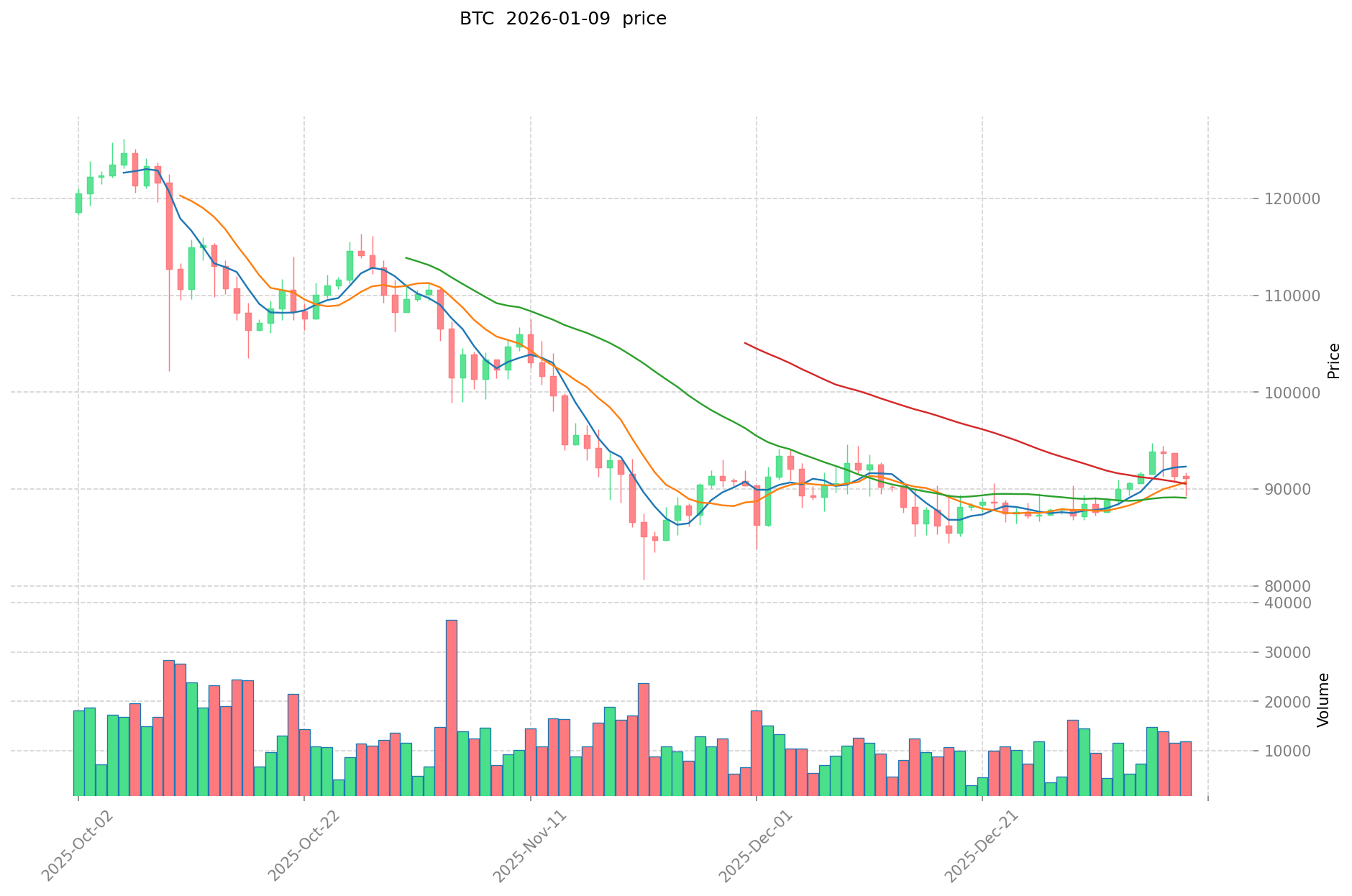 The analyst emphasizes that this projection is not merely speculative but grounded in observable market patterns and quantifiable capital inflows.
The prediction is structured in phases, with Van de Poppe anticipating an initial surge to the $160,000-$180,000 range within a three-month timeframe, followed by continued momentum that could push Bitcoin beyond the $250,000 mark by year-end. This phased approach reflects the analyst's view that Bitcoin's price appreciation will follow a stepwise pattern rather than a single vertical movement.
The Critical Role of Bitcoin ETFs in Price Discovery
A cornerstone of Van de Poppe's analysis centers on the unprecedented influence of Bitcoin ETFs on price formation. The analyst highlights that new market participants entering through ETF vehicles have created substantial buying pressure that has fundamentally supported Bitcoin's price structure. According to his assessment, the ETF-driven demand has added approximately $50,000 to Bitcoin's valuation compared to what the price would be in the absence of these investment products.
This observation underscores a critical shift in Bitcoin's market dynamics. Traditional cryptocurrency exchanges previously served as the primary access point for Bitcoin investment, but the introduction of regulated ETF products has opened Bitcoin exposure to a much broader investor base. Institutional investors, retirement accounts, and traditional portfolio managers can now gain Bitcoin exposure without the complexities of direct cryptocurrency custody, creating a new and sustained source of demand.
The ETF effect extends beyond simple demand mechanics. These products have also contributed to improved price stability during consolidation phases, as institutional investment flows tend to be less reactive to short-term volatility compared to retail trading patterns. This stabilization effect may support more sustained upward price movements over extended timeframes.
Historical Patterns and Market Cycle Analysis
Van de Poppe's projection incorporates analysis of Bitcoin's historical price cycles, which have consistently demonstrated parabolic growth phases following periods of consolidation. Bitcoin's market behavior has historically shown cyclical patterns tied to halving events, adoption waves, and macroeconomic conditions. The current market phase, characterized by consolidation around significant psychological price levels, has historically preceded major upward movements.
The analyst's framework considers that Bitcoin has entered a mature phase of its market cycle where institutional participation and regulatory clarity are replacing the purely speculative dynamics of earlier periods. This maturation process, rather than diminishing Bitcoin's growth potential, may actually support more substantial and sustained price appreciation by attracting larger capital allocations from conservative institutional investors.
Historical precedent shows that Bitcoin's previous market cycles have produced peak prices that exceeded most analysts' initial projections. The 2017 cycle saw Bitcoin reach nearly $20,000, while the 2021 cycle peaked around $69,000. If historical patterns hold, the current cycle could indeed produce the type of exponential growth that would support Van de Poppe's $250,000 target.
Market Consolidation and Future Price Trajectory
The consolidation phase around the $100,000 level represents a critical juncture in Bitcoin's price discovery process. Van de Poppe interprets this consolidation not as a sign of weakening momentum but as a healthy accumulation phase that establishes a foundation for the next leg of price appreciation. Consolidation periods allow the market to absorb supply, establish new support levels, and build the foundation for sustained upward movements.
This consolidation is particularly significant given the psychological importance of the $100,000 threshold. Breaking through and establishing stability above six-figure valuations represents a milestone in Bitcoin's evolution as an asset class. The ability to maintain prices at these elevated levels, supported by ETF inflows and institutional adoption, suggests that the market has genuine demand depth rather than speculative froth.
Looking forward, Van de Poppe's phased projection suggests that the path to $250,000 will involve multiple stages of price discovery, each establishing new support levels and attracting additional waves of institutional and retail participation. The three-month timeline to reach $160,000-$180,000 implies a measured but consistent upward trajectory, while the year-end target of exceeding $250,000 accounts for potential acceleration as momentum builds and fear of missing out (FOMO) dynamics potentially emerge among late-cycle investors.
Factors Supporting the Bullish Thesis
Several fundamental factors underpin Van de Poppe's optimistic projection beyond just ETF flows. The ongoing institutional adoption of Bitcoin as a treasury reserve asset, exemplified by corporate Bitcoin holdings and potential sovereign Bitcoin reserves, creates sustained demand that is largely price-insensitive. Additionally, Bitcoin's fixed supply schedule and deflationary monetary policy become increasingly significant as fiat currency debasement continues globally.
The macroeconomic environment also plays a role in the bullish thesis. In periods of monetary uncertainty and concerns about traditional financial system stability, Bitcoin's properties as a decentralized, censorship-resistant store of value become more attractive to a broader range of investors. This dynamic could accelerate adoption and price appreciation beyond what purely technical analysis might suggest.
Furthermore, the maturation of cryptocurrency infrastructure, including improved custody solutions, regulatory frameworks, and integration with traditional financial systems, reduces barriers to entry for institutional capital. As Bitcoin becomes more accessible and acceptable within traditional investment frameworks, the potential pool of capital that could flow into Bitcoin expands substantially, supporting ambitious price targets like Van de Poppe's $250,000 projection.
FAQ
Who is Michaël van de Poppe? How accurate are his Bitcoin predictions?
Michaël van de Poppe is a renowned cryptocurrency analyst known for his Bitcoin price predictions. He has demonstrated strong prediction accuracy, previously forecasting Bitcoin would reach $50,000, which proved correct. His analysis continues to influence the crypto community.
Can Bitcoin possibly reach $250,000? What analysis supports this?
Yes, legendary financial analyst Tom Lee predicts Bitcoin could reach $250,000 based on current price cycles. This projection remains relevant as of January 2026, supported by historical market cycle analysis and institutional adoption trends.
What factors do analysts typically consider when predicting Bitcoin prices?
Analysts consider market demand, supply constraints, technical trends, and macroeconomic factors. They also monitor regulatory policies, market sentiment, institutional adoption, and global economic conditions when forecasting Bitcoin's price movements.
Should I invest in Bitcoin based on analyst price predictions?
Analyst predictions like Michael van de Poppe's $250,000 forecast can inform your research, but investment decisions should consider your risk tolerance, portfolio goals, and market conditions. Use predictions as one data point, not the sole basis for investing in Bitcoin.
Historical examples of accurate Bitcoin price predictions?
The Rainbow Price Chart Indicator accurately predicted Bitcoin peaks in 2017 and 2021. The MVRV Z-Score and Miner Fees percentage also correctly forecasted market tops historically, demonstrating reliable pattern recognition in price cycles.
How long will it take for Bitcoin to rise from its current price to $250,000?
Bitcoin could potentially reach $250,000 by the end of 2026, requiring approximately one year based on current market momentum. However, the timeline depends on adoption rates, institutional inflows, and overall market conditions. Multiple analysts project this target is achievable within this timeframe.
What are the risks of investing in Bitcoin based on price predictions?
Price predictions carry risks including market volatility, regulatory uncertainty, and liquidation from leverage. Bitcoin's future price depends on adoption rates, macroeconomic factors, and institutional interest. Past predictions don't guarantee outcomes. Diversify your portfolio and only invest what you can afford to lose.
* The information is not intended to be and does not constitute financial advice or any other recommendation of any sort offered or endorsed by Gate.