This comprehensive guide compares AUDIO and QNT, two distinct blockchain projects with different market positioning. AUDIO, a decentralized music streaming protocol launched in 2020, focuses on creator monetization at $0.02985 current price with lower liquidity. QNT, an enterprise blockchain interoperability platform established in 2018, serves institutional clients at $83.92 with significantly higher trading volumes. The article examines historical price trends, tokenomics, institutional adoption, technical ecosystems, and 2026-2031 price forecasts. While AUDIO targets the creator economy sector, QNT specializes in cross-ledger enterprise solutions. Conservative investors may favor QNT's established presence, while aggressive investors may seek AUDIO's growth potential. Both assets require careful risk assessment considering regulatory frameworks, liquidity conditions, and individual investment timelines.
Introduction: Investment Comparison Between AUDIO and QNT
In the cryptocurrency market, the comparison between AUDIO vs QNT continues to draw investor attention. These two assets exhibit notable differences in market cap ranking, application scenarios, and price performance, representing distinct positioning within the crypto asset landscape.
Audius (AUDIO): Launched in October 2020, this decentralized music sharing and streaming protocol has gained recognition for enabling direct transactions between listeners and creators, allowing free distribution and monetization of audio content.
Quant (QNT): Introduced in August 2018, Quant Network has established itself as a technology provider focused on blockchain interoperability through its Overledger operating system, serving enterprises, regulators, and governments.
This article will provide a comprehensive analysis of AUDIO vs QNT investment value comparison, examining historical price trends, supply mechanisms, institutional adoption, technological ecosystems, and future projections to address investors' key concerns:
"Which is the better buy right now?"
I. Historical Price Comparison and Current Market Status
Historical Price Trends of AUDIO (Coin A) and QNT (Coin B)
- 2021: AUDIO reached a peak price of $4.95 on March 27, 2021, reflecting heightened market interest during the broader cryptocurrency bull cycle. Subsequently, the token experienced significant downward pressure.
- 2021: QNT achieved its all-time high of $427.42 on September 11, 2021, driven by growing institutional interest in blockchain interoperability solutions during the same bull market period.
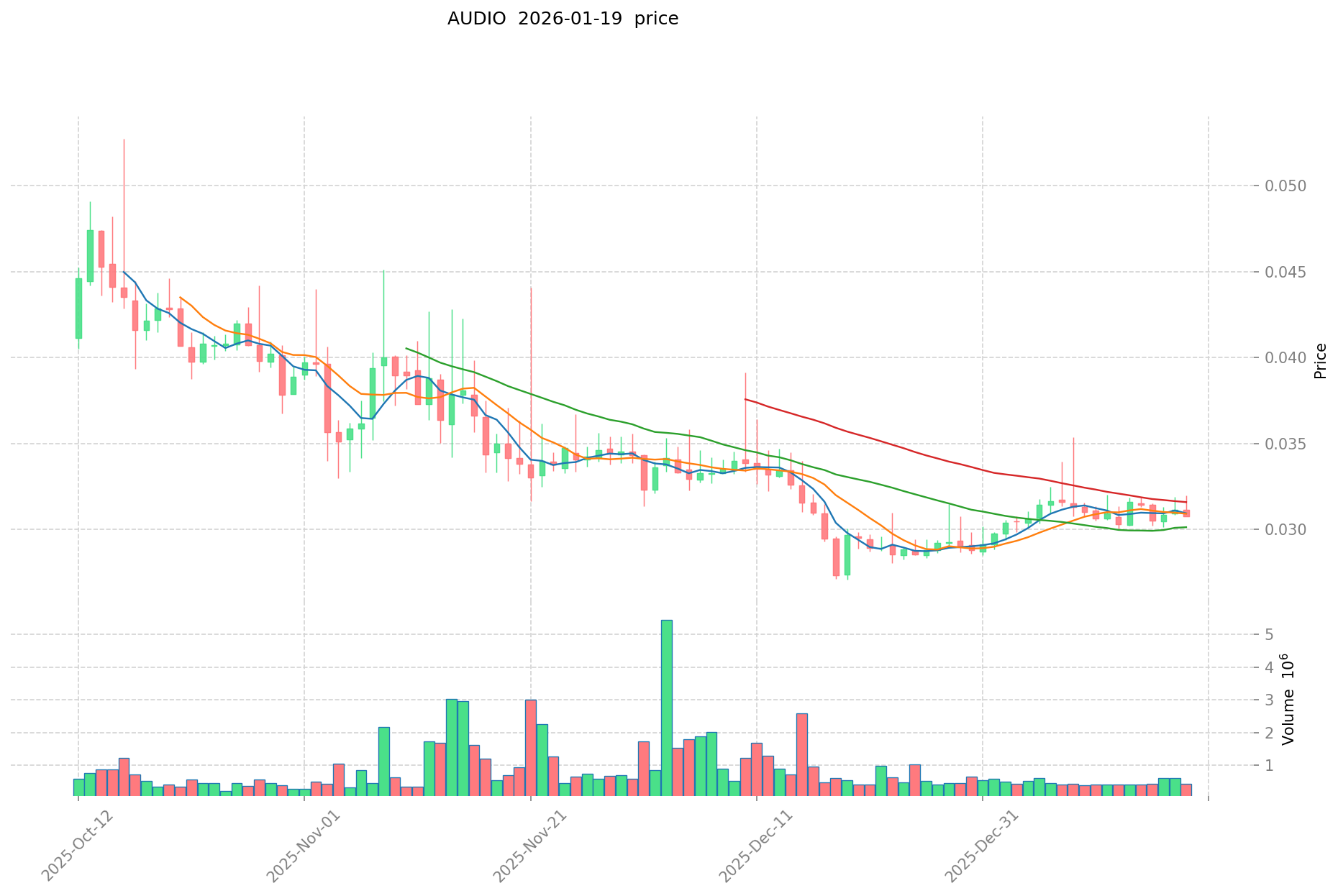
- Comparative Analysis: During the subsequent market correction phase, AUDIO declined from its peak of $4.95 to a historical low of $0.02719366 (recorded on December 19, 2025), representing a substantial retracement. QNT, meanwhile, fell from its high of $427.42 to a historical low of $0.215773 (recorded on August 23, 2018), though it has maintained relatively higher price levels compared to AUDIO in recent periods.
Current Market Conditions (January 20, 2026)
- AUDIO Current Price: $0.02985
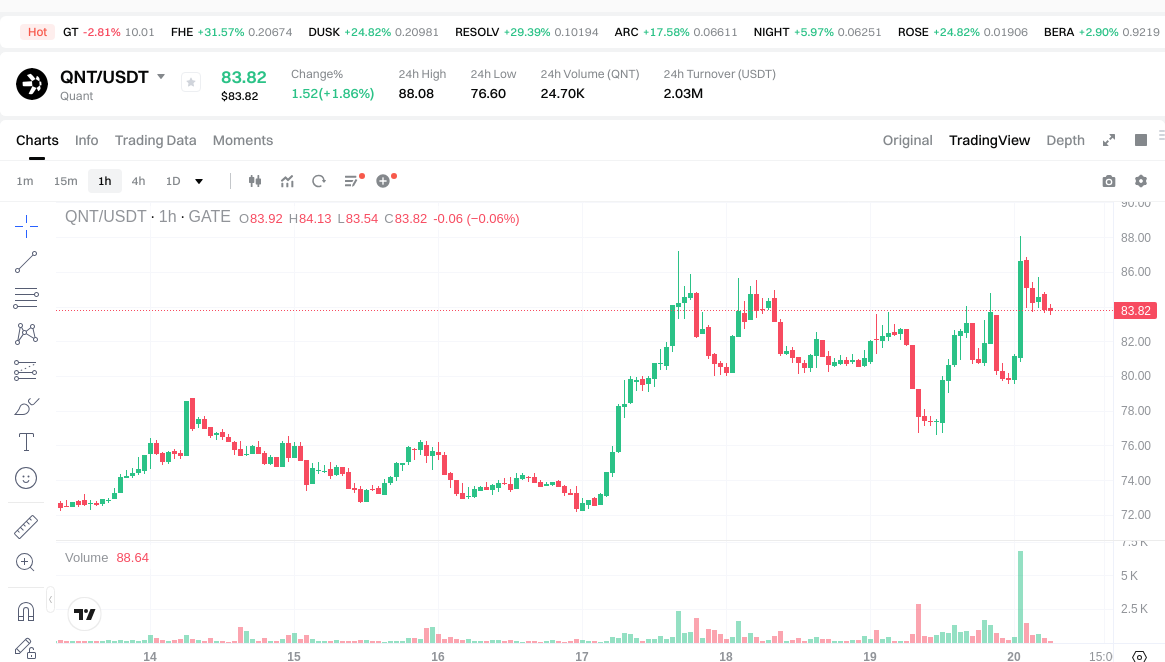
- QNT Current Price: $83.92
- 24-Hour Trading Volume: AUDIO recorded $12,992.83, while QNT showed significantly higher activity at $2,029,290.92
- Market Sentiment Index (Fear & Greed Index): 44 (Fear)
View real-time prices:
II. Core Factors Influencing AUDIO vs QNT Investment Value
Supply Mechanism Comparison (Tokenomics)
- AUDIO: The token operates with a defined supply structure designed to support platform governance and reward content creators within the Audius ecosystem.
- QNT: Features a fixed maximum supply model, creating potential scarcity dynamics as network adoption expands.
- 📌 Historical Pattern: Supply mechanisms influence price cycles through scarcity perception and distribution schedules, though specific correlations require careful analysis of market conditions.
Institutional Adoption and Market Application
- Institutional Holdings: Both assets present different profiles for institutional interest, with varying levels of exposure through different investment vehicles.
- Enterprise Adoption: AUDIO focuses on decentralized music streaming infrastructure, while QNT targets enterprise blockchain interoperability solutions, serving distinct use cases in digital content distribution versus cross-ledger technology.
- Regulatory Environment: Different jurisdictions maintain varying stances toward digital assets, impacting accessibility and compliance requirements for both tokens.
Technical Development and Ecosystem Construction
- AUDIO Technical Progress: Development centers on streaming protocol enhancements and creator monetization tools within its decentralized audio platform.
- QNT Technical Evolution: Focuses on expanding blockchain interoperability capabilities and enterprise integration solutions.
- Ecosystem Comparison: AUDIO emphasizes content creator networks and streaming applications, whereas QNT concentrates on financial institution connectivity and multi-chain infrastructure.
Macroeconomic Environment and Market Cycles
- Inflation Context Performance: Digital assets may demonstrate varying correlations with traditional inflation hedges, depending on market sentiment and adoption trends.
- Macroeconomic Monetary Policy: Interest rate adjustments and currency strength fluctuations can influence risk appetite for digital assets across different sectors.
- Geopolitical Considerations: Cross-border transaction demands and international developments may affect adoption patterns for blockchain-based solutions in different regional markets.
III. 2026-2031 Price Prediction: AUDIO vs QNT
Short-term Forecast (2026)
- AUDIO: Conservative $0.027-$0.030 | Optimistic $0.030-$0.036
- QNT: Conservative $56.94-$83.73 | Optimistic $83.73-$124.76
Medium-term Forecast (2028-2029)
- AUDIO may enter a growth phase with estimated prices ranging from $0.025 to $0.066 across different market scenarios
- QNT may experience expansion with projected prices between $116.21 and $208.05 depending on market conditions
- Key drivers: institutional capital inflows, ETF developments, ecosystem expansion
Long-term Forecast (2030-2031)
- AUDIO: Baseline scenario $0.048-$0.065 | Optimistic scenario $0.061-$0.080
- QNT: Baseline scenario $134.59-$182.24 | Optimistic scenario $192.27-$257.64
View detailed price predictions for AUDIO and QNT
Disclaimer: Price predictions are based on historical data analysis and market trends. Actual prices may vary significantly due to market volatility, regulatory changes, technological developments, and other unpredictable factors. This information should not be considered as investment advice.
AUDIO:
| Year |
Predicted High Price |
Predicted Average Price |
Predicted Low Price |
Price Change |
| 2026 |
0.035832 |
0.02986 |
0.026874 |
0 |
| 2027 |
0.04565594 |
0.032846 |
0.02890448 |
10 |
| 2028 |
0.0498487319 |
0.03925097 |
0.0247281111 |
31 |
| 2029 |
0.0654882808965 |
0.04454985095 |
0.0325213911935 |
49 |
| 2030 |
0.075376120314852 |
0.05501906592325 |
0.047866587353227 |
84 |
| 2031 |
0.079541063605242 |
0.065197593119051 |
0.061285737531908 |
118 |
QNT:
| Year |
Predicted High Price |
Predicted Average Price |
Predicted Low Price |
Price Change |
| 2026 |
124.7577 |
83.73 |
56.9364 |
0 |
| 2027 |
151.1535825 |
104.24385 |
61.5038715 |
24 |
| 2028 |
185.1631385625 |
127.69871625 |
116.2058317875 |
52 |
| 2029 |
208.0531334503125 |
156.43092740625 |
120.4518141028125 |
86 |
| 2030 |
202.288653775392187 |
182.24203042828125 |
147.616044646907812 |
117 |
| 2031 |
257.635558416461203 |
192.265342101836718 |
134.585739471285703 |
129 |
IV. Investment Strategy Comparison: AUDIO vs QNT
Long-term vs Short-term Investment Strategies
- AUDIO: May appeal to investors focused on decentralized content distribution and music streaming innovation, with interest in early-stage protocol development and creator economy infrastructure
- QNT: May suit investors seeking exposure to enterprise blockchain interoperability solutions, with focus on institutional adoption and cross-ledger technology infrastructure
Risk Management and Asset Allocation
- Conservative Investors: AUDIO 20-30% vs QNT 70-80% allocation considerations, reflecting risk tolerance and volatility preferences
- Aggressive Investors: AUDIO 40-50% vs QNT 50-60% allocation possibilities, based on growth potential assessment and risk appetite
- Hedging Instruments: Stablecoin reserves for liquidity management, derivatives for downside protection, diversified multi-asset portfolio construction
V. Potential Risk Comparison
Market Risks
- AUDIO: Exposure to price volatility patterns observed in decentralized application tokens, with 24-hour trading volume of $12,992.83 indicating lower liquidity conditions compared to larger market cap assets
- QNT: Subject to enterprise adoption cycle variations and institutional sentiment shifts, with 24-hour trading volume of $2,029,290.92 reflecting higher market activity levels
Technical Risks
- AUDIO: Network scalability considerations related to streaming protocol capacity, platform stability requirements for content delivery infrastructure
- QNT: Multi-chain integration complexity involving interoperability protocol maintenance, security considerations across connected blockchain networks
Regulatory Risks
- Different jurisdictions maintain varying frameworks for digital assets, with potential implications for both content distribution protocols and enterprise blockchain solutions. Regulatory developments may affect accessibility, compliance requirements, and adoption patterns differently for consumer-facing platforms versus enterprise infrastructure providers.
VI. Conclusion: Which Is the Better Buy?
📌 Investment Value Summary:
- AUDIO Characteristics: Positioned in decentralized music streaming sector with focus on creator monetization, current price of $0.02985 reflects early-stage protocol development phase
- QNT Characteristics: Established presence in enterprise blockchain interoperability space, current price of $83.92 indicates market recognition of institutional use cases
✅ Investment Considerations:
- Beginning Investors: Consider starting with smaller position sizes to understand volatility patterns, prioritize understanding fundamental technology and use cases before allocation decisions
- Experienced Investors: Evaluate portfolio diversification benefits across different blockchain sectors, assess risk-reward profiles based on individual investment thesis and time horizons
- Institutional Investors: Analyze enterprise adoption trends, regulatory compliance frameworks, and liquidity requirements for larger capital allocations
⚠️ Risk Disclosure: Cryptocurrency markets exhibit substantial volatility. This content presents informational analysis and does not constitute investment advice. Investors should conduct independent research and consult qualified financial advisors before making investment decisions.
VII. FAQ
Q1: What are the main differences between AUDIO and QNT in terms of use cases?
AUDIO focuses on decentralized music streaming and content creator monetization, while QNT specializes in enterprise blockchain interoperability solutions. AUDIO operates within the creator economy sector, enabling direct transactions between listeners and artists through its streaming protocol. QNT, through its Overledger operating system, serves enterprises, financial institutions, and government organizations by facilitating cross-ledger connectivity and multi-chain integration.
Q2: Which token has better liquidity based on current trading volumes?
QNT demonstrates significantly better liquidity with a 24-hour trading volume of $2,029,290.92 compared to AUDIO's $12,992.83 as of January 20, 2026. This substantial difference indicates that QNT offers greater ease of entry and exit for larger position sizes, reduced slippage potential, and more active market participation. Lower liquidity in AUDIO may result in higher price volatility and wider bid-ask spreads for traders.
Q3: How do the supply mechanisms of AUDIO and QNT differ?
QNT operates with a fixed maximum supply model, creating potential scarcity dynamics as network adoption expands. AUDIO utilizes a defined supply structure designed to support platform governance and reward content creators within its ecosystem. The fixed supply characteristic of QNT may contribute to different price dynamics compared to AUDIO's distribution model, particularly as demand patterns evolve within their respective sectors.
Q4: What is the recommended portfolio allocation between AUDIO and QNT?
For conservative investors, a potential allocation consideration is 20-30% AUDIO and 70-80% QNT, reflecting lower risk tolerance and preference for established market presence. Aggressive investors might consider 40-50% AUDIO and 50-60% QNT allocation, based on higher growth potential assessment and willingness to accept greater volatility. These allocations should be adjusted based on individual risk profiles, investment horizons, and diversification strategies across broader cryptocurrency portfolios.
Q5: What are the key regulatory risks affecting AUDIO and QNT?
Both tokens face distinct regulatory considerations based on their use cases. AUDIO, as a content distribution protocol, may encounter regulations related to digital content platforms, creator payments, and consumer-facing applications. QNT, serving enterprise and institutional clients, must navigate financial services regulations, cross-border transaction frameworks, and institutional compliance requirements. Different jurisdictions maintain varying frameworks that may affect accessibility, operational requirements, and adoption patterns differently for each token.
Q6: What price performance can be expected by 2030?
According to baseline projections, AUDIO may reach prices between $0.048 and $0.065 by 2030, representing potential growth from current levels of $0.02985. QNT baseline scenario estimates range from $134.59 to $182.24 by 2030, compared to the current price of $83.92. However, these predictions are subject to significant uncertainty influenced by market cycles, technological developments, institutional adoption rates, regulatory changes, and macroeconomic conditions. Actual performance may vary substantially from these projections.
Q7: Which token is more suitable for institutional investors?
QNT may present greater appeal for institutional investors due to its enterprise-focused positioning, higher liquidity levels, and established presence in blockchain interoperability solutions serving financial institutions and government organizations. Its use case aligns more directly with institutional requirements for cross-ledger connectivity and regulatory compliance frameworks. AUDIO's focus on consumer-facing music streaming applications positions it differently within institutional portfolio considerations, though it may attract institutions interested in creator economy infrastructure and decentralized content distribution innovation.
* The information is not intended to be and does not constitute financial advice or any other recommendation of any sort offered or endorsed by Gate.