# Article Introduction
This comprehensive guide explores top high-potential altcoins for 2024 investment, covering cryptocurrency fundamentals, evaluation criteria, and strategic portfolio construction. Designed for both beginner and experienced investors, it examines established cryptocurrencies like Bitcoin, Ethereum, Solana, and Cardano alongside emerging opportunities, providing systematic frameworks for assessing utility, technology, and market performance. The article addresses critical investor needs: identifying quality digital assets, understanding blockchain applications, managing volatility, and building diversified portfolios on platforms like Gate. Through detailed analysis of real-world use cases, security considerations, and investment strategies including dollar-cost averaging and long-term holding, readers gain actionable knowledge for navigating cryptocurrency markets with informed decision-making and risk management discipline.
What is Cryptocurrency?
Cryptocurrency is digital money built on blockchain technology. Unlike traditional currency, it doesn't require banks or governments to function, making it decentralized and borderless. Instead, transactions are verified by a network of computers, which ensures security and transparency. This decentralized nature is why cryptocurrency has gained significant popularity among investors and technology enthusiasts.
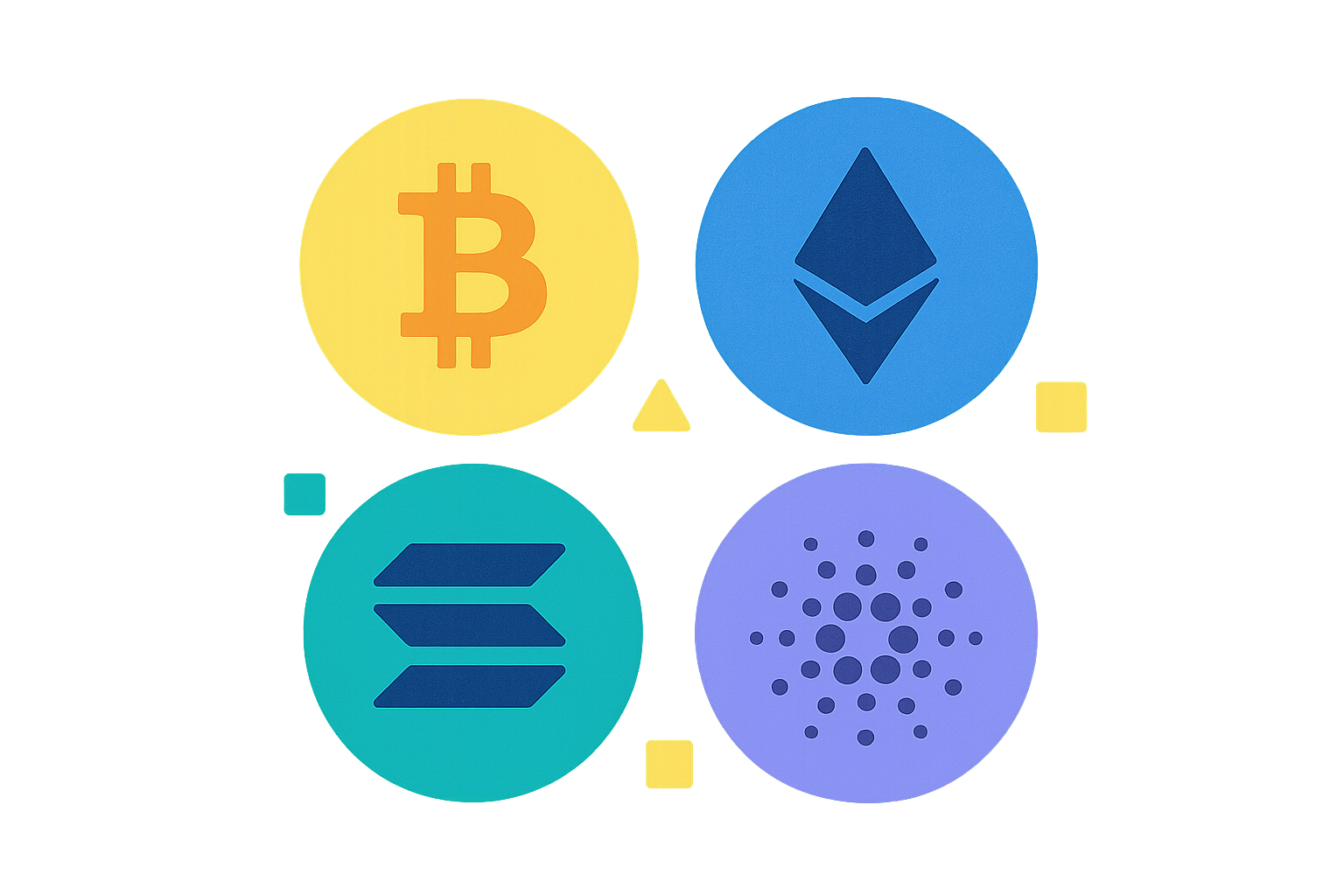
Bitcoin (BTC), launched in 2009, was the first cryptocurrency and continues to hold the largest market capitalization. Since then, other major cryptocurrencies like Ethereum, Solana, and Cardano have emerged, each offering unique features and capabilities. Ethereum, for example, introduced smart contracts that enable decentralized applications, while other cryptocurrencies focus on transaction speed and efficiency.
Cryptocurrencies can be used for various purposes in the real world, including purchasing goods and services, investment, and cross-border money transfers. The diversity of cryptocurrency projects demonstrates that community engagement and technological innovation can drive significant growth. Many investors are drawn to these digital assets because of their potential for returns and their role in reshaping financial systems.
Price analysis often focuses on cryptocurrencies with strong fundamentals and real-world applications. Coins known for their speed, scalability, and adoption in decentralized finance (DeFi) are particularly noteworthy. With growing institutional interest and technological advancement, it's easy to see why these digital assets have become a significant part of modern investment portfolios.
Criteria for Rating the Best Cryptocurrencies to Buy
Evaluating quality cryptocurrencies involves analyzing multiple factors beyond simply identifying popular names. A comprehensive assessment requires examining market performance, technological utility, community strength, development quality, and regulatory compliance. Here's how to evaluate these factors systematically.
Market capitalization serves as a primary indicator of a cryptocurrency's size and market significance. Established cryptocurrencies with large market capitalizations tend to offer greater stability, while smaller-cap projects may present higher growth opportunities. Analyzing recent price trends, historical performance, and proximity to previous highs can help identify potential growth opportunities.
Utility and Technology
A cryptocurrency's real-world utility is crucial for long-term value. Projects that solve genuine problems or provide innovative solutions tend to maintain stronger positions in the market. For instance, cryptocurrencies that power smart contracts, enable decentralized finance applications, or facilitate cross-border payments demonstrate clear utility. Technological innovations such as improved transaction speed and reduced fees also contribute to a project's value proposition.
Community and Adoption
The strength and engagement of a cryptocurrency's community often correlate with its success. Active communities demonstrate genuine interest and confidence in a project. Adoption metrics, including the number of users, transaction volume, and integration with real-world applications, provide tangible evidence of a cryptocurrency's utility and market acceptance.
Development and Security
The team behind a cryptocurrency project significantly influences its success. Projects with transparent development roadmaps, regular updates, and strong security practices inspire confidence among investors. A history of secure operations without major incidents strengthens a project's reputation and attracts both retail and institutional investors.
Regulatory Compliance and Roadmaps
Compliance with evolving regulatory frameworks is increasingly important for cryptocurrency projects. Clear roadmaps outlining future development and milestones provide investors with insight into a project's direction and long-term viability. Projects that proactively address regulatory concerns tend to have better prospects for sustained growth.
Best Cryptocurrencies to Buy
Bitcoin (BTC)
Bitcoin remains the most recognized and largest cryptocurrency by market capitalization. As the original cryptocurrency, it has established itself as a store of value and medium of exchange. Bitcoin's fixed supply of 21 million coins creates inherent scarcity, which many investors view as a key factor in its long-term value proposition.
Bitcoin's network security is provided by a distributed proof-of-work consensus mechanism, making it highly resistant to attacks and manipulation. Over the years, Bitcoin has demonstrated resilience through various market cycles and has gained acceptance among institutional investors. Its role as "digital gold" has solidified its position in investment portfolios seeking exposure to cryptocurrency.
Ethereum (ETH)
Ethereum is the leading platform for smart contracts and decentralized applications (dApps). Since its launch in 2015, Ethereum has revolutionized blockchain technology by enabling developers to build complex applications on top of its network. The platform powers the majority of decentralized finance (DeFi) applications and has become the foundation for numerous blockchain-based projects.
Ethereum's transition to a proof-of-stake consensus mechanism significantly reduced its energy consumption while improving scalability. Recent network upgrades have enhanced transaction efficiency and reduced fees. The platform's ongoing development and commitment to innovation make it a cornerstone of the blockchain ecosystem.
From decentralized exchanges to lending protocols and non-fungible tokens (NFTs), Ethereum's versatility has made it indispensable for the broader cryptocurrency ecosystem. Its large developer community and extensive tooling ensure continued innovation and adoption.
Solana (SOL)
Solana is a high-performance blockchain designed for speed and efficiency. It processes transactions at significantly higher speeds than many competing blockchains while maintaining relatively low transaction fees. These characteristics have made Solana attractive for applications requiring high throughput, such as decentralized exchanges and gaming platforms.
Solana's architecture enables parallel processing of transactions, contributing to its impressive transaction capacity. The platform has attracted substantial developer interest and has become home to a growing ecosystem of decentralized applications. Its focus on user experience and developer-friendly tools has contributed to its adoption.
The platform's performance characteristics and growing ecosystem make it a notable option for those seeking exposure to high-speed blockchain technology.
Cardano (ADA)
Cardano is a blockchain platform developed with a focus on sustainability and academic rigor. The project emphasizes peer-reviewed research and formal verification methods in its development process. This scientific approach distinguishes Cardano from many other blockchain projects.
Cardano's proof-of-stake consensus mechanism is designed to be energy-efficient while maintaining network security. The platform has gradually introduced smart contract functionality and continues to expand its capabilities. Its commitment to interoperability and scalability positions it as a significant player in the blockchain ecosystem.
The project's long-term vision includes serving as infrastructure for real-world applications, particularly in regions with limited access to traditional financial services.
Chainlink (LINK)
Chainlink operates as a decentralized oracle network, providing blockchain applications with access to real-world data and external resources. This functionality is critical for smart contracts that need to interact with information outside the blockchain. Chainlink's infrastructure enables developers to build applications that can respond to real-world events and data.
The network's security model relies on a distributed network of node operators, ensuring data reliability and preventing single points of failure. Chainlink's widespread adoption across multiple blockchain platforms demonstrates its utility and importance to the broader ecosystem.
As decentralized applications increasingly require reliable external data, Chainlink's role in bridging blockchains and the real world becomes increasingly valuable.
Ripple (XRP)
Ripple is designed specifically for facilitating international payments and cross-border transactions. The XRP token serves as a bridge currency within the Ripple network, enabling rapid settlement of payments between different currencies. This functionality addresses a genuine need in global finance, where cross-border transactions have traditionally been slow and expensive.
Ripple has partnered with various financial institutions to explore and implement its technology for payment settlement. The platform's focus on practical financial applications distinguishes it from many other blockchain projects.
XRP's utility in payment settlement and its partnerships with financial institutions provide a clear use case for the token.
Dogecoin (DOGE)
Dogecoin originated as a lighthearted cryptocurrency based on an internet meme but has evolved into a genuine payment network with a substantial user base. Despite its humorous origins, Dogecoin has demonstrated remarkable longevity and community support. The cryptocurrency's simplicity and low transaction fees make it suitable for everyday transactions.
The Dogecoin community has remained active and engaged, supporting various charitable initiatives and causes. This community engagement has contributed to the cryptocurrency's sustained relevance in the broader market.
While Dogecoin lacks the technological complexity of some other cryptocurrencies, its accessibility and strong community make it noteworthy in the cryptocurrency landscape.
Polkadot (DOT)
Polkadot is a multi-chain blockchain platform designed to enable interoperability between different blockchains. The project addresses the fragmentation of the blockchain ecosystem by creating a framework for different blockchains to communicate and share information. This interoperability focus represents an important approach to blockchain scalability and functionality.
Polkadot's architecture includes a central relay chain and multiple parallel chains (parachains), allowing for specialized blockchains to operate while maintaining connection to the broader network. This design enables greater flexibility and specialization within the ecosystem.
The platform's focus on interoperability and its growing ecosystem of connected blockchains make it a significant development in blockchain technology.
Litecoin (LTC)
Litecoin was created as an alternative to Bitcoin, with a focus on faster transaction confirmation times and lower transaction fees. The cryptocurrency uses a different hashing algorithm than Bitcoin, which affects its mining characteristics. Litecoin has maintained a consistent position in the cryptocurrency market due to its technical improvements and established network.
Litecoin's faster block time and lower fees make it suitable for everyday transactions, while its established network provides security and reliability. The cryptocurrency's longevity and continued development contribute to its standing in the market.
How to Find Quality Cryptocurrencies to Buy
Identifying promising cryptocurrencies requires a systematic approach that considers multiple factors. By focusing on key indicators and conducting thorough research, investors can make more informed decisions about which digital assets to include in their portfolios.
Analyze Market Capitalization
Market capitalization provides insight into a cryptocurrency's size and market position. Larger market cap cryptocurrencies generally offer greater stability and liquidity, while smaller market cap projects may present higher growth potential. Understanding the relationship between market cap and risk can help investors balance their portfolios appropriately.
Research Utility and Real-World Applications
Quality cryptocurrencies typically address genuine needs or provide meaningful technological advantages. Examining a project's use cases, adoption metrics, and real-world applications helps assess its long-term viability. Cryptocurrencies that solve problems or enable new capabilities tend to maintain stronger value propositions.
Evaluate Development and Governance
The quality of a project's development team, technical roadmap, and governance structure significantly influences its prospects. Projects with transparent development processes, regular updates, and clear long-term vision tend to perform better. Assessing the team's track record and the project's organizational structure provides valuable insight.
Community engagement and activity often reflect genuine interest in a project. Active communities contribute to development, adoption, and advocacy. However, it's important to distinguish between genuine community engagement and speculative hype.
Assess Security and Regulatory Compliance
Security practices and regulatory compliance are increasingly important factors. Projects that prioritize security and work proactively with regulators tend to have better long-term prospects. Understanding a project's approach to these issues helps identify lower-risk opportunities.
Continuous learning and research are essential for making informed decisions. Following technical developments, market analysis, and industry trends helps investors stay current with the evolving cryptocurrency landscape.
Is Cryptocurrency a Good Long-Term Investment?
Cryptocurrencies represent a new asset class with unique characteristics and risk factors. Whether they are suitable for long-term investment depends on individual circumstances, risk tolerance, and investment objectives.
Potential for Growth
Cryptocurrencies have demonstrated the capacity for significant appreciation over extended periods. Several cryptocurrencies have achieved substantial returns for early investors. However, past performance does not guarantee future results, and cryptocurrency markets remain highly volatile.
Real-World Use Cases
The development of genuine use cases strengthens the long-term investment case for cryptocurrencies. Projects that address real problems or enable new capabilities have stronger fundamentals than purely speculative assets. As blockchain technology matures and adoption increases, the utility of certain cryptocurrencies continues to expand.
Volatility and Risk
Cryptocurrency markets are characterized by significant price volatility. This volatility presents both opportunities and risks for investors. Understanding and managing risk appropriately is essential for long-term cryptocurrency investing. Many financial advisors recommend limiting cryptocurrency exposure to a small percentage of a diversified portfolio.
Regulatory Uncertainty
The regulatory environment for cryptocurrencies continues to evolve. Changes in regulation can significantly impact cryptocurrency values and investment prospects. Investors should remain aware of regulatory developments and their potential implications.
Long-Term Outlook
The long-term viability of cryptocurrencies depends on continued technological development, adoption, and regulatory acceptance. While the future remains uncertain, the fundamental technology underlying cryptocurrencies continues to advance, and institutional interest continues to grow.
For investors considering long-term cryptocurrency exposure, focusing on established projects with strong fundamentals and genuine use cases may provide the best balance between opportunity and risk.
How to Build a Cryptocurrency Portfolio
Constructing a cryptocurrency portfolio requires careful planning and consideration of individual investment objectives. A systematic approach can help investors build positions that align with their goals and risk tolerance.
Define Your Investment Strategy
Clearly articulating investment objectives and strategy is the first step in portfolio construction. Different strategies suit different investors and market conditions. Some investors focus on long-term accumulation of established cryptocurrencies, while others pursue more active trading strategies. Defining your approach helps guide portfolio decisions.
Choosing reliable platforms for cryptocurrency transactions is essential. Established exchanges and brokers offer various features, security measures, and asset selections. Evaluating platforms based on security, fees, available assets, and user experience helps ensure a suitable choice.
Diversify Your Holdings
Diversification across multiple cryptocurrencies and asset types can help manage risk. A balanced portfolio might include established cryptocurrencies alongside projects in emerging areas. However, investors should ensure they understand each holding and its role in their portfolio.
Manage Your Entry Points
Timing market entry can significantly impact investment outcomes. While perfectly timing the market is impossible, taking a measured approach to accumulation can help reduce the impact of price volatility. Dollar-cost averaging, where fixed amounts are invested at regular intervals, is one approach to managing entry points.
Monitor and Rebalance
Regular portfolio monitoring and rebalancing help maintain alignment with investment objectives. As different holdings appreciate or depreciate at different rates, periodic rebalancing can restore the intended portfolio allocation.
Popular Investment Approaches for Cryptocurrency
Various investment strategies can be applied to cryptocurrency portfolios. Understanding different approaches helps investors select methods that align with their objectives and circumstances.
Dollar-Cost Averaging (DCA)
Dollar-cost averaging involves investing a fixed amount at regular intervals, regardless of price. This approach reduces the impact of volatility and removes emotion from investment decisions. It is particularly suitable for long-term investors with a regular income stream.
Value Investing
Value investing involves identifying undervalued assets with strong fundamentals. This approach requires thorough research and analysis to identify projects with genuine utility and growth potential trading at reasonable valuations.
Growth Investing
Growth investing focuses on projects with significant future potential. This approach typically involves accepting higher volatility in pursuit of greater returns. It requires identifying emerging technologies and projects with strong growth prospects.
Technical Analysis
Technical analysis involves studying price charts and trading patterns to identify market opportunities. This approach requires skill and experience to apply effectively and works best when combined with fundamental analysis.
Long-Term Holding (HODL)
Long-term holding involves purchasing cryptocurrencies and maintaining positions through market cycles. This approach minimizes trading costs and can be effective for investors with strong conviction in long-term cryptocurrency trends. It requires patience and discipline to maintain positions through periods of volatility.
Conclusion
The cryptocurrency market presents diverse opportunities for investors with varying risk tolerances and investment objectives. Established cryptocurrencies with strong fundamentals and genuine use cases offer exposure to blockchain technology and its potential applications. Emerging projects and specialized blockchains continue to expand the possibilities for cryptocurrency investment.
Successful cryptocurrency investing requires thorough research, careful portfolio construction, and disciplined risk management. By understanding the characteristics of different cryptocurrencies, evaluating their fundamentals, and building diversified portfolios aligned with personal objectives, investors can make informed decisions about cryptocurrency exposure.
As blockchain technology continues to mature and cryptocurrency adoption expands, the role of digital assets in investment portfolios may continue to evolve. Investors who approach cryptocurrency investing with appropriate caution and thorough research can position themselves to benefit from this emerging asset class.
FAQ
What are cryptocurrencies and how do they work as digital assets?
Cryptocurrencies are decentralized digital assets secured by cryptographic technology. They operate on blockchain networks, enabling peer-to-peer transactions without intermediaries. Each transaction is verified and recorded on an immutable ledger, ensuring security and transparency.
What factors should I consider when choosing which cryptocurrencies to buy?
Consider the project's utility and tokenomics, evaluate strong fundamentals and real-world use cases, research the development team's credibility, assess community engagement and adoption rates, analyze trading volume and market liquidity, and review the project's technology and innovation potential.
What are the main risks and security concerns when investing in cryptocurrencies?
Main risks include private key theft and insecure storage, extreme market volatility causing significant losses, fraud and scams, regulatory uncertainty, and exchange hacking. Protect yourself with hardware wallets, strong security practices, and thorough research before investing.
How do Bitcoin and Ethereum compare to other cryptocurrencies for investment?
Bitcoin and Ethereum dominate by market cap at $1.22 trillion and $411 billion respectively. Bitcoin serves as digital store of value, while Ethereum powers smart contracts and decentralized applications. Both offer distinct investment theses compared to alternative cryptocurrencies.
What is the best strategy for beginners to start investing in cryptocurrencies?
Start with small, diversified investments in major cryptocurrencies. Use reputable platforms, do thorough research, and consider consulting a financial advisor before making investment decisions.
How do I safely store and secure my cryptocurrency holdings?
Store most cryptocurrency in a self-custody cold wallet, such as a hardware wallet, for maximum security. Keep smaller amounts in mobile wallets for daily transactions. Always maintain private keys offline and secure. Use a combination approach based on your holdings and usage needs.
What role do market cap and trading volume play in selecting cryptocurrencies?
Market cap indicates a cryptocurrency's total value and market position, while trading volume reflects liquidity and investor interest. Higher volume ensures easier buying and selling, while larger market cap suggests greater stability and adoption. Both metrics help evaluate cryptocurrency quality and viability.
Are there regulatory risks I should be aware of before investing in digital assets?
Yes, regulatory risks include limited oversight of over-the-counter trading platforms, potential social media scams, and liquidity challenges with less common assets. Stay vigilant against phishing attempts and unverified investment schemes.
* The information is not intended to be and does not constitute financial advice or any other recommendation of any sort offered or endorsed by Gate.