This article examines the critical impact of record $3.79 billion Bitcoin ETF outflows on BTC's price action near the $77,000 support level. It analyzes on-chain data showing 171,617 BTC concentrated at this threshold, high-profile investor transactions, and Federal Reserve monetary policy effects on market sentiment. The piece explores multiple market scenarios, explaining how support level strength depends on buying interest and broader liquidity conditions. Key sections address ETF outflow significance, on-chain concentration metrics, technical support zones, and strategic entry opportunities. Designed for investors monitoring Bitcoin's short-term trajectory, this comprehensive overview combines institutional fund movements with blockchain analytics to provide actionable market insights for navigating current cryptocurrency volatility.
Market Overview
Bitcoin is approaching a critical support level at $77,000 as the cryptocurrency market experiences significant pressure from institutional fund movements. This price level has become increasingly important as market participants monitor both on-chain metrics and traditional financial indicators to gauge the asset's near-term trajectory.
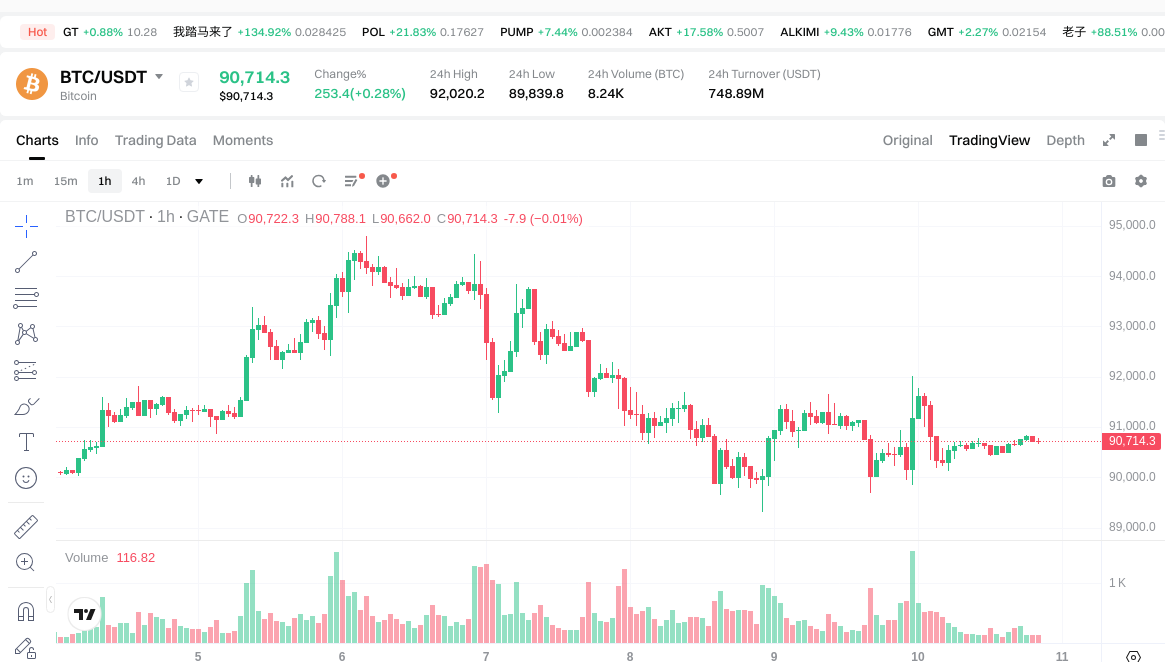 The convergence of multiple bearish factors has created a challenging environment for Bitcoin holders, with the digital asset testing key technical support zones that could determine its direction in the coming period.
Record ETF Outflows in Recent Period
The cryptocurrency market has witnessed unprecedented capital withdrawal from U.S. spot Bitcoin ETFs, with a staggering $3.79 billion in outflows recorded during the recent period. This represents one of the largest exodus events since the introduction of spot Bitcoin ETFs in the United States. The magnitude of these outflows reflects shifting investor sentiment and risk appetite in the broader financial markets. Several factors have contributed to this trend, including profit-taking after previous rallies, concerns about regulatory developments, and portfolio rebalancing by institutional investors. These ETF outflows have added significant selling pressure to the Bitcoin market, contributing to the price decline toward the $77,000 support zone.
On-Chain Data Analysis
Blockchain analytics reveal compelling insights into the current market structure at the $77,000 price level. On-chain data shows that approximately 171,617 BTC are held at this support level, representing a substantial concentration of Bitcoin holdings. This accumulation zone suggests that numerous market participants have established positions around this price point, potentially providing a foundation for price stabilization. The presence of such significant holdings at this level indicates that many investors view $77,000 as an attractive entry point or a critical defense line for their portfolios. Historical patterns suggest that strong on-chain support levels can act as temporary floors during market corrections, though they are not guaranteed to hold under sustained selling pressure.
Notable Market Transactions
Adding to the selling pressure, prominent financial educator Robert Kiyosaki executed a significant Bitcoin transaction, selling $2.25 million worth of BTC at the $90,000 price level. This high-profile sale has drawn attention from market observers and may have influenced sentiment among retail investors who follow Kiyosaki's investment philosophy. While individual transactions of this size represent a small fraction of Bitcoin's daily trading volume, sales by well-known figures can have psychological impacts on market participants. This transaction occurred before the current decline to the $77,000 level, suggesting that some experienced investors took profits at higher price points in anticipation of potential market volatility.
Federal Reserve Policy Impact
Macroeconomic factors continue to play a crucial role in Bitcoin's price dynamics. The Federal Reserve's monetary policy decisions remain a key consideration for cryptocurrency investors, particularly regarding quantitative tightening measures. Market participants are closely monitoring the central bank's balance sheet management and its potential impact on liquidity conditions in financial markets. Changes in monetary policy stance could significantly affect Bitcoin's short-term volatility, as the cryptocurrency has historically shown sensitivity to shifts in the broader liquidity environment. The interplay between traditional monetary policy and cryptocurrency markets has become increasingly evident, with Bitcoin often responding to changes in risk sentiment driven by central bank actions.
Market Outlook and Potential Scenarios
The current market structure presents several possible scenarios for Bitcoin's near-term price action. If the $77,000 support level holds, it could provide a foundation for price stabilization and potential recovery, particularly if buying interest emerges at this level. The substantial on-chain holdings at this price point suggest that many market participants view it as a significant threshold worth defending. However, a decisive break below this support could trigger additional selling pressure and potentially lead to a test of lower support zones. Market participants will be closely monitoring trading volume, on-chain metrics, and broader market sentiment to assess the strength of this support level and the likelihood of various outcomes.
FAQ
What is the significance of Bitcoin's $77K support level? What happens if it breaks?
The $77K support level is critical for Bitcoin. A breakdown could trigger deeper corrections and shake market confidence. Monitoring this level is essential for understanding potential price movements.
What does large-scale Bitcoin ETF outflows mean? Does it indicate institutional investors are bearish?
Large Bitcoin ETF outflows typically signal institutional investor pessimism and may trigger short-term price declines. However, this often reflects profit-taking and arbitrage rather than pure bearish sentiment. Long-term, ETF approval represents a major milestone for crypto asset mainstream adoption.
How significant is the impact of ETF outflows on Bitcoin price?
ETF outflows significantly affect Bitcoin price, potentially triggering downward pressure. Research indicates ETFs account for approximately 50% of Bitcoin price movements. Large-scale outflows can amplify price volatility and create bearish momentum in the short term.
Is now a good time to buy Bitcoin or should I wait and see?
Bitcoin at support levels presents a buying opportunity for long-term investors. With institutional adoption growing and fixed supply dynamics, strategic accumulation through dollar-cost averaging is recommended over timing the market perfectly.
What are the key technical support and resistance levels for Bitcoin near $77K?
Bitcoin's critical support near $77K is around $75K, with resistance at $80K. These levels are vital for short-term price action. Stronger support exists at $74K, while $82K serves as intermediate resistance before $85K.
* The information is not intended to be and does not constitute financial advice or any other recommendation of any sort offered or endorsed by Gate.