This article explores Cameron Winklevoss's perspective on Bitcoin trading below $90,000 as a potential accumulation opportunity. It examines current market dynamics, including Bitcoin's significant correction from $126,000 highs and the impact of macroeconomic headwinds such as government shutdown concerns and trade tensions. The analysis covers on-chain data revealing whale short positions outpacing longs, ETF outflows, and options market hedging activity. Technical analysts monitor key resistance at $100,000 and support at $93,000. Despite market pressures, institutional players like MicroStrategy continue strategic Bitcoin acquisitions, suggesting confidence among certain investors. The article evaluates whether this pullback represents a cyclical opportunity aligned with historical Bitcoin patterns and the role of institutional capital flows in shaping price movements.
Market Context and Recent Price Action
A prominent crypto exchange co-founder, Cameron Winklevoss, recently shared his perspective with investors, suggesting that Bitcoin trading below $90,000 may represent a final opportunity to accumulate at this price level. This statement came as the digital asset slipped beneath that threshold, erasing its year-to-date gains and sparking renewed discussion about the current market cycle's trajectory.
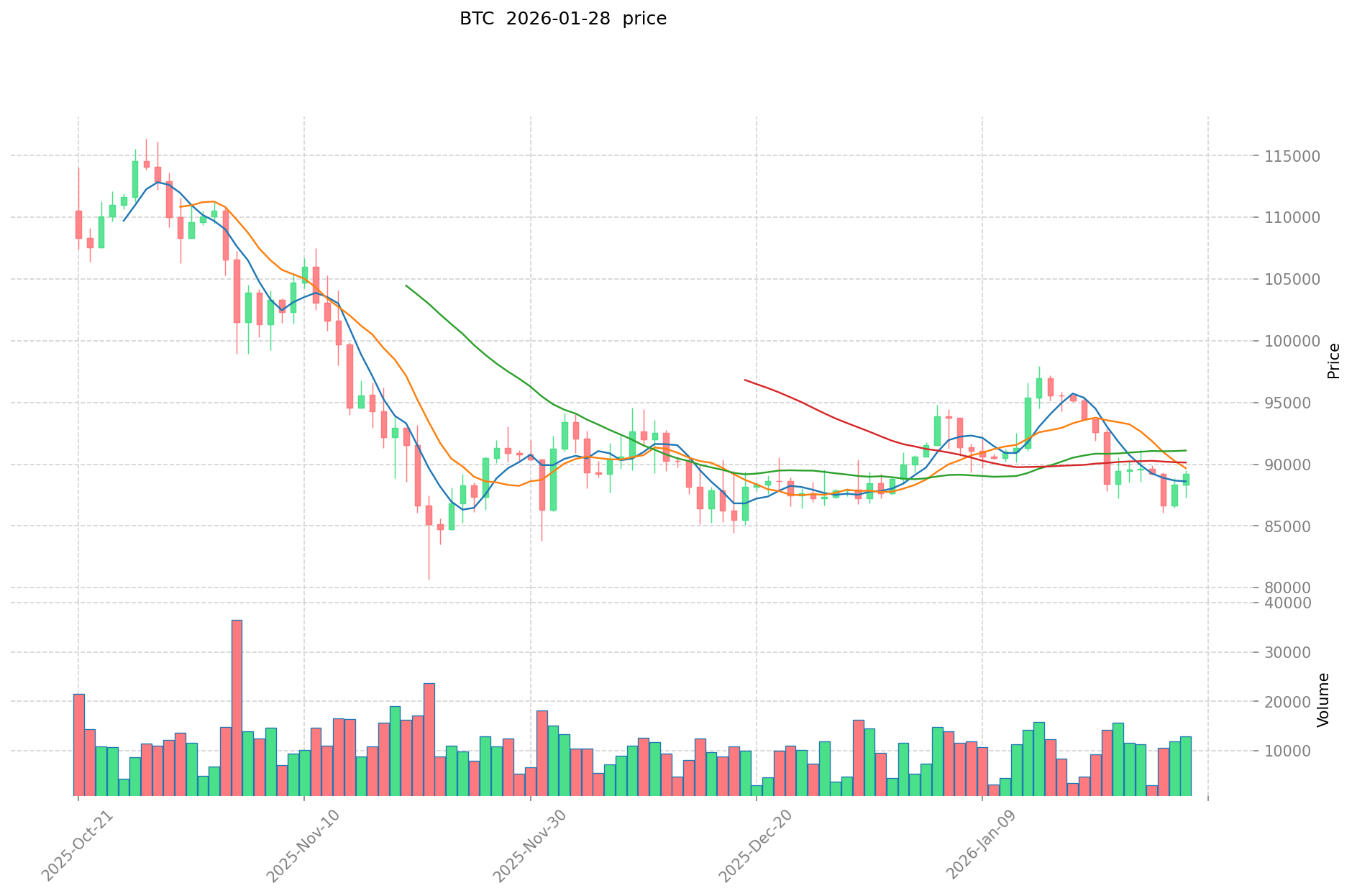
The cryptocurrency has experienced a significant retracement from its record high above $126,000 earlier in the cycle, declining to the low $90,000 range. This correction has eliminated approximately $600 billion from Bitcoin's market capitalization, returning prices to levels last observed seven months prior. The magnitude of this move has reignited familiar debates between bullish and bearish camps across crypto trading desks worldwide.
On one side of the debate, traders point to what they describe as cycle-related anxiety. With no single headline event clearly driving the sell-off, many market participants have reverted to analyzing the four-year halving cycle framework. However, this traditional playbook has become less straightforward in recent years due to the substantial institutional capital flows that now characterize the market, making historical patterns less predictive than in earlier eras when retail investors dominated trading activity.
Government Shutdown and Trade Tensions Add Pressure to Crypto
Macroeconomic conditions have formed a challenging backdrop for risk assets across the board. An extended government shutdown, ongoing trade war concerns, and constrained market liquidity have collectively weighed on assets perceived as higher risk, leaving cryptocurrency markets particularly exposed to fluctuations in dollar strength, interest rate expectations, and global economic growth sentiment.
Market analysts increasingly observe that Bitcoin now exhibits trading characteristics more aligned with traditional macro assets rather than functioning purely as a supply-driven commodity. This evolution reflects the asset's maturation and its growing correlation with broader financial markets. The cryptocurrency's price movements have become more responsive to Federal Reserve policy signals, geopolitical developments, and shifts in global liquidity conditions.
The role of leverage in amplifying price movements cannot be understated. The token has experienced sharp declines since approximately $19 billion in leveraged positions were liquidated in the previous month. This forced liquidation event was further intensified by long-term holders choosing to realize profits at elevated price levels. The timing of this correction aligns with the historical window when Bitcoin has often reached cyclical peaks in past market cycles, typically occurring between 400 to 600 days following a halving event, with the most recent halving having taken place in the spring of the previous year.
Whale Shorts Now Outpace Longs as ETF Outflows Deepen
On-chain data from recent months reveals significant movement among large holders. Analysis from blockchain data firms indicates that clusters of wallets containing more than 1,000 Bitcoin executed concentrated sales, driving the price from below $100,000 toward $97,000. Both exchange-level data and derivatives market indicators point to synchronized selling pressure across multiple venues.
Detailed analysis shows that whale-level short exposure has now surpassed long positions, with on-chain metrics indicating approximately $2.17 billion in short positions versus $1.18 billion in long positions. This shift in positioning represents a notable change in sentiment among the largest market participants. Additionally, Bitcoin exchange-traded funds have recorded several consecutive weeks of net outflows, totaling several billion dollars over a five-week period, suggesting institutional investors have been reducing their exposure.
In the derivatives markets, traders have been actively purchasing put options with strike prices clustered around the $90,000 to $95,000 range. This options activity signals strong demand for downside protection at these lower price levels, reflecting concerns about further potential declines. The elevated put option volume indicates that sophisticated market participants are hedging their portfolios against additional volatility.
Research reports from prominent blockchain analytics firms such as Glassnode and MarketVector have characterized this price movement as "scheduled distribution" by long-term holders rather than panic-driven liquidation. However, these same reports emphasize that the market's capacity to absorb this supply has diminished compared to earlier periods. The combination of ETF redemptions and slower institutional allocation means that similar waves of selling can now generate more pronounced price movements and trigger cascading liquidation events across leveraged positions.
Deep Pullbacks Have Often Preceded Higher Highs in Bitcoin's History
From a technical analysis perspective, market observers are closely monitoring $100,000 as a key resistance level and $93,000 as a critical support zone. These price points have emerged as psychologically significant levels where buying and selling pressure tends to concentrate. A sustained break above resistance or below support would likely trigger additional momentum in the respective direction.
Blockchain analysts identify whale wallet flows, ETF trend reversals, and options market positioning as the primary signals to monitor for signs of a genuine market bottom. A coordinated shift in all three indicators—characterized by stronger spot market inflows, declining short exposure, and calmer implied volatility readings—would suggest that authentic demand is returning to the market rather than merely short-term short covering activity that could prove temporary.
Despite the challenging market conditions, institutional buyers continue to operate actively. MicroStrategy, one of the largest corporate holders of Bitcoin, disclosed in a recent announcement that it had acquired an additional 8,178 Bitcoin at an average purchase price of $102,171, deploying approximately $835 million. This acquisition further expands the company's already substantial Bitcoin treasury, demonstrating continued conviction among certain institutional players despite the price correction.
The assertion that this period may represent a final opportunity to acquire Bitcoin below $90,000 echoes a recurring theme throughout cryptocurrency market history: that substantial drawdowns often constitute necessary components of the path toward establishing new all-time highs. However, the contemporary market environment suggests that the route to those potential higher prices may depend as heavily on global liquidity conditions and monetary policy decisions as on traditional cryptocurrency-specific factors such as halving cycles and on-chain supply dynamics. The increasing institutional participation and correlation with traditional financial markets means that Bitcoin's price trajectory has become intertwined with broader macroeconomic forces in ways that were less pronounced in earlier market cycles.
FAQ
Why is Bitcoin below $90K considered a rare buying opportunity?
Bitcoin below $90K is viewed as a rare buying opportunity because market sentiment suggests prices will appreciate from these levels. Industry leaders believe current valuations offer attractive entry points before anticipated price increases, making it an opportune moment for accumulation.
Bitcoin previously experienced pullbacks before halving events, but demonstrated strong fundamentals at sub-$90K levels. Post-halving cycles historically showed significant appreciation, indicating these lower price points represented accumulation opportunities for long-term holders seeking entry points.
Does Bitcoin's technical and fundamental analysis support continued appreciation?
Yes. Bitcoin trades above its 20-day moving average at $91,142, signaling upward momentum. Strong fundamentals including institutional adoption and growing transaction volume support further gains toward $100,000.
Buy near key support levels with proper stop-loss placement. Monitor RSI indicators for overbought/oversold conditions. Wait for price confirmation before entering positions. Consider dollar-cost averaging to reduce entry risk at this attractive valuation.
What are the potential risks and resistance levels Bitcoin may face below the $90K level?
Bitcoin below $90K faces local resistance and market sentiment pressure. Sudden volatility and policy comments may intensify downside risks. Current support level is near $90K, with potential further decline if broken through macroeconomic headwinds or negative sentiment shifts.
* The information is not intended to be and does not constitute financial advice or any other recommendation of any sort offered or endorsed by Gate.