This comprehensive analysis compares CYBER and ETH as Layer 2 solutions, examining their scalability and transaction cost efficiency for cryptocurrency investors. CYBER, launched in 2023 as a specialized social Layer 2 platform, trades at $0.7295 with extreme volatility but limited liquidity. ETH, the established smart contract leader since 2015, maintains $3,192.83 with substantially higher trading volume and institutional adoption. The article evaluates price history, market dynamics, institutional adoption, and technical ecosystems to determine investment suitability. Key findings show ETH offers superior market stability and broader ecosystem applications, while CYBER represents higher-risk exposure to emerging social blockchain infrastructure. Through detailed risk analysis and 2026-2031 price forecasts, the guide provides tailored investment recommendations: conservative investors should prioritize ETH (85-90% allocation), while experienced investors may diversify with CYBER (10-35% allocation). The com
Introduction: Investment Comparison Between CYBER and ETH
In the cryptocurrency market, the comparison between CYBER vs ETH has been an unavoidable topic for investors. The two not only show significant differences in market cap ranking, application scenarios, and price performance, but also represent different positioning in the crypto asset space.
CYBER (CYBER): Launched in 2023, it has gained market recognition by positioning itself as the L2 for social applications, expanding web3's focus beyond finance to enable developers to create dApps that transform how people connect, create, monetize, and share value.
ETH (ETH): Since its launch in 2015, it has been regarded as a decentralized blockchain platform supporting smart contracts and decentralized applications, becoming one of the cryptocurrencies with the highest trading volume and market cap globally.
This article will comprehensively analyze the investment value comparison between CYBER vs ETH from perspectives including historical price trends, supply mechanisms, institutional adoption, technical ecosystems, and future forecasts, attempting to answer the question that investors care about most:
"Which is the better buy right now?"
I. Price History Comparison and Current Market Status
CYBER (Coin A) and ETH (Coin B) Historical Price Trends
- 2023: CYBER reached its peak price of $16 on September 1, 2023, shortly after its launch in August 2023, reflecting strong initial market interest in its social-focused Layer 2 positioning.
- 2025: ETH achieved a notable price peak of $4,946.05 on August 25, 2025, demonstrating continued strength as the second-largest cryptocurrency by market capitalization.
- Comparative Analysis: During recent market cycles, CYBER declined from its high of $16 to a low of $0.4832 (recorded on October 10, 2025), representing a substantial correction. In contrast, ETH has maintained relatively stronger resilience, with its historical low recorded at $0.432979 in October 2015, showing significant long-term growth trajectory.
Current Market Status (January 20, 2026)
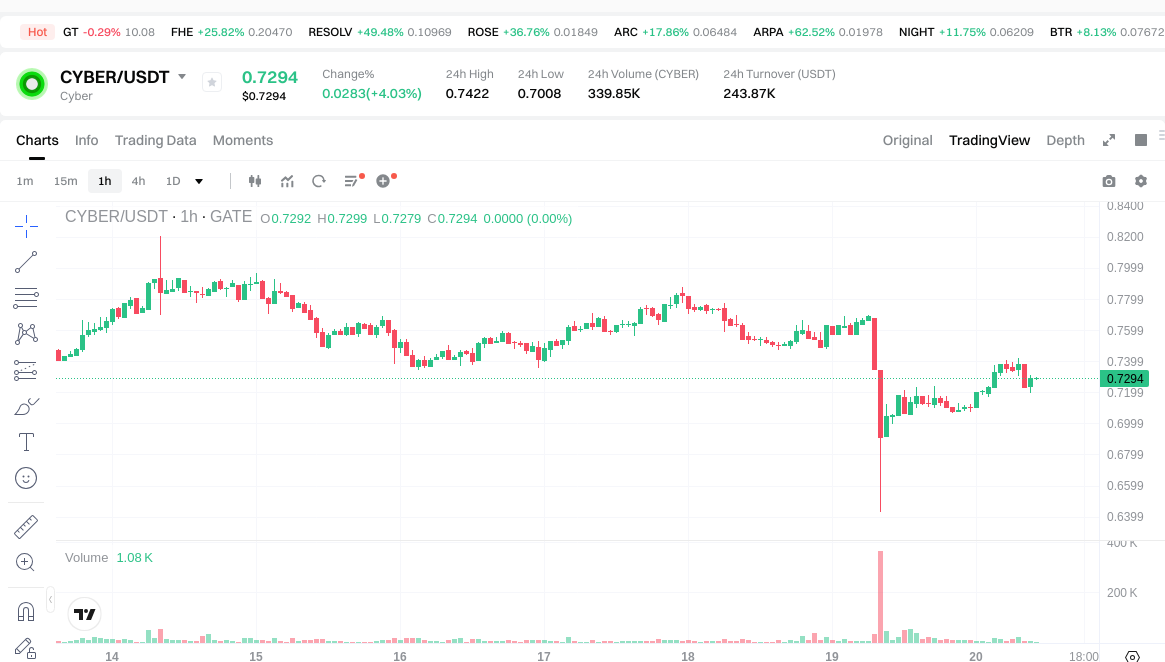
- CYBER Current Price: $0.7295
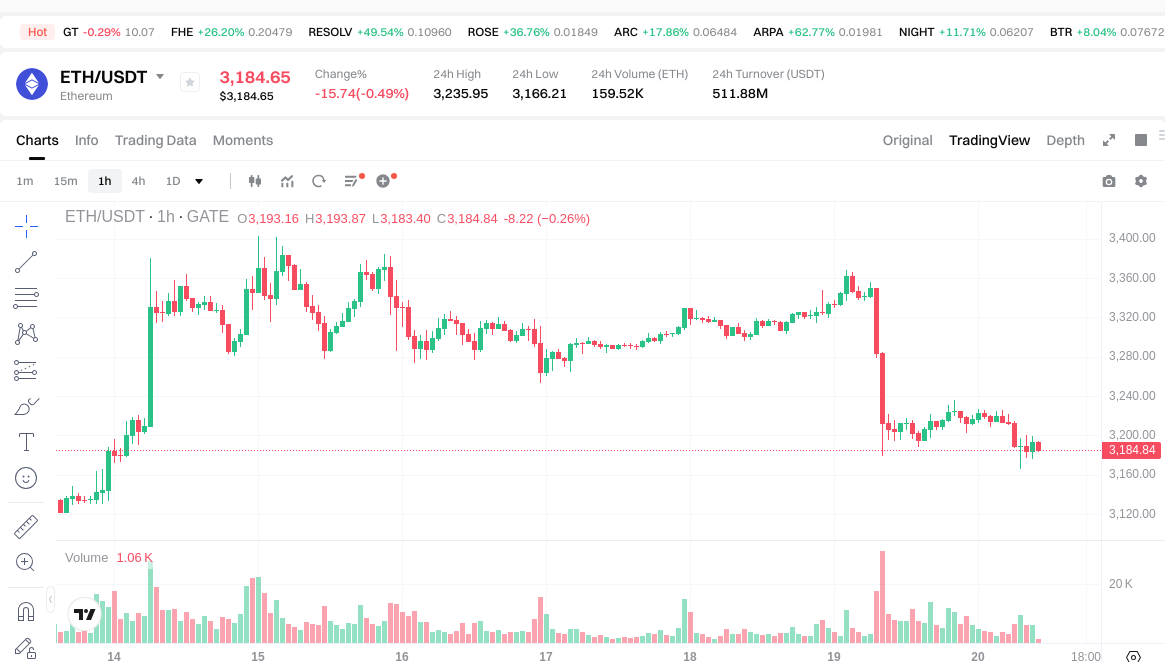
- ETH Current Price: $3,192.83
- 24-Hour Trading Volume: CYBER recorded $245,463.54 compared to ETH's significantly higher $514,893,386.82
- Market Sentiment Index (Fear & Greed Index): 32 (Fear)
View real-time prices:
II. Core Factors Influencing CYBER vs ETH Investment Value
Supply Mechanism Comparison (Tokenomics)
- CYBER: Information regarding the supply mechanism is not available in the provided materials
- ETH: Information regarding the supply mechanism is not available in the provided materials
Institutional Adoption and Market Application
- Institutional Holdings: Data on institutional preference between CYBER and ETH is not available in the provided materials
- Enterprise Adoption: Information on enterprise-level applications in cross-border payments, settlements, and investment portfolios is not available in the provided materials
- National Policies: Data on regulatory attitudes toward CYBER and ETH across different jurisdictions is not available in the provided materials
Technical Development and Ecosystem Building
- CYBER Technical Upgrades: Information on technical developments and potential impacts is not available in the provided materials
- ETH Technical Development: Information on technical developments and potential impacts is not available in the provided materials
- Ecosystem Comparison: Data on DeFi, NFT, payments, and smart contract implementations is not available in the provided materials
Macroeconomic Environment and Market Cycles
- Performance in Inflationary Environment: Information on anti-inflation properties is not available in the provided materials
- Macroeconomic Monetary Policy: Data on the impact of interest rates and dollar index on both assets is not available in the provided materials
- Geopolitical Factors: Information on cross-border transaction demand and international situations is not available in the provided materials
III. 2026-2031 Price Forecast: CYBER vs ETH
Short-term Forecast (2026)
- CYBER: Conservative $0.40-$0.73 | Optimistic $0.73-$0.98
- ETH: Conservative $1,944-$3,187 | Optimistic $3,187-$3,793
Mid-term Forecast (2028-2029)
- CYBER may enter a consolidation phase with projected price range of $0.61-$1.30
- ETH may enter an expansion phase with projected price range of $3,735-$7,280
- Key drivers: institutional capital inflows, ETF developments, ecosystem growth
Long-term Forecast (2030-2031)
- CYBER: Baseline scenario $0.96-$1.37 | Optimistic scenario $1.37-$1.58
- ETH: Baseline scenario $3,317-$7,041 | Optimistic scenario $7,041-$10,280
View detailed price predictions for CYBER and ETH
Disclaimer
CYBER:
| Year |
Predicted High Price |
Predicted Average Price |
Predicted Low Price |
Price Change |
| 2026 |
0.98469 |
0.7294 |
0.40117 |
0 |
| 2027 |
0.91703815 |
0.857045 |
0.71134735 |
17 |
| 2028 |
1.12654280025 |
0.887041575 |
0.61205868675 |
21 |
| 2029 |
1.29876192203625 |
1.006792187625 |
0.765162062595 |
38 |
| 2030 |
1.579304565117956 |
1.152777054830625 |
1.025971578799256 |
58 |
| 2031 |
1.529965707171205 |
1.36604080997429 |
0.956228566982003 |
87 |
ETH:
| Year |
Predicted High Price |
Predicted Average Price |
Predicted Low Price |
Price Change |
| 2026 |
3792.887 |
3187.3 |
1944.253 |
0 |
| 2027 |
5095.53651 |
3490.0935 |
3036.381345 |
9 |
| 2028 |
6181.6536072 |
4292.815005 |
3734.74905435 |
34 |
| 2029 |
7279.755685479 |
5237.2343061 |
4137.415101819 |
64 |
| 2030 |
7823.118744736875 |
6258.4949957895 |
3317.002347768435 |
96 |
| 2031 |
10279.57803058425375 |
7040.8068702631875 |
3802.03570994212125 |
120 |
IV. Investment Strategy Comparison: CYBER vs ETH
Long-term vs Short-term Investment Strategies
- CYBER: May appeal to investors with higher risk tolerance interested in emerging social Layer 2 applications and early-stage blockchain infrastructure projects with significant growth potential but substantial volatility
- ETH: May suit investors seeking exposure to established smart contract platforms with broader ecosystem adoption, more stable price patterns, and diversified use cases across DeFi, NFTs, and enterprise applications
Risk Management and Asset Allocation
- Conservative Investors: CYBER 10-15% vs ETH 85-90%
- Aggressive Investors: CYBER 25-35% vs ETH 65-75%
- Hedging Tools: Stablecoin allocation for liquidity management, options strategies for downside protection, cross-asset portfolio diversification
V. Potential Risk Comparison
Market Risk
- CYBER: Exhibits heightened volatility evidenced by the decline from $16 peak to $0.4832 low, with relatively lower trading volume ($245,463.54 in 24 hours) indicating reduced market liquidity and potential for sharp price movements
- ETH: Demonstrates comparatively greater market stability with substantially higher trading volume ($514,893,386.82 in 24 hours), though remains subject to broader cryptocurrency market cycles and sentiment shifts as indicated by Fear & Greed Index of 32
Technical Risk
- CYBER: As a newer Layer 2 protocol launched in 2023, faces uncertainties regarding network scalability testing, sustained developer adoption, and long-term technical viability in the competitive Layer 2 landscape
- ETH: Continues to navigate challenges related to network congestion during high-demand periods, ongoing development implementations, and coordination across a complex ecosystem of validators and stakeholders
Regulatory Risk
- Both assets face evolving regulatory frameworks across different jurisdictions, with potential impacts on exchange listings, institutional participation, and classification as securities or commodities affecting their accessibility and market dynamics
VI. Conclusion: Which Is the Better Buy?
📌 Investment Value Summary:
- CYBER Advantages: Represents exposure to specialized social application Layer 2 positioning with potential for substantial returns if adoption accelerates, though accompanied by commensurately higher risk profile
- ETH Advantages: Offers participation in the second-largest cryptocurrency by market capitalization with established ecosystem, broader institutional recognition, higher liquidity, and more diversified application scenarios
✅ Investment Recommendations:
- Beginner Investors: Consider prioritizing ETH for initial cryptocurrency exposure due to greater liquidity, established track record, and relatively lower volatility compared to smaller-cap alternatives
- Experienced Investors: May evaluate portfolio diversification incorporating both assets, with weighting adjusted based on individual risk tolerance, investment horizon, and conviction regarding Layer 2 social application development
- Institutional Investors: Conduct comprehensive due diligence examining liquidity requirements, custody solutions, regulatory compliance considerations, and alignment with investment mandates before allocation decisions
⚠️ Risk Disclosure: Cryptocurrency markets exhibit extreme volatility. This content does not constitute investment advice. Investors should conduct independent research and consult qualified financial advisors before making investment decisions.
VII. FAQ
Q1: What is the fundamental difference between CYBER and ETH in terms of use cases?
CYBER is a Layer 2 blockchain specifically designed for social applications, enabling developers to create decentralized apps that transform how people connect, create, and monetize content, while ETH serves as a general-purpose smart contract platform supporting diverse applications including DeFi, NFTs, enterprise solutions, and various decentralized applications across multiple sectors. This means CYBER targets a niche market focused on web3 social interactions, whereas ETH provides broader infrastructure for the entire decentralized ecosystem.
Q2: Why does ETH have significantly higher trading volume compared to CYBER?
ETH's 24-hour trading volume of $514,893,386.82 vastly exceeds CYBER's $245,463.54 because ETH is the second-largest cryptocurrency by market capitalization with established institutional adoption, extensive exchange listings, and widespread recognition since its 2015 launch. CYBER, launched in 2023, remains a relatively new and specialized project with limited market penetration, fewer trading pairs, and lower awareness among mainstream investors, resulting in substantially reduced liquidity and trading activity.
Q3: Which asset is more suitable for portfolio diversification?
ETH is generally more suitable for core portfolio diversification due to its established market position, higher liquidity, and broader ecosystem applications that provide exposure to multiple crypto sectors simultaneously. CYBER may serve as a satellite position for investors seeking targeted exposure to social Layer 2 development with higher risk-reward potential. Conservative investors might allocate 85-90% to ETH and 10-15% to CYBER, while aggressive investors could consider 65-75% ETH and 25-35% CYBER depending on their risk tolerance and conviction in specialized social blockchain applications.
Q4: How do the historical price patterns of CYBER and ETH differ?
CYBER experienced extreme volatility with a rapid decline from its September 2023 peak of $16 to a low of $0.4832 in October 2025, representing approximately 97% drawdown within two years, typical of newly launched tokens with limited market history. ETH has demonstrated greater long-term stability with its historical trajectory from $0.432979 in October 2015 to a peak of $4,946.05 in August 2025, showing sustained growth over nearly a decade despite periodic corrections, reflecting its maturation as an established cryptocurrency asset.
Q5: What are the key risk factors investors should consider when comparing CYBER and ETH?
For CYBER, primary risks include extreme price volatility evidenced by its 97% decline from peak, limited trading volume indicating poor liquidity, uncertain long-term viability as a specialized Layer 2 platform, and competition from established social blockchain projects. For ETH, key risks involve network congestion during high-demand periods, ongoing technical implementation challenges, regulatory uncertainties affecting smart contract platforms, and broader cryptocurrency market cycle dependencies. Both assets face evolving regulatory frameworks across jurisdictions that could impact accessibility and institutional adoption.
Q6: How do the 2026-2031 price forecasts compare between CYBER and ETH?
CYBER's conservative forecast ranges from $0.40-$0.73 in 2026 to $0.96-$1.37 by 2031, with optimistic scenarios reaching $1.58, representing potential moderate growth from current levels but remaining below its historical peak. ETH's forecasts project $1,944-$3,187 conservatively in 2026, expanding to $3,317-$7,041 by 2031, with optimistic scenarios exceeding $10,280, suggesting stronger growth potential driven by institutional capital inflows, ETF developments, and ecosystem expansion. However, these forecasts carry significant uncertainty and should not be interpreted as guaranteed outcomes.
Q7: What investment strategy is most appropriate for beginners comparing CYBER and ETH?
Beginner investors should prioritize ETH due to its greater liquidity, established track record since 2015, relatively lower volatility compared to newer tokens, broader institutional recognition, and more diversified application scenarios providing stability. ETH's higher trading volume and market capitalization reduce the risk of sharp, unexpected price movements that could result from low liquidity. Once investors gain experience understanding cryptocurrency market dynamics and risk management, they may consider allocating a small percentage (10-15%) to higher-risk assets like CYBER for portfolio diversification and exposure to emerging technologies.
Q8: How does the current market sentiment (Fear & Greed Index of 32) affect CYBER and ETH differently?
The Fear & Greed Index reading of 32 indicates overall market fear, which typically affects lower-liquidity assets like CYBER more severely due to amplified selling pressure and reduced buyer interest in riskier, speculative positions. ETH, with substantially higher trading volume and institutional participation, generally exhibits greater resilience during fearful market conditions as it serves as a relative safe haven within the cryptocurrency ecosystem. During fear phases, investors often consolidate holdings into larger-cap assets like ETH while reducing exposure to smaller projects like CYBER, potentially widening performance divergence between the two assets.
* The information is not intended to be and does not constitute financial advice or any other recommendation of any sort offered or endorsed by Gate.