The article provides a detailed comparison between DHV and NEAR, highlighting their unique features, market performance, value drivers, and investment strategies. It addresses critical investment questions, such as which is the better buy and how to allocate portfolios efficiently. Readers will gain insights into historical price trends, potential risks, and growth predictions up to 2030. Serving both new and seasoned investors, the article offers practical advice for diversified investment in the competitive blockchain landscape. For real-time prices, visit Gate.
Introduction: DHV vs NEAR Investment Comparison
In the cryptocurrency market, the comparison between DHV and NEAR has always been an unavoidable topic for investors. The two not only show significant differences in market cap ranking, application scenarios, and price performance, but also represent different positioning in crypto assets.
DeHive (DHV): Since its launch in 2021, it has gained market recognition for its decentralized protocol allowing users to become holders of top-level DeFi tokens packaged in an index with one click.
Near (NEAR): Introduced in 2020, it has been hailed as a highly scalable foundation protocol ensuring fast support for DApp operations on mobile devices.
This article will comprehensively analyze the investment value comparison between DHV and NEAR, focusing on historical price trends, supply mechanisms, institutional adoption, technological ecosystems, and future predictions, attempting to answer the question investors care about most:
"Which is the better buy right now?"
I. Price History Comparison and Current Market Status
DHV and NEAR Historical Price Trends
- 2021: DHV reached its all-time high of $7.48 in May due to the overall crypto market bull run.
- 2022: NEAR hit its peak price of $20.44 in January, influenced by growing adoption and ecosystem expansion.
- Comparative analysis: During the 2022 bear market, DHV dropped from its high of $7.48 to a low of $0.0009997, while NEAR declined from $20.44 to around $1.32, showing more resilience.
Current Market Situation (2025-11-02)
- DHV current price: $0.025073
- NEAR current price: $2.162
- 24-hour trading volume: DHV $9,340.39 vs NEAR $2,210,644.12
- Market Sentiment Index (Fear & Greed Index): 33 (Fear)
Click to view real-time prices:
- Check DHV current price Market Price
- Check NEAR current price Market Price
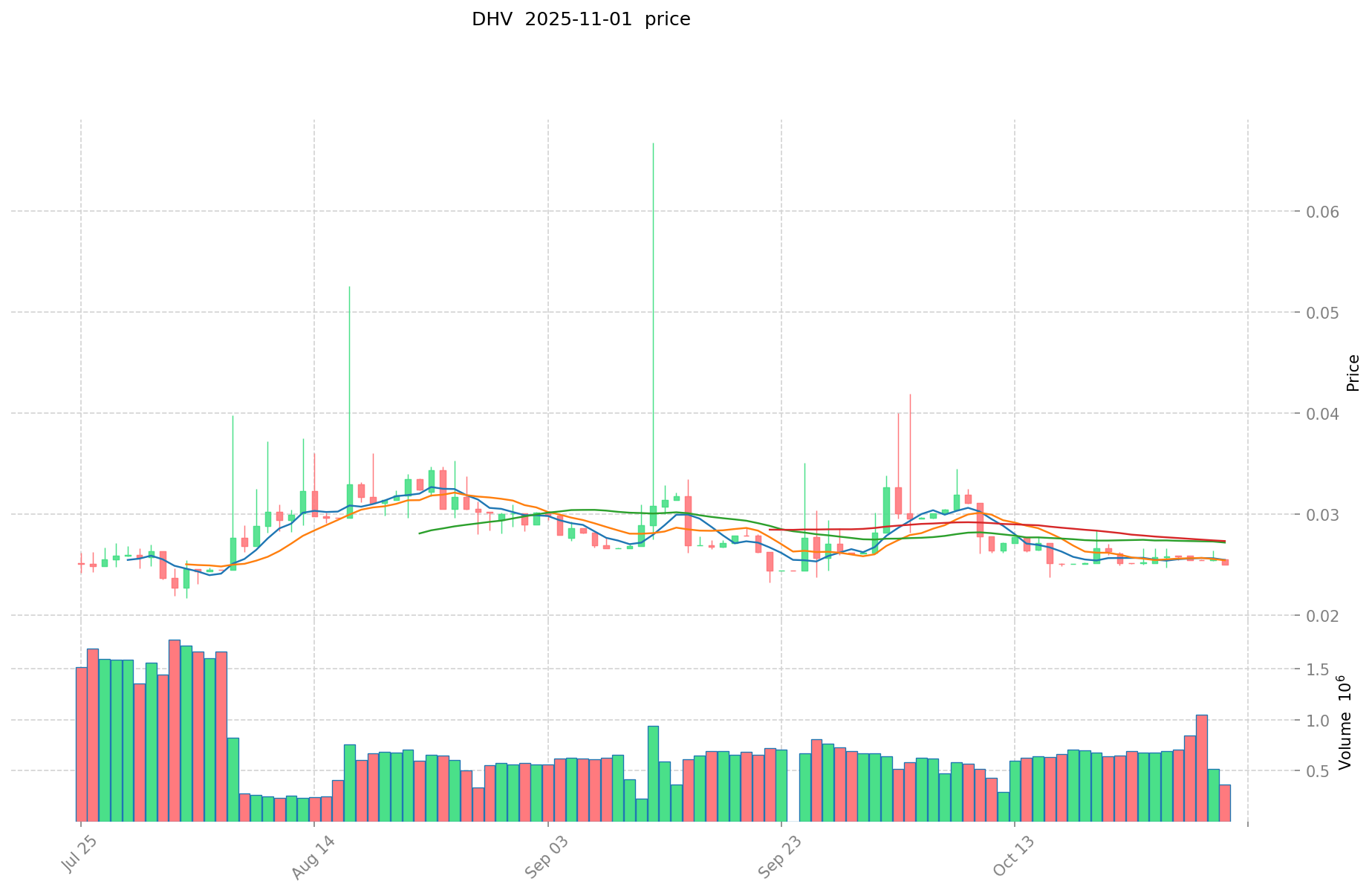
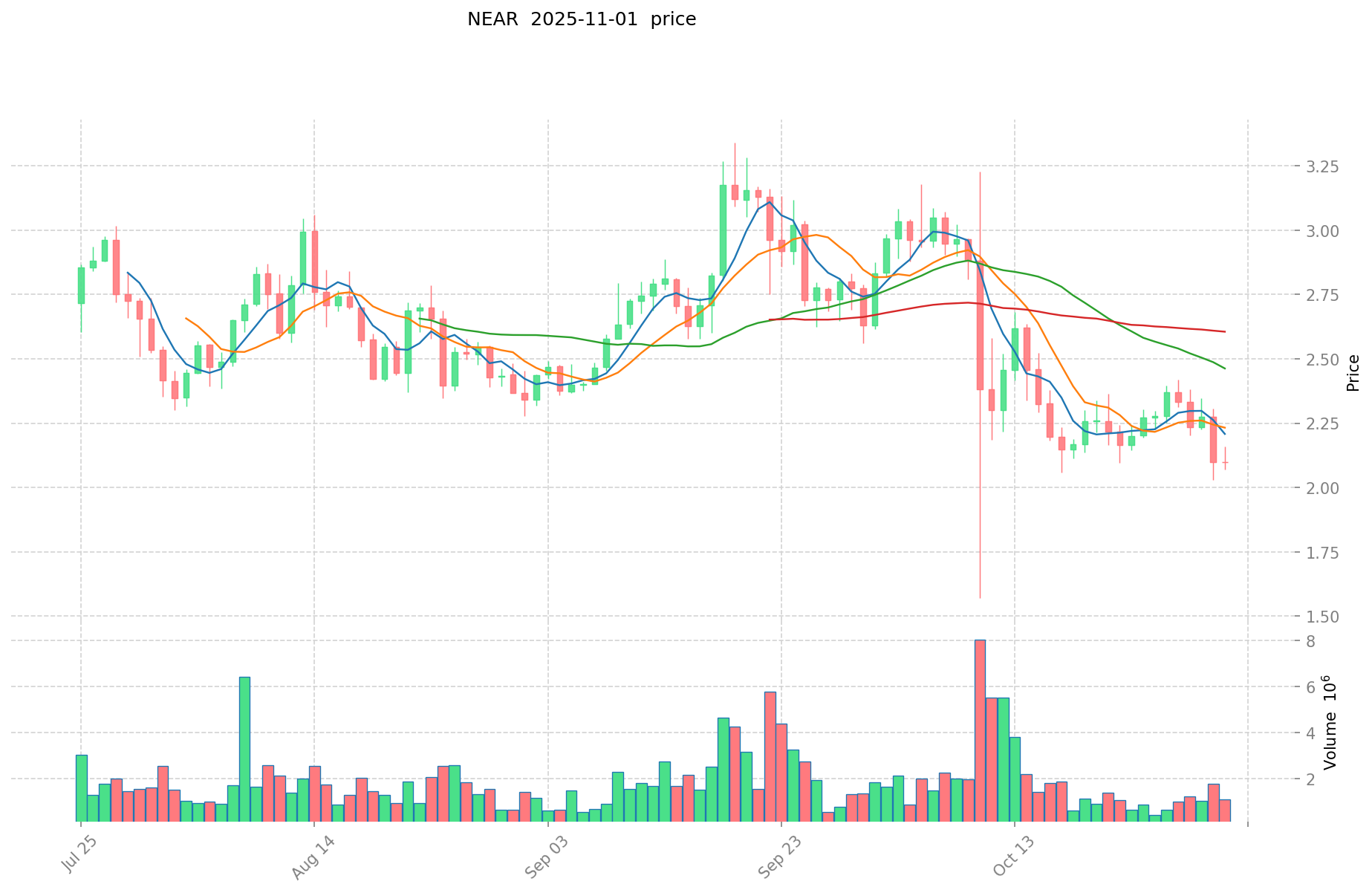
DHV vs NEAR: Investment Value Analysis
Core Factors Influencing DHV and NEAR Investment Value
Value Drivers Comparison
- Resource Provision: Both assets derive value from their ability to provide resources, with DHV focusing on demonstrating this through emotional expressions rather than just possession.
- Social Recognition: Social validation serves as a critical factor for DHV, where acknowledgment from others significantly enhances perceived value.
- Emotional Health: DHV's value significantly correlates with demonstrations of emotional health through behavior rather than just technical capabilities.
Attraction Mechanisms
- Physical Attributes: Physical appearance and proportions represent foundational value factors, particularly for DHV.
- Behavioral Traits: How one presents themselves—including confidence, humor, and social intelligence—creates inherent value that transcends technical specifications.
- Leadership Qualities: The ability to lead groups represents a significant value factor, combining control capabilities with social validation.
Investment Testing Effects
- Value Extraction vs. Investment: When subjected to investment testing, both assets may experience fluctuating attraction levels based on how they respond to demands.
- Dominance Position: Maintaining a dominant position during investment testing prevents value depreciation.
- Response Strategy: The appropriate response to investment testing directly impacts perceived value and attraction levels.
Strategic Value Communication
- Indirect Value Display: The most effective value communication comes through indirect demonstrations rather than explicit statements.
- Narrative Implementation: Embedding value propositions within stories and experiences creates more sustainable value recognition.
- Timing Considerations: Strategic timing of value demonstrations significantly impacts overall reception and valuation.
III. 2025-2030 Price Prediction: DHV vs NEAR
Short-term Prediction (2025)
- DHV: Conservative $0.01905548 - $0.025073 | Optimistic $0.025073 - $0.03058906
- NEAR: Conservative $1.28148 - $2.172 | Optimistic $2.172 - $2.84532
Mid-term Prediction (2027)
- DHV may enter a growth phase, with estimated prices ranging from $0.0289442712 to $0.037916995272
- NEAR may enter a growth phase, with estimated prices ranging from $2.7469827 to $3.076620624
- Key drivers: Institutional capital inflow, ETF, ecosystem development
Long-term Prediction (2030)
- DHV: Base scenario $0.041186540146752 - $0.054366232993712 | Optimistic scenario $0.054366232993712+
- NEAR: Base scenario $4.02010616959875 - $5.587947575742262 | Optimistic scenario $5.587947575742262+
View detailed price predictions for DHV and NEAR
Disclaimer: The above predictions are based on historical data and market analysis. Cryptocurrency markets are highly volatile and subject to rapid changes. These projections should not be considered as financial advice. Always conduct your own research before making investment decisions.
DHV:
| 年份 |
预测最高价 |
预测平均价格 |
预测最低价 |
涨跌幅 |
| 2025 |
0.03058906 |
0.025073 |
0.01905548 |
0 |
| 2026 |
0.0300575124 |
0.02783103 |
0.0158636871 |
11 |
| 2027 |
0.037916995272 |
0.0289442712 |
0.019971547128 |
15 |
| 2028 |
0.0401167598832 |
0.033430633236 |
0.025072974927 |
33 |
| 2029 |
0.045599383733904 |
0.0367736965596 |
0.033464063869236 |
46 |
| 2030 |
0.054366232993712 |
0.041186540146752 |
0.031301770511531 |
64 |
NEAR:
| 年份 |
预测最高价 |
预测平均价格 |
预测最低价 |
涨跌幅 |
| 2025 |
2.84532 |
2.172 |
1.28148 |
0 |
| 2026 |
2.9853054 |
2.50866 |
1.9316682 |
16 |
| 2027 |
3.076620624 |
2.7469827 |
2.170116333 |
27 |
| 2028 |
3.9309322437 |
2.911801662 |
1.7470809972 |
34 |
| 2029 |
4.6188453863475 |
3.42136695285 |
2.942375579451 |
58 |
| 2030 |
5.587947575742262 |
4.02010616959875 |
3.256285997374987 |
85 |
IV. Investment Strategy Comparison: DHV vs NEAR
Long-term vs Short-term Investment Strategies
- DHV: Suitable for investors focusing on DeFi index products and ecosystem potential
- NEAR: Suitable for investors seeking scalable foundation protocols and DApp support
Risk Management and Asset Allocation
- Conservative investors: DHV: 20% vs NEAR: 80%
- Aggressive investors: DHV: 40% vs NEAR: 60%
- Hedging tools: Stablecoin allocation, options, cross-currency portfolios
V. Potential Risk Comparison
Market Risks
- DHV: Higher volatility due to smaller market cap and lower liquidity
- NEAR: Exposure to broader crypto market trends and competition from other Layer 1 protocols
Technical Risks
- DHV: Scalability, network stability
- NEAR: Centralization of validators, potential security vulnerabilities
Regulatory Risks
- Global regulatory policies may have different impacts on both assets, with NEAR potentially facing more scrutiny as a Layer 1 protocol
VI. Conclusion: Which Is the Better Buy?
📌 Investment Value Summary:
- DHV advantages: Unique DeFi index offering, potential for high growth in a niche market
- NEAR advantages: Established ecosystem, higher liquidity, and broader adoption potential
✅ Investment Advice:
- New investors: Consider allocating a small portion to NEAR as part of a diversified crypto portfolio
- Experienced investors: Explore both DHV and NEAR, with a higher allocation to NEAR for stability
- Institutional investors: Focus on NEAR for its established ecosystem and potential for long-term growth
⚠️ Risk Warning: The cryptocurrency market is highly volatile. This article does not constitute investment advice.
None
VII. FAQ
Q1: What are the main differences between DHV and NEAR?
A: DHV is a decentralized protocol for DeFi index tokens, while NEAR is a scalable Layer 1 blockchain platform. DHV focuses on providing easy access to top DeFi tokens, whereas NEAR aims to support fast and efficient DApp operations, especially on mobile devices.
Q2: Which cryptocurrency has shown better price performance historically?
A: NEAR has shown better price performance and resilience historically. During the 2022 bear market, NEAR declined from $20.44 to around $1.32, while DHV dropped from $7.48 to $0.0009997, demonstrating NEAR's stronger market position.
Q3: How do the current market situations of DHV and NEAR compare?
A: As of 2025-11-02, DHV's price is $0.025073 with a 24-hour trading volume of $9,340.39, while NEAR's price is $2.162 with a 24-hour trading volume of $2,210,644.12. NEAR shows significantly higher liquidity and trading activity.
Q4: What are the price predictions for DHV and NEAR by 2030?
A: By 2030, DHV's base scenario price range is predicted to be $0.041186540146752 - $0.054366232993712, while NEAR's base scenario range is $4.02010616959875 - $5.587947575742262. Both assets are expected to show growth, with NEAR potentially experiencing higher percentage gains.
Q5: How should investors allocate their portfolio between DHV and NEAR?
A: Conservative investors might consider allocating 20% to DHV and 80% to NEAR, while aggressive investors could opt for 40% DHV and 60% NEAR. The exact allocation should depend on individual risk tolerance and investment goals.
Q6: What are the main risks associated with investing in DHV and NEAR?
A: DHV faces higher volatility due to its smaller market cap and lower liquidity, as well as potential scalability issues. NEAR is exposed to broader crypto market trends and competition from other Layer 1 protocols, with potential risks in validator centralization and security vulnerabilities.
Q7: Which cryptocurrency is considered a better buy for different types of investors?
A: For new investors, NEAR is recommended as part of a diversified crypto portfolio due to its established ecosystem and higher liquidity. Experienced investors might explore both, with a higher allocation to NEAR for stability. Institutional investors may focus on NEAR for its long-term growth potential and established ecosystem.
* The information is not intended to be and does not constitute financial advice or any other recommendation of any sort offered or endorsed by Gate.












