This comprehensive cryptocurrency investment guide compares GOAT, a 2024 Solana-based memecoin, with Bitcoin (BTC), the established digital gold since 2008. The article analyzes key differences across price performance, market volatility, trading volume, and liquidity, providing investors with critical insights into which asset aligns with their risk tolerance and investment objectives. Current data shows GOAT at $0.03218 versus BTC at $89,081.1, with BTC demonstrating significantly higher trading volume ($1.35B daily) and stability. The guide offers tailored investment strategies for novice, experienced, and institutional investors, detailed price forecasts through 2031, comprehensive risk assessments, and practical portfolio allocation recommendations. Whether you seek exposure to emerging memecoins or established cryptocurrency value preservation, this analysis equips investors to make informed decisions through real-time pricing data available on Gate and strategic guidance for cryptocurrency market parti
Introduction: Investment Comparison Between GOAT and BTC
In the cryptocurrency market, the comparison between GOAT vs BTC has consistently been a topic that investors cannot overlook. The two differ significantly in market capitalization ranking, application scenarios, and price performance, representing distinct positions within the crypto asset landscape.
Goatseus Maximus (GOAT): Launched in 2024, this Solana-based memecoin gained market attention through endorsement by the AI bot Truth Terminal.
Bitcoin (BTC): Since its introduction in 2008, Bitcoin has been recognized as digital gold and remains among the cryptocurrencies with the highest global trading volume and market capitalization.
This article will comprehensively analyze the investment value comparison between GOAT vs BTC through historical price trends, supply mechanisms, institutional adoption, technological ecosystems, and future forecasts, while attempting to address the question most concerning to investors:
"Which is the better buy right now?"
I. Historical Price Comparison and Current Market Status
GOAT (Coin A) and BTC (Coin B) Historical Price Trends
- 2024: GOAT reached a peak price of $1.373 on November 17, 2024, driven by endorsement from the AI bot Truth Terminal and initial memecoin market enthusiasm.
- 2025: BTC experienced significant volatility, reaching an all-time high of $126,080 on October 7, 2025, supported by broader institutional adoption and market maturation.
- Comparative Analysis: During the recent market cycle, GOAT declined from its high of $1.373 to a low of $0.02656 (recorded on October 10, 2025), representing a substantial correction. In contrast, BTC demonstrated relatively more stable price action, with its current price showing a moderate decline from its peak, reflecting its established market position and lower volatility compared to emerging memecoin assets.
Current Market Status (2026-01-21)
- GOAT Current Price: $0.03218
- BTC Current Price: $89,081.1
- 24-Hour Trading Volume: GOAT $451,837.34 vs BTC $1,350,247,433.81
- Market Sentiment Index (Fear & Greed Index): 24 (Extreme Fear)
Check real-time prices:
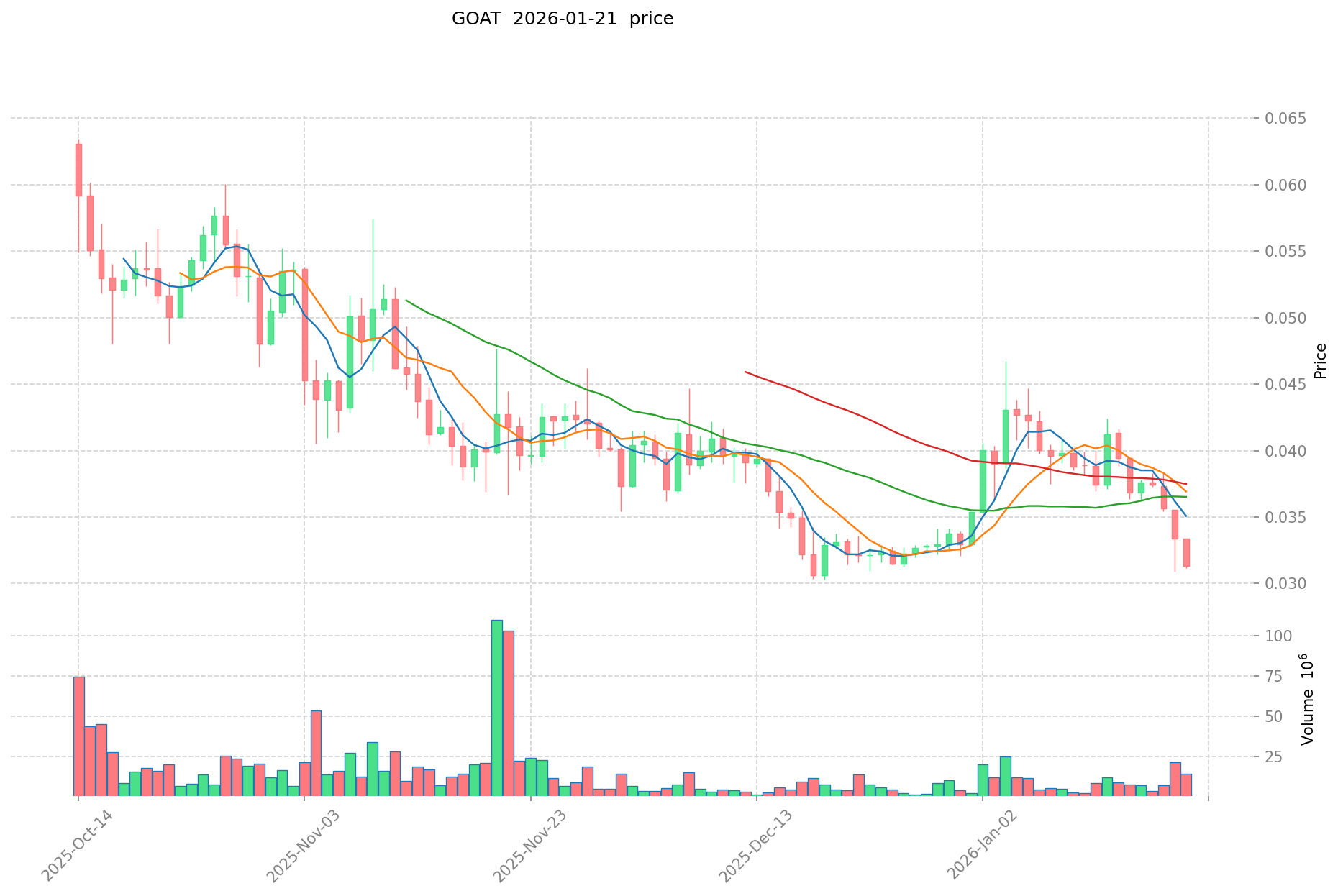
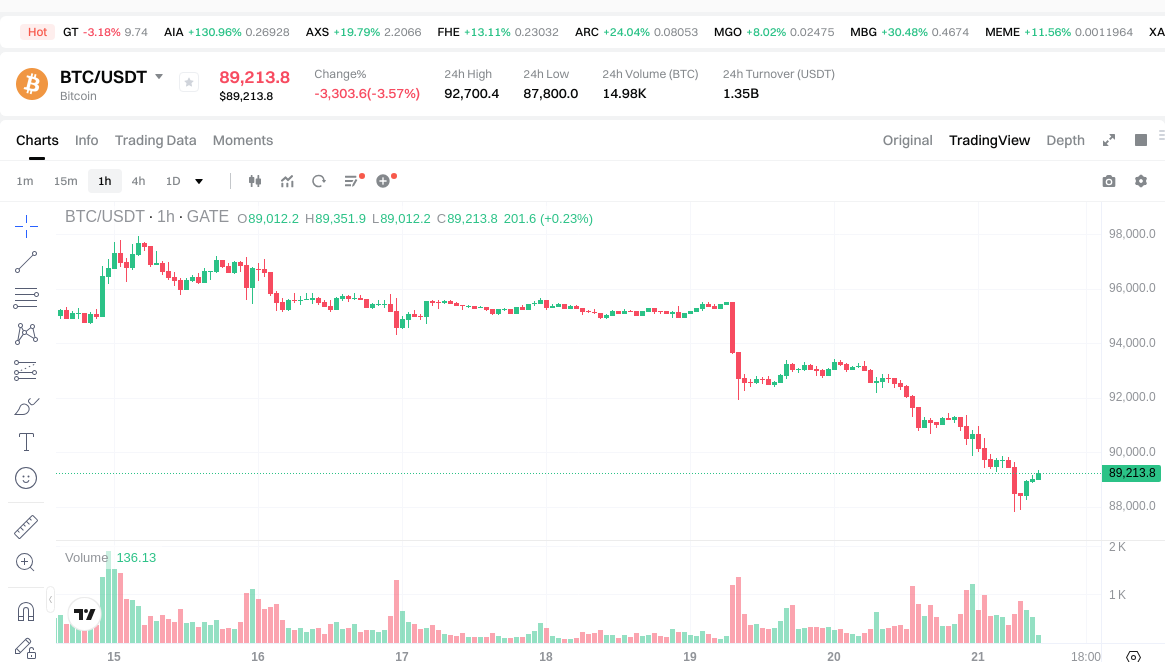
II. Core Factors Influencing GOAT vs BTC Investment Value
Supply Mechanism Comparison (Tokenomics)
Due to insufficient reference materials regarding the supply mechanisms of GOAT and BTC, this section cannot be elaborated upon with specific details at this time.
Institutional Adoption and Market Application
Without adequate data on institutional holdings, enterprise adoption patterns, or regulatory stances toward GOAT and BTC across different jurisdictions, a meaningful comparison in this area cannot be provided.
Technical Development and Ecosystem Building
The reference materials do not contain information regarding technical upgrades for GOAT or BTC, nor details about their respective ecosystems in DeFi, NFT, payment systems, or smart contract implementations.
Macroeconomic Factors and Market Cycles
Given the absence of data on how GOAT and BTC perform under inflationary conditions, their responses to monetary policy changes, or their roles in geopolitical contexts, this analysis cannot be completed with the available resources.
III. 2026-2031 Price Forecast: GOAT vs BTC
Short-term Forecast (2026)
- GOAT: Conservative $0.024195 - $0.03226 | Optimistic $0.03226 - $0.0351634
- BTC: Conservative $49,123.14 - $89,314.8 | Optimistic $89,314.8 - $116,109.24
Mid-term Forecast (2028-2029)
- GOAT may enter a consolidation phase with projected price range of $0.023994 - $0.04752, showing gradual upward momentum through 2029
- BTC may enter a growth phase with projected price range of $74,384 - $132,359, demonstrating potential expansion into 2029
- Key drivers: institutional capital flows, ETF developments, ecosystem expansion
Long-term Forecast (2030-2031)
- GOAT: Baseline scenario $0.033791 - $0.042774 | Optimistic scenario $0.050097 - $0.061595
- BTC: Baseline scenario $63,186 - $135,046 | Optimistic scenario $75,626 - $182,312
View detailed price predictions for GOAT and BTC
Disclaimer
GOAT:
| Year |
Predicted High Price |
Predicted Average Price |
Predicted Low Price |
Price Change |
| 2026 |
0.0351634 |
0.03226 |
0.024195 |
0 |
| 2027 |
0.040116923 |
0.0337117 |
0.020564137 |
4 |
| 2028 |
0.03912917019 |
0.0369143115 |
0.023994302475 |
14 |
| 2029 |
0.04752717605625 |
0.038021740845 |
0.03612065380275 |
18 |
| 2030 |
0.0615952201689 |
0.042774458450625 |
0.033791822175993 |
32 |
| 2031 |
0.055837778061445 |
0.052184839309762 |
0.050097445737372 |
62 |
BTC:
| Year |
Predicted High Price |
Predicted Average Price |
Predicted Low Price |
Price Change |
| 2026 |
116109.24 |
89314.8 |
49123.14 |
0 |
| 2027 |
116064.5826 |
102712.02 |
85250.9766 |
15 |
| 2028 |
132359.844573 |
109388.3013 |
74384.044884 |
22 |
| 2029 |
126917.776583325 |
120874.0729365 |
111204.14710158 |
35 |
| 2030 |
146197.19121669675 |
123895.9247599125 |
63186.921627555375 |
39 |
| 2031 |
182312.85328421124375 |
135046.557988304625 |
75626.07247345059 |
51 |
IV. Investment Strategy Comparison: GOAT vs BTC
Long-term vs Short-term Investment Strategies
- GOAT: May suit investors with higher risk tolerance seeking exposure to emerging memecoin assets and speculative opportunities within the Solana ecosystem
- BTC: May suit investors prioritizing established market positioning, relative stability, and long-term value preservation characteristics
Risk Management and Asset Allocation
- Conservative Investors: GOAT 5-10% vs BTC 90-95%
- Aggressive Investors: GOAT 20-30% vs BTC 70-80%
- Hedging Tools: stablecoin allocation, options strategies, cross-asset portfolio diversification
V. Potential Risk Comparison
Market Risk
- GOAT: Higher price volatility with substantial correction history from $1.373 to $0.02656, reflecting memecoin market sensitivity and limited trading volume ($451,837.34 in 24-hour period)
- BTC: Moderate volatility with current price of $89,081.1 showing decline from October 2025 peak of $126,080, supported by significantly higher liquidity ($1,350,247,433.81 in 24-hour trading volume)
Technical Risk
- GOAT: Network dependency on Solana infrastructure, limited operational history since 2024 launch
- BTC: Mining concentration considerations, network security maintenance requirements
Regulatory Risk
- Evolving regulatory frameworks across jurisdictions may impact both assets differently, with established cryptocurrencies and emerging memecoins facing distinct compliance considerations
VI. Conclusion: Which Is the Better Buy?
📌 Investment Value Summary:
- GOAT Advantages: Early-stage positioning within memecoin sector, potential for volatility-driven returns, Solana ecosystem participation
- BTC Advantages: Established market presence since 2008, higher trading volume and liquidity, recognition as digital store of value, broader institutional participation
✅ Investment Recommendations:
- Novice Investors: Consider prioritizing BTC allocation for foundational exposure to cryptocurrency markets, with limited or no GOAT allocation until gaining market experience
- Experienced Investors: May explore balanced portfolio approach with BTC as core holding (70-90%) and selective GOAT allocation (10-30%) based on individual risk parameters
- Institutional Investors: Focus on BTC positioning for primary cryptocurrency exposure, with careful evaluation of memecoin assets like GOAT within alternative investment allocations
⚠️ Risk Disclosure: Cryptocurrency markets demonstrate extreme volatility. This content does not constitute investment advice.
VII. FAQ
Q1: What is the main difference between GOAT and BTC in terms of market positioning?
GOAT is an emerging Solana-based memecoin launched in 2024 with speculative characteristics, while BTC is an established digital asset since 2008 recognized as digital gold with the highest market capitalization and trading volume globally. GOAT represents early-stage memecoin market opportunities driven by AI bot endorsement and community sentiment, whereas BTC serves as a foundational cryptocurrency asset with broader institutional adoption, established infrastructure, and recognition as a store of value across traditional and digital finance sectors.
Q2: Which asset shows higher price volatility: GOAT or BTC?
GOAT demonstrates significantly higher price volatility compared to BTC. GOAT experienced a dramatic decline from its peak of $1.373 (November 17, 2024) to a low of $0.02656 (October 10, 2025), representing a substantial correction exceeding 98%. In contrast, BTC's price movement from its all-time high of $126,080 (October 7, 2025) to the current level of $89,081.1 reflects a more moderate decline of approximately 29%, supported by higher liquidity with 24-hour trading volume of $1,350,247,433.81 compared to GOAT's $451,837.34.
Q3: What is the recommended portfolio allocation between GOAT and BTC for different investor types?
For conservative investors, the recommended allocation is 5-10% GOAT and 90-95% BTC, prioritizing stability and established market positioning. Aggressive investors may consider 20-30% GOAT and 70-80% BTC to capture potential memecoin volatility while maintaining core cryptocurrency exposure. Novice investors should focus primarily on BTC allocation for foundational market experience with limited or no GOAT exposure, while institutional investors are advised to maintain BTC as their primary cryptocurrency holding (70-90%) with careful evaluation of alternative assets like GOAT within diversified allocations.
Q4: What are the projected price ranges for GOAT and BTC through 2031?
For GOAT, short-term 2026 projections range from $0.024195 to $0.0351634, with long-term 2031 forecasts between $0.050097 and $0.061595 under optimistic scenarios. For BTC, short-term 2026 projections range from $49,123.14 to $116,109.24, with long-term 2031 forecasts between $75,626 and $182,312 under optimistic scenarios. These projections reflect GOAT's consolidation phase with gradual upward momentum and BTC's growth phase driven by institutional capital flows, ETF developments, and ecosystem expansion, though actual market performance may vary significantly from forecasted ranges.
Q5: What are the primary risks associated with investing in GOAT versus BTC?
GOAT faces higher market risk due to extreme price volatility, limited trading volume, and dependency on Solana network infrastructure with a short operational history since 2024. BTC experiences moderate volatility with considerations around mining concentration and network security maintenance. Both assets face regulatory risk from evolving compliance frameworks across jurisdictions, though established cryptocurrencies like BTC and emerging memecoins like GOAT encounter distinct regulatory treatment. GOAT's risk profile is amplified by memecoin market sensitivity and limited liquidity compared to BTC's established market presence and significantly higher daily trading volume.
Q6: How does the current market sentiment affect GOAT and BTC investment decisions?
The current Fear & Greed Index stands at 24 (Extreme Fear), indicating heightened market caution that typically impacts higher-volatility assets like GOAT more severely than established assets like BTC. During extreme fear periods, GOAT may experience amplified selling pressure due to its memecoin characteristics and limited liquidity, while BTC often benefits from its perception as a relative safe-haven within cryptocurrency markets. Investors should consider that extreme fear environments may present accumulation opportunities for both assets, though risk tolerance and portfolio allocation strategies should be adjusted according to individual circumstances and market conditions.
Q7: What factors should investors prioritize when choosing between GOAT and BTC?
Investors should prioritize risk tolerance, investment timeframe, and portfolio objectives when choosing between these assets. BTC suits investors seeking established market positioning, higher liquidity, institutional participation, and long-term value preservation with moderate volatility. GOAT may appeal to investors with higher risk tolerance seeking exposure to emerging memecoin markets, potential volatility-driven returns, and early-stage Solana ecosystem participation. Additional considerations include trading volume disparities ($1.35 billion vs $451,837 daily), operational history (BTC since 2008 vs GOAT since 2024), and regulatory clarity, with BTC offering more established precedents compared to GOAT's emerging memecoin classification.
Q8: What hedging strategies can investors implement when holding both GOAT and BTC?
Investors can implement several hedging strategies including stablecoin allocation to preserve capital during volatile periods, options strategies such as protective puts on BTC positions or covered calls to generate income, and cross-asset portfolio diversification beyond cryptocurrency markets. Additional approaches include dynamic rebalancing between GOAT and BTC based on volatility metrics, utilizing stop-loss orders particularly for GOAT positions given higher price fluctuation, and maintaining emergency liquidity reserves in stablecoins or fiat currency. Risk management should incorporate position sizing appropriate to individual risk tolerance, with conservative allocations favoring BTC dominance (90-95%) and limited GOAT exposure (5-10%) for capital preservation objectives.
* The information is not intended to be and does not constitute financial advice or any other recommendation of any sort offered or endorsed by Gate.












