The article "GST vs ETH: Which Cryptocurrency Should You Invest in for Maximum Returns?" explores the investment potential of Green Satoshi Token (GST) and Ethereum (ETH). It discusses key factors such as historical price trends, supply mechanisms, and ecosystem adoption that influence their value. The article aims to guide investors in making informed decisions on selecting suitable crypto assets based on investment goals and risk tolerance. Targeted at both novice and experienced investors, the analysis provides insights into the benefits and risks of each cryptocurrency, emphasizing GST's gaming ecosystem and Ethereum's infrastructure dominance. For real-time prices and forecasts, readers can refer to the links provided to Gate.
Introduction: GST vs ETH Investment Comparison
In the cryptocurrency market, comparing Green Satoshi Token (GST) and Ethereum (ETH) reveals significant differences across market positioning, application scenarios, and price performance. These two digital assets represent distinctly different roles within the broader crypto ecosystem.
Green Satoshi Token (GST) is a game token within the STEPN ecosystem, a Web3 lifestyle application that integrates Social-Fi and Game-Fi elements. Users equipped with NFT sneakers can earn GST through outdoor movement activities, which can be utilized for upgrading and minting new sneakers within the platform.
Ethereum (ETH), established in 2015, has become a foundational decentralized blockchain platform supporting smart contracts and decentralized applications (DApps). With a market dominance of 11.10% and a market capitalization exceeding $352 billion, Ethereum represents one of the most established and widely-adopted cryptocurrency networks globally.
This article will provide a comprehensive analysis of GST versus ETH investment value across key dimensions including historical price trends, supply mechanisms, ecosystem adoption, and technical infrastructure, addressing the fundamental question investors face:
"Which represents a more suitable investment opportunity?"
I. Historical Price Comparison and Market Status
Green Satoshi Token (GST) and Ethereum (ETH) Historical Price Trends
- April 2022: Green Satoshi Token reached its all-time high of $8.51 as the STEPN move-to-earn application gained significant market traction and user adoption.
- August 2025: Ethereum achieved its all-time high of $4,946.05, reflecting strong institutional demand and network development progress.
- Comparative analysis: In the cryptocurrency market cycle from 2022 to December 2025, Green Satoshi Token declined from $8.51 to $0.001137, representing a 99.87% decrease, while Ethereum experienced a more moderate decline from its highs but maintained a significantly higher market position with a price of $2,918.43.
Current Market Status (December 26, 2025)
- Green Satoshi Token current price: $0.001137.
- Ethereum current price: $2,918.43.
- 24-hour trading volume: Green Satoshi Token $11,617.90 vs Ethereum $411,103,843.23.
- Market sentiment index (Fear & Greed Index): 20 (Extreme Fear).
Click to view real-time prices:
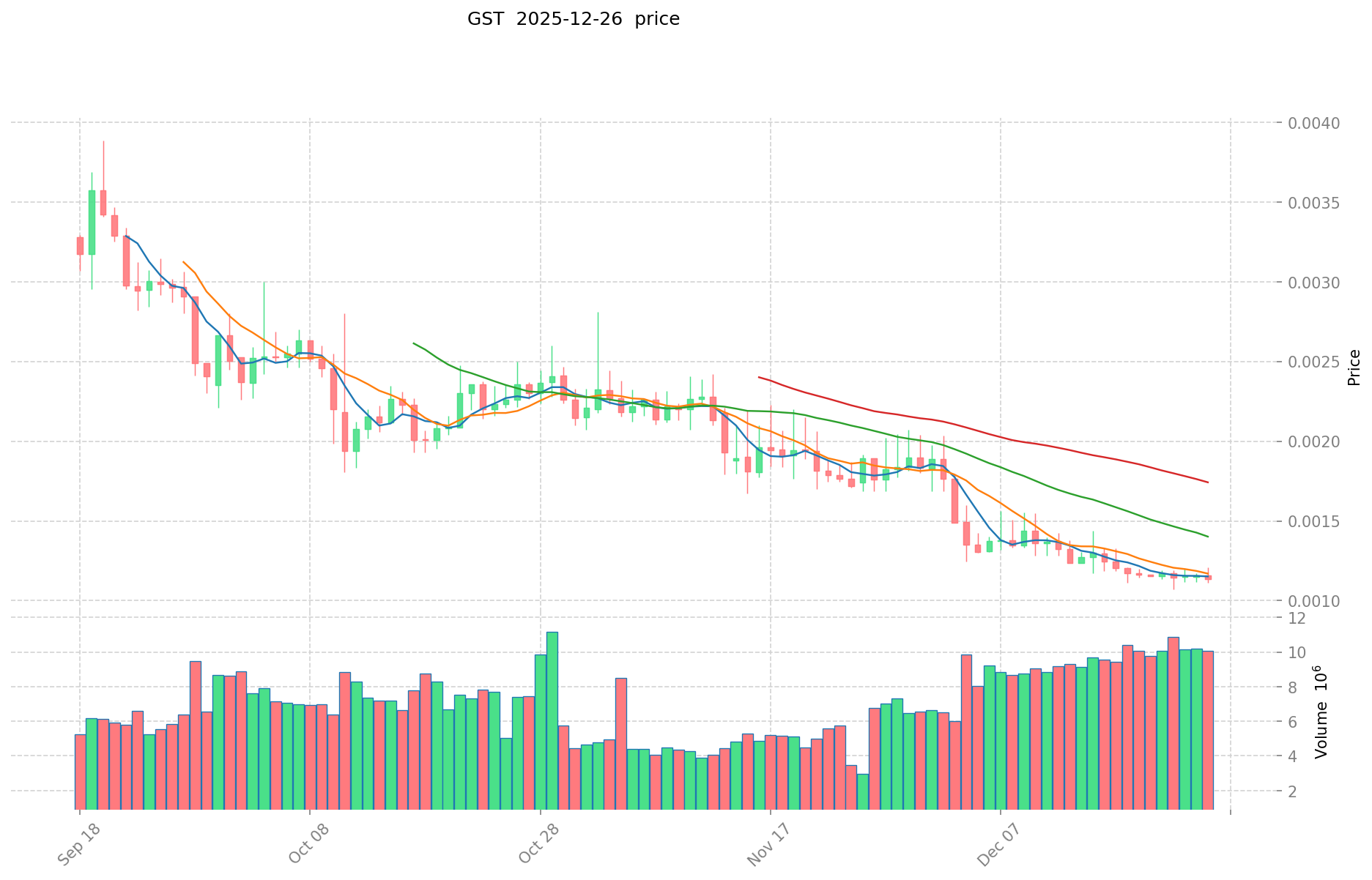
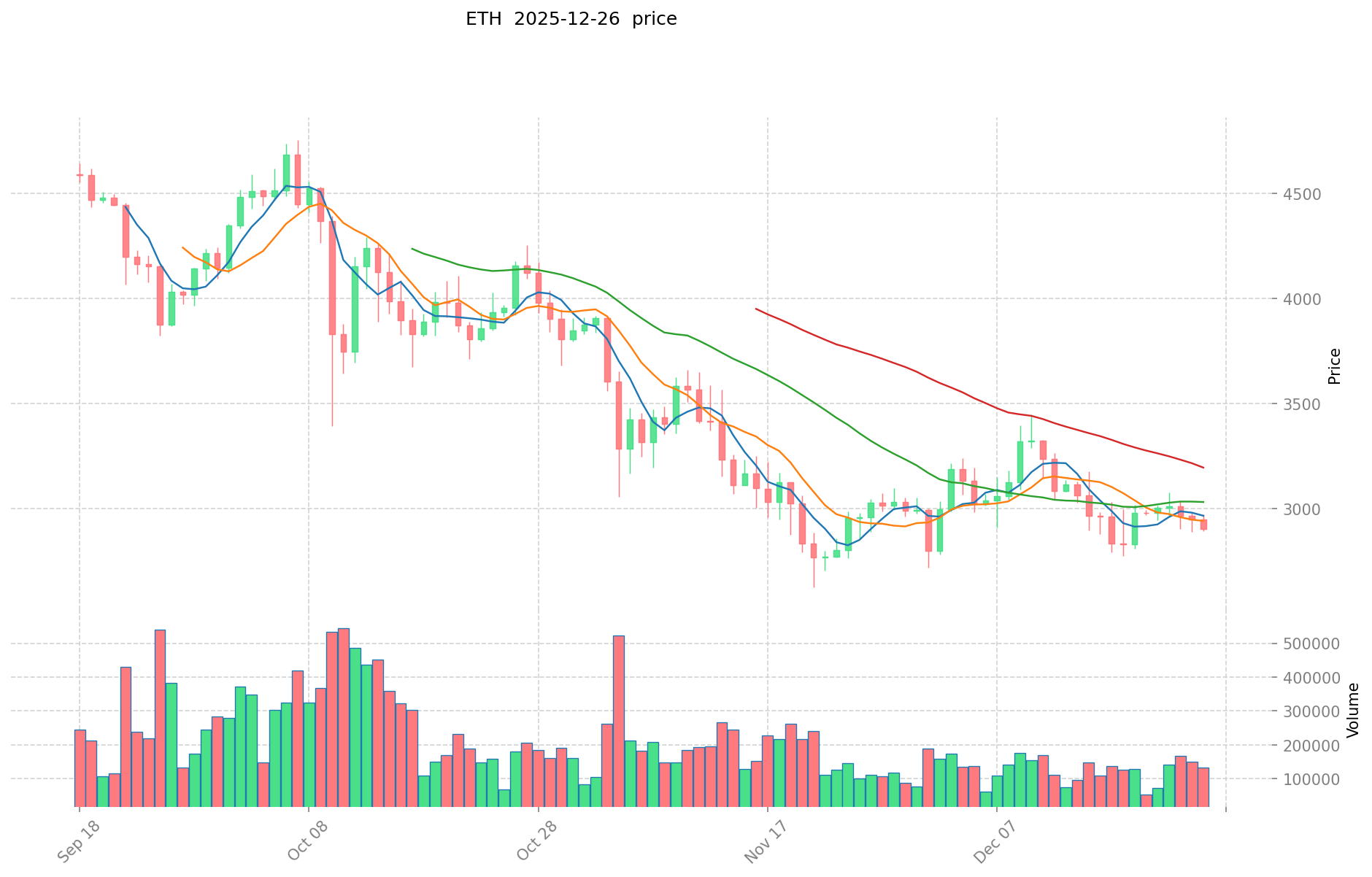
II. Core Factors Influencing GST vs ETH Investment Value
Supply Mechanism Comparison (Tokenomics)
-
GST (Green Satoshi Token): Unlimited supply. GST functions as a utility token within the STEPN ecosystem, where users earn GST by maintaining activity and utilize it within the application for upgrading digital sneakers or paying repair fees.
-
ETH (Ethereum): Fixed supply model post-merge. Ethereum implements a deflationary mechanism through transaction fee burning, which reduces the circulating supply over time.
-
📌 Historical Pattern: Unlimited supply tokens like GST typically experience downward price pressure over extended periods, while tokens with supply constraints or deflationary mechanisms tend to demonstrate stronger price resilience across market cycles.
Institutional Adoption and Market Application
-
Institutional Holdings: Ethereum (ETH) commands significantly greater institutional adoption, serving as a core asset in cryptocurrency investment portfolios. GST, as a gaming utility token, attracts primarily retail users and move-to-earn application participants.
-
Enterprise Adoption: Ethereum supports critical infrastructure including stablecoin settlement (exceeding $30 trillion annually), DeFi trading, tokenized asset issuance, NFT transactions, and Layer 2 settlement. GST remains limited to the STEPN application ecosystem for in-game transactions and equipment upgrades.
-
Regulatory Framework: Different jurisdictions maintain varying regulatory approaches toward both assets, with some countries implementing strict compliance requirements for cryptocurrency markets.
Technology Development and Ecosystem Construction
-
GST Technology Evolution: GST operates within the STEPN application layer, with development primarily focused on enhancing the move-to-earn gaming experience and application functionality rather than protocol-level innovations.
-
Ethereum Technology Development: Ethereum continues expanding its technical capabilities through Layer 2 solutions, supporting increased transaction throughput, improved efficiency, and broader ecosystem applications across DeFi, NFTs, payments, and smart contract execution.
-
Ecosystem Comparison: Ethereum maintains a mature and expansive ecosystem with extensive DeFi protocol integration, NFT infrastructure, payment solutions, and programmable smart contract capabilities. GST's ecosystem remains confined to the STEPN application and its associated move-to-earn activities.
Macroeconomic Environment and Market Cycles
-
Performance in Inflationary Environments: Ethereum functions as a foundational digital infrastructure asset with inherent value derived from economic activity processed on its network. The relationship between GST and inflation protection remains less established due to its limited utility scope and unlimited supply characteristics.
-
Monetary Policy Impact: Federal Reserve interest rate adjustments and US dollar index movements significantly influence both assets, though Ethereum's status as a major cryptocurrency reserve asset and infrastructure layer creates deeper integration with macroeconomic cycles compared to GST's narrower application context.
-
Geopolitical Factors: Ethereum's role in cross-border settlement, international remittances, and global DeFi infrastructure positions it to benefit from increased cross-border transaction demand resulting from geopolitical tensions or sanctions regimes. GST lacks comparable exposure to these geopolitical dynamics.
III. 2025-2030 Price Forecast: GST vs ETH
Short-term Forecast (2025)
- GST: Conservative $0.000999-$0.001135 | Optimistic $0.001135-$0.001464
- ETH: Conservative $2,105.88-$2,924.84 | Optimistic $2,924.84-$4,007.03
Mid-term Forecast (2026-2028)
- GST may enter accumulation phase, expected price range $0.001157-$0.001793
- ETH may enter growth phase, expected price range $3,119.34-$4,851.10
- Key drivers: institutional capital inflows, ETF expansion, ecosystem development
Long-term Forecast (2029-2030)
- GST: Base scenario $0.001355-$0.001632 | Optimistic scenario $0.001813-$0.002608
- ETH: Base scenario $3,164.78-$4,521.11 | Optimistic scenario $2,965.85-$5,004.87
View detailed price forecasts for GST and ETH
GST:
| 年份 |
预测最高价 |
预测平均价格 |
预测最低价 |
涨跌幅 |
| 2025 |
0.00146415 |
0.001135 |
0.0009988 |
0 |
| 2026 |
0.00154649425 |
0.001299575 |
0.00115662175 |
14 |
| 2027 |
0.0017930236275 |
0.001423034625 |
0.00078266904375 |
25 |
| 2028 |
0.001656270000037 |
0.00160802912625 |
0.000996978058275 |
41 |
| 2029 |
0.002350295370927 |
0.001632149563143 |
0.001354684137409 |
43 |
| 2030 |
0.002608501431816 |
0.001991222467035 |
0.001812012445002 |
75 |
ETH:
| 年份 |
预测最高价 |
预测平均价格 |
预测最低价 |
涨跌幅 |
| 2025 |
4007.0308 |
2924.84 |
2105.8848 |
0 |
| 2026 |
4055.144418 |
3465.9354 |
3119.34186 |
18 |
| 2027 |
4851.09648261 |
3760.539909 |
2068.29694995 |
28 |
| 2028 |
4736.4000153855 |
4305.818195805 |
2755.7236453152 |
47 |
| 2029 |
4747.1645608750125 |
4521.10910559525 |
3164.776373916675 |
54 |
| 2030 |
5004.86777989394175 |
4634.13683323513125 |
2965.847573270484 |
58 |
IV. Investment Strategy Comparison: GST vs ETH
Long-term vs Short-term Investment Strategy
-
GST: Suitable for retail users seeking exposure to move-to-earn gaming ecosystems and short-term speculation driven by application user growth. Given unlimited supply mechanics, short-term tactical trading may be more appropriate than long-term accumulation.
-
ETH: Suitable for investors seeking long-term infrastructure exposure, institutional-grade asset holdings, and diversification through DeFi, NFT, and smart contract ecosystem participation. Deflationary tokenomics support longer-term capital appreciation potential.
Risk Management and Asset Allocation
- Conservative Investors: GST 0% vs ETH 80-100%
- Aggressive Investors: GST 5-15% vs ETH 50-70%
- Hedging Tools: Stablecoin positions (40-50% of portfolio), options strategies for volatility management, cross-asset diversification including Bitcoin, major altcoins, and USD-denominated reserves
V. Potential Risk Comparison
Market Risk
-
GST: Extreme volatility driven by STEPN ecosystem health, user retention rates, and retail sentiment. 99.87% decline from all-time high demonstrates severe liquidity concentration and market dependency on single application platform adoption.
-
ETH: Market volatility influenced by broader cryptocurrency market cycles and macroeconomic factors. Significantly higher market liquidity ($411 billion daily volume) provides more stable price discovery mechanisms and reduces execution slippage.
Technology Risk
-
GST: Application-layer vulnerability to STEPN platform failures, smart contract exploits within gaming mechanics, and dependency on external movement verification infrastructure for earn mechanics sustainability.
-
ETH: Protocol-level security well-established through years of network operation and cryptographic validation. Ongoing Layer 2 development introduces new smart contract risk vectors, though core network consensus remains robust.
Regulatory Risk
- Global regulatory frameworks increasingly impose strict requirements on cryptocurrency exchanges and gaming-related token offerings. GST faces heightened scrutiny as a gaming utility token with earn-to-play mechanics that may attract classification as unregistered securities in certain jurisdictions. ETH, established as infrastructure asset, encounters more standardized regulatory treatment across major markets.
VI. Conclusion: Which Is the Better Buy?
📌 Investment Value Summary:
-
GST Advantages: Direct participation in move-to-earn application ecosystem; potential for user growth-driven appreciation if STEPN ecosystem expands; accessible entry point for retail investors with limited capital.
-
ETH Advantages: Established infrastructure asset with $352+ billion market capitalization; institutional adoption and portfolio integration; deflationary supply mechanism supporting long-term price resilience; diversified ecosystem generating sustained network activity and transaction fees; proven scalability through Layer 2 development.
✅ Investment Recommendations:
-
Beginner Investors: Prioritize ETH allocation (80-100% of crypto portfolio) to establish foundation in established infrastructure assets before considering GST exposure. Focus on understanding blockchain fundamentals through major network participation rather than speculative gaming tokens.
-
Experienced Investors: Maintain ETH core position (60-70%) while deploying tactical GST allocations (5-15%) for short-term trading opportunities driven by STEPN application metrics and user growth catalysts. Implement stop-loss discipline given GST's extreme volatility profile.
-
Institutional Investors: ETH represents appropriate reserve asset and infrastructure allocation for cryptocurrency portfolios. GST unsuitable for institutional holdings due to limited liquidity depth, regulatory uncertainty, and single-platform dependency creating unacceptable concentration risk.
⚠️ Risk Disclaimer: Cryptocurrency markets demonstrate extreme volatility. This analysis does not constitute investment advice. All cryptocurrency investments carry substantial capital loss risk. Investors must conduct independent due diligence and consult qualified financial advisors before making investment decisions.
FAQ
1个ETH等于多少美金?
1个ETH约等于2930美金(截至2025年12月26日)。ETH价格随市场实时波动,具体价格以当前市场行情为准。
ETC和ETH的关系?
ETC是以太坊经典,ETH是以太坊。2016年DAO事件后以太坊分裂,ETC保持原始代码保守不变,ETH持续技术升级创新。两者独立运行,ETH市值和生态远大于ETC。
ETH算山寨币吗?
ETH不是山寨币,而是以太坊的原生加密货币。以太坊2015年创立,首创智能合约技术,是区块链重要基础设施。ETH作为网络燃料支撑DeFi、NFT等生态运行,具有真实应用价值和技术创新,不同于模仿类山寨币。
BTC和ETH的区别?
BTC是比特币,ETH是以太坊。BTC创立更早,市值更大,主要用于支付和价值存储。ETH支持智能合约,生态应用更丰富,是公链平台。
GST是什么?有什么用途?
GST是Stepn平台的治理代币,用于参与生态决策、质押获得收益和支付交易费用。持有者可通过治理投票参与项目发展方向决策。
GST和ETH有什么主要区别?
ETH是以太坊原生代币,用于支付网络费用和智能合约执行;GST是Gnosis平台的治理代币,主要用于平台治理和决策。两者应用场景、生态系统和用途完全不同。
GST相比ETH的优势和劣势分别是什么?
优势:GST交易速度更快,交易费用更低,适合小额交易。劣势:智能合约功能不如ETH强大,应用生态相对有限。ETH则生态完善,但交易成本较高。
* The information is not intended to be and does not constitute financial advice or any other recommendation of any sort offered or endorsed by Gate.