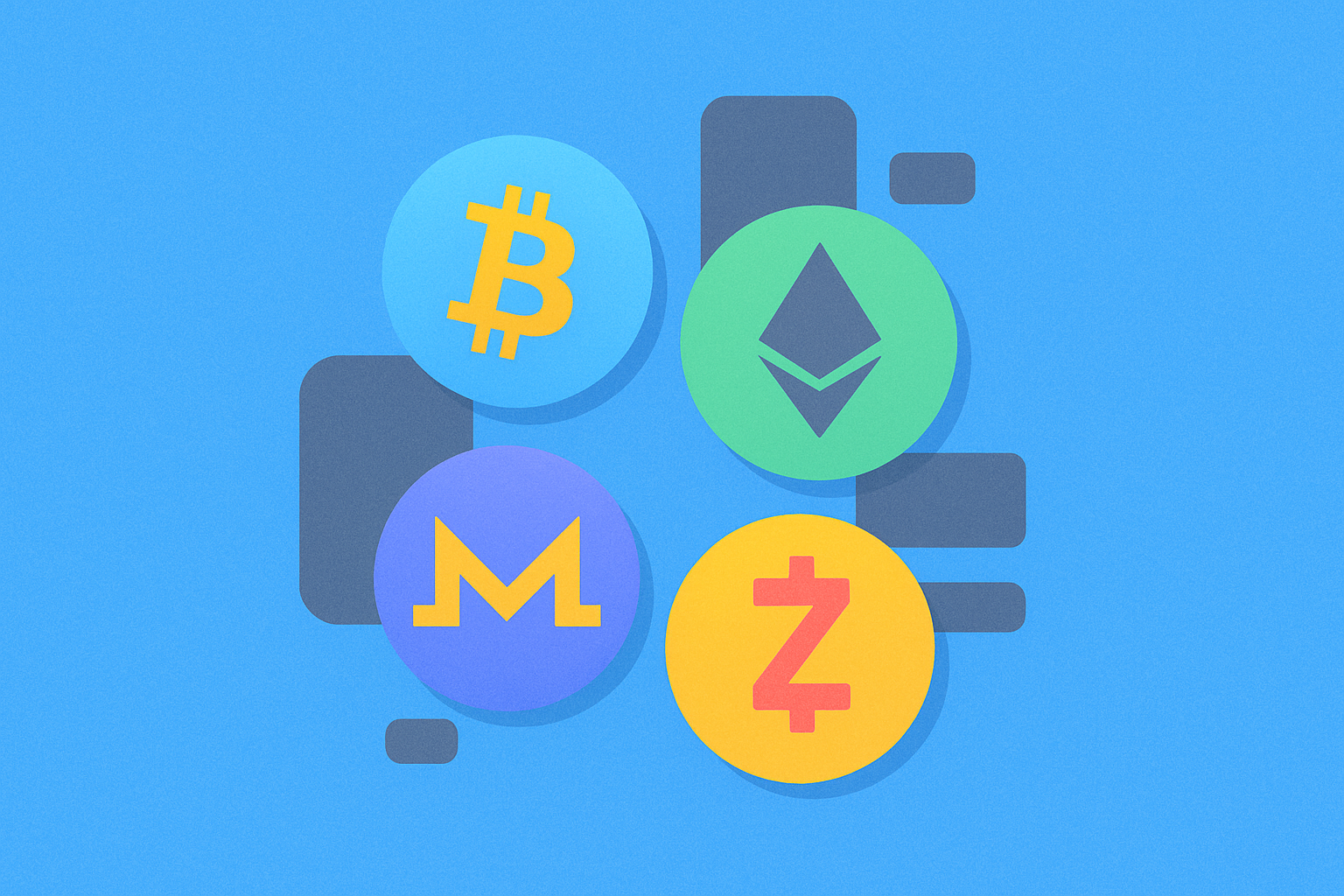
This comprehensive mining guide explores cryptocurrency mining fundamentals and identifies top mining opportunities for 2023. The article covers essential hardware options including CPU, GPU, FPGA, and ASIC miners, helping both beginners and experienced miners make informed investment decisions. It provides step-by-step instructions for mining on personal devices using platforms like MinerGate and WinEth, while highlighting industry-standard applications such as HoneyMiner and Coinmine. The guide analyzes profitability factors including asset prices, mining costs, and long-term value potential, then examines the most lucrative cryptocurrencies to mine: Bitcoin, Ethereum, Monero, and ZCash. Whether you're seeking passive income through home-based mining or scaling operations on Gate exchange, this guide equips readers with practical knowledge about hardware requirements, software configuration, risk management, and tax considerations for successful cryptocurrency mining ventures.
What is Cryptocurrency Mining?
Cryptocurrency mining is a fundamental process that maintains blockchain networks and validates transactions. The mining process is typically conducted by a group of individuals called miners. Joining them requires having the appropriate hardware and software setup. Different cryptocurrencies employ various protocols for mining new coins, each with its own technical requirements and reward mechanisms.
Bitcoin remains the most popular cryptocurrency for mining due to its substantial market capitalization and unit value. To mine new Bitcoins, miners must verify transactions and confirm them on the blockchain by solving complex mathematical equations using powerful computers. This process, known as Proof of Work, ensures network security and transaction integrity. The mining process operates on Layer 0 protocols, which form the foundational infrastructure that enables cross-chain interoperability and scalability across different blockchain networks.
Types of Mining Hardware
Selecting the right hardware is crucial for successful cryptocurrency mining. Each type of equipment offers different performance levels, power consumption rates, and profitability potential. Understanding these options helps miners make informed investment decisions.
CPU Mining
CPU mining utilizes the central processing unit of a computer. While CPUs were the original mining hardware, they have become less competitive for most cryptocurrencies. However, CPUs can still be effectively used for mining certain cryptocurrencies such as Monero, Electroneum, and Bytecoin, whose algorithms are specifically optimized for CPU mining. This approach offers lower entry barriers and can be suitable for beginners exploring cryptocurrency mining.
GPU Mining with Graphics Cards
Graphics Processing Units (GPUs) are high-performance graphics cards present in powerful computers. GPUs are significantly more powerful than CPUs for mining operations, offering better hash rates and efficiency. Some cryptocurrencies that can be mined using GPUs include ZCash, Ethereum, Ethereum Classic, and Litecoin. GPU mining provides a balance between performance and flexibility, allowing miners to switch between different cryptocurrencies based on profitability.
Field Programmable Gate Arrays (FPGAs) are flexible mining platforms that can be programmed for specific mining algorithms. FPGAs provide miners with increasing power and electrical efficiency compared to traditional GPU setups. These devices are versatile and can be configured to mine Bitcoin, Ethereum, Monero, and many other cryptocurrencies. FPGAs represent a middle ground between GPU and ASIC mining in terms of both cost and performance.
ASIC Mining Equipment
Application-Specific Integrated Circuits (ASICs) represent the most specialized and efficient option for cryptocurrency mining. These devices are microchips built specifically for mining particular cryptocurrencies. ASICs provide optimal speed and hashing power while reducing electrical energy consumption. However, an ASIC miner can only mine coins for a specific algorithm, limiting its flexibility. Despite this limitation, ASICs offer the highest return on investment for large-scale mining operations.
Mining on Personal Devices
Personal computers and mobile devices can be used for cryptocurrency mining, though expectations should be realistic. While you can engage in mining with personal equipment, significant profits typically require more substantial investments in dedicated hardware.
Mining Bitcoin on Mac Computers
Mining Bitcoin on a Mac computer is technically possible, but profitability is limited. As Bitcoin gained popularity and its price increased, mining became highly competitive. To compete effectively for block rewards, substantial investments in specialized hardware are necessary. Mac computers, while powerful for general computing, lack the specialized mining capabilities needed for profitable Bitcoin mining.
Mining Ethereum on Mac Using MinerGate
MinerGate is one of the most popular mining clients for Mac computers, offering a user-friendly interface and straightforward setup process. To begin mining with MinerGate, download the application from the official website and register an account using your email address. After logging into the application on your Mac, navigate to the "Miner" tab and select Ethereum to start mining.
You can customize resource utilization by choosing how many processor cores the computer uses for mining. More cores result in higher mining output but may significantly slow down your computer's performance for other tasks. It's recommended to monitor your CPU temperature using specialized applications to prevent overheating and hardware damage.
Mining Ethereum on Windows Systems
Windows users can mine Ethereum by following a systematic setup process. First, download the appropriate mining software from the manufacturer's website. Create an Ethereum wallet independently to receive your mining rewards. Install WinEth, a Windows mining service that enables transaction validation and cryptocurrency rewards.
After installation, launch the service and enter your wallet address. Configure mining options based on your preferences - you can run the service when the computer is idle or operate it continuously in the background. Once configured, press "Start" to begin mining operations.
Cryptocurrency mining applications enable more people to utilize their computers' computational power for maintaining blockchains and validating transactions. These tools have democratized mining access, allowing individuals to participate without extensive technical knowledge.
HoneyMiner: Industry Standard Mining Application
HoneyMiner is an easy-to-use, highly efficient mining platform that has become an industry standard. The service combines computational power from multiple computers, creating a more efficient mining network. When you register with HoneyMiner, the service automatically identifies the most profitable coins to mine based on current market conditions and your hardware capabilities. It utilizes your computational power to mine digital assets and rewards you in Bitcoin.
The application is free to use, though the company charges a commission on generated income. Potential earnings vary based on hardware quality and market conditions, but users with high-performance computers can generate meaningful passive income. The platform's automated optimization ensures you're always mining the most profitable cryptocurrency without manual intervention.
Coinmine: Plug-and-Play Mining Box
Coinmine offers a physical plug-and-play mining platform that simplifies the mining process. This device allows mining of five different cryptocurrencies: Bitcoin, Ether, Monero, ZCash, and GRIN. The hardware-software integration eliminates complex setup procedures.
To start mining with Coinmine, order the mining box from the manufacturer's website. Upon delivery, unbox the device and connect it to power. Download the Coinmine mobile application and install it on your smartphone. Synchronize your phone with the device, select your preferred cryptocurrency, and press "mine" to begin operations.
Each Coinmine device includes a built-in wallet that receives mined coins. Withdrawal thresholds vary by cryptocurrency: 0.0075 Bitcoin, 0.2 Ether, 0.4 Monero, 0.2 ZCash, or 5 GRIN. This integrated approach makes Coinmine particularly suitable for beginners seeking a simplified mining experience.
Factors to Consider When Choosing Cryptocurrencies to Mine
Asset Price and Mining Costs
Ensuring profitability requires careful analysis of mining costs versus cryptocurrency prices. It's essential to verify that the cost of mining your chosen cryptocurrency doesn't exceed its market value. This calculation should include electricity costs, hardware depreciation, and maintenance expenses. Mining cryptocurrencies that cannot cover costs when sold on the market results in financial losses rather than passive income.
Future Potential and Long-term Value
Another approach to selecting mining targets involves analyzing the long-term potential of digital assets. If an asset demonstrates significant future potential and appears undervalued relative to its true worth, it may represent an excellent mining opportunity. This strategy requires researching project development, technological innovations, and market adoption trends. Mining cryptocurrencies with strong fundamentals can yield substantial returns as their value appreciates over time.
Most Profitable Cryptocurrencies to Mine
Bitcoin remains the most popular and valuable cryptocurrency in the market. Over the past decade, Bitcoin has provided investors with extraordinary returns. As the foundational Layer 0 protocol for many blockchain innovations, Bitcoin's network security and decentralization make it a prime mining target. However, Bitcoin mining requires substantial capital investment in specialized ASIC hardware and significant electricity resources. The high competition and mining difficulty mean that profitability depends heavily on access to cheap electricity and efficient equipment.
Ether is the native cryptocurrency of the Ethereum network and the second most valuable cryptocurrency by market capitalization. Ethereum's value is intrinsically linked to its network utility and development activity. As a heavily developmental project with ongoing upgrades and improvements, Ethereum presents compelling mining opportunities. The network's transition to various scaling solutions maintains mining relevance while the ecosystem continues expanding with decentralized applications and smart contracts.
Monero Mining
Monero is a popular privacy-focused cryptocurrency that attracts users seeking transaction anonymity. Monero's ability to obscure payment sources and protect user identities represents a unique value proposition in the cryptocurrency space. These privacy features have driven consistent demand and price appreciation. Monero's mining algorithm is designed to be ASIC-resistant, making it accessible to miners using standard computer hardware. This accessibility, combined with strong privacy features, makes Monero an attractive mining option.
ZCash Mining
ZCash is another privacy-oriented cryptocurrency with distinct technical advantages. ZCash is ASIC-resistant, meaning it can be effectively mined using more affordable GPU equipment. The total network power and mining difficulty for ZCash remain relatively low compared to major cryptocurrencies, providing opportunities for profitable mining. ZCash's optional privacy features and ongoing development make it a viable long-term mining choice for those seeking privacy-focused digital assets.
Conclusion
Cryptocurrency mining represents a lucrative business opportunity that engages tens of thousands of people worldwide. While Bitcoin remains the largest and most challenging cryptocurrency to mine profitably, other digital assets such as Ethereum, Monero, and ZCash offer more accessible options for home-based mining operations. Success in cryptocurrency mining requires careful consideration of hardware investments, electricity costs, and market conditions. Understanding Layer 0 protocols and blockchain infrastructure helps miners make informed decisions about which cryptocurrencies to target. With proper planning, appropriate equipment, and realistic expectations, cryptocurrency mining can generate positive returns and provide meaningful passive income opportunities.
FAQ
What is cryptocurrency mining? How does it work?
Cryptocurrency mining involves solving complex mathematical puzzles to validate transactions and add them to the blockchain. Miners compete to find valid solutions, earning cryptocurrency rewards. The process secures the network, prevents fraud, and introduces new coins into circulation while maintaining stable block generation rates.
What hardware equipment is needed to start mining cryptocurrency?
You need ASIC miners or GPU rigs for powerful computing, high-performance graphics cards(NVIDIA or AMD),reliable power supply(750W+),efficient cooling systems, motherboard supporting multiple cards, memory, and stable internet connection.
How much initial investment does cryptocurrency mining require?
Initial investment typically ranges from $6,000 to $15,000, depending on equipment choice and electricity costs. Key expenses include ASIC miners ($5,000-$8,000), power supplies, and cooling systems. Monthly electricity costs generally run $200-$400. Total investment varies based on mining scale and regional energy prices.
How to choose the right cryptocurrency for mining?
Consider profitability by analyzing current rewards and monthly earnings potential. Evaluate market trends and long-term growth prospects. Prioritize coins with stable trading volume, strong community support, and sustainable mining difficulty. Select coins with proven utility and future potential for optimal returns.
Mining profitability expectations depend on several factors including block rewards, network difficulty, and your hardware's hashrate. Daily earnings vary significantly based on cryptocurrency type and market conditions. Bitcoin mining currently generates variable returns based on difficulty adjustments and energy costs. Ethereum and other coins offer different reward structures. Use mining calculators with current network data for accurate projections of your potential passive income returns.
Mining profitability expectations depend on several factors including block rewards, network difficulty, and your hardware's hashrate. Daily earnings vary significantly based on cryptocurrency type and market conditions. Bitcoin mining currently generates variable returns based on difficulty adjustments and energy costs. Ethereum and other coins offer different reward structures. Use mining calculators with current network data for accurate projections of your potential passive income returns.
What are the advantages and disadvantages of mining compared to other passive income methods?
Mining offers higher flexibility and diversified returns potential, but requires significant technical expertise and capital investment. It features volatile earnings, high equipment and energy costs, yet provides greater long-term scalability compared to traditional passive income streams.
What technical knowledge is required for cryptocurrency mining?
Mining requires basic understanding of hardware setup, mining software configuration, and network connections. You need to learn how to operate mining equipment, install necessary drivers, and optimize settings for your specific mining rig. Basic computer maintenance knowledge is helpful but not mandatory for beginners.
What is the difference between solo mining and pool mining?
Solo mining is performed independently with higher risks and rewards. Pool mining combines collective computational power to share rewards with lower risks. Pool mining is more suitable for small-scale participants seeking stable returns.
What are the main risks faced by cryptocurrency mining?
Main mining risks include rising hashrate causing miner depreciation, market price volatility affecting pool rewards, hardware failure, electricity cost fluctuations, and network congestion reducing profitability.
What is the impact of mining on electricity costs and the environment?
Mining requires significant electrical power, increasing energy consumption and costs. High energy demand can strain local power grids. However, miners increasingly adopt renewable energy sources like solar and hydroelectric power to reduce environmental impact and operational expenses.
Select a reputable mining pool, download mining software like Phoenix Miner, then configure it with your mining account details, wallet address, and pool settings. Adjust temperature and power parameters for optimal performance.
Is mining income subject to taxation?
Mining income is generally taxable depending on your country's tax laws. If mining is your primary income source, you typically must report and pay applicable taxes. Tax regulations vary by jurisdiction, so consult a tax professional for guidance.
* The information is not intended to be and does not constitute financial advice or any other recommendation of any sort offered or endorsed by Gate.