The Psychology of Japanese Candlesticks: Decoding Financial Markets

2026-01-02 18:40:58
Crypto Insights
Crypto Trading
Crypto Tutorial
K-line
Spot Trading
Article Rating : 3.5
half-star
186 ratings
Discover the psychology behind Japanese candlesticks for traders on Gate. Analyze patterns, interpret signals, and develop trading strategies. This is your comprehensive technical analysis guide for cryptocurrency and financial markets.
The Psychology of Japanese Candlesticks: Decoding Financial Markets

Introduction

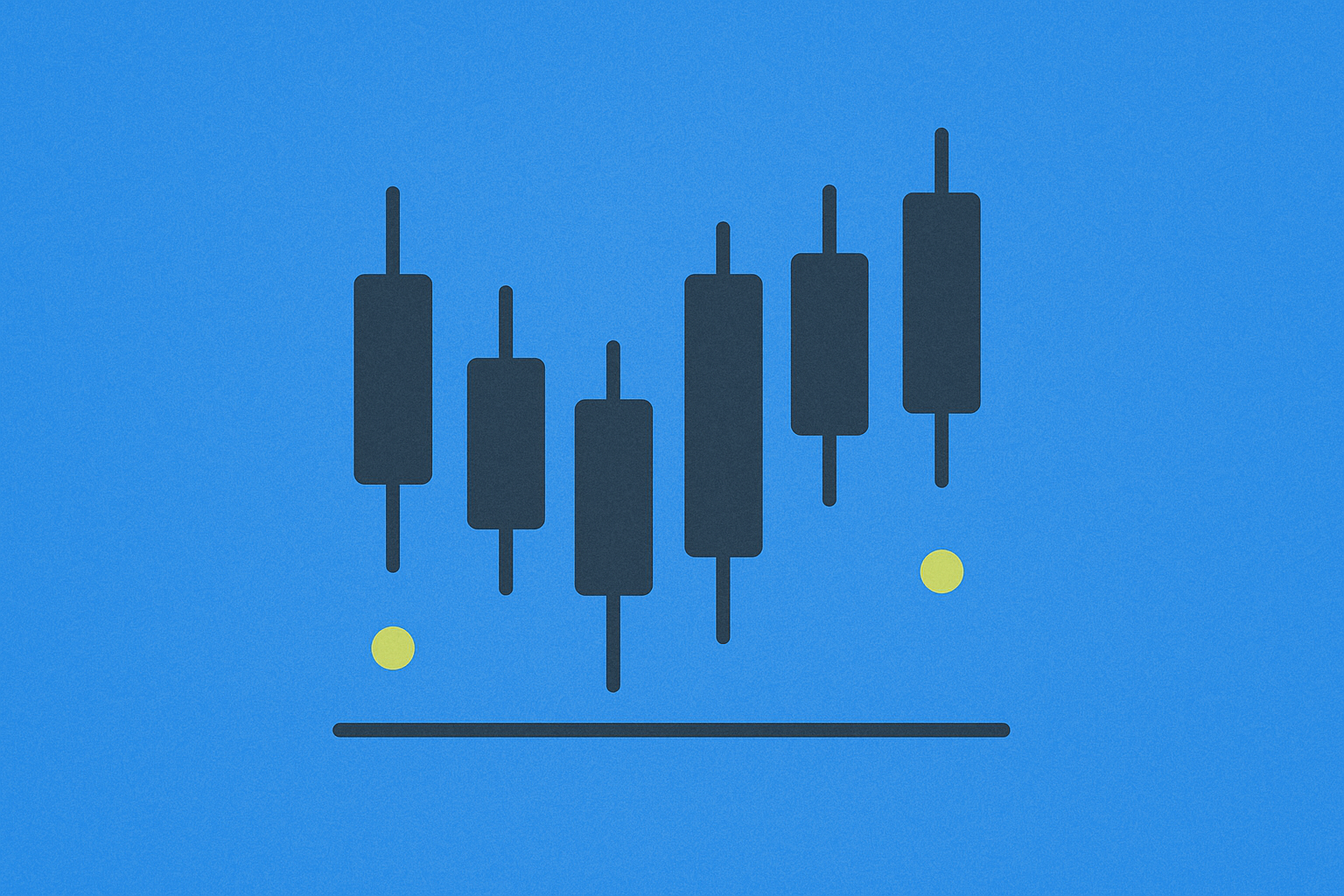
Japanese candlesticks are an analytical tool that captures investor psychology and the ongoing power struggle between buyers and sellers. Each candlestick tells a story of market movement, enabling traders and analysts to better interpret the behavior of financial market participants.

Buyers Have Full Control

A candlestick with a large, solid body and no shadows or only short shadows signals that buyers have complete control of the market. This formation demonstrates clear buyer strength and strong upward momentum. The lack or minimal presence of shadows highlights buyers' confidence and their ability to hold positions throughout the trading session.

Buyers Control the Market Despite Resistance

When a green candlestick features a relatively long upper shadow, it indicates buyers are in control but facing resistance from sellers. Nevertheless, buyers retain overall control. The long upper shadow shows that sellers attempted to drive prices lower, but buyers maintained their ground and closed the candlestick in positive territory.

Buyers Regain Control After Pressure

A long lower shadow signals that the market initially faced selling pressure, but buyers regained control and closed the candlestick in positive territory. This type of candle reflects a strong bullish response and a willingness to defend support levels. Traders often interpret this pattern as a sign of a potential uptrend continuation.

Weak and Unconvincing Buyer Control

A candlestick with a small body and a long shadow indicates weak and unconvincing buyer control. This pattern reflects market indecision and may signal a potential trend reversal. The small body suggests uncertainty, with neither side claiming a decisive advantage.

Conclusion

Japanese candlesticks are more than charting tools—they are a visual language that narrates market stories and explains participant behavior. Understanding the psychology behind each candlestick pattern helps traders make more informed decisions and anticipate future price movements. Every candlestick represents the ongoing contest between optimism and pessimism in the market.

FAQ

What are Japanese candlesticks, and what is their basic structure and components?

Japanese candlesticks are a technical analysis chart type comprising four key prices: open, close, high, and low. The structure includes the body (distance between open and close) and the wicks or shadows (above and below the body), illustrating price movement over a specific time period.

How should you interpret the open, close, high, and low prices on Japanese candlesticks?

A Japanese candlestick displays four key prices for a given period: open, close, high, and low. The body shows the open and close; a green candle signals price increase, while a red candle indicates a decline. The wicks represent the highest and lowest prices reached during the session.

What are the common Japanese candlestick formations, and what market signals do they represent?

Key formations: Engulfing pattern signals a trend reversal; Hammer indicates a potential reversal; Hanging Man warns of a possible decline. These patterns help traders identify critical entry and exit points.

What are the differences in applying Japanese candlesticks to stocks, forex, and cryptocurrency markets?

Japanese candlesticks function similarly across all markets, reflecting open, close, high, and low prices. The main difference lies in volatility: cryptocurrencies are more volatile, stocks are more stable, and forex falls in between. Crypto markets also experience higher trading volumes, resulting in sharper price swings. Patterns remain the same, but the speed of signal formation varies.

How do you use Japanese candlesticks to analyze trends and identify support and resistance levels?

Analyze candlestick patterns to identify trends. Support forms at the bottom of a decline, while resistance forms at the top of a rally. A breakout above resistance signals an uptrend; a breakdown below support signals a downtrend. Use these levels to inform entry and exit strategies.

How can you use Japanese candlesticks alongside other technical analysis tools such as moving averages and RSI?

Combine Japanese candlesticks with RSI to identify trends. RSI below 30 indicates oversold conditions; above 70 indicates overbought. Moving averages confirm trends. Used together, these tools enhance the accuracy of entry and exit points.

What common mistakes do beginner traders make when using Japanese candlesticks?

Beginners often focus too much on individual candles and overlook the broader market trend. This approach leads to missed trading signals and lost opportunities. Successful trading requires analyzing the entire chart context.

How do you evaluate the forecasting accuracy of single and combined candlestick patterns?

Forecasting accuracy depends on market conditions and trading strategy. Tweezer patterns offer high recognition accuracy. Combined patterns require backtesting and real trading data for effective validation.

* The information is not intended to be and does not constitute financial advice or any other recommendation of any sort offered or endorsed by Gate.
Related Articles
Understanding Red and Green Colors in Cryptocurrency Charts

Understanding Red and Green Colors in Cryptocurrency Charts

The article "Understanding Red and Green Colors in Cryptocurrency Charts" explores how these colors indicate market momentum and sentiment, critical for effective trading. It addresses questions like the significance of green in crypto and how green and red patterns shape market interpretations. Aimed at traders seeking to enhance technical analysis, the article delves into candlestick relationships, trend reversals, and support/resistance levels. By mastering red and green analysis alongside broader market research, traders can refine strategies and improve outcomes on platforms like Gate.

2025-12-21 08:17:39
Trading Simulator: The Complete Guide to Paper, Backtests, and Live Drills

Trading Simulator: The Complete Guide to Paper, Backtests, and Live Drills

Before risking real funds, smart traders pressure-test their edge in a simulator. Here’s how to choose one, set it up properly, and use it to turn ideas into a repeatable, data-driven playbook.
2025-08-28 04:52:30
What Does TP Mean in Crypto Trading Slang?

What Does TP Mean in Crypto Trading Slang?

This article delves into the crypto slang "TP," or "Take Profit," crucial for risk management in volatile markets. Key topics include TP and SL comparison for trading success, advanced order types on Gate, and sophisticated TP techniques utilized by Web3 traders. The piece emphasizes mastering TP placement through technical analysis and market psychology, aiding traders in maximizing potential gains. Ideal for crypto traders seeking disciplined practices and enhanced analytic strategies, it addresses implementing actionable TP strategies for optimized profit-taking in cryptocurrency trading.
2025-08-22 01:44:02
What is M Pattern in Trading

What is M Pattern in Trading

This article offers a comprehensive guide to mastering the M Pattern, a key bearish reversal signal in cryptocurrency trading. It focuses on recognizing key components of the M Pattern, including the peaks, troughs, neckline, and volume dynamics, ensuring traders enhance their market strategies. Readers will learn proven strategies for trading the M Pattern, differentiating authentic signals from false ones, and improving risk management and potential profits. Tailored for crypto traders, this piece provides essential insights to navigate volatile markets with advanced technical analysis using Gate's tools.
2025-08-29 05:20:33
PNL in Crypto: A Complete Guide to Calculating Profit and Loss

PNL in Crypto: A Complete Guide to Calculating Profit and Loss

The article serves as a comprehensive guide to understanding and calculating Profit and Loss (PNL) in crypto trading, highlighting the criticality of PNL in evaluating investment performance. It addresses key distinctions between realized and unrealized PNL, essential calculation formulas, and advanced tracking strategies to optimize trading efficiency. Targeted at cryptocurrency traders, it helps enhance decision-making processes, risk management, and portfolio health. The logical flow begins with defining PNL, followed by differentiating realized from unrealized PNL, presenting calculation methods, and concluding with advanced tracking strategies.
2025-09-25 19:05:56
Why Is Session Momentum Important? Trading Psychology Explained

Why Is Session Momentum Important? Trading Psychology Explained

This article delves into the critical role of session momentum in trading psychology and its impact on traders' decision-making and performance. It elucidates how understanding market psychology, session patterns, and technical analysis indicators can empower traders to identify and capitalize on trading opportunities. The piece addresses the needs of traders aiming to enhance their market insights and develop effective emotional regulation and risk management strategies. Structurally, the article progresses through the psychological aspects of momentum, recognizing market patterns, applying technical indicators, and psychological strategies for consistent profits.
2025-09-04 18:33:58
Recommended for You
How to Read Technical Indicators for PAXG Trading: MACD, RSI, and Moving Average Analysis

How to Read Technical Indicators for PAXG Trading: MACD, RSI, and Moving Average Analysis

# How to Read Technical Indicators for PAXG Trading: MACD, RSI, and Moving Average Analysis This comprehensive guide equips PAXG traders with essential technical analysis skills to navigate gold trading on Gate with confidence. Master three critical indicators—MACD, RSI, and moving averages—to identify entry and exit signals across multiple timeframes. Learn how MACD histogram divergence and moving average crossovers reveal momentum shifts, while volume-price analysis exposes institutional positioning at key support levels like the $4,373 Fibonacci level. Discover how to combine these technical indicators effectively to avoid false signals and implement disciplined trading strategies. Whether you're analyzing bearish MACD readings, identifying overbought/oversold RSI zones, or confirming trends with the 50-day and 200-day moving averages on Gate, this guide provides actionable frameworks for both beginner and intermediate traders seeking to enhance their PAXG trading performance.
2026-01-04 04:33:59
Will Pi Network Be Listed on Mainstream Exchanges?

Will Pi Network Be Listed on Mainstream Exchanges?

# Introduction to "The Future of Pi Network: Anticipated Exchange Listings" This comprehensive guide explores Pi Network's pathway toward mainstream exchange listings, addressing key barriers to adoption and ecosystem development. The article examines why Pi hasn't yet secured major exchange listings—including open-source requirements and security audits—while highlighting the importance of robust ecosystem growth over rapid exchange inclusion. Readers will discover current trading options on Gate, recent wallet innovations enabling fiat purchases, and market dynamics suggesting favorable conditions for price appreciation. Ideal for Pi investors and cryptocurrency enthusiasts, this article provides technical insights, realistic timelines, and strategic perspectives on Pi Network's maturation in the digital asset landscape.
2026-01-04 04:33:04
How will MACD, RSI, and Bollinger Bands predict HYPE's next price move?

How will MACD, RSI, and Bollinger Bands predict HYPE's next price move?

# Article Introduction This comprehensive technical analysis examines how MACD, RSI, and Bollinger Bands converge to forecast HYPE's next price movement within the critical $44-$49 consolidation zone. The guide combines momentum indicators, volatility patterns, and market sentiment metrics to identify high-probability breakout scenarios and key support/resistance levels. Designed for Gate traders seeking data-driven entry and exit strategies, this article bridges technical analysis with practical risk management. By analyzing MACD golden crosses, RSI mid-level positioning, Bollinger Bands compression, and long/short ratios, readers gain actionable insights for navigating HYPE's near-term price trajectory. The analysis reveals why the $48 resistance and $39-$40 support levels matter for position management, while addressing common limitations of technical indicators through multi-factor confirmation approaches.
2026-01-04 04:31:40
How to Find Your EVM Address

How to Find Your EVM Address

# Introduction Discover how to easily locate your EVM address across Ethereum and compatible blockchains. This comprehensive guide explains what EVM addresses are, their cross-chain compatibility, and provides step-by-step instructions for finding your address in professional wallets like Gate. Learn essential security practices for protecting your private keys, explore 15+ major EVM networks, and get answers to common questions about address management. Whether you're new to Web3 or managing multiple chains, this article equips you with the knowledge to confidently navigate blockchain transactions and asset storage.


2026-01-04 04:31:39
How does HYPE community engagement and ecosystem activity compare to other DEX tokens?

How does HYPE community engagement and ecosystem activity compare to other DEX tokens?

# How HYPE Community Engagement and Ecosystem Activity Compare to Other DEX Tokens HYPE demonstrates distinctive competitive advantages through robust community engagement and rapid ecosystem expansion. This article examines HYPE's thriving Telegram and Twitter communities, 50+ deployed DApps on HyperEVM, and trading dominance commanding 62% of perpetual DEX open interest. We analyze how HYPE's developer-driven ecosystem, transparent governance, and revenue-sharing model differentiate it from competitors like UNI, AAVE, and GMX. Whether you're evaluating DEX token fundamentals, seeking insights into ecosystem health metrics, or trading on Gate, this comprehensive comparison reveals HYPE's market positioning, growth trajectory, and structural advantages in the increasingly competitive derivatives landscape.

2026-01-04 04:29:30
Raoul Pal

Raoul Pal

# Article Introduction This comprehensive guide explores the expertise and influence of Raoul Pal, a leading macro strategist and crypto analyst who transformed financial advisory through his Real Vision platform. Discover how Pal's insights on blockchain technology, Bitcoin, and Ethereum shape investment decisions for institutional and retail investors navigating digital assets. The article examines his career trajectory from Goldman Sachs to founding Real Vision, his "Exponential Age" framework integrating AI and cryptocurrency, and his market predictions on crypto cycles and financial trends. Perfect for investors seeking professional cryptocurrency analysis and macroeconomic perspectives, this piece breaks down Pal's analytical approach, historical accuracy, and actionable strategies. Follow Raoul Pal's latest market insights on Gate for real-time crypto trends and expert analysis to optimize your digital asset portfolio.
2026-01-04 04:25:18