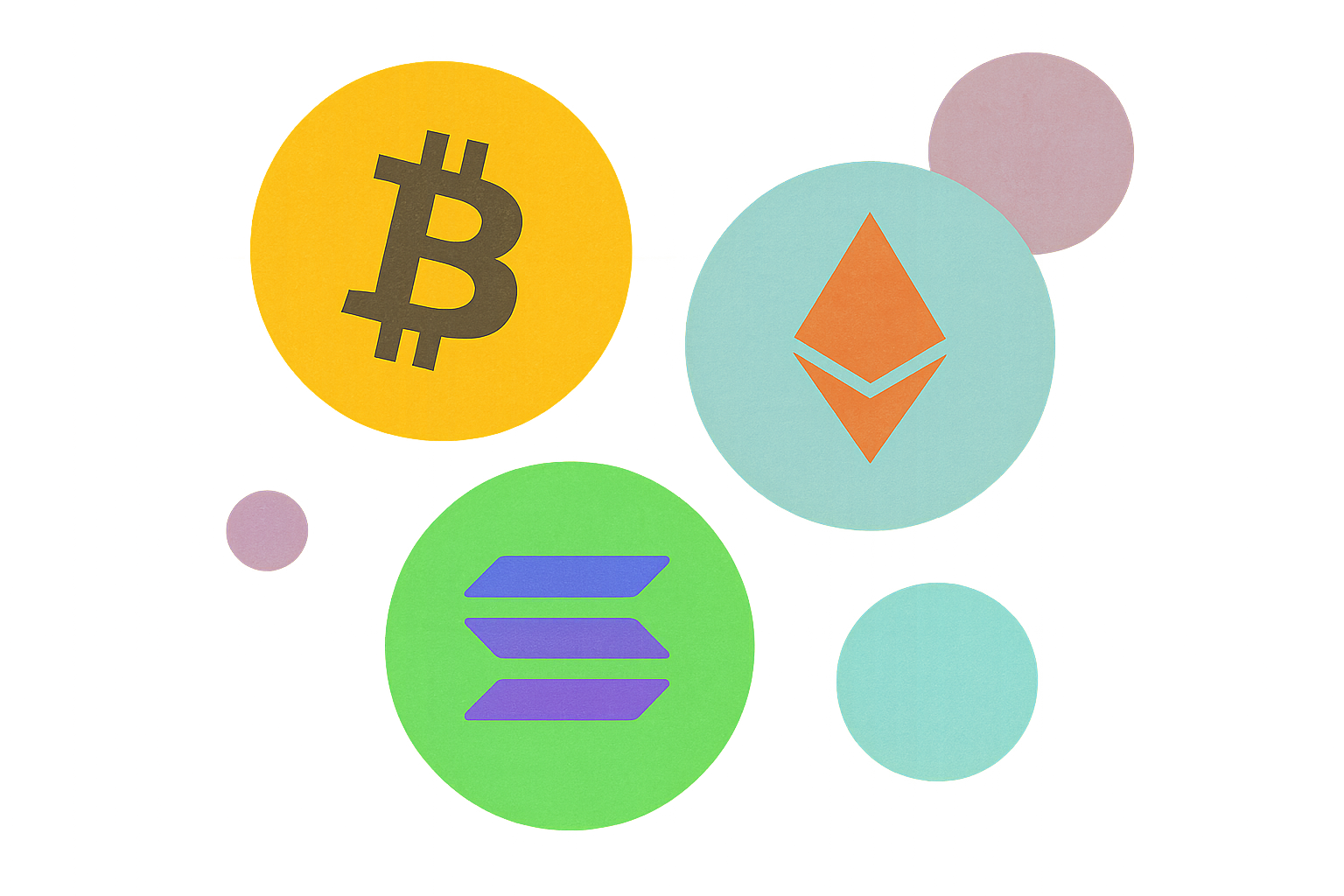
Explore the leading cryptocurrencies to watch in 2025, including Bitcoin, Ethereum, Solana, Cardano, XRP, and others. Stay ahead by analyzing blockchain trends, diversifying your crypto portfolio on Gate, and securing your digital wealth with our expert investment guides.
Why Invest in Cryptocurrencies?
Cryptocurrencies have moved beyond being speculative assets for a niche market. They are steadily integrating into mainstream finance. Governments, particularly in the United States, are introducing clearer regulatory frameworks, which is strengthening investor confidence. Simultaneously, advancements in blockchain technology are enabling faster and more efficient networks. Financial institutions and sovereign wealth funds are expanding their digital asset portfolios, highlighting the sector’s increasing adoption.
Bitcoin (BTC) – Digital Gold
Bitcoin remains the most recognized and trusted cryptocurrency, often referred to as digital gold. In recent years, several governments have considered establishing strategic Bitcoin reserves, further elevating its status as a global asset. Institutional investors and sovereign wealth funds continue to increase their Bitcoin holdings, supporting its long-term value.
Analysts see significant growth potential for Bitcoin in the coming years, driven by rising demand and a capped supply due to its halving mechanism.
Ethereum (ETH) – Powering Decentralized Applications
Ethereum transformed the crypto landscape with smart contract functionality, enabling decentralized finance (DeFi), NFTs, and AI-driven applications. Since the transition to Ethereum 2.0, transaction speeds have improved and energy costs have dropped, making the platform more scalable and attractive to developers.
These technical upgrades position Ethereum as a leading platform for blockchain innovation, with strong growth prospects fueled by institutional adoption and a rapidly expanding DeFi market.
Solana (SOL) – The High-Speed Contender
Solana is emerging as one of the fastest and most cost-effective blockchains. Its vibrant NFT ecosystem and strategic partnerships with major corporations position it as a serious rival to Ethereum. Ongoing discussions about traditional financial products tied to Solana could further attract institutional investors.
Solana’s high adoption rate and continuous network enhancements make it a compelling choice for investors seeking scalable alternatives.
Cardano (ADA) – A Smart Investment for the Future
Cardano’s research-driven methodology ensures long-term sustainability. The platform has successfully implemented smart contracts and is expanding into practical applications, especially in emerging markets like Africa. For investors seeking strong fundamentals and sustainable growth, Cardano stands out as a strategic choice.
The project continues to evolve, forming new partnerships and real-world use cases that strengthen its value proposition.
XRP (XRP) – The Future of Cross-Border Payments
XRP’s ability to enable instant, low-cost international transfers has made it a preferred choice for banks and financial institutions. Over time, XRP has solidified its standing in traditional finance through its technical strengths and key partnerships.
The ongoing clarification of XRP’s regulatory status is boosting investor confidence and unlocking new opportunities for widespread adoption.
Polygon (MATIC) – Scaling Ethereum for Mass Adoption
Polygon addresses Ethereum’s scalability limitations by delivering faster and cheaper transactions. With partnerships involving major tech and gaming companies, MATIC is well-positioned for sustained success.
The continued growth of the Polygon ecosystem, driven by new projects and integrations, cements its role as vital blockchain infrastructure.
Chainlink (LINK) – The Oracle Bridging Blockchain and the Real World
Chainlink provides essential infrastructure for decentralized applications, enabling smart contracts to access real-world data. As AI-driven applications proliferate, Chainlink’s importance in blockchain infrastructure continues to grow.
Rising demand for reliable, decentralized oracle solutions positions Chainlink as a foundational component of the evolving blockchain ecosystem.
Polkadot (DOT) – The Future of Blockchain Interoperability
Polkadot enables seamless communication between different blockchains, which is crucial for the advancement of Web3. As more developers build on its network, the value of DOT is poised to rise significantly.
Cross-chain interoperability is becoming a strategic pillar of blockchain development, placing Polkadot at the forefront of this movement.
Avalanche (AVAX) – The Fast and Scalable Ethereum Challenger
Avalanche’s extremely fast transaction speeds and low fees make it an appealing platform for both developers and enterprises. Institutional interest in AVAX is on the rise, establishing it as a strong investment for the future.
The platform’s innovative consensus mechanism and advanced architecture reinforce its position as a credible alternative to leading blockchains.
Stablecoins (USDT, USDC) – The Backbone of Digital Finance
Stablecoins such as USDT and USDC provide liquidity and stability in the highly volatile crypto market. Their growing use in payments, remittances, and DeFi makes them essential components of any crypto portfolio.
The stablecoin market continues to expand, underscoring their central role in digital finance infrastructure and their importance for decentralized transactions and applications.
Conclusion: Is Now the Right Time to Invest?
Yes. The cryptocurrency market is at a turning point, with mainstream adoption, regulatory progress, and technological breakthroughs fueling growth. Whether you’re a seasoned investor or just starting out, diversifying your portfolio with high-potential cryptocurrencies could deliver substantial returns.
Long-term investors should focus on assets like Bitcoin, Ethereum, and Solana for sustainable growth. Those with a higher risk tolerance may consider altcoins such as Cardano, Chainlink, and Polkadot for potentially greater returns. Stablecoins offer a secure way to hold crypto without exposure to volatility.
The future of finance is digital. Are you ready to be part of it?
FAQ
Which cryptocurrencies should you watch in 2025?
Bitcoin, Solana, Cardano, and XRP lead the market in 2025. Bitcoin remains the benchmark, Solana advances with DeFi innovation, Cardano continues its technology upgrades, and XRP strengthens its regulatory standing. These digital assets offer robust fundamentals and strong growth potential.
Bitcoin and Ethereum: What are their prospects for 2025?
Bitcoin remains the dominant digital safe haven, while Ethereum is showing stronger momentum due to its expanding application ecosystem. In 2025, Ethereum is expected to outperform Bitcoin, driven by smart contract and decentralized application adoption. Bitcoin consolidates its store-of-value status, while Ethereum becomes the core infrastructure for Web3.
Emerging Cryptocurrencies vs. Major Coins: Pros and Cons
Emerging cryptocurrencies offer decentralization, lower costs, and faster transactions. However, they also come with higher risks, limited regulation, and greater volatility compared to established coins.
What trends and challenges will the cryptocurrency market face in 2025?
In 2025, the crypto market will see more institutional adoption, tighter regulation, competing stablecoins, and Bitcoin’s emergence as an inflation hedge. Volatility is expected to decrease gradually as ETFs are introduced.
Open an account with a trusted platform, set a personal budget, and invest gradually in small increments. Safeguard your private key, enable two-factor authentication, and track market trends regularly to make informed decisions.
How will cryptocurrency regulation impact the market in 2025?
Stricter regulation in 2025 has increased compliance and attracted institutional investors, but also caused short-term volatility. Over the long run, regulatory clarity fosters market stability and strengthens investor trust.
* The information is not intended to be and does not constitute financial advice or any other recommendation of any sort offered or endorsed by Gate.