Solana (SOL) is far from obsolete. In this article, we thoroughly examine its future prospects, previous hurdles, and core technical advantages. Solana has rebounded following the FTX collapse and security breaches, fueled by major corporate adoption and DEX trading volumes exceeding those on Ethereum. The Firedancer upgrade is slated for 2025, with potential ETF approval on the horizon and investor interest at 49.3%. This report delivers must-have insights for Web3 investors, offering up-to-date information to inform investment strategies on Gate and other trading platforms.
What Is Solana (SOL)?
Solana is a layer-1 blockchain platform founded by Anatoly Yakovenko in 2017, built to provide fast, low-cost transaction processing. Its standout feature is a proprietary Proof of History (PoH) mechanism.
PoH is an innovative system that timestamps blockchain events, significantly improving the scalability issues found in traditional consensus algorithms. This technology enables Solana to theoretically process tens of thousands of transactions per second, delivering performance that surpasses many other blockchain platforms.
Solana also integrates the Tower Byzantine Fault Tolerance (BFT) protocol, which works alongside PoH to sharply reduce communication overhead among network nodes. This combination enables rapid consensus and high-level security. These technical advantages have made Solana a focal point for developers and projects in decentralized finance (DeFi) and NFT (non-fungible token) sectors.
Why Was Solana Once Considered "Dead"?
Technical Issues and Recurring Network Outages
Solana gained a reputation for being "dead" largely due to repeated network outages over the past few years. The first major incident occurred in September 2021, when a surge in transaction volume overloaded the system, causing a 17-hour network shutdown.
This problem recurred in 2022, 2023, and 2024, shaking the confidence of both users and investors. The main causes included code bugs and limitations in processing capacity under heavy load. In particular, Solana’s inability to handle rapid transaction spikes exposed significant weaknesses.
These technical issues led to criticism that, despite promising "high-speed processing," Solana lacked network stability—a perception that fueled the "dead" label. However, the development team has continued to implement improvements, and network stability has improved markedly in recent years.
Price Crash and Fallout from a Major Exchange Bankruptcy
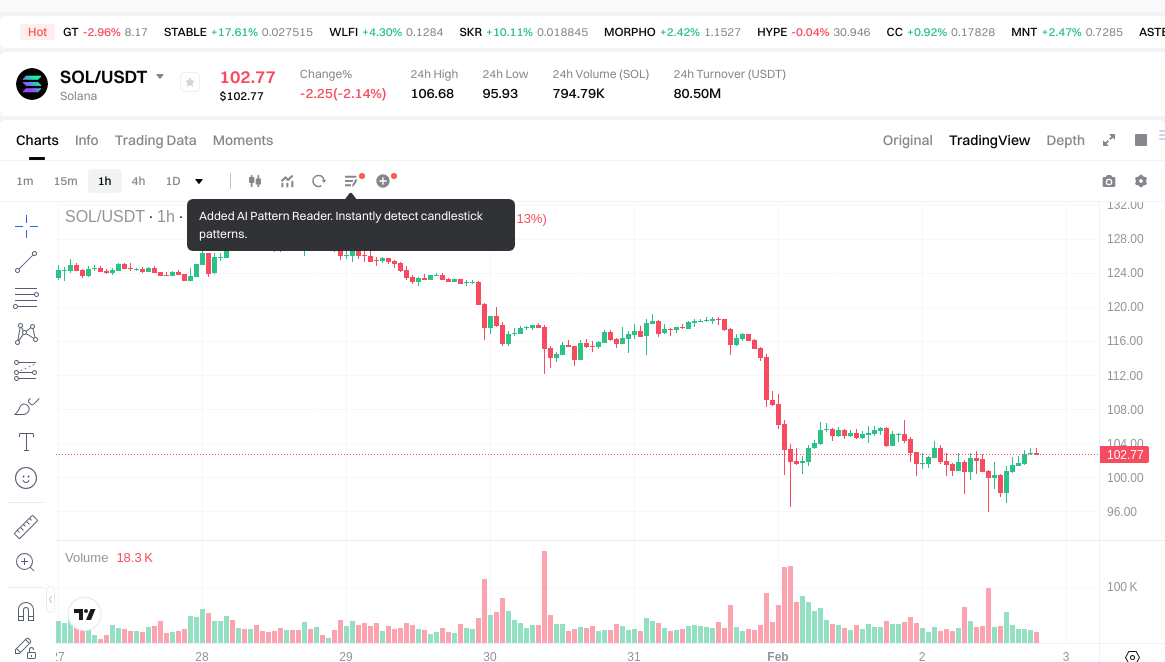
In November 2022, a major event rattled the crypto industry: a leading exchange filed for bankruptcy, triggering a sharp drop in Solana (SOL) prices. Within days, SOL plunged from roughly $36 to $14, inflicting heavy losses on investors.
This exchange was a key backer of the Solana ecosystem, so its collapse had a severe impact on the overall project. Many investors questioned Solana’s prospects and began withdrawing capital. The event also prompted several high-profile projects on Solana to migrate to other blockchains.
This series of developments greatly damaged Solana’s market reputation and reinforced its "dead" narrative. However, Solana has since worked to restore confidence, winning new partnerships and project launches.
Multiple Hacks and Security Concerns
The Solana ecosystem has weathered several major hacks in recent years. In August 2022, Solana-based wallets Slope and Phantom suffered breaches resulting in the theft of about 800 million yen in crypto assets. Attackers exploited private key management vulnerabilities, affecting many users.
In December that year, the decentralized exchange Raydium on Solana was also hacked, losing roughly 550 million yen in assets. In February 2022, the Wormhole bridge connecting Solana to other blockchains was breached, with losses reaching an industry record of approximately 34 billion yen.
These repeated incidents fueled serious concerns about Solana’s security and reliability, prompting users and investors to pull funds from the ecosystem.
In response, Solana’s core team and ecosystem projects have stepped up security, tightening audits and working with security experts to implement various improvements.
Is Solana Really "Dead"? Strengths and Future Prospects
Ecosystem and Technology Advancements
Despite past setbacks, Solana’s ecosystem has grown rapidly in recent years. By late October 2024, decentralized exchanges (DEXs) on Solana surpassed Ethereum in trading fees—a milestone demonstrating real-world demand for Solana’s low-cost, high-speed processing.
Solana also launched its own smartphone, Saga, integrating blockchain technology into daily life. The phone features a built-in crypto wallet, making access to Solana’s ecosystem easier for users.
A 2024 survey found Solana captured 49.3% of crypto investor interest, making it the most-watched blockchain ecosystem. This high level of attention highlights Solana’s central role in the industry.
On the tech front, Solana is developing the new validator client Firedancer, scheduled for release in 2025. This upgrade is expected to further boost throughput and significantly improve network stability, marking a pivotal step toward solving technical challenges and securing Solana’s place as a next-generation blockchain.
Bullish Market Sentiment and Price Predictions
Crypto market analysts and major investment firms remain bullish on Solana’s long-term outlook. In October 2023, asset manager VanEck projected in a report that SOL could reach $3,211.28 by 2030 under a strong growth scenario—assuming continued ecosystem expansion and innovation.
In October 2024, Standard Chartered Bank forecast that SOL could increase fivefold by the end of 2025. This optimism is based on Solana’s technical edge, ecosystem growth, and rising institutional interest.
These forecasts suggest Solana is positioned to play a central role in the crypto market, not fade away. However, given the crypto market’s volatility, these remain potential scenarios rather than certainties.
Adoption by Major Enterprises
Adoption by leading corporations and financial institutions serves as a key indicator of Solana’s reliability and future prospects. In September 2024, global asset manager Franklin Templeton announced plans to launch joint funds on Solana’s blockchain—a sign that traditional finance trusts and is actively leveraging Solana’s technology.
French banking giant Société Générale also announced support for Solana in its EURCV stablecoin, facilitating euro-backed digital currency on the Solana network and boosting Solana’s presence in Europe.
In August 2024, payments leader PayPal expanded its PYUSD stablecoin to the Solana blockchain, recognizing Solana’s speed and low costs as well-suited for large-scale payment infrastructure.
These enterprise partnerships show Solana is being recognized as practical blockchain infrastructure, not just a speculative crypto project.
Prospects for a Solana ETF in the US
A Solana ETF (exchange-traded fund) is a financial product based on SOL, allowing investors to gain exposure to Solana via stock exchanges. ETF approval would provide both institutional and retail investors a safer, regulated avenue to invest in Solana.
In the US, several asset managers have filed for Solana ETF approval. The SEC has taken a cautious stance, with the first decision deadline set for mid-March 2025. Approval could send Solana’s market value sharply higher.
Brazil approved a Solana ETF in August 2024, and trading began in South America. This precedent suggests other countries may follow, further increasing Solana’s global adoption and recognition.
ETF approval would be strong evidence that Solana is gaining mainstream financial acceptance—not fading into irrelevance.
Challenges Facing Solana
Concerns About Centralization
Solana’s high transaction performance comes at the cost of criticism for centralization. Becoming a validator requires high-performance hardware and fast internet—barriers that limit participation mainly to large, well-funded operators, rather than the average user.
Decentralization and democratization are foundational to blockchain, but platforms prioritizing performance, like Solana, tend to become more centralized due to technical requirements. This challenge could affect Solana’s long-term reliability and sustainability.
The development team recognizes this issue and is working to lower validator entry barriers and design incentives for broader participation. However, balancing high performance and decentralization remains a persistent challenge.
Competition with Other Blockchains
Solana is renowned for speed, but new competitors—often called "Solana killers"—like Aptos and Sui have emerged. Aptos claims throughput up to 160,000 transactions per second, exceeding Solana’s theoretical capacity, while Sui boasts 297,000 TPS, challenging Solana on scalability.
These upstarts have learned from Solana’s earlier issues, building more stable architectures and offering developer-friendly tools and flexible smart contracts to attract developer communities.
For Solana to stay ahead, continuous innovation and ecosystem strengthening are vital. Upgrades like Firedancer are crucial to further improving stability and performance.
Conclusion: Solana Is Not "Dead"
Solana has faced years of technical challenges, market turmoil due to a major exchange collapse, and recurring security issues. These difficulties led to it being called "dead" at times. However, today’s Solana shows that judgment was premature.
Solana’s unique Proof of History (PoH) technology and Tower BFT protocol enable high-speed, low-cost transactions—a technical edge that has driven strong support in DeFi and NFT spaces, with the ecosystem steadily expanding.
Recently, major firms like Franklin Templeton, Société Générale, and PayPal have adopted Solana, proving its real-world reliability and utility. The anticipated approval of a Solana ETF in 2025 could attract significant institutional capital and further boost Solana’s market value.
Key upgrades like Firedancer are underway, aimed at enhancing network stability and performance. Market analysts and financial institutions remain optimistic about Solana’s growth potential.
While challenges remain—such as centralization concerns and competition from platforms like Aptos and Sui—the development team is proactively addressing these issues. As a result, Solana is poised to play a leading role in the crypto market, rivaling Ethereum.
In summary, Solana is far from "dead." It is overcoming past setbacks and evolving into a more robust, mature blockchain platform—drawing increasing attention for what comes next.
FAQ
What Are the Main Reasons Solana (SOL) Was Considered "Dead"?
The main reason Solana was labeled "dead" was the price collapse following the FTX bankruptcy, which severely damaged investor confidence and impacted the broader market.
What Types of Network Outages or Technical Issues Has Solana Experienced?
Solana has experienced temporary outages from network congestion and validator overload—typical scaling challenges that have since been addressed. For details, refer to official announcements.
How Does Solana’s Ecosystem Compare to Other Blockchains?
Solana’s ecosystem is expanding rapidly, with a growing number of projects. Its daily active users have reached 5 million, exceeding Ethereum’s 3 million. Solana supports a wide range of DeFi, NFT, and gaming projects, establishing itself as a major player in the blockchain space.
What Security Incidents or Hacks Has Solana Experienced?
Solana has had few direct hacking incidents but has experienced seven outages in the past five years—five due to client bugs and two stemming from the network’s inability to handle transaction spam. Ongoing security enhancements continue to improve reliability.
How Does Solana Differ from Ethereum or Polygon?
Solana is an independent blockchain offering higher speed and lower fees than Ethereum, and greater throughput than Polygon. Ethereum is the largest layer-1 blockchain, while Polygon is a layer-2 solution for Ethereum. Solana uses its own high-performance consensus mechanism.
What Is Solana’s Outlook and Potential for Recovery?
With ongoing technological progress and ecosystem growth, Solana is expected to see a strong price recovery by 2026. Market confidence is rising, supporting robust recovery potential.
* The information is not intended to be and does not constitute financial advice or any other recommendation of any sort offered or endorsed by Gate.