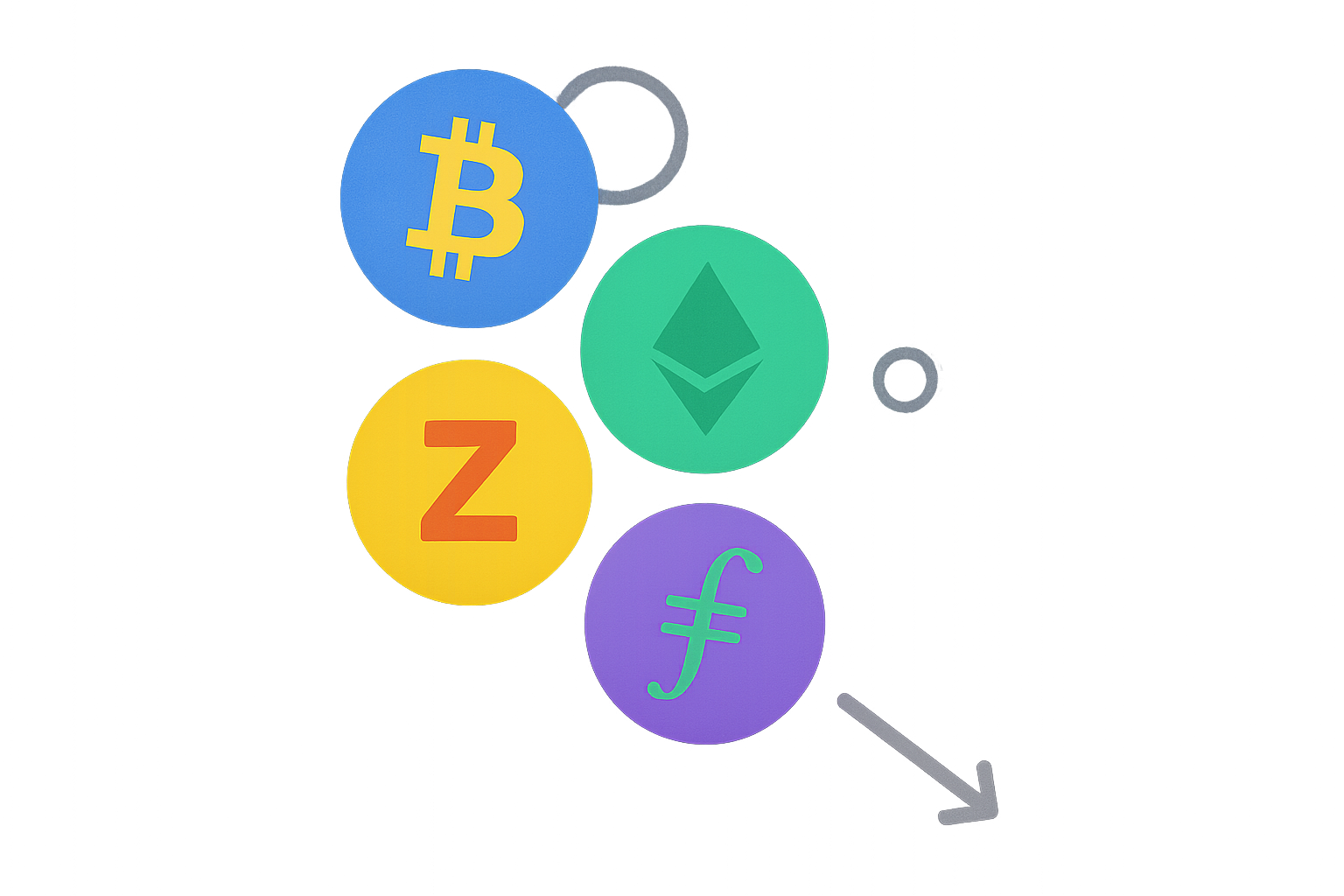
Explore the key factors driving today’s downturn in the cryptocurrency market: shrinking futures positions, ETF outflows, negative market sentiment, and increased corporate risk. Get real-time insights tailored for investors and traders.
Over recent months, the cryptocurrency futures market has contracted significantly, marking a key inflection point in the previously bullish sector trend. Open interest, which tracks the total value of active futures contracts, fell sharply from $225 billion in October to $144 billion in the following periods.
This approximate 36% drop in aggregate open interest signals a reduction in speculative activity and leverage across the market. Bitcoin, the sector’s leading cryptocurrency, was hit especially hard, with its open interest share declining from $96 billion to $64 billion—a decrease of about 33%.
Despite falling open interest, stable funding rates point to an important dynamic: low market liquidity. Stable funding rates indicate that neither long nor short positions face significant pressure, suggesting traders are growing more cautious and scaling back risk exposure in the derivatives market.
Drop in Bitcoin and Ethereum ETF Inflows
Cryptocurrency exchange-traded funds (ETFs), previously major catalysts for market growth, are experiencing a major shift in capital flows. Both Bitcoin and Ethereum ETFs have seen a substantial decline in new investments, reflecting shifting sentiment among institutional investors.
Ethereum ETFs faced particularly strong headwinds, posting net outflows of $107 million in a recent period. This negative ETF flow trend suggests institutional players are taking a more conservative stance, likely responding to market uncertainty or portfolio rebalancing needs.
This drop in ETF inflows is especially significant since these investment vehicles have enabled broader institutional access to the cryptocurrency market. ETFs provide traditional investors with a regulated, accessible pathway to digital assets—without the technical burdens of direct crypto custody.
Market Sentiment and Broad-Based Profit Taking
Sentiment across the crypto market has worsened sharply, as shown by the Crypto Fear and Greed Index, which recently dropped to 30. On its 0–100 scale, this places the market firmly in “fear” territory, signaling heightened investor concerns about future market direction.
This shift has sparked widespread profit taking throughout the crypto ecosystem. Investors who built positions during the previous bull run are now selling off holdings to lock in gains, leading to further downward price pressure.
Several tokens have been particularly vulnerable in this market environment. Zcash, renowned for transaction privacy; Filecoin, a provider of decentralized storage; and Internet Computer Protocol (ICP), focused on decentralized computing, have all experienced sharp valuation declines. More volatile than Bitcoin and Ethereum, these assets tend to amplify broader market moves in both uptrends and downturns.
Impact on Corporate Digital Asset Treasury Firms
Corporations that hold cryptocurrencies as part of their treasury strategies are facing considerable challenges in today’s market. These firms, known for innovative capital allocation into digital assets, now confront the realities of heightened market volatility.
One standout example is Michael Saylor’s company, a pioneer in corporate Bitcoin adoption. Shares of these digital asset treasury firms have undergone deep corrections, dropping about 50% from their annual highs. This reflects not only the fall in underlying crypto asset values but also investor concerns about these companies’ concentrated exposure to the digital asset market.
Fluctuating valuations highlight the risks inherent in holding significant cryptocurrency reserves on the corporate balance sheet. While such strategies can yield strong returns in bull markets, they also make companies vulnerable to sharp corrections when sentiment sours. This underscores the critical importance of risk management and diversification—even for firms with long-term confidence in digital assets.
FAQ
Why has the cryptocurrency bull run paused?
The bull run stalled due to heavy selling by long-term holders, rising market volatility, and declining futures activity. Weak institutional confidence and tighter regulations have also weighed on crypto market sentiment.
How does the drop in futures affect the crypto market?
Futures declines lead to immediate price swings and erode investor confidence. Over time, though, they help stabilize the market by removing excess speculative positions and rebalancing crypto market supply and demand.
What are cryptocurrency ETFs, and how do inflows impact asset prices?
Cryptocurrency ETFs give investors market exposure without direct coin storage. ETF inflows boost demand and drive underlying asset prices higher.
What are the key drivers of current crypto market volatility?
Market sentiment, regulatory changes, technological innovation, and macroeconomic shifts are the main factors. These forces create sharp price movements and directly shape crypto investment strategies.
Is now a good time to invest in crypto, or should you wait?
Yes, now is a strong entry point. Prices have dropped, so smart accumulation should begin. Historically, investing during downturns yields greater returns in the next bull cycle.
Bitcoin futures both anticipate and impact spot prices, with futures movements directly shaping real-time market pricing. Speculation in futures can accelerate spot market shifts, creating a tightly linked relationship between both markets.
* The information is not intended to be and does not constitute financial advice or any other recommendation of any sort offered or endorsed by Gate.