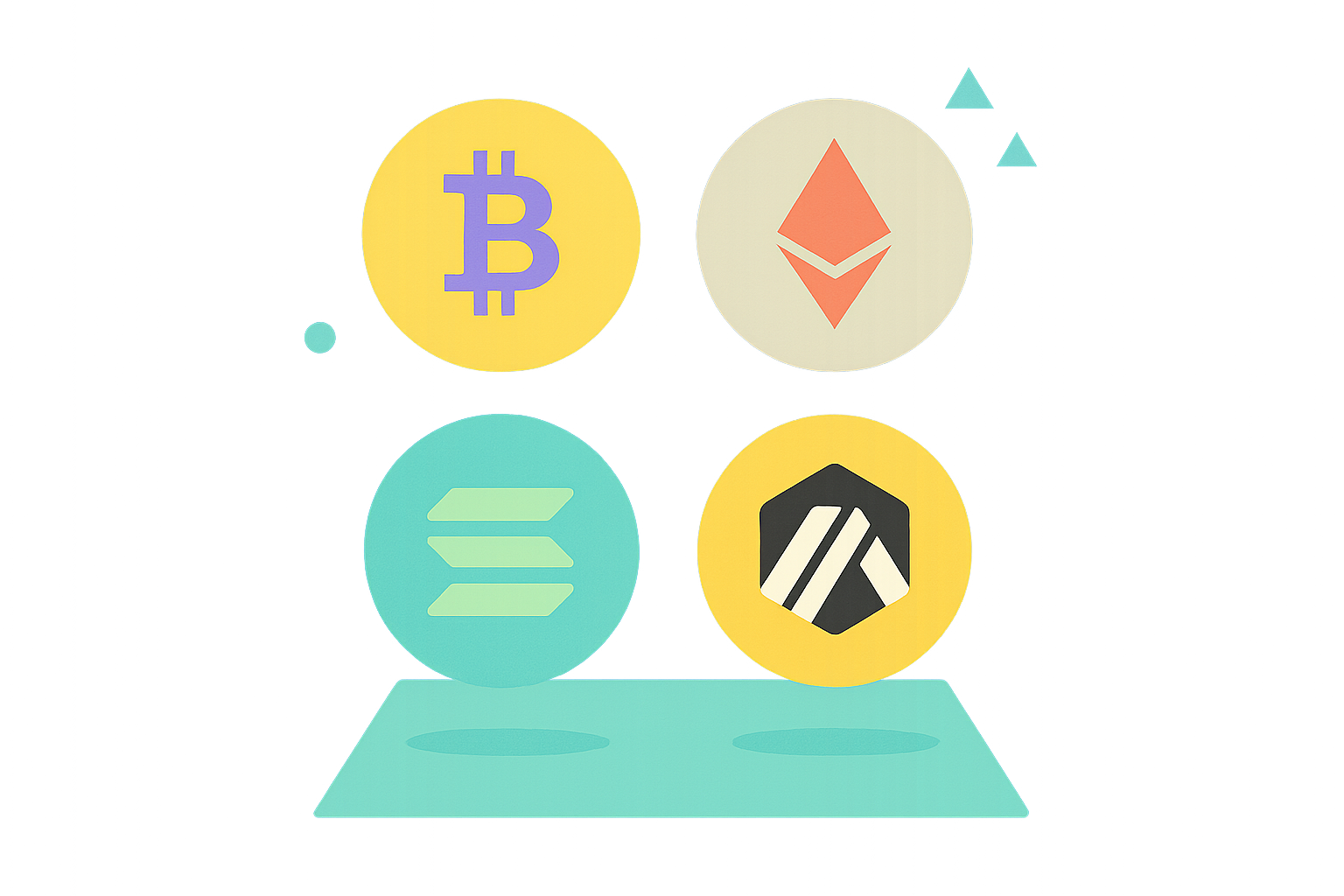
Explore the top 10 cryptocurrencies to consider for investment in January 2024. Review opportunities from industry leaders such as Bitcoin and Ethereum, along with promising new projects positioned for growth. This guide is essential for Gate investors and anyone interested in Web3.
Top 10 Cryptocurrencies to Buy in 2025
As the cryptocurrency market continues to evolve, it's crucial to assess the most promising investment opportunities. This article provides an in-depth analysis of the ten leading cryptocurrencies with significant potential, covering both established assets and emerging projects poised for substantial growth. If you're considering which crypto to buy now, this guide offers a comprehensive review of the options currently available.
Bitcoin (BTC)
Bitcoin is the original cryptocurrency, conceived in 2008 by Satoshi Nakamoto and launched in 2009. As a decentralized digital currency, Bitcoin introduced blockchain technology, creating a secure and fully transparent transaction system. Its Proof-of-Work mechanism preserves transaction history integrity, making it nearly impossible to alter or duplicate transactions.
Despite the rise of new cryptocurrencies and blockchain platforms, Bitcoin remains the market leader by capitalization. Miners validate transactions and create new blocks, earning BTC rewards that incentivize ongoing network security and growth.
Recent regulatory developments have further strengthened Bitcoin's market position. The SEC's approval of spot Bitcoin ETFs marked a major milestone for institutional recognition. BTC has followed a bullish trend through recent market cycles. This regulatory validation has increased institutional accessibility and unlocked new investment opportunities in the crypto ecosystem.
Ethereum (ETH)
Ethereum is a groundbreaking blockchain platform built to facilitate smart contracts. Developed by Vitalik Buterin, Ethereum was proposed in a 2013 white paper and launched in July 2015. The platform has cultivated a dynamic ecosystem, supporting complex decentralized applications.
The Ethereum ecosystem features decentralized lending protocols, NFT marketplaces, publishing platforms, decentralized exchanges, and a wide array of innovative financial services. ETH is the native token, rewarding users for securing the network and participating in governance.
Ethereum underwent a pivotal shift in September 2022, transitioning from Proof-of-Work to Proof-of-Stake and drastically improving energy efficiency. Subsequent upgrades have continued to enhance the network, building on the 2023 staking update, which enables users to withdraw staked ETH and improves platform functionality overall.
Arbitrum (ARB)
Arbitrum is a cutting-edge Layer 2 solution built on optimistic rollup technology for Ethereum. Its mission is to deliver faster, lower-cost transactions while leveraging Ethereum's robust security. Despite its recent launch, Arbitrum quickly emerged as a leading force in the DeFi ecosystem.
Arbitrum holds a top position among Ethereum Layer 2 solutions, capturing significant market share across industry metrics. Its Total Value Locked (TVL) has shown consistent growth, reflecting a thriving ecosystem and rising developer and user confidence.
Recent innovations have accelerated Arbitrum adoption. The platform now enables projects using custom Arbitrum Orbit chains to deploy custom gas tokens, with notable adoption from XAI, Caldera, AltLayer, and Conduit. The Arbitrum Foundation's grant program provides substantial funding for decentralized applications in gaming, DePIN, NFTs, and social networks. ARB has demonstrated strong market performance throughout its development.
Solana (SOL)
Solana is a smart contract platform distinguished by its unique architecture, allowing thousands of transactions per second at exceptionally low costs. This high throughput is powered by the innovative Proof-of-History algorithm, paired with Proof-of-Stake consensus.
SOL, Solana's native token, is known for its cost efficiency, enabling transactions at minimal fees and positioning Solana as one of the industry's most affordable transfer platforms. Despite facing prior market challenges, Solana maintains one of the most vibrant, diverse ecosystems in crypto.
Recently, Solana has posted exceptional performance, securing top spots by market capitalization. Robust trading activity on Solana's decentralized exchanges has driven significant transaction volumes, often surpassing competitors, even with SOL's comparatively lower market cap. SOL ranks prominently among major cryptocurrencies, and leading hardware wallet manufacturers have added support for SOL and SPL-standard tokens, ensuring secure custody options.
Ripple (XRP)
Ripple (XRP) enables fast, low-cost transfers, making it an ideal choice for international remittances. Rather than relying on Proof-of-Work or Proof-of-Stake, XRP employs the XRP Ledger Consensus Protocol, allowing network participants to select trusted validators.
Ripple has tightly integrated XRP into its products, most notably through On-Demand Liquidity (ODL), which partners with crypto exchanges to leverage XRP for efficient cross-border payments, dramatically reducing costs and processing times.
XRP has seen strong price growth in recent cycles, reflecting positive developments around Ripple. Key regulatory milestones have marked significant progress in Ripple's regulatory journey. Recently, Ripple has partnered with financial institutions to support central bank digital currency (CBDC) initiatives. XRP has also earned recognition from global regulators, confirming its legitimacy across multiple jurisdictions.
BNB
BNB, launched by a leading crypto exchange in 2017, serves multiple roles. Token holders receive exclusive benefits including reduced trading fees, launch program access, rebates on linked card transactions, and other ecosystem perks.
BNB is also the native token of BNB Chain, a blockchain platform offering substantially lower transaction fees. Developers can seamlessly deploy EVM-compatible decentralized applications, enabling smooth migration from other networks.
BNB has attracted strong institutional demand, especially due to unique eligibility for special participation programs. Launch initiatives have significantly boosted BNB demand. Today, BNB delivers consistent performance in recent market cycles. Through participation programs, users can stake BNB to earn tokens from upcoming blockchain projects, with the flexibility to withdraw at any time while receiving additional incentives, all with relatively low risk.
Cosmos (ATOM)
Cosmos is a network built for seamless interoperability across diverse blockchains. The cornerstone is Cosmos Hub, operating as a Proof-of-Stake blockchain. This strategic setup enables connections within Cosmos and to external chains like Bitcoin and Ethereum.
Inter-blockchain communication within Cosmos is powered by the Inter-Blockchain Communication (IBC) Protocol. ATOM is the native asset, allowing users to stake tokens to secure the network and earn rewards plus a share of transaction fees.
The Cosmos community has backed key proposals to optimize ecosystem tokenomics, aiming to improve economic efficiency and balance incentives for validators and participants. These upgrades will continue refining reward parameters and inflation dynamics. Supporting research indicates these changes may positively impact DeFi protocols and money markets throughout the Cosmos ecosystem.
Litecoin (LTC)
Litecoin is a well-established cryptocurrency, launched in October 2011 as one of the market’s earliest alternatives. Building on existing code, Litecoin introduced unique features that set it apart. With a maximum supply of 84 million coins—four times Bitcoin’s cap—Litecoin was designed as a scalable complement.
Litecoin has a targeted block time of 2.5 minutes, making it four times faster than Bitcoin. While both use Proof-of-Work consensus, Litecoin utilizes the scrypt hash function, in contrast to Bitcoin’s SHA-256, offering distinct performance benefits.
Recently, Litecoin has shown solid performance, with traders holding strategic positions ahead of new developments. LTC has seen notable growth since previous market cycles, maintaining a strong market cap position. This growth is supported by rising institutional investor interest in crypto. Leading firms have filed for crypto-backed investment products, signaling digital assets’ growing role in long-term strategies. LTC’s visibility has increased with listings on regulated trading platforms.
Shiba Inu (SHIB)
Shiba Inu is a utility token introduced in 2020, branded after the Shiba Inu dog breed. Unlike other cryptocurrencies, SHIB is an ERC-20 token on Ethereum, granting access to the Ethereum decentralized ecosystem.
SHIB experienced a major popularity surge in previous cycles, earning top ranks by market capitalization. It remains a leading token option with accessible pricing, attracting retail investors for its affordability.
The Shiba Inu team is actively advancing its digital infrastructure in the Web3 ecosystem. Through collaboration with Web3 domain projects, the team is focused on new integration initiatives, marking key progress for Web3 adoption. At the same time, SHIB’s burn mechanism continues to improve, a development expected to drive positive price momentum and enhance long-term supply dynamics.
Uniswap (UNI)
Uniswap is a decentralized exchange that pioneered the Automated Market Maker (AMM) model, fundamentally transforming traditional trading. By removing conventional order books, Uniswap enables fully decentralized token swaps directly on-chain, without centralized intermediaries.
UNI token holders control Uniswap’s governance, proposing and voting on protocol matters. UNI tokens were distributed via a 2020 airdrop to previous users and can now be purchased on major decentralized and centralized exchanges.
Uniswap has achieved major trading volume milestones, showcasing its robust processing capabilities. User activity surged during periods of heightened market dynamics, demonstrating the protocol's resilience and ability to efficiently handle large volumes, even in turbulent markets. Uniswap stands as a pivotal component of crypto market infrastructure.
Conclusion
As we move into 2025, the cryptocurrency market offers a dynamic and diverse landscape, presenting investors with numerous promising opportunities. If you're considering which crypto to buy now, established leaders such as Bitcoin (BTC) and Ethereum (ETH) have proven their resilience and long-term value, while emerging players like Arbitrum (ARB) and Solana (SOL) deliver significant technological innovation. Every cryptocurrency covered in this article brings unique strengths and growth potential.
It's critical to recognize that the crypto market is highly volatile, subject to major fluctuations driven by regulatory, technological, and market factors. Navigating this complex environment requires thorough research, constant monitoring of market developments, and careful alignment of decisions with individual risk tolerance and investment goals. The market's inherent volatility underscores the importance of a cautious, well-informed approach to exploring current and future investment opportunities.
FAQ
Which cryptocurrencies are the most profitable today?
Currently, Bitcoin, Ethereum, XRP, BNB, and Solana are the most profitable cryptocurrencies, leading in market capitalization and transaction volume. Prices fluctuate according to market conditions.
Which cryptocurrency is expected to rise the most?
Bitcoin Hyper (HYPER) is projected to rise the most in 2025. As the first Bitcoin Layer 2 blockchain, it offers applications, payments, DeFi, and memecoins with strong growth potential.
Which cryptocurrency has the most promising future?
Bitcoin and Ethereum have the best long-term prospects. Their leadership, widespread adoption, and innovative technology make them top investments in the crypto ecosystem for the coming years.
Which crypto is the most profitable?
Bitcoin Hyper ($HYPER) leads as the most profitable cryptocurrency in 2025, followed by Maxi Doge (MAXI). Both have strong profitability and growth potential in the current market.
What are the risks of investing in cryptocurrencies?
The primary risks include extreme price volatility, lack of regulation, security concerns, and fraud. Investors also face liquidity risks with certain assets and the possibility of total capital loss.
How should you choose which cryptocurrency to buy?
Evaluate the cryptocurrency's use case, technology, and adoption. Review its price history, market capitalization, and developer team strength. Consider transaction volume and overall availability.
What is the difference between Bitcoin, Ethereum, and other altcoins?
Bitcoin is a decentralized digital currency, while Ethereum is a platform for building decentralized applications. Bitcoin focuses on value transfers; Ethereum enables smart contracts and dApps. Altcoins differ in technology, speed, and specialized use cases.
* The information is not intended to be and does not constitute financial advice or any other recommendation of any sort offered or endorsed by Gate.