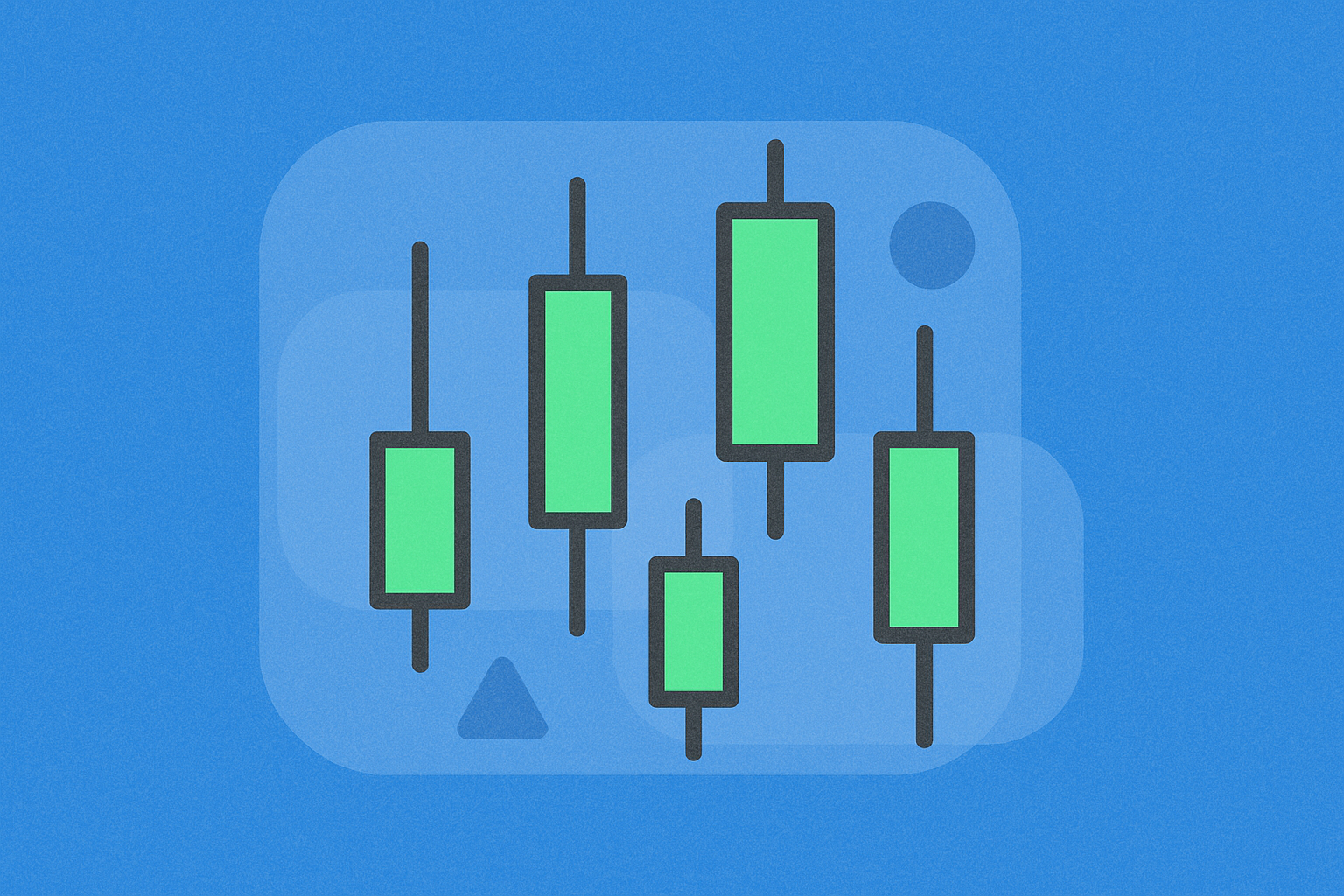
Master Japanese candlestick patterns for crypto trading. This essential guide covers 8 classic bullish and bearish formations, technical analysis, and practical strategies for both beginner and intermediate traders on Gate.
What Is a Japanese Candlestick?
A Japanese candlestick illustrates the price movement of an asset over a defined time interval, customizable by traders to fit their strategy (such as one minute, one hour, daily, or monthly). This visual method has become the industry standard because it conveys multiple data points in a single chart element.
Each Japanese candlestick displays four critical components essential for technical analysis:
- Open: The asset’s price at the start of the selected period. This serves as the reference point for price action during the interval.
- Close: The asset’s price at the end of the period. This figure is vital, capturing the outcome of buyer-seller dynamics.
- High: The peak price reached during the period. It reflects the highest level of buying strength or the point where sellers took control.
- Low: The lowest price recorded during the period, indicating maximum selling pressure or where buyers defended the price.
The body of the candlestick represents the difference between open and close prices, offering a quick visual cue of whether the session was bullish or bearish. Wicks (or shadows) extend above and below the body, marking the session’s highs and lows.
Japanese candlesticks are usually color-coded for clarity:
- Green (or white on traditional charts): Closing price exceeds opening price, signaling upward movement.
- Red (or black on traditional charts): Closing price is lower than opening price, indicating downward movement.
Why Use Japanese Candlestick Charts?
Japanese candlestick charts date back to the 18th century, developed by Japanese rice merchants to track market prices. Munehisa Homma, regarded as the father of candlestick charting, pioneered this technique to analyze price patterns and market sentiment, becoming one of his era’s most successful traders.
In modern crypto trading, candlestick charts are indispensable for several key reasons:
Superior Visualization: Unlike line charts that show only closing prices, Japanese candlesticks offer a full view of price action—open, close, high, and low—within a single visual unit.
Sentiment Analysis: The shape and color of each candle reveal important information about market sentiment and the struggle between buyers and sellers in that period.
Pattern Identification: Multi-candle formations help traders pinpoint possible reversals, continuations, and market indecision with greater accuracy.
Timeframe Adaptability: Traders can adjust candlestick timeframes to fit their approach, from one-minute scalping candles to monthly candles for long-term investing.
Japanese candlestick patterns evolve over time, revealing crucial insights into market trends, reversals, or indecision. Mastering their interpretation is fundamental for any crypto trader.
A single candlestick can reveal much about price action during its time frame. For instance, a long-bodied candle with short wicks suggests strong directional movement with little resistance. Conversely, a short body paired with long wicks signals indecision and volatility.
The real strength of candlestick analysis emerges when multiple candles form broader patterns. These multi-period patterns are used by experienced traders to anticipate future market direction with higher precision.
Accurate interpretation depends on:
- Trend Context: The same pattern may mean different things in an uptrend, downtrend, or sideways market.
- Trading Volume: Patterns accompanied by high volume carry more weight than those formed on low volume.
- Chart Location: Patterns at major support or resistance levels are more likely to trigger significant price moves.
8 Essential Candlestick Patterns for Crypto Trading
Bullish Patterns
Hammer
The hammer is among the most reliable bullish reversal patterns in technical analysis. It features a small body (green or red) at the top of the candle, a lower wick at least twice the body’s length, and little or no upper wick.
This pattern forms at the base of a downtrend, signaling that after a spate of selling, buyers stepped in forcefully, driving the price up from the lows and closing near the opening. The long lower wick marks rejection of lower prices, showing sellers lost control.
To confirm the pattern, traders look for:
- Bullish close in the following candle
- Rising trading volume
- Formation near major support levels
Inverted Hammer
The inverted hammer’s structure is opposite to the traditional hammer: a small body (green or red), a long upper wick, and little or no lower wick. It also appears at the bottom of a downtrend.
This pattern signals buyers attempted a rally, but sellers resisted, pushing the price back down. Still, the price did not drop significantly below the open, indicating selling pressure is weakening.
Though initially bearish in appearance, the inverted hammer is bullish when seen after an extended downtrend—especially if the next candle confirms with strong upward movement.
Bullish Engulfing
This powerful reversal pattern features two candles at the end of a downtrend. The first is a small red candle, followed by a larger green candle whose body fully engulfs the previous one.
A bullish engulfing marks a dramatic sentiment shift: buyers overtake sellers, overcoming previous selling pressure. The larger the second candle, the stronger the reversal signal.
Factors enhancing reliability:
- Second candle opens below the first candle’s close
- High volume in the engulfing candle
- Formation after a clear, extended downtrend
Morning Star
The morning star is a three-candle bullish reversal at a downtrend’s low. It starts with a long red candle, followed by a “star” with a short body (green or red) and long upper and lower wicks, ending with a long green candle closing above the midpoint of the first.
This sequence illustrates a gradual market shift:
- First candle: Sellers dominate
- Second candle (star): Market indecision, balance of buyers and sellers
- Third candle: Buyers seize decisive control
The morning star is a highly reliable bullish reversal, especially when:
- There’s a gap between the first and second candle
- The third candle closes well above the midpoint of the first
- Volume rises in the third candle
Piercing Line
The piercing line is a two-candle bullish reversal at the end of a downtrend. It comprises a long red candle, followed by a long green candle that opens below the red candle’s low but closes above the midpoint of the red body.
This pattern shows that after a bearish start (gap down), buyers reversed losses and closed well above the previous day’s midpoint. A higher closing position within the first candle strengthens the bullish signal.
Bearish Patterns
Hanging Man
The hanging man mirrors the hammer’s structure (small body at the top, long lower wick, minimal upper wick) but appears at the peak of an uptrend, changing its meaning.
Appearing after an uptrend, the hanging man suggests rising selling pressure. Sellers drove prices lower during the session, although buyers recovered some ground by the close. The long lower wick signals sellers probing lower levels and potential exhaustion of the uptrend.
Bearish confirmation criteria:
- Next candle closes below the hanging man’s body
- Greater reliability after a prolonged uptrend
- Rising volume in confirmation candles
Shooting Star
The shooting star is the bearish counterpart to the inverted hammer, showing up at the top of an uptrend. It features a small body (green or red), a long upper wick, and little or no lower wick.
This pattern indicates buyers initially pushed prices higher, reaching new highs, but sellers rejected the move and drove prices back down to close near the open. The long upper wick marks rejection of higher prices, showing sellers are gaining control.
The shooting star is most significant when:
- It appears after a strong uptrend
- The upper wick is at least double the body’s length
- The next candle confirms with a bearish move
- It forms at key resistance levels
Bearish Engulfing
This bearish reversal pattern features two candles at the peak of an uptrend: a small green candle, followed by a larger red candle whose body fully engulfs the first.
A bearish engulfing marks a sharp sentiment shift to pessimism: sellers take total control, erasing all prior gains. This pattern is especially strong when the second candle is much larger than the first.
Factors increasing pattern reliability:
- Second candle opens above the first candle’s close (gap up)
- High volume in the bearish engulfing candle
- Formation near key resistance
- Appearance after an extended uptrend
Combining Candlestick Patterns with Other Indicators
While Japanese candlestick patterns are powerful on their own, their effectiveness multiplies when combined with other technical indicators. This multi-indicator strategy helps filter out false signals and increases the odds of successful trades.
Relative Strength Index (RSI)
Pairing candlestick patterns with RSI provides added confirmation of overbought or oversold conditions. A hammer pattern at a downtrend’s base is more reliable if RSI is below 30, confirming the asset is undervalued and primed for reversal.
Moving Averages
Moving averages reveal overall market trends and dynamic support/resistance. Bullish patterns forming near key moving averages (like the 200-period MA) are more likely to trigger significant reversals.
Bollinger Bands
Bollinger Bands measure market volatility and can reinforce candlestick signals. For example, a bullish reversal pattern forming at the lower band suggests the asset is oversold and set to rebound.
Trading Volume
Volume is a critical confirmation indicator. Patterns formed on high volume are far more trustworthy than those on low volume. A significant volume increase during a reversal pattern confirms a genuine sentiment shift.
Fibonacci Levels
Fibonacci retracements and extensions offer objective reference points for profit-taking or stop-loss placement. Candlestick patterns near major Fibonacci levels (like 61.8% or 38.2%) carry extra weight.
Experienced traders usually seek at least two or three confirmations from different indicators before executing trades. This disciplined approach greatly reduces the risk of acting on false signals.
Conclusion
Japanese candlestick patterns are core tools for every cryptocurrency trader, providing deep insights into market sentiment and price evolution. Their ability to visualize buyer-seller dynamics in a straightforward yet informative format has set the industry standard.
Mastering these patterns can significantly strengthen your trading strategy, helping you pinpoint entry and exit opportunities with greater precision. Still, no pattern is foolproof. Trading success depends on:
- Consistent practice: Study historical charts and identify patterns in real time
- Risk management: Always set stop-losses and never risk more than you can afford to lose
- Multiple confirmations: Validate your analysis by combining candlestick patterns with other technical indicators
- Patience and discipline: Wait for high-probability setups instead of trading every pattern you see
- Continuous learning: The market evolves—stay current with new techniques and strategies
Candlestick patterns are most effective as part of a comprehensive trading strategy that integrates fundamental analysis, sound risk management, and emotional discipline. Over time, you will develop the ability to interpret these patterns within the broader market context, greatly improving your trading performance.
FAQ
What are Japanese candlesticks, and how do you interpret their basic components (wick, body, open, close)?
Japanese candlesticks display open, close, high, and low prices for a specific time period. The body marks the open and close; upper and lower wicks indicate highs and lows. Green or red colors show bullish or bearish price action.
What are the most common and reliable candlestick patterns for predicting cryptocurrency price moves?
The most reliable patterns are Doji, Engulfing, and Harami for reversals. Three White Soldiers and Flag patterns are key for trend continuation. When combined with transaction volume analysis, these patterns deliver robust predictive signals in crypto markets.
How do you identify bullish patterns like hammer, bullish engulfing, and three white soldiers?
The hammer features a short body and long lower wick. Bullish engulfing shows a close above the previous candle. Three white soldiers are three consecutive bullish candles with progressively higher closes, signaling bullish reversal.
How do you identify bearish patterns like evening star, bearish engulfing, and head and shoulders?
The evening star shows three candles with a bearish shift after an uptrend. Bearish engulfing is a large candle that completely covers the previous one. Head and shoulders displays three peaks, the middle one highest—indicating an impending bearish reversal.
What’s the difference between analyzing candlesticks in different timeframes (one minute, one hour, one day) for crypto trading?
Short timeframes (one minute) capture intraday volatility for scalping; medium timeframes (one hour) highlight short-term trends; long timeframes (one day) reveal major market direction. Choose based on your strategy and investment horizon.
* The information is not intended to be and does not constitute financial advice or any other recommendation of any sort offered or endorsed by Gate.