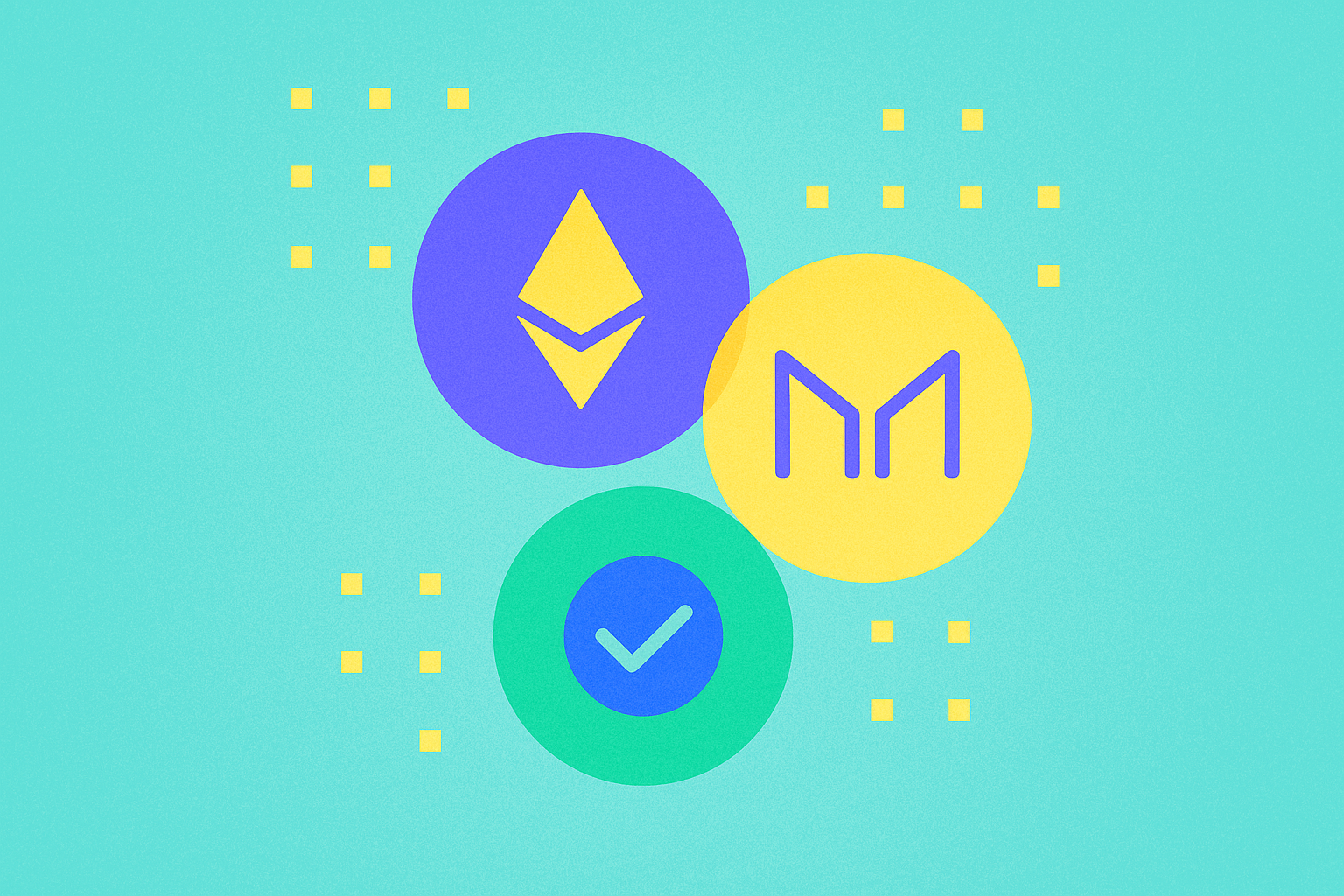
This comprehensive beginner's guide explores governance tokens, the fundamental tools enabling decentralized decision-making in blockchain projects. Governance tokens grant holders voting rights on critical protocol decisions, treasury allocation, and strategic direction across DEXs, DAOs, and blockchain games. The guide traces their evolution from Ethereum's pioneering role through landmark projects like The DAO and MakerDAO's MKR token, demonstrating how governance mechanisms drive community engagement and protocol success. Learn how on-chain and off-chain voting systems operate, understand the distinctions between governance tokens and utility tokens, and discover the advantages—including true decentralization and economic alignment—alongside challenges like whale concentration and voter apathy. Explore innovative anti-whale mechanisms and emerging legal frameworks reshaping DAO governance, plus practical insights on acquiring governance tokens through trading on Gate and maximizing your participation in d
Understanding Governance Tokens
Alongside the development of cryptocurrency decentralization, governance tokens have emerged as a cornerstone commodity in the blockchain industry. Decentralized projects such as blockchain games, decentralized exchanges (DEXs), and decentralized autonomous organizations (DAOs) are among the primary platforms adopting governance tokens. These tokens grant holders voting rights on critical decisions or proposals that can shape the future trajectory of these projects.
Unlike centralized corporations where decision-making power rests with a select few executives, decentralized projects typically align their objectives with user preferences by issuing governance tokens. By owning these tokens, users can vote on existing proposals or submit new ones, effectively becoming stakeholders in the project's governance structure. This democratization of decision-making represents a fundamental shift in how digital organizations operate, empowering community members to directly influence protocol development, treasury allocation, and strategic direction.
Origins of Governance Tokens
The first cryptocurrency, Bitcoin, functioned solely as a utility token facilitating peer-to-peer transactions without governance features. However, the launch of Ethereum in 2014 marked the beginning of a decentralized era that would revolutionize blockchain governance. By holding Ethereum tokens, users became stakeholders who could submit Ethereum Improvement Proposals (EIPs), laying the groundwork for community-driven protocol development.
The DAO Experiment
The DAO represented the first major attempt to create a truly decentralized organizational structure. Built on Ethereum, The DAO launched through an Initial Coin Offering (ICO) on April 30, 2016, and was envisioned as a community-led venture capital fund. The project raised approximately $150 million, making it one of the largest crowdfunding efforts in history at that time.
Unfortunately, anonymous hackers exploited vulnerabilities in the original code, leading to one of the most significant events in blockchain history. The DAO hack resulted in the first fork of the Ethereum blockchain, a controversial decision made to mitigate the impact of the $150 million loss. The split was necessary to transfer tokens to a parallel chain, ultimately limiting the attackers' gains to approximately $8.5 million. This incident highlighted both the potential and the risks of decentralized governance, teaching valuable lessons about smart contract security and community decision-making processes.
MakerDAO Success Story
MakerDAO's MKR token, launched in 2017, stands as one of the most successful implementations of governance tokens. Global MKR holders can vote on critical issues surrounding the popular crypto-backed stablecoin DAI, including collateral types, stability fees, and risk parameters. The success of DAI directly correlates with the value appreciation of MKR, as more users engage with the protocol and participate in its governance.
This symbiotic relationship between the governed asset (DAI) and the governance token (MKR) creates aligned incentives for token holders to make decisions that benefit the entire ecosystem. Voting rights represent the most important utility of MKR tokens, demonstrating how governance mechanisms can drive protocol stability and growth while maintaining decentralization.
How Governance Tokens Work
Most projects carefully allocate and set parameters for governance tokens as their primary decision-making tool. At a fundamental level, owning governance tokens through purchase or distribution grants users an equivalent number of votes. Since project developers typically define and update on-chain voting parameters, they cannot manipulate decisions unilaterally, ensuring transparent and tamper-proof governance processes.
Similar to shareholders in corporations, governance token holders have stakes and vested interests in the protocol's success. They typically bear the risks of poor decisions that could harm the project's value or functionality. Consequently, most participants in decentralized projects carefully review proposals before submission, conducting due diligence to assess potential impacts on tokenomics, security, and long-term sustainability.
Voting on decentralized platforms occurs on-chain, with approval or rejection nodes available for participants during the voting process. Some projects require additional criteria for participants to exercise their voting rights, such as minimum holding periods or token lock-up requirements. Establishing such criteria prevents price manipulation and governance attacks by whales who might purchase tokens solely to gain decision-making positions. For example, the Optimism project requires users to hold a fixed amount of OP tokens throughout the previous voting period to participate in proposal voting, ensuring committed long-term stakeholders drive governance decisions.
Typical issues decided through voting depend on the project's nature and objectives. For instance, an on-chain stablecoin protocol like MakerDAO might vote on risk mitigation measures and stability enhancements, such as adjusting collateralization ratios or adding new collateral types. On the other hand, a decentralized exchange like Uniswap might focus on adjusting trading fees to increase liquidity provision or implementing new pool types. Another common issue projects vote on is capital allocation across different protocol categories to achieve sustainable growth, including development funding, marketing budgets, and community incentive programs.
Types of Governance
Governance can be implemented on-chain or off-chain, each with distinct characteristics and trade-offs. In off-chain governance, the core team typically translates most voting results into code and upgrades for all participants to review after completing the timeframe or process. Decentralized blockchains using off-chain proposals are usually operated by decentralized developer groups communicating through social channels and forums.
Ethereum exemplifies off-chain proposals, commonly labeled as EIPs (Ethereum Improvement Proposals). Although the Ethereum Foundation specifies that anyone can submit proposals, it requires users to have a fundamental understanding of the project's technical architecture and governance processes. This approach allows for more flexible discussion and iteration before implementation, though it may sacrifice some transparency compared to fully on-chain systems.
On-chain governance is more straightforward because translating user decisions into code is automatic and transparent. Decision parameters are hard-coded on-chain before voting begins, ensuring immutability and verifiability. After voting concludes, the majority decision is automatically executed on the network without requiring manual intervention. Developers of these projects typically test preset parameters on test networks before voting, minimizing risks of implementation errors or unintended consequences.
Differences Between Governance Tokens and Other Token Types
Governance tokens grant their owners voting rights, distinguishing them from pure utility or payment tokens. Holders of governance tokens are typically careful about project decisions and are often individuals with strong conviction in the project's long-term vision. While governance tokens are not entirely utility tokens, most decentralized protocols provide additional benefits to governance token owners beyond voting rights.
For example, Curve Protocol rewards users with CRV governance tokens for their activities and consistency on the platform, including liquidity provision and long-term staking. SUSHI, UNI, and other protocols also distribute staking rewards using similar commitment and consistency criteria, creating multiple incentive layers that align token holder interests with protocol health.
This multi-functional approach enhances token value proposition while maintaining the primary governance function, creating sustainable tokenomics that encourage both active participation and long-term holding.
Advantages of Governance Tokens
Governance tokens promote decentralization by enabling developers to build comprehensive on-chain versions of centralized corporations. These tokens also encourage diversity of perspectives, progress, and inclusivity in DeFi protocols, allowing global participation regardless of geographic location or institutional affiliation.
The issuance and distribution of governance rights has established some of the strongest communities DeFi has ever seen. For example, the number of UNI, CRV, and MKR token owners has increased significantly due to the governance features each platform provides. These communities often demonstrate remarkable resilience during market downturns and actively contribute to protocol development through proposal submission, voting participation, and community discussion.
Additionally, governance tokens create economic alignment between users and protocols, as token holders directly benefit from successful governance decisions that increase protocol adoption and value. This alignment incentivizes informed decision-making and long-term thinking, contrasting with traditional corporate structures where user interests may diverge from shareholder priorities.
Disadvantages of Governance Tokens
However, several issues remain associated with governance tokens. The largest among these is institutional whales—wealthy individuals or organizations that attempt to drive protocol decisions in their favor by purchasing large quantities of tokens. Allowing such influences to exist contradicts decentralization ideals, yet preventing this concentration of power remains extremely challenging without compromising token transferability and market efficiency.
Voter apathy represents another significant challenge, as many token holders fail to participate in governance due to complexity, time constraints, or lack of understanding. Low participation rates can enable small groups of active voters to disproportionately influence outcomes, potentially undermining the democratic principles governance tokens aim to establish.
The final issue stems from the nature of governance tokens themselves. Unlike company shares where boards of directors and CEOs can be identified and held accountable, some DAOs are managed by anonymous teams. It becomes very difficult to assign responsibility when such projects fail, creating potential legal and ethical complications. This anonymity, while protecting privacy and enabling global participation, can also shield bad actors from consequences and make dispute resolution challenging.
Future of Governance Tokens
As global attention increasingly shifts toward making the world a better place through decentralized coordination, large corporations will gradually evolve into DAOs. The next step will be creating viable legal frameworks for DAOs. In recent developments, only the state of Wyoming in the United States has regulations recognizing DAOs as limited liability companies, though other jurisdictions are beginning to explore similar frameworks.
The expansion of virtual reality into the physical world will also accelerate demand for governance tokens. These tokens could be used to manage entire cities and nations as the world embraces metaverse concepts and cities within metaverses. Many believe that cities seamlessly integrating the physical world with the virtual world represent the future of human organization. Governance tokens will make managing corporations and cities easier, encouraging political participation and paving the way for fair governance at unprecedented scales.
Future projects may discover better ways to address governance token challenges. For example, some recent DeFi projects have implemented anti-whale functions as part of their overall code architecture, preventing individual and institutional whales from accumulating tokens to the detriment of decentralization ideals. Such functions might include progressive voting power curves, where additional tokens provide diminishing voting influence, or delegation systems that distribute power more evenly.
To ensure accountability, most blockchain projects are also developing methods to prove their on-chain commitment and transparency. More accurate algorithmic metrics for proof of commitment are expected to launch soon, potentially including reputation systems, participation tracking, and transparent treasury management. These innovations will help governance tokens fulfill their promise of democratizing organizational decision-making while mitigating current limitations and vulnerabilities.
FAQ
What is a Governance Token (Governance Token)? What is its function?
Governance tokens grant holders voting rights to participate in protocol decisions, including parameter changes, fund allocation, and feature upgrades. Token holders collectively shape the project's development direction and strategic direction through democratic voting mechanisms.
What can governance token holders do? What rights do they have?
Governance token holders can vote on protocol decisions, propose changes, participate in treasury management, and influence platform development. They hold voting rights to shape the future direction of the project.
What is the difference between governance tokens and regular tokens?
Governance tokens grant holders voting rights on protocol decisions, treasury management, and feature updates. Regular tokens primarily serve as payment or utility assets without governance power or decision-making authority.
How to obtain or purchase governance tokens?
Governance tokens can be acquired through direct purchases on cryptocurrency markets, earned via staking or liquidity mining rewards, obtained through community participation and contributions, or received as airdrops from blockchain projects.
What role do governance tokens play in DeFi and DAO?
Governance tokens grant holders voting rights on protocol decisions, parameter changes, and fund allocation. They enable decentralized decision-making, allowing community members to shape the platform's future direction and development priorities.
What are the risks and considerations of holding governance tokens?
Key risks include governance participation dilution, smart contract vulnerabilities, token price volatility, regulatory uncertainty, and concentration risks from large token holders. Monitor proposal voting outcomes and community sentiment to make informed decisions.
How are voting rights calculated for governance tokens? Does one token equal one vote?
Voting rights typically depend on the governance model. In most protocols, one token equals one vote, but some use quadratic voting or weighted systems where voting power increases non-linearly with token holdings to prevent whale dominance and encourage broader participation.
* The information is not intended to be and does not constitute financial advice or any other recommendation of any sort offered or endorsed by Gate.