Badger DAO is a decentralized autonomous organization launched in 2020 to bridge Bitcoin into the DeFi ecosystem, enabling Bitcoin holders to earn yield while maintaining BTC exposure. As a pioneering Bitcoin-DeFi protocol, Badger DAO leverages Ethereum's blockchain infrastructure with smart contract automation and decentralized governance through BADGER token holders. The platform operates Sett vaults for yield aggregation and Digg as a Bitcoin-pegged synthetic asset, supported by 31,242 token holders in an active community. BADGER token demonstrates market dynamics with a circulating supply of 19.93 million tokens and trading available on Gate and other exchanges. Despite facing regulatory uncertainties and competitive pressures, Badger DAO continues expanding Bitcoin-DeFi integration with community-driven innovation. Investors and DeFi participants can engage through governance participation, yield strategies, and ecosystem development.
Badger DAO's Positioning and Significance
In 2020, the Badger DAO community launched Badger DAO (BADGER), aiming to address the challenge of bringing Bitcoin into decentralized finance (DeFi) ecosystems.
As a pioneering DAO focused on bridging Bitcoin to DeFi, Badger DAO plays a key role in the DeFi and Bitcoin-backed asset management sectors.
As of 2026, Badger DAO has established itself within the crypto ecosystem, with an active community and ongoing development efforts.
This article will provide an in-depth analysis of its technical architecture, market performance, and future potential.
Origin and Development History
Background of Creation
Badger DAO was created by the Badger DAO community in 2020, aiming to solve the limited utility of Bitcoin in decentralized finance and yield generation opportunities.
It emerged during the rapid expansion of DeFi protocols, with the goal of enabling Bitcoin holders to earn yield while maintaining exposure to BTC and transforming the current landscape.
The launch of Badger DAO brought new possibilities for Bitcoin holders and DeFi participants.
Major Milestones
- 2020: Platform launch, introducing Sett vaults for Bitcoin yield aggregation and governance token distribution.
- Ongoing development: Continuous ecosystem expansion with multiple vault strategies and Bitcoin-pegged asset innovations.
- Community governance: BADGER token holders actively participate in protocol decisions, parameter adjustments, and strategic direction.
With the support of the decentralized community and DAO governance structure, Badger DAO continues to optimize its technology, security, and real-world applications.
How Badger DAO Works?
Decentralized Governance
Badger DAO operates as a decentralized autonomous organization without central control by traditional institutions.
BADGER token holders collectively govern all decisions including marketing strategies, protocol parameters, token economics, and smart contract upgrades.
This decentralized governance model ensures community-driven development and enhances protocol resilience.
Blockchain Foundation
Badger DAO is built on the Ethereum blockchain (ERC-20 standard), utilizing a transparent and immutable digital ledger.
All governance proposals, token distributions, and vault operations are recorded on-chain.
The public nature of blockchain allows anyone to verify transactions and protocol activities, establishing trust without intermediaries.
The protocol leverages Ethereum's smart contract capabilities to automate yield strategies and reward distributions.
Consensus and Security
Badger DAO benefits from Ethereum's Proof of Stake (PoS) consensus mechanism for transaction validation and network security.
Validators secure the underlying Ethereum network through staking ETH, ensuring the integrity of all Badger DAO operations.
The protocol's smart contracts undergo security audits to protect user funds in vault strategies.
Secure Token Management
Badger DAO uses cryptographic key technology to protect user assets:
- Private keys (secret passwords) authorize transactions and vault deposits
- Public keys (account addresses) verify ownership and receive rewards
This mechanism ensures fund security while maintaining pseudonymous transactions on the Ethereum blockchain.
Users interact with Sett vaults and governance through Web3 wallets, maintaining full custody of their assets throughout the process.
Circulating Supply Overview
As of January 26, 2026, the circulating supply of BADGER stands at 19,930,669.91 tokens, with a total supply of 21,000,000 tokens. The maximum supply is capped at 21,000,000, representing a fixed supply model similar to Bitcoin's scarcity design.
New tokens enter circulation through reward mechanisms including staking incentives, liquidity mining programs in Badger Sett products, and developer mining rewards for contributors building Vault strategies. These distribution channels directly impact the token's supply-demand dynamics.
The circulating supply represents approximately 94.91% of the total supply, indicating a high circulation ratio with limited remaining tokens for future distribution.
Price Volatility
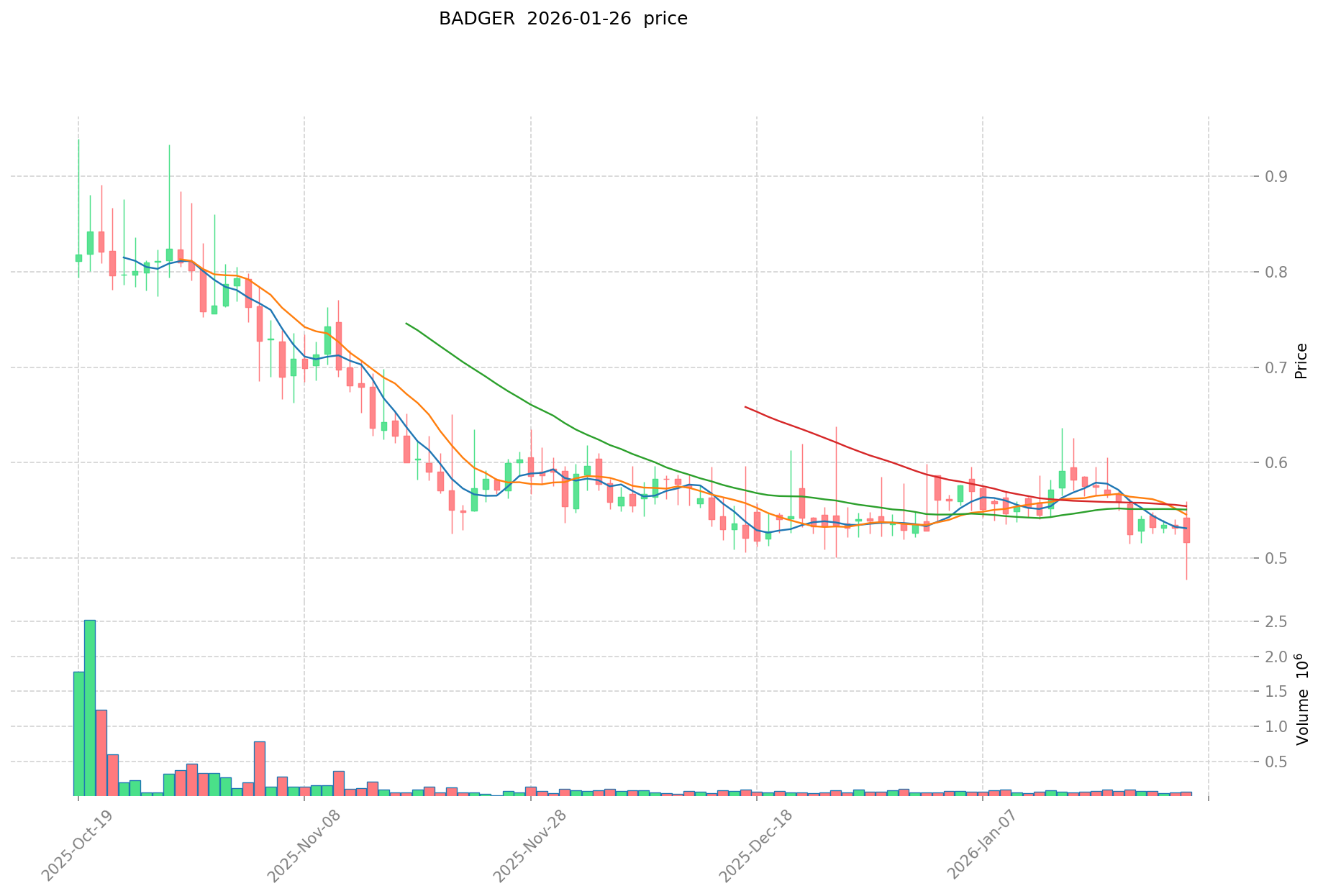
BADGER reached its peak price of $89.08 on February 9, 2021, driven by the broader DeFi market expansion and growing interest in Bitcoin-wrapped assets during the crypto bull market cycle. Institutional attention toward Bitcoin-related DeFi protocols and the launch of innovative yield aggregation products contributed to significant price appreciation during this period.
The token recorded its lowest price of $0.506985 on January 26, 2026, reflecting broader market corrections and shifts in DeFi sector sentiment. The substantial decline from peak levels demonstrates the impact of market cycles, regulatory developments, and evolving competitive dynamics in the DeFi ecosystem.
Recent price movements show:
- 1-hour change: +0.35%
- 24-hour change: -2.31%
- 7-day change: -6.98%
- 30-day change: -3.07%
- 1-year change: -86.79%
These fluctuations reflect ongoing market sentiment, adoption trends, and external factors affecting the broader cryptocurrency and DeFi sectors.
Click to view the current BADGER market price
On-Chain Metrics
- Token Holders: 31,242 addresses hold BADGER tokens, indicating the distribution and community participation level
- Market Capitalization: Approximately $10.30 million, representing 0.00034% of the total cryptocurrency market
- 24-Hour Trading Volume: $38,762.29, reflecting current market liquidity and trading activity
- Market Cap to FDV Ratio: 94.91%, suggesting limited dilution risk from future token unlocks
Badger DAO Ecosystem Applications and Partners
Core Use Cases
Badger DAO's ecosystem supports multiple applications:
- DeFi: Sett, a yield aggregator product, provides optimized yield strategies for Bitcoin-related assets.
- Stablecoin: Digg, an elastic supply token, drives innovation in Bitcoin-pegged synthetic assets.
Strategic Collaborations
Badger DAO operates within the Ethereum ecosystem, leveraging its smart contract capabilities to enhance technical functionality and expand market reach.
These partnerships provide a solid foundation for Badger DAO's ecosystem expansion.
Controversies and Challenges
Badger DAO faces the following challenges:
- Technical Issues: Managing elastic supply mechanisms and maintaining price stability for synthetic assets
- Regulatory Risks: Navigating evolving DeFi regulations and compliance requirements
- Competitive Pressure: Competition from other Bitcoin-DeFi bridging solutions and yield optimization platforms
These issues have sparked discussions within the community and market, while also driving continuous innovation for Badger DAO.
Badger DAO's community remains active, with 31,242 token holders participating in the ecosystem.
On X platform, related posts and hashtags (such as #BADGER) generate engagement within the DeFi community.
Product launches and governance proposals have energized community participation.
Sentiment on X shows diverse perspectives:
- Supporters praise Badger DAO's innovative approach to bringing Bitcoin into DeFi, viewing it as "a bridge between Bitcoin and decentralized finance".
- Critics focus on price volatility and market performance challenges.
Recent trends reflect varying sentiment depending on broader market conditions.
Hot Topics
X users discuss Badger DAO's governance model, yield strategies, and Bitcoin integration,
showcasing both its transformative potential and the obstacles to achieving mainstream adoption.
- Official Website: Visit Badger DAO official website for features, use cases, and latest updates.
- X Updates: On X platform, Badger DAO maintains an active presence using @badgerdao,
with posts covering governance proposals, technical updates, and community initiatives.
Badger DAO Future Roadmap
- Ongoing Development: Enhancing Sett vault strategies and Digg stability mechanisms
- Ecosystem Goals: Expanding Bitcoin-DeFi integration and yield optimization solutions
- Long-term Vision: Becoming a leading platform for Bitcoin utilization in decentralized finance
How to Participate in Badger DAO?
- Purchase Channels: Buy BADGER on Gate.com and other supporting exchanges
- Storage Solutions: Store securely using Ethereum-compatible wallets
- Participate in Governance: Engage in community decisions through DAO governance mechanisms
- Build the Ecosystem: Visit developer documentation on GitHub to develop applications or contribute code
Summary
Badger DAO redefines Bitcoin's role in DeFi through blockchain technology, providing decentralized governance, yield optimization, and Bitcoin integration.
Its engaged community, comprehensive resources, and innovative products distinguish it in the cryptocurrency space.
Despite facing regulatory uncertainties and market challenges, Badger DAO's innovative approach and clear development direction position it as a noteworthy project in decentralized finance.
Whether you are a newcomer or experienced participant, Badger DAO merits attention and engagement.
FAQ
What is Badger DAO and what is its main purpose in the crypto ecosystem?
Badger DAO is a decentralized autonomous organization focused on Bitcoin DeFi. Its main purpose is to build products and infrastructure that enable Bitcoin holders to participate in decentralized finance, including yield farming and liquidity provisioning across blockchain networks.
How does Badger token work and what are its key features?
Badger is a governance token powering the Badger DAO ecosystem, focused on Bitcoin DeFi solutions. Key features include decentralized governance, yield farming opportunities, and protocol treasury management. Badger holders can stake tokens to earn rewards and participate in community decisions.
Where can I buy and trade Badger (BADGER) tokens?
You can buy and trade BADGER tokens on major decentralized exchanges (DEXs) like Uniswap and SushiSwap, as well as through various DeFi protocols and liquidity pools that support the token.
What are the risks and security considerations when investing in Badger?
Badger faces smart contract risks, market volatility, and liquidity fluctuations. Users should verify wallet security, enable two-factor authentication, use hardware wallets for large holdings, and only invest amounts they can afford to lose. Always conduct thorough research before participating.
How does Badger compare to other DeFi projects and cryptocurrency tokens?
Badger specializes in Bitcoin-backed DeFi solutions, offering unique yield strategies for BTC holders. Unlike general DeFi tokens, Badger focuses on maximizing Bitcoin productivity through innovative vault products and governance, differentiating itself through Bitcoin-centric infrastructure and community-driven development in the DeFi ecosystem.
BADGER has a maximum supply of 21 million tokens. The tokenomics include ecosystem rewards, community incentives, and treasury allocations. Token distribution supports governance participation and platform sustainability across the Badger DAO ecosystem.
* The information is not intended to be and does not constitute financial advice or any other recommendation of any sort offered or endorsed by Gate.