Celo Dollar (CUSD) is a decentralized stablecoin launched by the Celo Foundation in 2020, designed to address financial inequality and cross-border payment inefficiency through mobile-first blockchain technology. Operating on the Celo blockchain with a Proof-of-Stake consensus mechanism, CUSD maintains stability through algorithmic mechanisms while enabling fast, low-cost transactions for payments, remittances, and DeFi applications. As of January 2026, CUSD commands a market capitalization of $35.55 million with over 6 million active holders. This comprehensive guide explores CUSD's technical architecture, market performance, ecosystem applications, and its role in democratizing access to stable digital assets for underbanked populations. Whether for trading on Gate or participating in the Celo ecosystem, CUSD represents a significant innovation in stablecoin technology and financial accessibility.
Celo Dollar's Positioning and Significance
In 2020, the Celo Foundation launched Celo Dollar (cUSD), aiming to address financial inequality, cross-border payment inefficiency, and barriers to accessing stable digital assets.
As a stablecoin pegged to the US Dollar within the Celo ecosystem, Celo Dollar plays a critical role in mobile-first payments, remittances, and decentralized finance (DeFi).
As of 2026, Celo Dollar has established itself as a stable value asset with a market capitalization of approximately $35.55 million, supported by over 6 million holders and an active developer community.
This article will provide an in-depth analysis of its technical architecture, market performance, and future potential.
Origin and Development History
Birth Background
Celo Dollar was created by the Celo Foundation in 2020, designed to solve financial exclusion, high remittance costs, and the lack of accessible stable digital currencies for mobile users.
It emerged during the rapid expansion of blockchain technology and growing demand for stablecoins, with the goal of enabling fast, affordable, and accessible value transfer through mobile devices.
The launch of Celo Dollar brought new possibilities for underbanked populations and mobile users seeking stable digital payment solutions.
Key Milestones
- 2020: Mainnet launch, achieving mobile-optimized stablecoin functionality with elastic supply mechanisms.
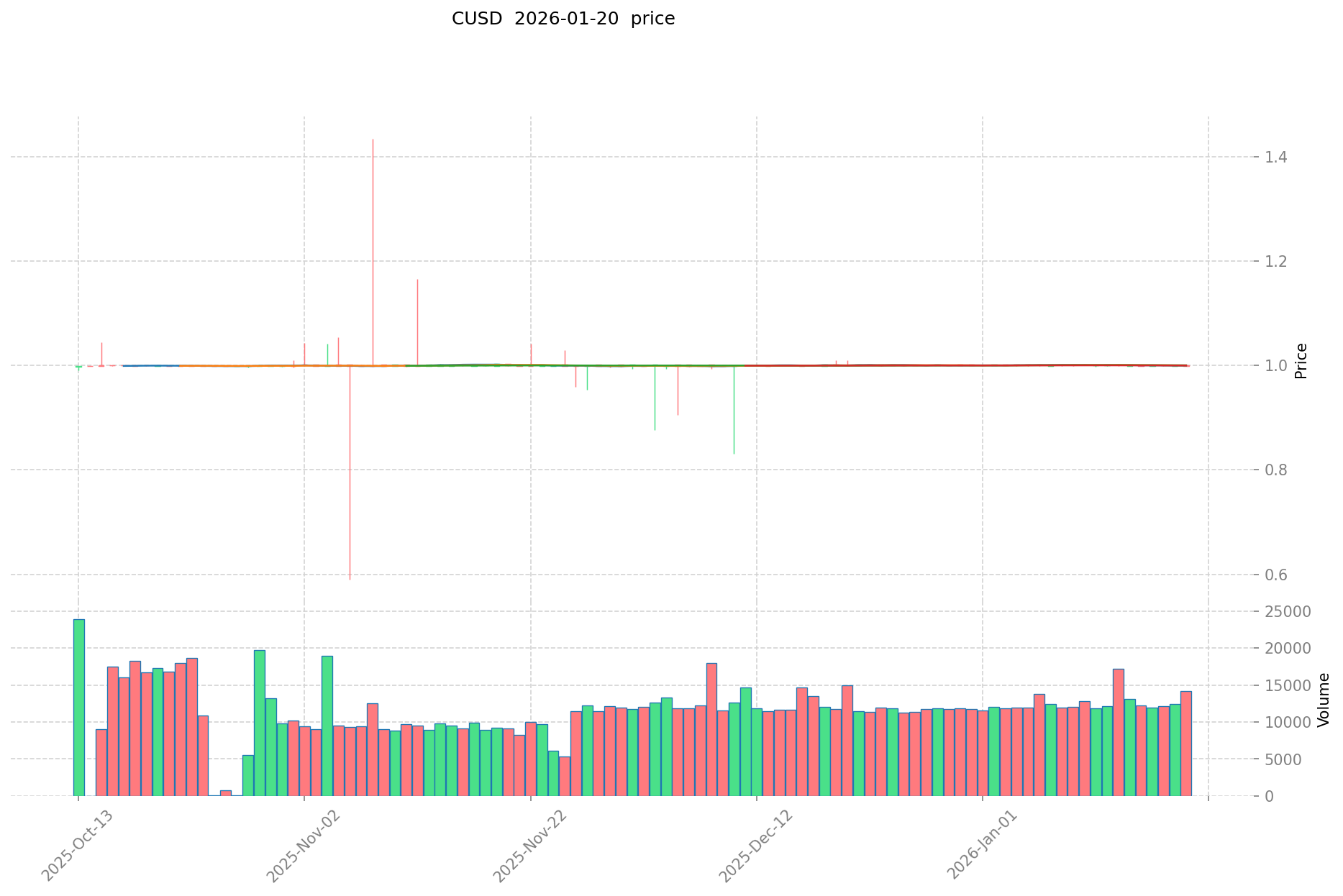
- 2021: Price reached an all-time high of $1.14 on September 10, demonstrating strong market confidence.
- 2025: Market volatility led to an all-time low of $0.498806 on October 11, reflecting broader stablecoin market pressures.
- 2026: Circulating supply stabilized at approximately 35.55 million cUSD, with continued ecosystem development.
Under the support of the Celo Foundation and its global community, Celo Dollar continues to refine its stability mechanisms, security features, and real-world applications.
How Celo Dollar Works
No Central Control
Celo Dollar operates on the Celo blockchain, a decentralized network of computers (nodes) distributed globally, independent of banks or government control.
These nodes collaborate to validate transactions, ensuring transparency and resistance to attacks, granting users greater autonomy and enhancing network resilience.
Blockchain Foundation
The Celo blockchain serves as a public, immutable digital ledger recording every transaction.
Transactions are grouped into blocks and linked through cryptographic hashes to form a secure chain.
Anyone can view the records, establishing trust without intermediaries.
The platform's mobile-first architecture and lightweight client design further enhance accessibility and performance for users with limited connectivity.
Ensuring Fairness
Celo Dollar operates within the Celo network, which utilizes a Proof-of-Stake (PoS) consensus mechanism to validate transactions and prevent fraudulent activities such as double-spending.
Validators maintain network security by staking CELO tokens and validating blocks, earning rewards in return.
The system's innovation includes Byzantine Fault Tolerance (BFT) protocols for faster finality and energy efficiency.
Secure Transactions
Celo Dollar employs public-private key cryptography to protect transactions:
- Private keys (similar to secret passwords) are used to sign transactions
- Public keys (similar to account numbers) are used to verify ownership
This mechanism ensures fund security while maintaining pseudonymous transaction privacy.
The Celo platform additionally supports multi-signature wallet capabilities and smart contract-based security features to enhance protection for users and applications.
Circulation Overview
As of January 21, 2026, the circulating supply of Celo Dollar stands at 35,553,466.18 tokens, with a total supply of 35,553,967.18 tokens. The maximum supply is set at 1,000,000,000,000,000 tokens, indicating a highly flexible supply model.
The token distribution follows the protocol's issuance mechanism, where new tokens enter circulation through algorithmic supply adjustments designed to maintain price stability against the US dollar.
Price Volatility
Celo Dollar reached a notable price point of $1.14 on September 10, 2021, driven by increased adoption of the Celo ecosystem and broader market momentum during that period.
The asset experienced a lower price point of $0.498806 on October 11, 2025, reflecting market conditions and adjustments in the stablecoin mechanism.
These price movements demonstrate the dynamic nature of algorithmic stablecoins and their responsiveness to market conditions, adoption patterns, and the underlying collateralization mechanisms.
Click to view the current CUSD market price
On-Chain Metrics
- Holder Count: Approximately 6,007,281 addresses hold CUSD, indicating substantial adoption across the Celo ecosystem
- 24-Hour Trading Volume: $12,340.99, reflecting active market participation
- Market Capitalization: $35,549,910.83, representing the current valuation of circulating tokens
Celo Dollar Ecosystem Applications and Partners
Core Use Cases
Celo Dollar's ecosystem supports multiple applications:
- Payments: As a stablecoin pegged to the US dollar, CUSD enables fast, low-cost cross-border transactions within the Celo network.
- DeFi: CUSD serves as a stable medium of exchange in decentralized finance protocols, facilitating lending, borrowing, and liquidity provision.
Strategic Partnerships
Celo Dollar operates within the broader Celo ecosystem, which has established partnerships to enhance its technical capabilities and market reach.
These partnerships provide a solid foundation for CUSD's ecosystem expansion.
Controversies and Challenges
Celo Dollar faces the following challenges:
- Market Competition: Competition from other stablecoins and blockchain platforms poses ongoing pressure.
- Price Stability: Maintaining the peg to the US dollar during extreme market volatility remains a technical challenge.
- Regulatory Uncertainty: Evolving global regulations around stablecoins could impact CUSD's operations.
These issues have sparked discussions within the community and markets, while also driving continuous innovation.
Celo Dollar's community demonstrates active participation, with over 6 million holders as of January 2026.
The CUSD ecosystem benefits from the broader Celo community's enthusiasm for financial inclusion and blockchain innovation.
Sentiment on X presents diverse perspectives:
- Supporters praise CUSD's stability mechanism and accessibility, viewing it as a tool for financial democratization.
- Critics focus on centralization concerns and regulatory risks associated with algorithmic stablecoins.
Recent trends indicate cautious optimism among community members.
Popular Topics
X users frequently discuss CUSD's price stability mechanism, regulatory landscape, and adoption in emerging markets,
showcasing both its transformative potential and the obstacles to mainstream acceptance.
- Official Website: Visit Celo official website for features, use cases, and latest updates.
- X Updates: On X platform, Celo maintains an active presence using @CeloOrg,
with posts covering protocol upgrades, community initiatives, and ecosystem developments.
Celo Dollar Future Roadmap
- Ecosystem Goals: Expand CUSD adoption across payment networks and DeFi protocols
- Long-term Vision: Become a widely-adopted stable digital currency for global payments
How to Participate in Celo Dollar?
- Purchase Channels: Buy CUSD on Gate.com
- Storage Solutions: Store CUSD securely in compatible wallets supporting the Celo network
- Participate in Ecosystem: Use CUSD for transactions within the Celo ecosystem
- Build Ecosystem: Visit developer documentation to integrate CUSD into applications
Summary
Celo Dollar leverages blockchain technology to redefine stable digital currency, offering price stability, fast transactions, and financial accessibility.
Its active community, ecosystem integration, and market presence establish its position in the cryptocurrency space.
Despite facing regulatory uncertainty and market competition, CUSD's focus on financial inclusion and clear utility make it noteworthy in the decentralized finance landscape.
Whether you are new to crypto or an experienced participant, Celo Dollar merits attention and engagement.
FAQ
What is CUSD? Is it a stablecoin?
CUSD is a decentralized stablecoin designed to maintain a stable value, typically pegged to the US dollar. It operates on blockchain technology, enabling fast and low-cost transactions while preserving price stability through algorithmic mechanisms or collateral backing.
What are the uses and applications of CUSD?
CUSD is a stablecoin designed for fast, low-cost transactions in the crypto ecosystem. It can be used for trading, payments, liquidity provision, yield farming, and as a stable store of value across DeFi protocols.
How to buy and hold CUSD? Which exchanges can trade it?
You can purchase CUSD through major cryptocurrency exchanges by connecting your wallet and placing a buy order. Hold CUSD securely in your personal wallet or exchange account. CUSD is available on numerous leading platforms for trading and asset management.
What is the difference between CUSD and other stablecoins such as USDC and USDT?
CUSD offers superior capital efficiency and lower transaction costs compared to USDC and USDT. With advanced smart contract architecture, CUSD delivers faster settlement speeds and enhanced composability within DeFi ecosystems, making it ideal for high-frequency trading and complex financial operations.
Is CUSD safe? What are the risks?
CUSD operates on secure blockchain infrastructure with audited smart contracts and transparent mechanisms. Main risks include market volatility, regulatory changes, and smart contract vulnerabilities. Users should conduct due diligence and manage their exposure appropriately.
Who is the issuer of CUSD? What is the project background?
CUSD is a stablecoin issued by Cubic Protocol. It maintains a 1:1 peg with the US dollar through a decentralized reserve system. The project focuses on providing stable value for Web3 ecosystems and DeFi applications.
* The information is not intended to be and does not constitute financial advice or any other recommendation of any sort offered or endorsed by Gate.