In this article, we explore Obol's transformative role in Ethereum staking through Distributed Validator Technology. Launched in 2023 by the Obol Collective, it tackles centralization issues in blockchain infrastructure. The article details Obol's technical architecture, market achievements by 2025, and its significance in the decentralized operator ecosystem with over 800 global operators. Key insights include decentralized control, enhanced transaction security, and market performance. Ideal for blockchain enthusiasts and developers, it guides participation via Gate. Obol's future roadmap emphasizes its potential as a standard for distributed digital infrastructure.
Obol's Positioning and Significance
In 2023, the Obol Collective launched Obol (OBOL), aiming to address the centralization and inefficiencies in digital infrastructure, particularly in blockchain networks.
As the foundation for Layer 1 blockchains and decentralized infrastructure networks, Obol plays a crucial role in decentralized validation and infrastructure management.
As of 2025, Obol has become a key player in the decentralized operator ecosystem, boasting over 800 decentralized operators globally and an active developer community. This report will delve into its technical architecture, market performance, and future potential.
Origin and Development History
Background
Obol was created by the Obol Collective in 2023 to solve the challenges of centralization and inefficiency in blockchain infrastructure.
It emerged during the rapid growth of Web3 and decentralized systems, aiming to distribute, decentralize, and democratize digital infrastructure.
Obol's launch brought new possibilities for Layer 1 blockchains, Layer 2 solutions, and decentralized applications.
Key Milestones
- 2023: Mainnet launch, achieving distributed validation for Ethereum.
- 2024: Major upgrade introducing the Obol Stack, a modular framework for managing decentralized infrastructure.
- 2025: Adoption by multiple Layer 1 and Layer 2 networks, driving price to reach $0.4211.
- 2025: Ecosystem expansion, with Distributed Validators (DVs) securing over $1 billion on mainnet.
With support from the global decentralized operator community, Obol continues to optimize its technology, security, and real-world applications.
How Does Obol Work?
Decentralized Control
Obol operates on a global network of decentralized operators, eliminating the need for centralized control.
These operators collaborate to validate transactions and manage infrastructure, ensuring system transparency and attack resistance, empowering users with greater autonomy and enhancing network resilience.
Blockchain Core
Obol's technology is built on top of existing blockchains, particularly Ethereum, creating a layer of distributed validation.
Transactions are processed through Distributed Validators (DVs), which offer improved performance and security compared to traditional validators.
Anyone can participate in the network by running or contributing to a DV, establishing trust without intermediaries.
Ensuring Fairness
Obol utilizes a distributed validation mechanism to verify transactions and maintain network security.
Decentralized operators participate by running Distributed Validators, contributing to network security and receiving rewards in OBOL tokens.
Its innovation includes better performance, fewer risks, and greater rewards than traditional validators.
Secure Transactions
Obol enhances transaction security through its Distributed Validator technology:
- Multiple operators collectively manage a single validator, reducing single points of failure
- Slashing resistance is improved through distributed key management
This mechanism ensures fund security while maintaining the pseudonymous nature of blockchain transactions.
Additional security features include modular, plug-and-play frameworks for managing various decentralized infrastructures.
Circulation Overview
As of November 21, 2025, OBOL's circulating supply is 132,700,000 tokens, with a total supply of 500,000,000.
New tokens enter the market through undisclosed mechanisms, impacting its supply and demand dynamics.
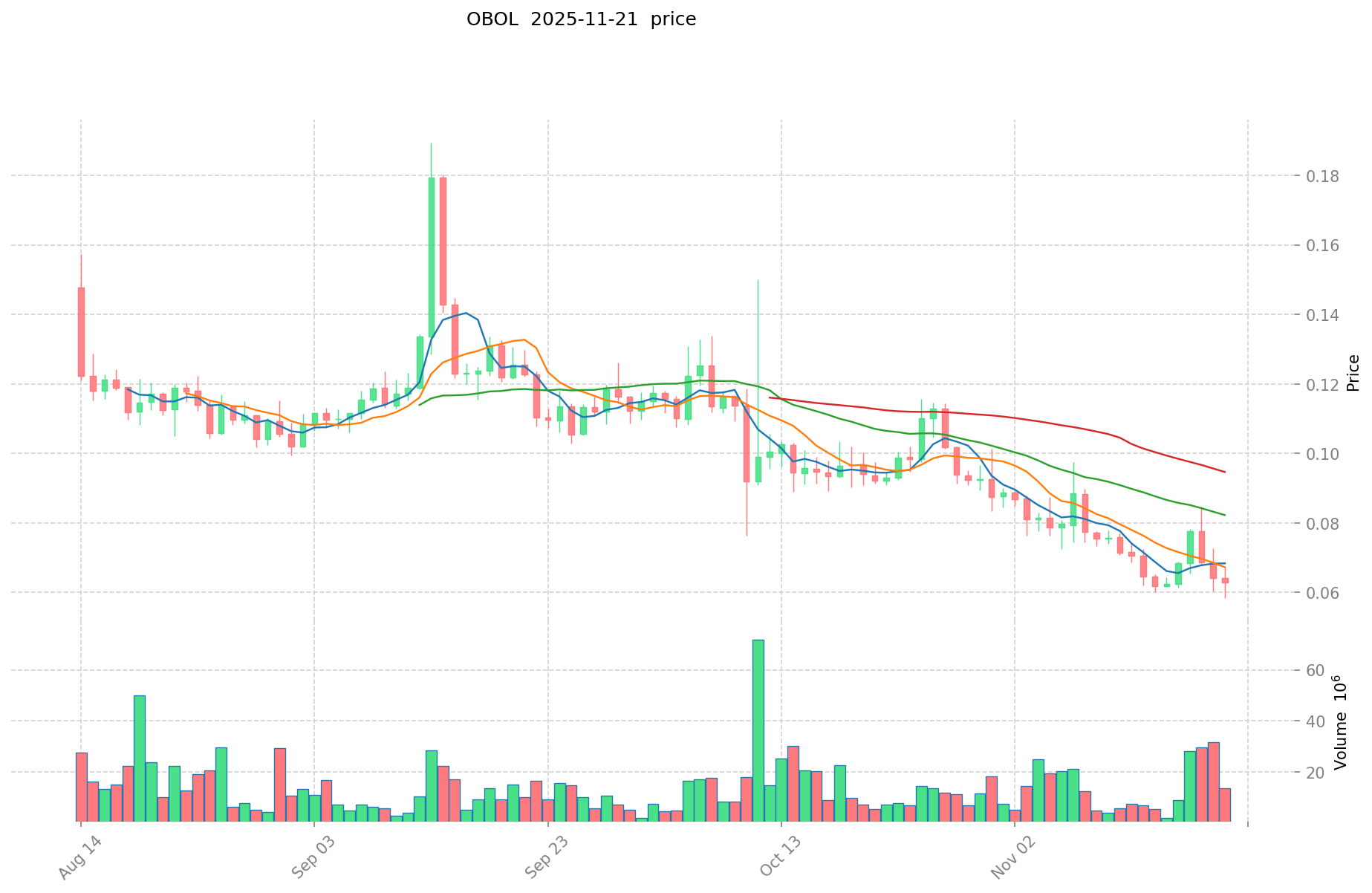
Price Fluctuations
OBOL reached its all-time high of $0.4211 on May 7, 2025, driven by overall market bullishness and increased adoption.
Its lowest price was $0.05659, occurring on November 21, 2025, due to broader market corrections.
These fluctuations reflect market sentiment, adoption trends, and external factors.
Click to view the current OBOL market price
On-Chain Metrics
- Daily Transaction Volume: $999,127.77 (indicates network activity)
- Active Addresses: 5,674 (reflects user engagement)
Obol Ecosystem Applications and Partnerships
Core Use Cases
Obol's ecosystem supports various applications:
- Decentralized Infrastructure: Distributed Validators (DVs), providing high-performance, slashing-resistant validation for Ethereum.
- Layer 1 and Layer 2 Solutions: Obol Stack, enabling easy deployment and management of Ethereum nodes, AI agents, and AVSs.
Strategic Collaborations
Obol has established partnerships with over 800 decentralized operators globally, enhancing its technical capabilities and market influence.
These partnerships have laid a solid foundation for Obol's ecosystem expansion.
Controversies and Challenges
Obol faces the following challenges:
- Technical Hurdles: Scaling the decentralized operator ecosystem
- Regulatory Risks: Potential scrutiny of decentralized validation systems
- Competitive Pressure: Emergence of other distributed validator technologies
These issues have sparked discussions within the community and market, driving Obol's continuous innovation.
Fan Enthusiasm
Obol's community is vibrant, with over 800 decentralized operators running Obol Distributed Validators.
On X, related posts and tags like #Obol often trend, with significant engagement.
The security of over $1B on mainnet has ignited community enthusiasm.
Sentiment on X shows a mix of opinions:
- Supporters praise Obol's high-performance, risk-reduced validation capabilities, viewing it as the foundation for future decentralized systems.
- Critics focus on potential complexities in distributed validation.
Recent trends indicate growing interest in decentralized infrastructure solutions.
Hot Topics
X users actively discuss Obol's role in securing Layer 1 blockchains, DePIN, AVSs, and AI Agents,
showcasing its transformative potential and the challenges in mainstream adoption of decentralized infrastructure.
- Official Website: Visit Obol's official website for features, use cases, and latest updates.
- X Updates: On X, Obol uses @Obol_Collective, as of November 21, 2025, covering technical upgrades, community events, and partnership news.
Obol's Future Roadmap
- Ecosystem Goal: Support and secure more Layer 1 and Layer 2 networks
- Long-term Vision: Become the standard for distributed and decentralized digital infrastructure across Web3
How to Participate in Obol?
- Purchase Channels: Buy OBOL on Gate.com
- Storage Solutions: Use secure wallets compatible with ERC-20 tokens
- Participate in Governance: Stay tuned for community decision-making processes
- Build the Ecosystem: Visit Obol's developer resources to contribute to the decentralized operator ecosystem
Summary
Obol is redefining decentralized infrastructure through blockchain technology, offering high-performance, risk-reduced validation capabilities.
Its active community, rich resources, and strong market presence make it stand out in the cryptocurrency field.
Despite facing challenges in scaling and adoption, Obol's innovative spirit and clear roadmap position it as a key player in the future of decentralized technologies.
Whether you're a newcomer or a seasoned player, Obol is worth watching and participating in.
FAQ
What is an obol used for?
Obol is used as a governance token in the Obol Network, enabling holders to participate in decision-making and protocol upgrades.
What were obols made of?
Obols were ancient Greek coins typically made of silver. They were small, weighing about 0.72 grams, and often used for everyday transactions in ancient Greece.
How much is an obol worth?
As of 2025, an OBOL token is valued at approximately $0.75. The price has shown steady growth over the past year, reflecting increased adoption in the Web3 ecosystem.
What replaced the obol?
The drachma replaced the obol in ancient Greece. The obol was a small silver coin used as currency, but it was eventually phased out in favor of the larger drachma denomination.
* The information is not intended to be and does not constitute financial advice or any other recommendation of any sort offered or endorsed by Gate.












