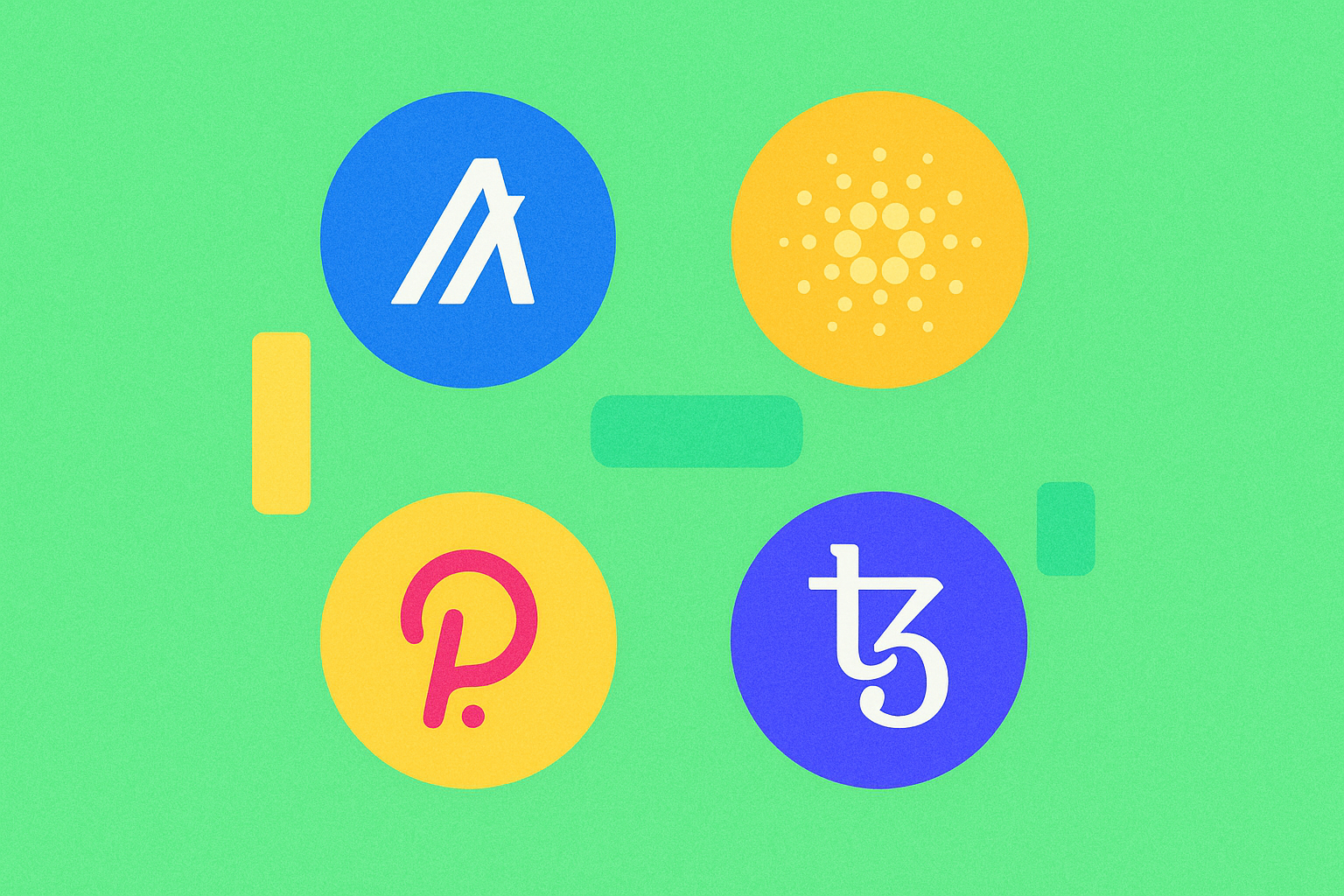
What is staking? Learn how to generate passive income by staking coins through Proof of Stake. This guide covers staking Algorand, Cardano, and Polkadot, offering annual returns between 2% and 16%. Explore alternative staking options on Gate, DeFi platforms, and crypto savings designed for newcomers.
What Is Staking?
Staking coins are cryptocurrencies you can contribute to blockchains using the Proof of Stake (PoS) protocol. PoS is a critical consensus mechanism that ensures blockchain networks remain stable and secure.
Unlike Proof of Work (PoW), which requires significant computational power, PoS lets users validate transactions by locking (staking) a specified amount of tokens. By contributing these coins, you not only help sustain network operations but also gain governance rights. This enables you to vote on important project decisions and earn passive income from your assets through staking rewards.
How Does Staking Coin Work?
Staking coins involves locking and contributing your tokens on a PoS network by holding them in the project's native wallet. You can also deposit tokens into a smart contract (smart contract) to run validator nodes.
Staked tokens play a vital role in validating new transactions, operating network nodes, and maintaining blockchain integrity. Participants receive rewards (dividends) proportional to their share of the total staked tokens. This system encourages long-term holding and active participation in ecosystem development.
Staking typically requires a minimum lock-up period (lock-up period), during which you cannot withdraw your tokens. In return, you earn periodic rewards based on the amount staked and your participation duration.
Which Coins Can Be Staked?
Today’s most popular PoS coins include Synthetix (SNX), Algorand (ALGO), Cardano (ADA), Polkadot (DOT), Avalanche (AVAX), Cosmos (ATOM), and Tezos (XTZ).
Each project features unique technical specifications and economic models, but all allow users to stake tokens for rewards. Beyond these leading projects, hundreds of other blockchains also use PoS or variants such as Delegated Proof of Stake (DPoS) or Nominated Proof of Stake (NPoS).
Is Staking Coin Profitable?
Despite the emergence of many alternative staking methods, direct staking via PoS blockchains remains the safest and most effective way to generate returns.
When you stake coins, you directly contribute to the network’s growth and stability. In return, you receive rewards with dividend rates typically ranging from 2% to 15% per year, based on the specific project. These rewards are paid in the project’s native token and are automatically credited to your staking wallet at set intervals.
For long-term investors and “whales” (individuals holding large amounts of tokens), staking coins delivers stable passive income and increases voting power in critical governance matters. However, keep in mind that staking yields also carry risks from token price volatility.
Best Staking Coins
Algorand
Algorand is a blockchain platform engineered to address the “impossible trinity” of scalability, security, and decentralization. Staking on Algorand is simple and offers attractive dividend rates.
To start, download the official Algorand Wallet and transfer ALGO into it. Uniquely, Algorand does not require a minimum staking amount, so you can begin with any quantity of ALGO.
Once ALGO is in your wallet, you immediately start earning rewards with dividend rates up to 6% per year. Tokens are distributed automatically about every nine minutes, allowing for continuous compounding returns.
Cardano
Cardano is one of the largest blockchain projects, using the PoS protocol called Ouroboros. When you stake ADA on Cardano, your staked amount represents both your share in the network and your voting rights.
You can earn ADA staking rewards in two ways. First, by delegating your stake to a pool operated by someone else—this is the easiest and most suitable method for typical users. Second, by running your own stake pool, which requires technical expertise and investment resources.
Staking ADA typically yields around 7% annually. Cardano’s major advantage is that you retain complete control over your ADA and can withdraw your stake at any time without penalty.
Polkadot
Polkadot is a multi-chain platform that enables interoperability among different blockchains. Investors can earn up to 16% annual dividends by becoming “Nominators” within the Polkadot network.
To become a Nominator, you must hold a minimum amount of DOT as specified by the Polkadot network (this amount may change over time). Then, you nominate validators you trust to process transactions. Rewards are split proportionally between you and your nominated validator.
Polkadot also features a slashing mechanism that penalizes misbehaving validators, making it essential to choose reputable validators.
Tezos
Tezos is a self-amending blockchain that enables upgrades without hard forks. Staking on Tezos is called “Baking,” and its process closely resembles Cardano’s.
You can delegate your XTZ assets to a baker (similar to a validator) or operate your own baker node. To become a baker, you need at least 8,000 XTZ, but delegation has no minimum requirement.
Anyone can easily participate in staking, with dividend rates typically ranging from 5% to 6% per year. Rewards are distributed every three days.
Alternative Ways to Stake Coins
Exchange Platforms
Major exchanges now offer staking services, with dividend rates determined by asset type and holding period. This is a convenient option for beginners, as it removes the need for wallet setup or technical expertise.
Top exchanges currently offer staking for 20+ cryptocurrencies, with annual yields (APY) ranging from 1% to 16%, depending on the coin and lock-up period.
However, staking through exchanges means your tokens are held by the platform, so you do not have direct control. Always choose exchanges with solid reputations and proven track records.
Crypto Savings Accounts
Crypto savings accounts are another secure choice for those seeking passive income without deep staking knowledge. These platforms offer annual yields from 1% to 20%, depending on token and deposit terms.
Your savings deposits are used by the platform to provide liquidity for crypto lending. Borrowers pay interest, which is partially shared with depositors.
Popular crypto savings platforms typically offer insurance and robust security, but you should always verify platform reliability before depositing funds.
DeFi Platforms
Decentralized Finance (DeFi) platforms have rapidly gained popularity due to their simplicity and high earning potential. This is the most flexible staking option but also the riskiest.
DeFi platforms hold your assets in liquidity pools (liquidity pools) or smart contracts. By participating, you become a liquidity provider, supporting trading, lending, and borrowing activities.
DeFi yields can range from 20% to 100% APY, and sometimes higher in special cases. However, you must understand risks such as impermanent loss, smart contract vulnerabilities, and rug pulls before getting involved.
Staking Service Providers
Numerous new “all-in-one” staking service providers have emerged, offering professional platforms that streamline staking for users.
These platforms offer a comprehensive, user-friendly interface, allowing you to easily select coins to stake and configure staking parameters. They typically support a wide range of coins and optimize your returns automatically.
Professional staking providers generally charge service fees (typically 5–25% of rewards) but deliver high security, 24/7 technical support, and intuitive interfaces. This is a strong option for users who want to stake without investing significant time or technical effort.
FAQ
What Is Staking? How Does It Generate Income?
Staking means holding cryptocurrency in a wallet to support the blockchain network and earn rewards. You lock coins for a set period, and the network randomly selects validators for transactions. This allows you to earn new tokens as benefits.
Which Coins Are Best for Staking and Offer High Yields?
Ethereum (ETH), Cardano (ADA), and Polkadot (DOT) are top options for staking with high yields. Tether (USDT) is also suitable if stability is your priority. APY rates range from 4–15% depending on the token and market conditions.
How Do You Start Staking? What Do You Need?
To start staking, you need an online crypto wallet that operates 24/7 and supports staking for your chosen coin. Pick a reputable, secure wallet and ensure you have enough coins to stake. Transfer your coins and activate staking to begin earning yields.
What Are the Risks of Staking? How Can You Protect Your Assets?
Staking risks include token loss, long-term asset lock-up, and price volatility. Protect your assets by choosing reputable platforms, keeping your private keys safe, diversifying your portfolio, and monitoring market conditions regularly.
How Is Staking Different from Mining? Which Is More Profitable?
Staking offers steady, predictable returns, while mining is more volatile but can deliver higher profits. Staking is ideal for those seeking consistent income, while mining provides greater profit potential at higher risk.
How Long Is the Lock-Up Period in Staking? Can You Withdraw Funds Anytime?
Lock-up periods usually range from 7 to 180 days, depending on the staking type and platform. You cannot withdraw funds at any time; you must wait until the term ends. Once the lock-up period is over, you can request a withdrawal.
* The information is not intended to be and does not constitute financial advice or any other recommendation of any sort offered or endorsed by Gate.