# Article Overview: NIGHT Token Economics Model
This comprehensive guide explores Midnight's innovative dual-token architecture, examining how NIGHT's 24 billion token supply and DUST resource generation system create sustainable blockchain economics. Designed for investors, developers, and cryptocurrency enthusiasts, this article clarifies how the decoupled capital-utility model eliminates traditional token burning while establishing predictable transaction costs. Discover NIGHT's deflationary mechanisms, phased distribution strategy unlocking through 2026, and governance framework supporting 170,000 staking participants. Learn why this transparent tokenomics model differentiates NIGHT from conventional systems, offering both economic viability and long-term price appreciation potential through renewable resource generation. Purchase NIGHT tokens on Gate to participate in this evolving ecosystem.
Dual-Token Architecture: NIGHT Governance Token and DUST Resource Generation Model
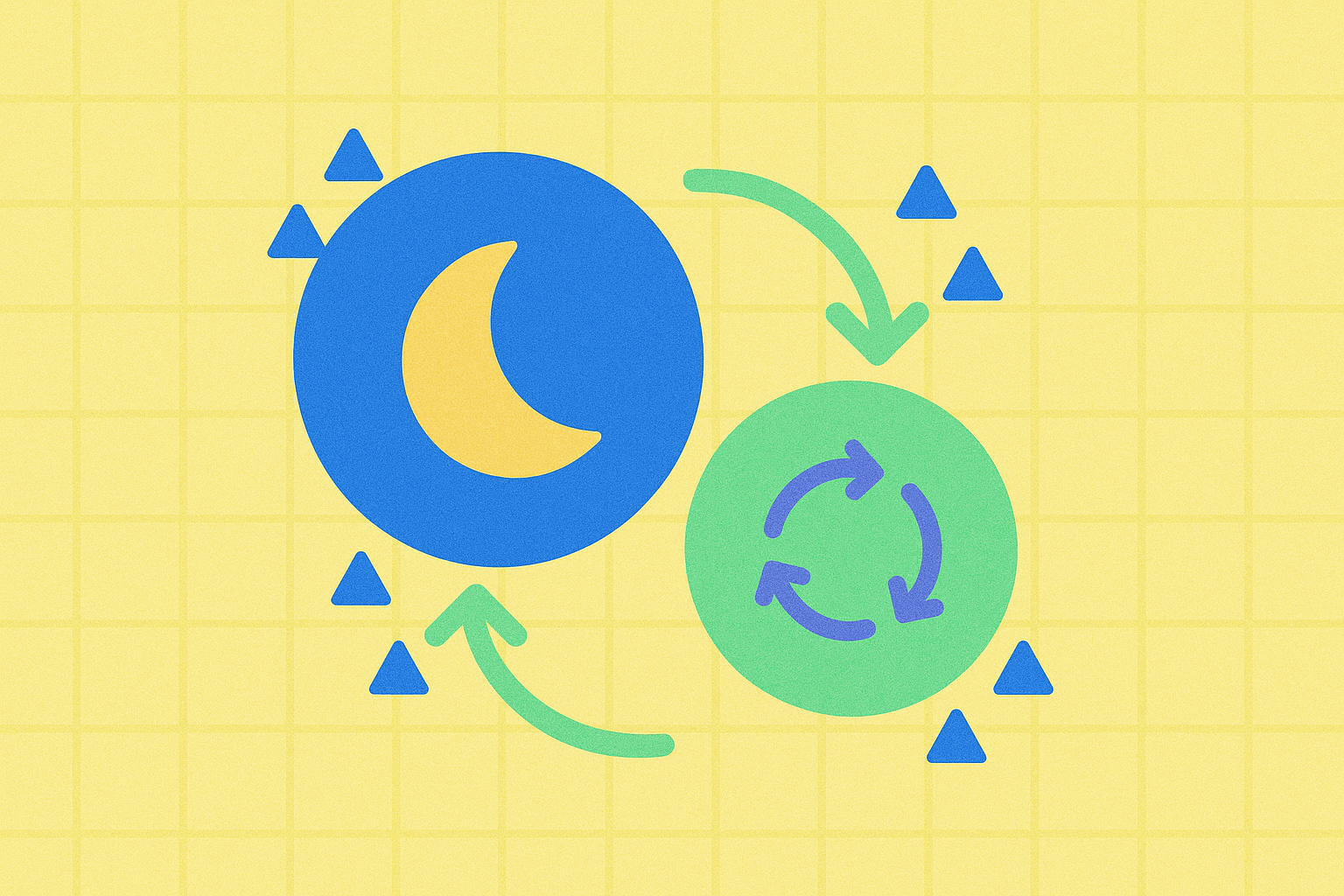
Midnight's innovation lies in decoupling the capital asset from operational utility, creating a more sustainable token economics model. Rather than requiring users to burn NIGHT tokens for transaction fees, the architecture generates DUST—a renewable network resource—through NIGHT ownership. This separation fundamentally changes how users interact with the blockchain.
NIGHT functions as both the governance token and the engine driving this dual-token system. Holding NIGHT grants network participants two distinct capabilities: the ability to stake tokens for network security and block production, and the right to participate in governance decisions. Simultaneously, NIGHT holders automatically generate DUST proportional to their holdings, creating a perpetual resource stream without requiring active token spending.
| Aspect |
NIGHT |
DUST |
| Purpose |
Governance & staking |
Transaction fuel |
| Generation |
Fixed supply (24B) |
Perpetually generated from NIGHT |
| Function |
Network security & voting |
Execute transactions & smart contracts |
| Spending |
Not consumed |
Powers network capacity |
This architectural approach delivers tangible advantages. Developers can delegate DUST to power applications for users without transferring ownership of the underlying NIGHT asset, enabling flexible resource management. Users benefit from predictable network costs since DUST generation ties directly to holdings rather than fluctuating market prices. The token economics model thus creates a cooperative framework where network capacity becomes renewable rather than depletable, establishing sustainable incentives for long-term participation in the Midnight ecosystem.
Token Distribution Strategy: 24 Billion NIGHT Supply Across Team, Investors, and Community
The NIGHT token's 24 billion supply demonstrates a thoughtfully structured token distribution designed to balance ecosystem growth with fair community participation. Currently, 16.6 billion NIGHT tokens are in circulation, representing approximately 69 percent of the total supply. This measured release reflects a strategic approach to managing market dynamics while ensuring broad access for network participants.
The remaining 7.4 billion tokens are scheduled to unlock gradually throughout 2026, creating a predictable release schedule that aligns incentives across different stakeholder groups. This phased token distribution approach benefits team members, early investors, and community participants differently, with each unlock milestone calibrated to support network development stages. The underlying philosophy prioritizes fair access as a core pillar, ensuring the network launches and sustains itself with equitable opportunity across all participant categories.
Midnight's distribution strategy extends beyond simple allocation percentages—it fundamentally shapes how the ecosystem evolves. By controlling the token supply release, the project maintains stability while rewarding early adopters and enabling newcomers to participate meaningfully. This balanced approach to token distribution supports the network's governance structure and incentivizes continued engagement as unlock events occur throughout the year, making community involvement integral to Midnight's long-term success and adoption trajectory.
Deflationary Mechanism and Sustainable Tokenomics: DUST Decay and Predictable Cost Structure
NIGHT's deflationary tokenomics operates through an elegant system where the native token continuously generates DUST, which powers transactions across the Midnight Network. Unlike traditional burn-and-mint models, this dual-token architecture creates a sustainable deflationary mechanism—DUST naturally decays over time, reducing the circulating supply without artificial interventions. The predictable cost structure emerges from this design: as DUST supply diminishes through decay, transaction expenses stabilize at transparent, measurable levels, enabling users to forecast spending accurately.
This approach fundamentally differentiates NIGHT from conventional deflationary tokenomics that rely on fee burning or buyback-and-burn strategies. The DUST decay model ensures genuine sustainability by aligning economic incentives with network utility rather than attempting to artificially manipulate supply. Transaction costs remain predictable and reasonable, supporting long-term ecosystem health. As circulating supply gradually contracts through DUST degradation, the combination of reduced inflation pressure and stable fees creates conditions for price appreciation. By January 2026, NIGHT's tokenomics demonstrated this framework's effectiveness—the deflationary mechanism successfully lowered transaction expenses while maintaining ecosystem incentives. This transparent, predictable cost structure provides investors and users with confidence in NIGHT's economic viability, positioning it as a sustainable alternative to more volatile deflationary models.
Governance and Incentive Framework: Staking Rewards and Community Participation at 170,000 Wallets
The 2026 governance framework for NIGHT represents a significant evolution in how token holders participate in network decisions and earn rewards. With 170,000 wallets engaged in staking rewards, the incentive mechanism has been deliberately streamlined through recent tax reforms that eliminate previous barriers to participation. This governance structure demonstrates how a well-designed incentive framework encourages broader community involvement while maintaining economic sustainability.
Recent tax reforms have played a crucial role in reshaping the staking rewards landscape, removing the double taxation burdens that previously deterred retail participation. By simplifying the compliance requirements for staking rewards, NIGHT's governance framework now attracts both institutional and individual participants seeking transparent, tax-efficient opportunities. This evolution reflects the maturing regulatory environment surrounding digital assets in 2026.
The community participation mechanisms embedded within this framework serve dual purposes: enabling holders to influence protocol decisions through governance voting while simultaneously earning sustainable returns. This alignment between governance rights and economic incentives creates a virtuous cycle where engaged token holders maintain stronger commitment to the network's long-term development. The expanding wallet participation demonstrates that incentivized governance frameworks effectively drive adoption in the broader cryptocurrency ecosystem.
FAQ
What is the total supply of NIGHT tokens, and how are the 2.4 billion tokens distributed across different purposes and participants?
NIGHT has a total supply of 2.4 billion tokens. Approximately 40.3% is allocated to community rewards and reserves, with the remainder distributed among founding teams, early investors, and marketing initiatives.
What is NIGHT's dual-token system, and what are the differences in functions and uses between the two tokens?
NIGHT operates a dual-token ecosystem where one token serves as the primary utility token for payments, governance, and staking within the platform. The second token functions as a governance and access token for exclusive NFT-based memberships and VIP benefits. Together, they create a value cycle across venues, creators, and users in the Web3 night economy.
What is the release schedule for NIGHT tokens and how many tokens will enter market circulation at each time point?
NIGHT has a total supply of 24 billion tokens. 82% will unlock gradually starting December 10, 2025. Tokens unlock in four periods over one year, with 25% released in each period. Initial unlock dates are randomized within a 90-day window to avoid supply shock, with direct purchases available on exchanges.
NIGHT代币持有者可以获得什么样的经济激励和权益?
NIGHT holders earn continuous DUST generation for transactions, receive block production rewards, participate in decentralized governance voting, and support ecosystem development initiatives.
Does NIGHT's token economics model have inflation or deflation mechanisms, and how is token value maintained long-term?
NIGHT employs a deflationary mechanism with a hard cap of 24 billion tokens, preventing inflation. This ensures controlled supply and maintains long-term token value stability through scarcity and sustainable economics.
* The information is not intended to be and does not constitute financial advice or any other recommendation of any sort offered or endorsed by Gate.