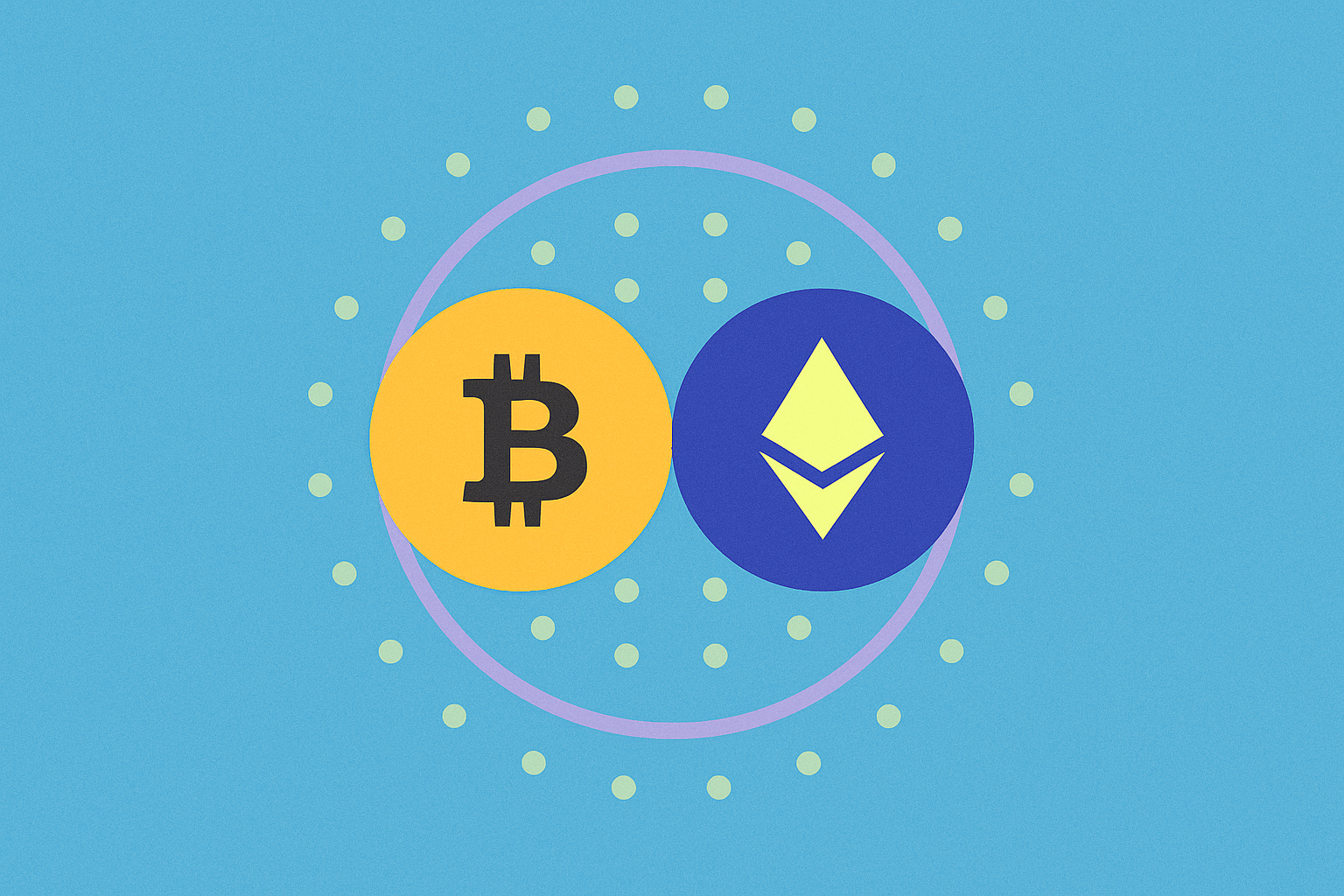
This comprehensive market analysis examines the current cryptocurrency landscape, revealing a market capitalization recovery to $3.06 trillion with broad-based gains across 99 of the top 100 cryptocurrencies. The article dissects Bitcoin's $86,899 price point and Ethereum's $2,822 level, highlighting critical support zones and resistance targets through detailed technical analysis. It explores macroeconomic interconnections with US equity markets, institutional investment flows through spot ETFs, and extreme fear sentiment readings on the fear and greed index. Readers will understand key market drivers, identify trading opportunities at critical price levels, and grasp how institutional adoption and traditional financial market dynamics shape crypto valuations for informed decision-making.
Market Overview and Key Highlights
The cryptocurrency market experienced notable upward momentum in recent trading sessions, with the total market capitalization climbing back above the psychologically significant $3 trillion threshold. According to Ruslan Lienkha, chief of markets at YouHodler, Bitcoin's short-term price movements remain heavily influenced by broader macroeconomic conditions, particularly the performance of the US equity market.
The crypto market capitalization rose by 1.4% to reach $3.06 trillion, marking a significant recovery from previous levels. In a remarkable show of market-wide strength, 99 of the top 100 cryptocurrencies recorded gains over a 24-hour period. The total trading volume across all crypto assets stood at $144 billion, indicating robust market participation and liquidity.
Several key developments shaped the market landscape during this period. Bitcoin increased by 1.3% to reach $86,899, while Ethereum rose by 1% to trade at $2,822. Market analysts suggest that the ultimate bottom formation may occur over the next 5-7 months, potentially setting the stage for the next major upward wave.
NYDIG's Greg Cipolaro identified a significant reversal in key market trends that had previously powered Bitcoin's rally, including ETF inflows, digital asset treasury demand, and growing stablecoin liquidity. This reversal signals not just deteriorating sentiment but actual capital outflows from the crypto space.
Market observers note that the crypto ecosystem may be approaching the late stages of the current growth cycle. A growing proportion of investors are choosing to lock in profits and move to the sidelines as uncertainty around interest rates, inflation dynamics, and liquidity conditions increases.
In terms of institutional adoption, US Bitcoin and Ethereum spot ETFs recorded combined inflows of $238.47 million and $55.71 million respectively on November 21, breaking a prolonged outflow streak. However, crypto market sentiment reached another multi-year low, with the fear and greed index dropping to extreme fear levels.
The cryptocurrency market demonstrated broad-based strength across major assets, with all top 10 coins by market capitalization recording price appreciation over the 24-hour period. This widespread positive performance reflects improving investor confidence and renewed buying interest across the crypto ecosystem.
Bitcoin led the recovery with a 1.3% increase, trading at $86,899. As the largest cryptocurrency by market capitalization, Bitcoin's performance often sets the tone for the broader market. The digital asset continues to serve as a bellwether for overall crypto market health and investor sentiment.
Ethereum, the second-largest cryptocurrency, posted a 1% gain to reach $2,822. This represented the lowest increase among the top 10 assets, shared with two other major cryptocurrencies. Ethereum's more modest gains reflect ongoing concerns about network competition and scalability challenges, though the asset remains a cornerstone of the decentralized finance ecosystem.
Solana matched Ethereum's 1% increase, trading at $130.1. The high-performance blockchain has maintained its position as a leading smart contract platform, attracting developers and users with its fast transaction speeds and lower fees compared to competitors.
Dogecoin emerged as the biggest gainer among the top 10, surging 2% to reach $0.1459. The meme-inspired cryptocurrency continues to benefit from strong community support and periodic waves of retail investor interest, demonstrating its enduring appeal despite its origins as a joke currency.
A major exchange token (BNB) appreciated by 1.3% to $853, reflecting positive sentiment around centralized exchange platforms and their native tokens. These exchange tokens often benefit from trading volume increases and platform developments.
Expanding the view to the top 100 cryptocurrencies, 80 assets recorded price increases, with one achieving double-digit gains. Canton led the gainers with an impressive 13.1% surge to $0.08507, demonstrating the potential for significant returns among smaller-cap assets.
Hedera claimed the second-highest gain with an 8.3% increase to $0.1465. The enterprise-focused blockchain platform continues to attract attention for its unique governance structure and focus on corporate use cases.
On the downside, Aster experienced the largest decline, falling 6.3% to $1.12. Zcash followed with a 4.4% decrease to $546.8, reflecting ongoing challenges in the privacy coin sector amid regulatory scrutiny.
Market Cycle Analysis and Growth Outlook
John Glover, Chief Investment Officer of Ledn, provided valuable insights into the current market dynamics and potential future trajectory. He observed that panic selling typically indicates weak long positions finally capitulating as traders attempt to preserve remaining profits. This type of market behavior, while painful for those exiting positions, often creates attractive entry points for longer-term investors with sufficient conviction and risk tolerance.
Glover's analysis suggests that the ultimate market bottom will likely form over the coming 5-7 months. This extended consolidation period would allow for the resolution of current uncertainties and the establishment of a solid foundation for the next major upward move. According to his projections, this bottom formation will serve as the launch pad for a significant Wave V rally, potentially driving Bitcoin prices to the $150,000-$170,000 range during 2027-2028.
This long-term bullish outlook is based on several factors, including the continued maturation of crypto markets, increasing institutional adoption, and the evolution of regulatory frameworks. However, Glover emphasizes that reaching these ambitious targets will require patience and the ability to weather near-term volatility.
Ruslan Lienkha from YouHodler highlighted that macro-driven factors have been the primary source of market pressure in recent periods. The cryptocurrency market does not operate in isolation but is deeply interconnected with traditional financial markets and broader economic conditions.
Across asset classes, risk sentiment has weakened considerably. US equity markets have been under notable strain, with headline indices masking underlying softness in the broader market. Most upward momentum in major stock indices has been concentrated in a narrow group of AI-related mega-cap technology stocks, while the majority of equities have shown signs of fatigue and distribution.
This market dynamic suggests that traditional financial markets may be approaching the late stages of the current growth cycle. As uncertainty around interest rates, inflation dynamics, and liquidity conditions increases, a growing share of investors across all asset classes is choosing to lock in profits and move to the sidelines, adopting a more defensive posture.
The relationship between Bitcoin and traditional markets remains crucial for understanding near-term price action. Bitcoin's price movements continue to be heavily influenced by broader macroeconomic conditions, particularly the performance of US equity markets. If major stock indices stabilize and resume their upward trajectory, this development would likely provide support for Bitcoin and help prevent the ongoing consolidation from evolving into a more severe correction.
Conversely, if US stock indices experience a sustained trend reversal rather than a routine correction, Bitcoin could face significantly stronger downside pressure. In such a scenario, the current consolidation phase could evolve into a more profound structural decline, with Bitcoin potentially retracing to much lower price levels. This underscores the importance of monitoring traditional market indicators for crypto investors.
Technical Analysis and Price Levels
Bitcoin's price action in recent trading sessions has been characterized by choppy, range-bound movement. The leading cryptocurrency traded within a tight range between $85,822 and $87,995, reflecting market indecision and balanced buying and selling pressure at these levels.
Looking at the broader timeframe, Bitcoin's intraweek low stands at $82,175, while the intraweek high reached $95,591. This $13,000+ range demonstrates significant volatility and the ongoing battle between bulls and bears for market control. The cryptocurrency has declined 9.2% over the week, 22% over the month, and 31.1% from its all-time high of $126,080 recorded in October.
From a technical perspective, the $86,500 level has emerged as a critical support zone that investors are closely monitoring. Maintaining prices above this threshold could open the door for a move toward $88,500 as the first resistance target. A successful break above that level could then target $97,000, followed by the psychologically significant $111,000 level.
However, if Bitcoin fails to defend the $86,500 support and drops below this level, the price could move toward $83,000. A break below that support would likely trigger additional selling pressure and potentially test lower support levels.
Ethereum's price action has similarly shown volatility and range-bound trading. The second-largest cryptocurrency initially declined from $2,838 to an intraday low of $2,770, before rallying to $2,881 and then correcting back to trade around $2,822.
Over the weekly timeframe, Ethereum has fallen 11.6%, trading within a range of $2,680 to $3,203. The monthly decline stands at 28%, and Ethereum has dropped 42.8% from its August all-time high of $4,946. This significant correction from peak levels reflects both profit-taking and concerns about Ethereum's competitive position in the smart contract platform space.
For Ethereum, the $2,780 level represents crucial support. Successfully defending this level could enable a price move toward $3,060 as the first resistance target, followed by $3,214 and $3,653. These resistance levels correspond to previous consolidation zones and Fibonacci retracement levels.
Conversely, a breakdown below $2,700 could lead to further declines toward $2,630 and $2,580. These lower levels would represent significant corrections from recent highs and could trigger additional selling pressure from leveraged positions.
Market Sentiment and Investor Psychology
Crypto market sentiment continues to deteriorate, remaining firmly within the extreme fear zone. The fear and greed index reached another multi-year low on Saturday, marking the lowest level since CoinMarketCap began measuring this index in July 2023. This extreme reading reflects the depth of current market pessimism and investor anxiety.
The crypto fear and greed index stood at 10 for the third consecutive day, having fallen from 11 the previous Friday. This sustained period of extreme fear indicates that market participants remain deeply worried and pessimistic about near-term prospects. The doubt-driven market environment has led to elevated selling pressure as investors rush to exit positions or reduce exposure.
However, contrarian investors and long-term holders often view extreme fear readings as potential buying opportunities. Historical analysis shows that some of the best entry points for long-term crypto investments have occurred during periods of maximum pessimism and fear. While timing the exact bottom remains challenging, sustained extreme fear readings often precede eventual market recoveries.
The high selling pressure evident in recent trading sessions reflects capitulation by weaker hands and those with shorter investment horizons. This type of forced selling, while painful in the short term, can help clear out excess leverage and weak positions, potentially setting the stage for a more sustainable recovery once sentiment begins to improve.
Institutional Investment Flows
US Bitcoin spot exchange-traded funds experienced a notable reversal in recent trading, recording significant inflows after a day of major outflows. On November 21, these investment vehicles collectively attracted $238.47 million in new capital, pushing the total net inflow slightly higher to $57.64 billion.
The flow data revealed divergent performance among different fund providers. Seven of the 12 Bitcoin ETFs recorded inflows, while one experienced outflows. Fidelity led the positive flows with $108.02 million in new investments, demonstrating continued institutional interest in Bitcoin exposure through traditional investment vehicles. Grayscale followed with $84.93 million in inflows, marking a positive shift for the pioneering crypto asset manager.
Interestingly, BlackRock, despite being the largest asset manager globally, experienced $122.01 million in outflows from its Bitcoin ETF. This outflow from the industry leader suggests some institutional investors may be taking profits or rotating into other assets, even as other providers see continued inflows.
US Ethereum ETFs also broke their prolonged outflow streak, attracting $55.71 million in new capital on November 21. This marked the end of a 10-day period of consecutive outflows, suggesting renewed institutional interest in the second-largest cryptocurrency. The total net inflow for Ethereum ETFs increased to $12.63 billion.
Among Ethereum ETFs, three of the nine funds recorded inflows, with one experiencing outflows. Fidelity again led with $95.4 million in positive flows, demonstrating the asset manager's strong position in both Bitcoin and Ethereum ETF markets. BlackRock was responsible for the entirety of negative flows with $53.68 million in outflows from its Ethereum ETF.
Robbie Mitchnick, BlackRock's head of digital assets, provided important context on institutional investor motivations. He noted that clients of large asset managers are far more interested in Bitcoin as a store of value rather than as a payments rail or medium of exchange. This perspective reflects a maturing understanding of Bitcoin's role in institutional portfolios.
"For us, and most of our clients, they're not really underwriting to that global payment network case," Mitchnick explained. Instead, institutional investors view Bitcoin primarily as a potential inflation hedge and portfolio diversifier. The payments thesis is considered "out-of-the-money option value" rather than a core investment rationale, meaning it represents potential future upside but is not the primary reason for current allocations.
This institutional perspective has important implications for Bitcoin's long-term trajectory and valuation. If major institutional investors continue to view Bitcoin primarily as "digital gold" rather than a payment system, it suggests that Bitcoin's value proposition will increasingly be compared to traditional store-of-value assets like gold rather than to payment networks or currencies.
FAQ
What were the main reasons for cryptocurrency price increases on November 24, 2025?
Cryptocurrency surged on November 24, 2025, primarily due to renewed expectations of Federal Reserve rate cuts and a technical rebound following previous sharp declines. Market sentiment improved as investors anticipated monetary easing, driving significant upward movement across major digital assets.
Which market events or policy factors affect cryptocurrency price volatility?
Crypto prices are influenced by global economic conditions, inflation rates, central bank monetary policies, and regulatory changes. Major market events, geopolitical tensions, technological innovations, and trading volume also significantly impact price movements.
How to determine if a cryptocurrency price rise is sustainable or just a short-term rebound?
Analyze trading volume growth, fundamental developments, and macroeconomic trends. Sustainable rallies show rising transaction volume and positive external catalysts. Short-term rebounds lack underlying support and typically fade within days without confirmation from key technical levels and institutional accumulation patterns.
Develop a clear trading plan with defined entry points, stop-loss levels, and profit targets. Control position sizing based on risk tolerance, set hard stops to lock in gains, and avoid emotional decisions during price rallies.
Do mainstream cryptocurrencies like Bitcoin and Ethereum have consistent price increases, and what are the reasons for differences?
Bitcoin and Ethereum price movements differ significantly. Bitcoin is more influenced by macroeconomic factors and institutional adoption, while Ethereum's price is driven by network activity, DeFi development, and application demand. Their distinct market dynamics, trading volumes, and use cases create varied performance patterns.
* The information is not intended to be and does not constitute financial advice or any other recommendation of any sort offered or endorsed by Gate.