Over the past few years, market capitalization has been the most visible metric for competition in the stablecoin market: the larger the circulation, the stronger the perceived position. However, as regulatory frameworks become a reality, this assessment method is losing relevance. Stablecoins are evolving from simple on-chain trading tools to integral components of broader financial systems, now encompassing payments, settlement, custody, disclosure, and capital requirements.
This shift means the competitive dynamic between USDT and USDC will move beyond “scale competition” to include “regulatory competition, distribution strategies, and real-world use cases.”
Why Regulatory Implementation Is Rewriting the Rules
Regulation does more than restrict—it redefines industry standards. For stablecoins, at least three structural shifts are underway:
- Entry barriers are rising: Transparency in reserves, custody arrangements, audit frequency, and redemption mechanisms are now baseline requirements.
- Channel access is tightening: Banks, payment processors, and compliant trading platforms will favor stablecoins with higher regulatory certainty.
- Cost structures are being reassessed: Increased compliance costs will compress margins, forcing issuers to optimize their balance sheets and return models.
In effect, regulation doesn’t inherently benefit one side; it amplifies differences in organizational capability, compliance execution, and global distribution reach.
The Old Paradigm: How USDT and USDC Previously Competed
Understanding past advantages is essential for recognizing future changes.
USDT’s Traditional Strengths
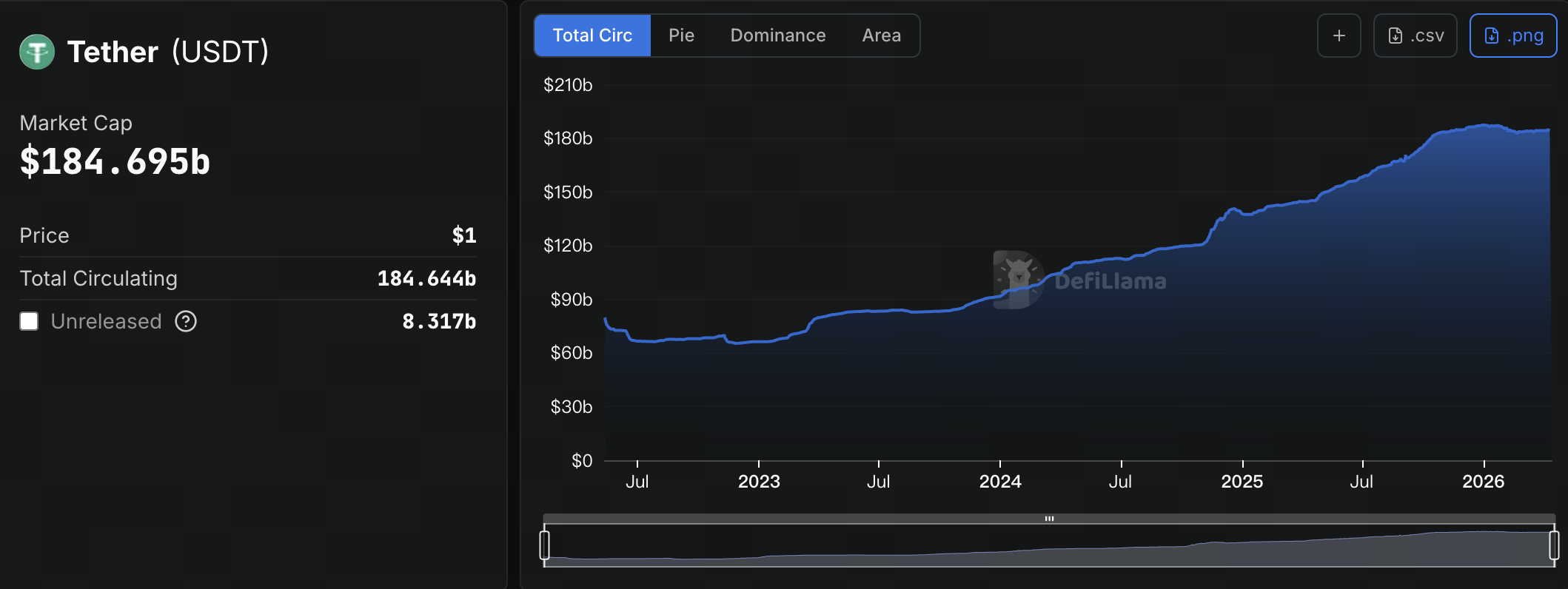
- Deep global liquidity: USDT is the default unit of account on most trading platforms and in emerging markets.
- Robust trading depth: USDT trading pairs provide more stable liquidity during volatile periods.
- Efficient distribution: Rapid movement across regions and platforms creates powerful network effects.
USDC’s Traditional Strengths
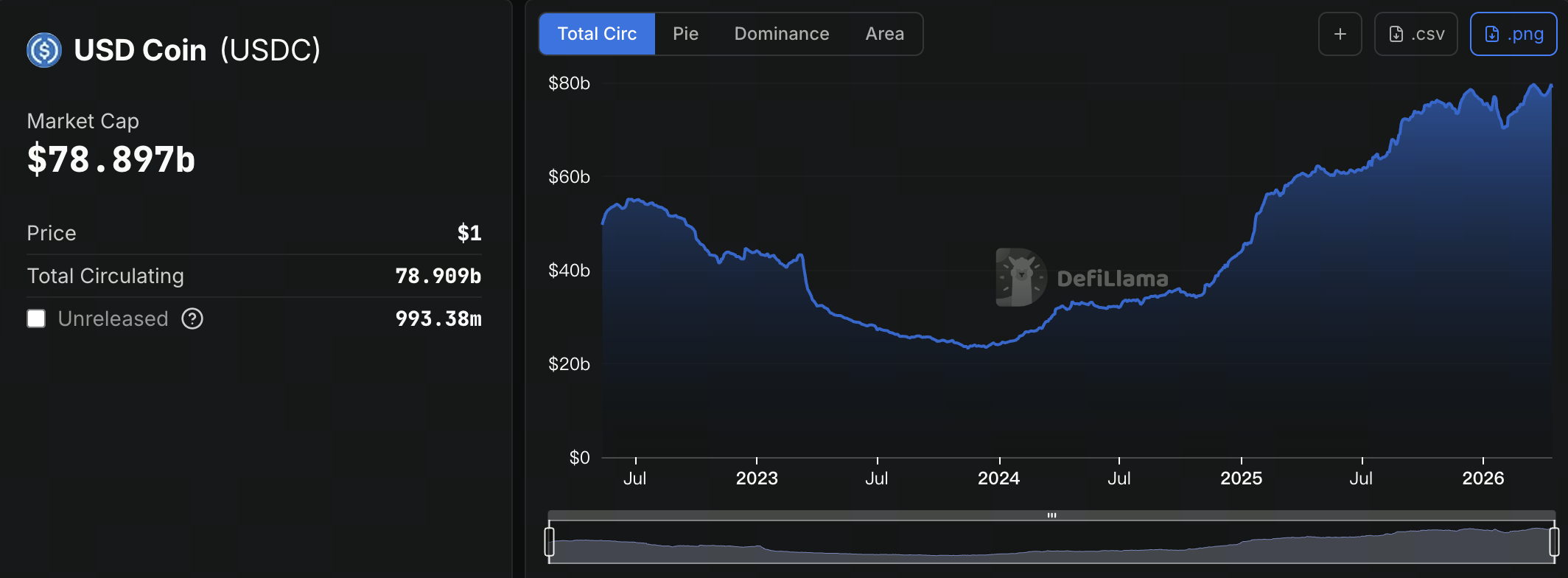
- High institutional trust: USDC has consistently emphasized reserve transparency and compliance partnerships.
- Strong integration with the US dollar financial system: Standardized access is easier in North America and institutional channels.
- Clear brand positioning: USDC is positioned as “compliant infrastructure,” not merely a trading medium.
Historically, USDT has served as the “lifeblood of global trading,” while USDC has functioned as the “institutional compliance gateway.”
With regulatory enforcement, these role distinctions will only become more pronounced.
The New Paradigm: Four Core Competitive Dimensions in the Regulatory Era
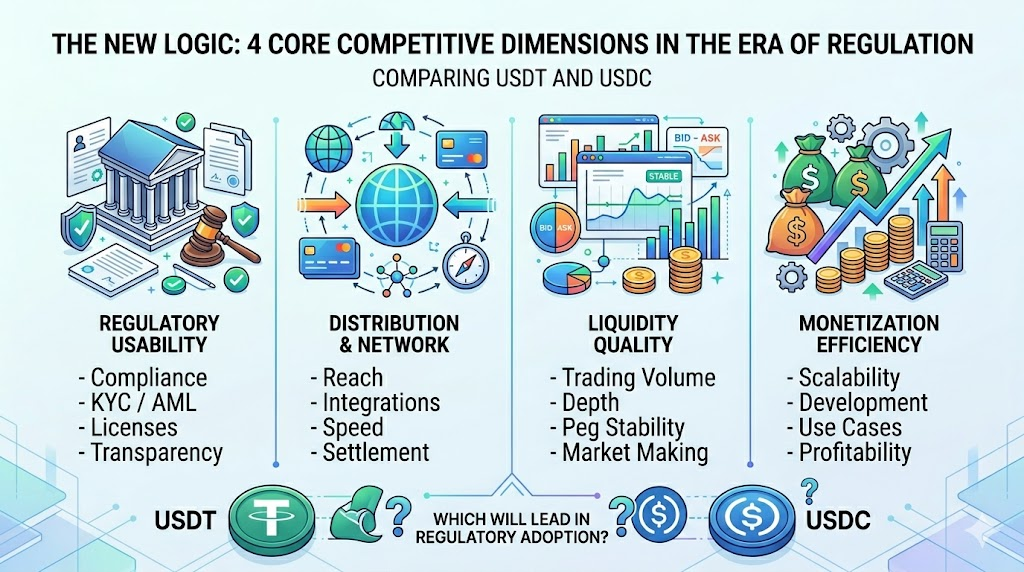
Looking forward, USDT and USDC should be evaluated across four dimensions—not just market cap rankings.
1. Regulatory Usability
- Does the stablecoin meet issuance, disclosure, reserve, and custody requirements in major jurisdictions?
- Can mainstream financial institutions integrate it at an institutional level?
In the regulatory era, compliance is no longer just a PR slogan—it’s the key to market access.
2. Distribution & Settlement Networks
- Which trading platforms, wallets, payment channels, and enterprise settlement systems are supported?
- Are cross-chain and cross-border settlement processes stable, predictable, and scalable?
The more high-frequency payment and trading entry points a stablecoin controls, the greater its real demand.
3. Liquidity Quality
- Focus isn’t just on total volume, but also on depth, spread, and resilience during extreme market events.
- Is availability consistent across chains and time zones?
Liquidity quality determines whether a stablecoin truly remains “stable and available” in times of stress.
4. Monetization Efficiency
- Can the issuer maintain a healthy profit structure balancing reserve returns, channel costs, and compliance costs?
- Are sustainable returns possible through changing interest rate cycles?
Ultimately, stablecoins are financial products—profitability must match risk.
USDT: Potential Advantages and Challenges
Strengths That May Be Reinforced
- Trading ecosystem dominance: USDT’s status as the default currency in global crypto trading is unlikely to be displaced soon.
- Strong network effects: Merchants, market makers, and traders reinforce habitual use.
- Deep penetration in emerging markets: USDT remains in demand where local currencies are volatile.
Pressures to Address
- Heightened compliance scrutiny: Institutions will demand greater transparency and reporting standards.
- Tougher channel access: Strictly regulated platforms may favor products with higher regulatory certainty.
- Narrative transition: Shifting from “available” to “auditable, regulated, and custodial” requires time.
The core question for USDT isn’t “Can it still be used?” but “Can it expand in high-compliance scenarios?”
USDC: Potential Advantages and Challenges
Strengths That May Be Reinforced
- Institutional appeal: USDC is more likely to be favored in compliance-driven trading, payments, and custody.
- Policy adaptability: USDC typically has clearer communication and execution paths as regulations evolve.
- Enterprise partnership potential: If on-chain payments scale to enterprise use, USDC is well positioned.
Pressures to Address
- Global retail and trading share: USDC must continue expanding in high-frequency trading environments.
- Channel cost vs. growth: Compliance advantages don’t automatically translate to market share gains.
- Network effect challenges: Competing with established network inertia is costly and difficult.
For USDC, the challenge isn’t “Is it compliant?” but “How can compliance advantages be converted into scale?”
The Five Key Metrics to Watch Over the Next 12–24 Months
To track this competitive landscape, focus on these five metrics—not just headlines:
- Circulation and net issuance: Is growth driven by trading, payments, or institutional custody?
- Trading depth and spread stability: Whose liquidity is more resilient during market volatility?
- Fiat on/off ramps and redemption efficiency: Redemption experience determines long-term institutional and enterprise adoption.
- On-chain payments and settlement share: The long-term value of stablecoins lies in payments and settlement, not just trading.
- Market share migration after regulatory events: Who is quickest to capture new demand after policy changes?
Many focus solely on trading volume, but the next wave of stablecoin growth will likely come from “non-investment use cases.”
Market Outlook: Layered Competition, Not a Single Winner
The likely outcome is not an outright victory for USDT or USDC, but a scenario-based division:
- Trading-centric scenarios: USDT may retain its dominant position.
- Institutional and compliance-driven scenarios: USDC is better positioned to grow its share.
- Cross-border payments and enterprise settlements: Outcomes will depend on regulatory harmonization and channel rollout speed.
Thus, to determine who “wins,” don’t just look at total market cap. Instead, ask:
Who is capturing higher-quality incremental growth in high-value scenarios?
Conclusion: The Stablecoin Market Enters the “Quality Era”
With regulatory enforcement, the competitive logic between USDT and USDC has shifted—from “who’s bigger” to “who’s more stable, more compliant, and better able to generate sustainable profits in real-world use cases.”
In summary:
- The past emphasized speed of expansion.
- Now, the focus is on the quality of expansion.
- In the future, the key will be comprehensive capabilities in regulatory adaptation, network effects, and profit sustainability.
For researchers and content creators, the priority isn’t picking sides, but building a scenario-driven analytical framework. Only then can you avoid missing the critical variables that will define the next phase of market share shifts by focusing solely on aggregate volume narratives.







