1. Why Transaction Costs Impact Your Net Returns
Many beginners in contract trading focus only on two metrics:
In reality, transaction costs have an ongoing effect on your final returns. With frequent trading, even if your market direction is correct, high costs can still eat into your profits. The primary costs involved in Gate contract trading are:
- Trading fees
- Funding rates
- Slippage
Grasping these cost structures is crucial for achieving long-term, stable trading results.
2. Gate Contract Trading Fee Structure
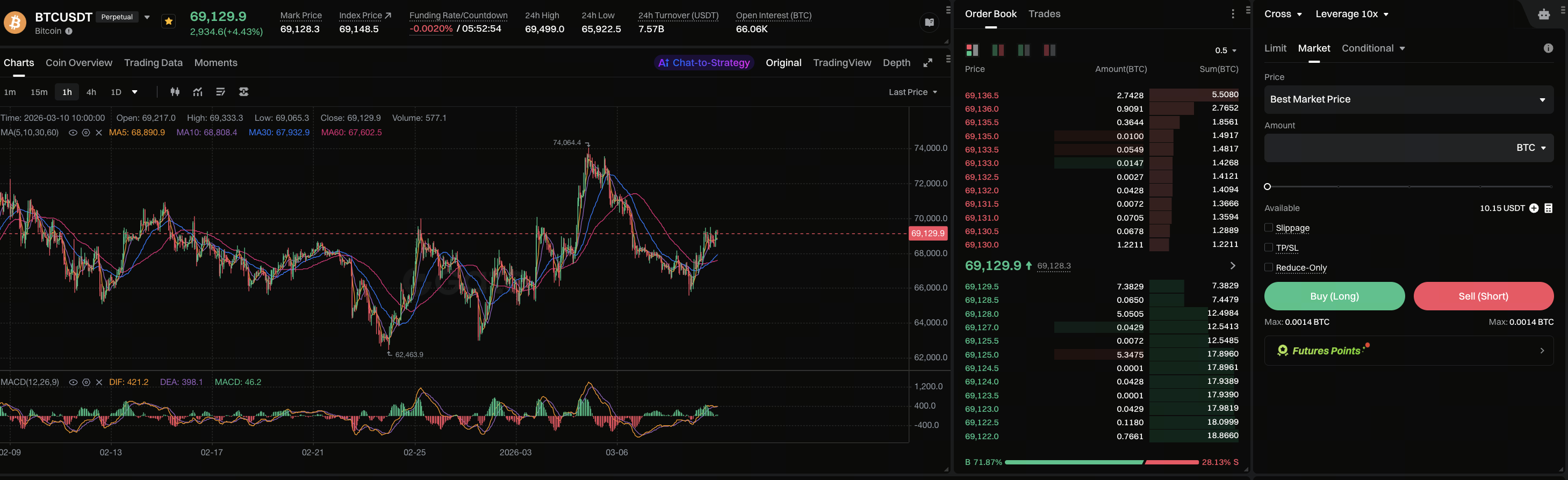 Figure: Gate Contract Trading Interface
Fees are the most visible trading cost. Gate’s contract trading divides fees into two types:
A Maker places an order that waits to be filled—usually at a lower fee;
A Taker executes an order immediately—typically at a higher fee.
Strategically using limit orders can help lower your trading costs.
3. How Funding Rates Affect Position Costs
In perpetual contracts, the funding rate is another key cost. Funding rates aren’t paid to the platform—they’re exchanged directly between long and short traders.
If you hold a position for an extended period while funding rates are high, you may incur ongoing costs even if the price stays flat.
Gate displays real-time funding rates and settlement times directly on the trading interface, making it easier for you to assess your holding costs in advance.
4. Slippage and Market Depth
Slippage is a hidden cost that many new traders overlook. Common causes of slippage include:
- Low market liquidity
- Quick execution of market orders
- Large orders that disrupt market depth
Gate’s contract trading feature provides order book depth data, enabling you to gauge market liquidity.
Selecting the right order type can help minimize slippage.
5. Common Cost Pitfalls for Beginners
Frequent cost-related mistakes among new traders include:
- High-frequency trading while ignoring cumulative fees
- Holding positions long-term without monitoring the funding rate
- Increasing slippage by relying on market orders
These issues may seem trivial, but over time, they can steadily erode your returns. Understanding the cost structure is essential for boosting trading efficiency.
6. How to Reduce Trading Costs on Gate Contracts
To keep trading costs down, consider the following strategies:
- Use limit orders whenever possible
- Avoid excessive trading frequency
- Cut back on long-term positions when funding rates are high
- Trade mainstream contracts with better market liquidity
Gate’s contract trading platform offers transparent fee structures and clear data displays.
By prioritizing cost management, you’ll improve the stability of your overall trading performance.