As AI adoption expands across industries, specialized implementations of MCP have begun to emerge. Platforms such as Gate MCP adapt the protocol to support domain-specific environments, including financial data systems, blockchain infrastructure, and real-time trading services.
Understanding the differences between general MCP frameworks and industry-focused implementations helps explain how AI agents can operate within complex ecosystems such as financial markets, blockchain networks, and enterprise platforms.
What Is Gate MCP
Developed as a specialized implementation of the Model Context Protocol, Gate MCP enables AI agents to interact with cryptocurrency trading infrastructure, market data systems, and blockchain services within a structured environment.
It functions as a protocol gateway that connects AI models with the operational capabilities of the Gate ecosystem, including exchange services, on-chain data, wallet infrastructure, and market intelligence tools.
Within the Gate for AI architecture, the MCP layer provides a standardized interface through which AI agents can safely access crypto-related tools and APIs.
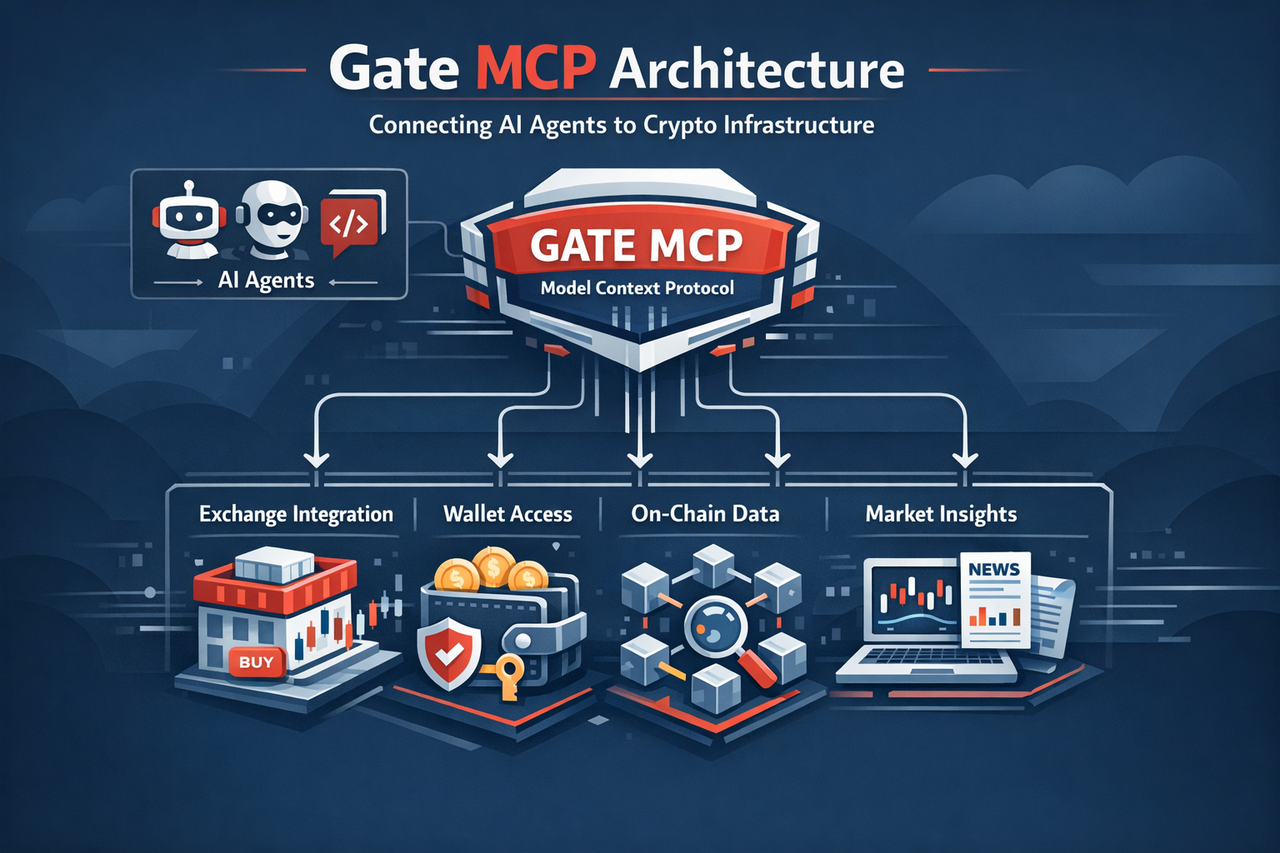
Key functional areas include:
-
Market Data Access: AI agents can retrieve tickers, order books, K-line data, funding rates, and liquidation history.
-
Trading Execution: The protocol allows programmatic creation, cancellation, and management of spot or derivatives orders.
-
Account and Wallet Interaction: Agents can query balances, manage accounts, and initiate transfers through authenticated requests.
-
On-Chain and Market Intelligence: Data from blockchain analytics, token profiles, and market news can be accessed for analytical workflows.
In practice, Gate MCP acts as a structured bridge between AI agents and a crypto trading environment, allowing models to execute complex workflows through standardized tool interfaces.
What Is Standard Model Context Protocol (MCP)
The Model Context Protocol (MCP) is a general-purpose protocol designed to enable AI models to interact with external tools, services, and structured data sources in a consistent manner.
Rather than embedding all capabilities within the model itself, MCP allows AI systems to dynamically access external resources through standardized interfaces.
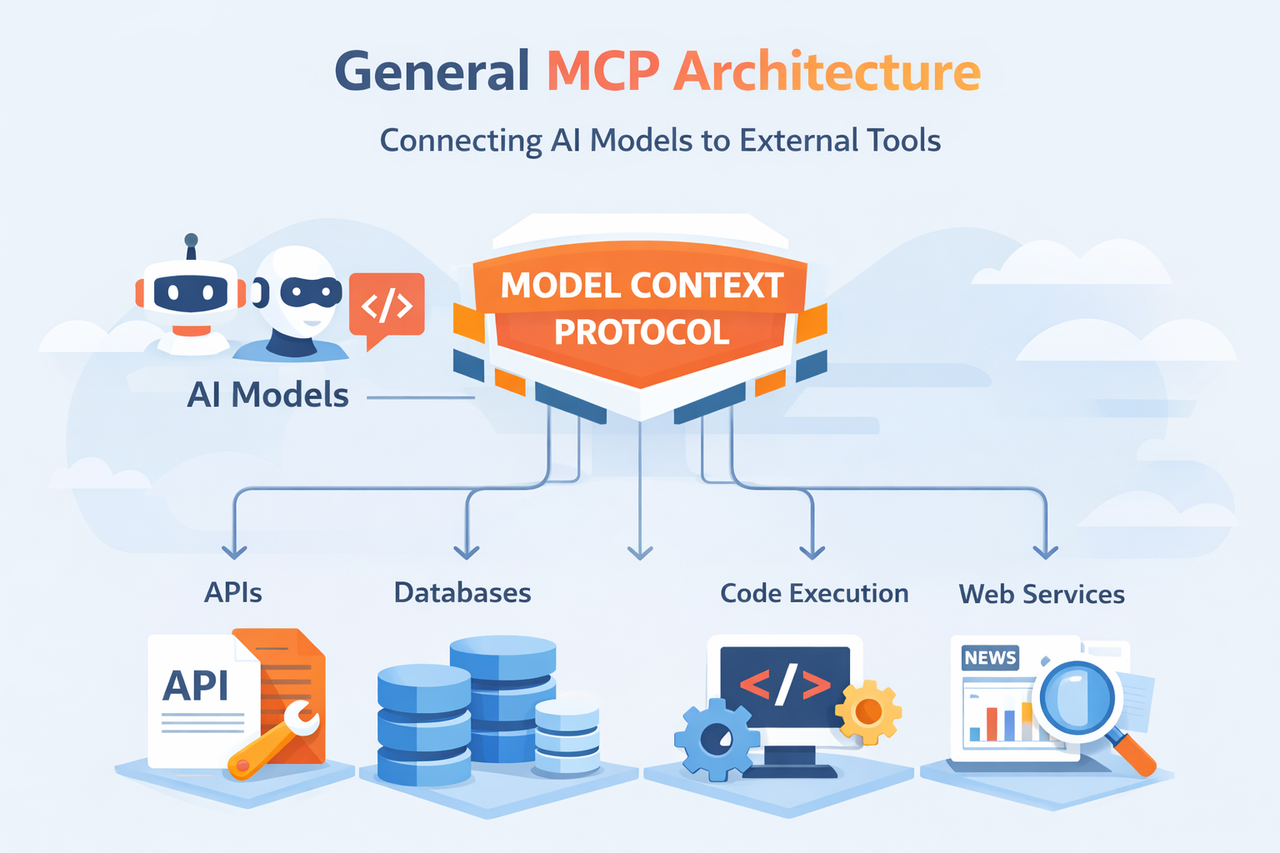
Typical MCP implementations focus on three core functions:
-
Tool Access: AI models can call external tools such as APIs, databases, or execution environments.
-
Context Injection: External systems can supply structured information to improve model reasoning and responses.
-
Secure Interaction: Authentication and permission mechanisms ensure controlled access to sensitive systems.
Standard MCP implementations are intentionally domain-agnostic. They are designed to support a wide range of use cases including software development, enterprise automation, data analysis, and research environments.
This neutrality allows the protocol to serve as a foundational layer for AI-tool interaction across many industries.
Gate MCP vs Standard MCP: Key Differences
While Gate MCP is built upon the general principles of MCP, its design focuses specifically on the requirements of cryptocurrency infrastructure and financial data systems.
The differences largely reflect the contrast between general-purpose AI integration frameworks and industry-specialized AI tool environments.
| Category |
Standard MCP |
Gate MCP |
| Design Philosophy |
General protocol for tool access |
Industry-specific implementation |
| Domain Focus |
Multi-industry |
Cryptocurrency and trading infrastructure |
| Tool Integration |
Generic APIs and utilities |
Exchange, wallet, on-chain data |
| Workflow Structure |
Flexible tool calls |
Pre-defined financial workflows |
| Security Context |
Standard authentication |
Financial-grade authorization and account access |
In short, standard MCP focuses on protocol standardization, while Gate MCP emphasizes domain integration and operational capabilities.
Technical Capability Comparison
The differences between the two approaches also appear at the technical capability level.
| Technical Area |
Standard MCP |
Gate MCP |
| Tool Abstraction |
Provides a general mechanism for exposing tools and APIs to AI models across different domains. |
Extends the concept with specialized financial tools designed for crypto trading environments. Examples include order execution, position management, funding rate analysis, and liquidation monitoring. |
| Workflow Orchestration |
Typically supports individual tool calls where AI models invoke one function at a time. |
Introduces AI Skills, which define structured workflows that combine multiple tools to complete complex financial tasks such as market analysis workflows, arbitrage opportunity scanning, and liquidity monitoring. |
| Infrastructure Integration |
Usually connects to generic software services such as APIs, databases, and development tools. |
Directly integrates with crypto infrastructure layers including centralized exchange APIs, decentralized trading systems, blockchain data providers, and market intelligence feeds, enabling AI agents to operate within a specialized financial ecosystem. |
This deeper integration enables AI agents to operate within a specialized financial ecosystem.
Practical Use Case Comparison
The distinction between standard MCP and Gate MCP becomes clearer when examining real-world applications.
Standard MCP Scenarios
Typical use cases include:
-
Developer assistants accessing code repositories
-
Research systems retrieving datasets
-
Enterprise automation interacting with internal APIs
-
AI agents coordinating workflows across productivity tools
These environments prioritize flexibility across multiple industries.
Gate MCP Scenarios
Gate MCP focuses on financial and blockchain-related operations.
Examples include:
-
Analyzing cryptocurrency market conditions
-
Monitoring liquidation events in derivatives markets
-
Identifying funding rate discrepancies
-
Managing trading accounts through AI agents
These use cases require highly specialized financial data and operational capabilities.
Advantages of Industry-Specific MCP Implementations
Industry-specific MCP systems offer several potential advantages compared to fully generalized implementations.
-
Domain Expertise Integration: Specialized MCP environments embed knowledge of industry-specific workflows, terminology, and system architecture. This allows AI agents to operate more effectively within complex domains.
-
Structured Tool Ecosystems: Industry implementations often provide curated tool sets designed to work together within a specific operational environment. This can simplify agent orchestration and reduce integration complexity.
-
Improved Data Context: Domain-focused MCP implementations can supply highly relevant contextual information, improving AI reasoning in specialized tasks. For financial environments, this may include market data, liquidity information, and blockchain analytics.
Risks and Considerations
Despite their advantages, industry-specific MCP systems also introduce certain challenges.
-
Ecosystem Fragmentation: If each industry develops its own MCP variant, interoperability between systems may become more complex. This could reduce the benefits of a universal protocol standard.
-
Security and Access Control: In sectors such as finance, granting AI systems access to operational tools requires robust authentication and risk management mechanisms. Improper access control could introduce security vulnerabilities.
-
Dependency on Platform Infrastructure: Industry implementations may depend heavily on the underlying service ecosystem. This can limit portability compared with fully standardized MCP implementations.
The Future of MCP in Industry Infrastructure
The development of MCP systems reflects a broader trend in AI infrastructure: the transition from isolated language models to tool-connected intelligent agents.
Two parallel directions are emerging:
-
General-purpose MCP frameworks that provide standardized interfaces across industries.
-
Domain-specific MCP ecosystems that optimize AI capabilities within specialized sectors such as finance, healthcare, or supply chain systems.
Rather than competing, these approaches may evolve as complementary layers. Standard MCP protocols could provide the foundational interface, while industry-specific implementations extend functionality within particular environments.
This layered architecture may allow AI agents to interact both with general digital systems and specialized operational infrastructures.
Conclusion
Gate MCP and standard Model Context Protocol implementations represent two different approaches to enabling AI systems to interact with real-world tools and services.
Standard MCP focuses on creating a universal protocol for AI-tool interaction across industries. In contrast, Gate MCP demonstrates how the protocol can be adapted to support the operational requirements of a specific domain such as cryptocurrency trading infrastructure.
As AI agents become more capable and autonomous, both approaches may play complementary roles. General MCP standards can provide interoperability, while industry-specific implementations can deliver deeper integration within complex ecosystems.
Understanding these models helps explain how AI systems may increasingly participate in financial platforms, data networks, and digital infrastructure.
FAQs
What is MCP in AI systems?
The Model Context Protocol (MCP) is a framework that allows AI models to access external tools, APIs, and data sources through standardized interfaces.
What does Gate MCP do?
Gate MCP enables AI agents to interact with cryptocurrency infrastructure, including market data systems, trading services, wallet management, and blockchain analytics.
How is Gate MCP different from standard MCP?
Standard MCP is a general protocol for tool integration, while Gate MCP is an industry-specific implementation designed for crypto trading and blockchain ecosystems.
Why are industry-specific MCP systems emerging?
Specialized MCP implementations allow AI systems to operate more effectively within complex domains that require dedicated tools, structured workflows, and domain-specific data.
Will MCP become a universal AI standard?
MCP has the potential to become an important standard for AI-tool interaction, although different industries may develop specialized implementations to address their specific operational requirements.