Macroeconomic Variables Shape Capital Allocation Strategies
In recent years, the global financial landscape has been defined by multiple uncertainties—from inflationary pressures and shifts in interest rate policies to escalating geopolitical tensions. Market sentiment often swings rapidly between optimism and caution. In this environment, investors reassessing risk typically seek assets with intrinsic value, keeping the metals market in the spotlight.
Metals continue to attract attention across economic cycles due to their diverse roles. Some metals serve as safe-haven assets, drawing capital during periods of market turbulence. Others are closely tied to industrial development and economic cycles, allowing the broader metals sector to offer varied investment strategies under different macro conditions.
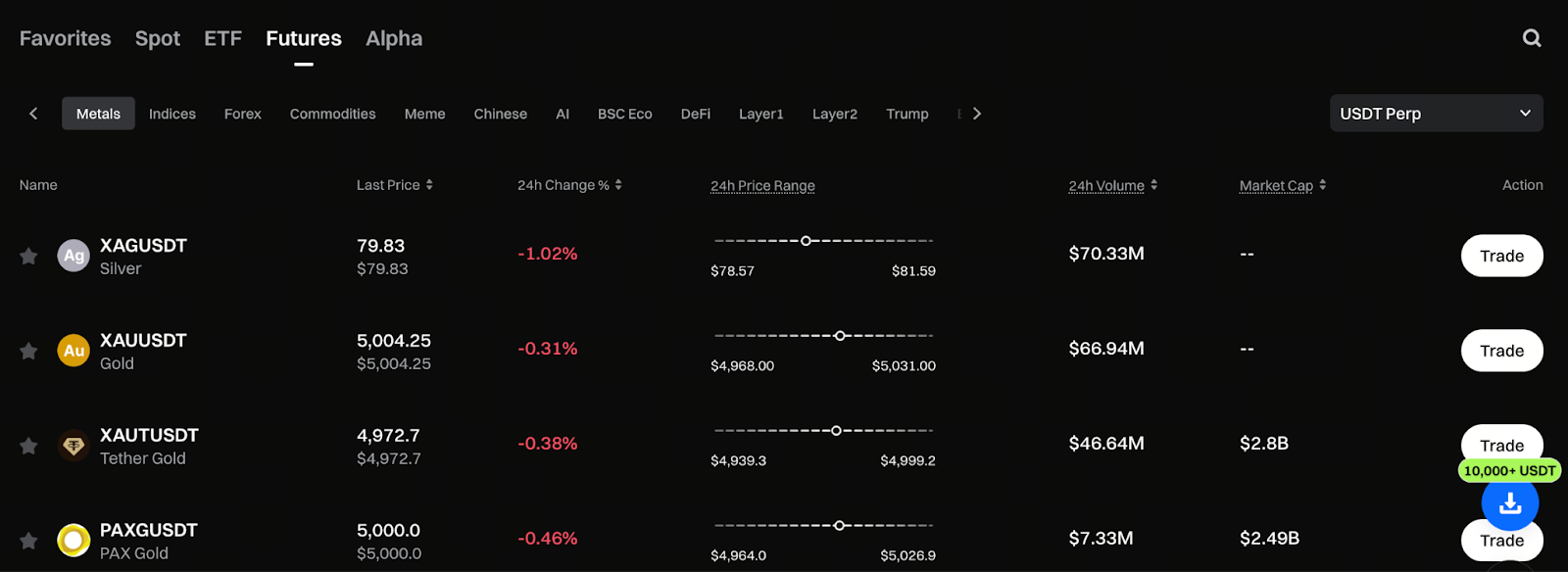
From a market structure standpoint, metals are generally classified into two categories: precious metals and industrial metals, each with unique investment characteristics and market functions.
Precious metals have long been viewed as essential tools for preserving asset value. Gold, in particular, is widely used by investors to hedge against inflation and financial market uncertainty. When demand for safe-haven assets rises or monetary policy shifts, gold tends to attract increased capital flows. Silver offers dual functionality—it is both an investment vehicle and a material broadly used in electronics and industrial manufacturing. As a result, silver prices are influenced by financial market sentiment as well as industrial demand.
Industrial metals, by contrast, are more directly linked to the real economy. Copper is often regarded as a key indicator of global economic activity, given its critical role in infrastructure and manufacturing. Aluminium is extensively used in transportation and construction, and when the market anticipates economic growth, demand—and thus prices—often reflect this optimism ahead of time.
Explore trading opportunities in Gate's Metals Section: https://www.gate.com/price/futures/category-metals/usdt
Metal prices rarely move in response to a single event; instead, they are shaped by the interaction of multiple factors. Changes in global economic data directly impact market expectations for future demand, often prompting rapid price adjustments when outlooks shift. Energy prices and transportation costs also affect metal production and supply chain structures, altering the balance between supply and demand.
Interest rate policies and government signals further influence capital flows. When major institutional investors and quantitative trading strategies quickly interpret these signals, market reactions can accelerate, resulting in significant price swings over short periods.
Market Dynamics Amid Heightened Volatility
As uncertainty increases, the tempo of metal price movements shifts. Price ranges that once persisted for extended periods may now be breached or reestablished in much shorter timeframes. Capital rotation between different metal categories is more frequent, with funds rapidly reallocating between safe-haven assets and those sensitive to economic conditions—such as shifting between precious and industrial metals—to adapt to changing macroeconomic expectations.
In this fast-moving market environment, real-time information and keen market observation are increasingly vital. Investors must quickly track price and news developments to improve decision-making efficiency.
Advancements in financial technology are driving commodity trading toward digitization. Integrated trading platforms enable investors to monitor market trends and execute trades within a single system, eliminating the need to switch between multiple markets.
For example, Gate's Metals Trading Section allows users to centrally access market data and trading opportunities across a range of metal products, streamlining both market monitoring and transaction processes. When unexpected events occur, a stable trading system and clear information presentation help investors respond quickly.
Digital trading also typically offers extended market access. When major policy changes or international events unfold outside traditional trading hours, investors can enter the market in real time, without waiting for the next trading session.
Despite ongoing innovation in market tools and trading methods, metal assets retain their stable position in investment allocation. Certain metals offer inflation protection, helping preserve value as currency purchasing power declines.
Moreover, the metals market does not move in lockstep with equities, crypto assets, or other markets, providing risk diversification in asset allocation. Industrial metals are closely tied to economic activity, and their price movements often serve as indicators of global economic cycles.
By strategically allocating different types of metal assets, investors can build a balanced portfolio that captures both defensive and growth opportunities.
Conclusion
In an era of global economic uncertainty, the metals market increasingly exhibits dual roles—as both a safe-haven and an economic indicator. Precious and industrial metals address distinct market demands, keeping the sector active across diverse macroeconomic scenarios. As trading becomes more digital, investors gain faster access to market trends and participation, reinforcing the importance of metal assets in diversified investment strategies. Whether as part of a long-term portfolio or as a tool for tracking global economic cycles, the metals market remains a vital component of the financial ecosystem.